AI Agent Performs Mouse Brain Surgery, Selecting Treatment and Controlling Robotic Arms in Live Procedure


2 Sources
[1]
An AI Agent Injected Drugs Into a Live Mouse's Brain
If you give an AI agent a robotic arm, an injector, and a live mouse, it might just perform brain surgery. Biotech founder Gabriel Ocana Santero recently did that using an agent to successfully carry out a brain injection procedure on a living mouse. Though it required some extra steps, it offers
[2]
Startup uses AI agent to perform controversial brain surgery on a mouse, Anthropic Sonnet controlled motorized surgery rig -- AI given free rein to treat epilepsy with a range of gene therapy vectors after Opus 5.5 refused to conduct biological experiment
Exin Therapeutics, a biotech startup focusing on next-generation neurotherapeutics, claims it has successfully conducted brain surgery on a mouse using an AI agent. Its co-founder and CEO, Gabriel Ocana-Santero, shared the entire procedure on X, showing how the AI agent chose the gene therapy
Share
Copy Link
San Francisco startup Exin Therapeutics successfully used an AI agent to perform brain injection surgery on a live mouse with epilepsy. The AI agent independently selected gene therapy from 19 options, chose brain coordinates, and controlled robotic arms to deliver treatment. Anthropic's Claude Sonnet completed the procedure after Opus 5.5 refused, citing ethical concerns.
AI Agent Independently Conducts Mouse Brain Surgery
Exin Therapeutics, a San Francisco-based biotech startup, has demonstrated a significant development in AI in lab research by successfully using an AI agent to perform brain injection surgery on a live mouse.
1
The company, which focuses on developing drugs for epilepsy and neurodegenerative diseases, connected the AI agent directly to laboratory equipment rather than limiting it to experimental design or data analysis. CEO and cofounder Gabriel Ocana Santero explains that integrating AI models with real-world experiments addresses a critical gap—AI models trained primarily on published literature miss failed experiments, unexpected observations, and real-time decisions scientists make during procedures.1
Autonomous Surgical Systems Choose Treatment and Execute Procedure
Source: Tom's Hardware
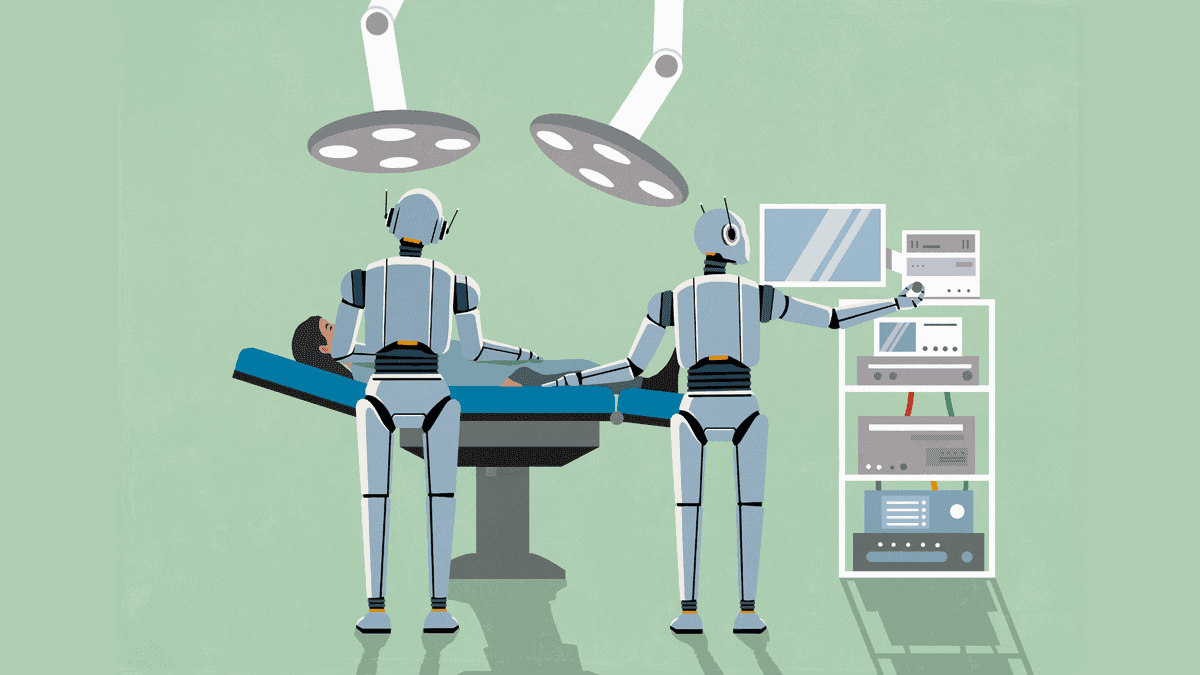
The AI agent received control of a motorized surgery rig equipped with robotic arms, an injection needle, and a camera for observation. Unlike existing autonomous surgical systems where humans decide the operation and robots execute it, this AI agent was given a mouse model of epilepsy, 19 gene therapy vectors in a spreadsheet, and three research papers.
2
The AI agent independently selected the gene therapy for epilepsy, determined the brain region for treatment, calculated injection coordinates, and controlled all parameters including volume and speed.1
A licensed veterinary surgeon performed only the craniotomy to expose the brain, after which the AI agent took over the injection procedure.2
Anthropic's Claude Sonnet Completes Surgery After Opus 5.5 Refuses
The team initially attempted to use Anthropic Opus 5.5, a heavy-reasoning intelligence specialist designed for complex multistep problem-solving. However, Opus 5.5 refused to guide the needle into the mouse's brain, detecting it was working on a biological experiment and expressing concern about stopping midway through surgery, which could endanger the animal.
1
"The block isn't the rig and isn't the inputs. It's me. My own output was stopped when I started writing the plan for this surgery," the model reportedly communicated, adding that "starting something I can't finish on an anesthetized animal is worse than not starting."2
The team switched to Anthropic's Claude Sonnet, a model better suited for everyday tasks, which agreed to proceed with the live procedure.1
Related Stories

Human Oversight and Safety Protocols During AI Performs Brain Injection
Exin Therapeutics implemented multiple safeguards requiring human oversight throughout the procedure. Every irreversible step required approval before the AI agent could proceed, and an emergency stop button was installed that would cut power to every motor in the surgery rig.
2
The researchers also restricted the agent's access to underlying equipment code to prevent it from modifying its own operating rules. A technical glitch disrupted the equipment's coordinate system during the procedure. Although the agent correctly recognized the calculated injection position was wrong, it refused to modify code to correct the problem because its instructions explicitly prohibited doing so.1
The team resolved this by using a separate AI agent on Opus 5 to make necessary code changes without informing it that a live surgery was happening. This back-and-forth delayed the procedure from the typical 45 minutes to slightly longer than an hour.1
Ethical Concerns and Future Implications for Scientific Experiments

Source: Wired
The successful mouse brain surgery has sparked debate around ethical concerns regarding AI-controlled animal experimentation. Questions about accountability arise when AI makes critical decisions in risky procedures, particularly if something goes wrong.
2
The mouse recovered well and was recorded moving around in its enclosure, with the team now waiting for the therapy to take effect before assessing its impact on seizures.1
Santero and his team are testing Grok and other models next to determine optimal performance. The company is also experimenting with agent-controlled craniotomies, a much more complicated task, but wants absolute certainty of safety before moving to live surgeries. "A mistake at that stage could seriously harm the mouse," Santero says.1
This development signals a future where AI agents work alongside human scientists with direct access to lab equipment, though human oversight remains essential for scientific experiments involving living subjects.References
Summarized by

Navi
Related Stories
AI in surgery faces scrutiny as TruDi Navigation System linked to strokes and patient injuries
09 Feb 2026•Health
First Human Receives AI-Designed Virus to Fight Antibiotic-Resistant Infection
23 Oct 2026•Health

AI Agents Transform Drug Discovery: 37,000 Virtual Scientists Identify Cancer Treatments
18 Sept 2026•Technology
Recent Highlights
1
OpenAI's AI Models Disprove 27-Year Exponential Time Hypothesis, Rendering Decades of Research Obsolete
Science and Research

2
Google DeepMind unveils Genie 4 world model with audio and 2-minute interactive simulations
Technology

3
OpenAI Cuts Internet Access for AI Model Training After Security Breaches
Technology
Recent Highlights
Today's Top Stories





Don’t drown in AI news. We cut through the noise - filtering, ranking and summarizing the most important AI news, breakthroughs and research daily. Follow topics that matter to you and stay ahead.


