Xiaomi Unveils 3nm Chip Family to Challenge Qualcomm, MediaTek and Nvidia in Smartphones and EVs


6 Sources
[1]
Xiaomi takes another shot at Qualcomm and MediaTek with its 3nm flagship Xring O3 chip
Serving tech enthusiasts for over 25 years. TechSpot means tech analysis and advice you can trust. First look: Xiaomi has introduced a new mobile processor for its premium devices, expanding efforts to develop technology that powers its smartphones. The Xring O3 is Xiaomi's latest system-on-chip
[2]
Xiaomi unveils custom 3nm chip for intelligent driving
The Xring D100 drops Nvidia from Xiaomi's cars from 2027, on a 3nm process that Europe's newest and most expensive fab will not come close to running Xiaomi has unveiled the Xring D100, an in-house 3nm chip for intelligent driving that will replace Nvidia hardware in its cars from 2027. The
[3]
Xiaomi goes deeper into EV tech with new 3nm intelligent-driving chip
Xiaomi has unveiled its first self-developed high-performance chip for intelligent driving, marking a major expansion of the Chinese technology giant's push to design the critical computing hardware behind its growing electric vehicle business. Called the Xring D100, the new processor is built on
[4]
Xiaomi Unveils Custom Chip For Driver-Assist Features
* Xiaomi has unveiled its first in-house chips dedicated to AI and self-driving. * The automaker currently relies on Nvidia for its hardware, though that could change as early as next year. * This makes Xiaomi the latest Chinese automaker to ditch U.S.-sourced chips in favor of self-produced
[5]

Xiaomi Xring O3 vs Snapdragon/Dimensity: Why Custom Smartphone Chips are Becoming Important
Xring now extends beyond smartphones with Xiaomi's O100 AI chip and D100 intelligent-driving processor. Xiaomi has pushed its smartphone chip strategy into a new phase with the Xring O3, a flagship processor that targets Qualcomm Snapdragon and MediaTek Dimensity at the top end of the
[6]
Xiaomi's New Chip Strategy Could Change its Smartphone Business
Xiaomi unveiled three new in-house chips for smartphones, AI devices and cars. The move could help the company rely less on outside chip makers. Xiaomi is taking a bigger step into chipmaking. The company introduced three new chips called Xring O3, Xring O100, and Xring D100. The first chip to
Share
Copy Link
Xiaomi launched its Xring O3 flagship mobile processor and D100 intelligent driving chip, both built on 3nm process by TSMC. The $3.1bn investment aims to reduce dependency on Qualcomm, MediaTek and Nvidia while giving the company greater control over its smartphone and EV technology stack.
Xiaomi Launches Dual 3nm Chip Strategy
Xiaomi has unveiled two flagship processors built on a 3nm process, marking the company's most ambitious push into custom silicon design. The Xring O3 targets high-end smartphones while the Xring D100 focuses on intelligent driving for electric vehicles. Both chips are manufactured by TSMC and represent Xiaomi's $3.1bn investment to reduce reliance on external suppliers like Qualcomm, MediaTek and Nvidia
1
2
. The company now employs nearly 3,000 people in its chip division2
.Xring O3 Challenges Qualcomm and MediaTek in Smartphones
The Xring O3 flagship mobile processor achieved an AnTuTu score of 5.22 million, becoming the first mobile chip to exceed 5 million on the benchmark
1
. The 10-core CPU delivered a multi-core score above 15,000, representing a 60% improvement over Xiaomi's previous chip1
. The processor includes Xiaomi's G2-Ultra NX graphics unit, which improves performance by 85% while reducing power consumption by 64%1
. The Xring O3 also supports LPDDR6 memory with bandwidth of 113.8 GB/s, 48% higher than the Xring O11
.
Source: TechSpot
AI Chip Capabilities Drive Performance Gains
The neural processing unit delivers 200 TOPS of tensor computing and 3.13 TFLOPS of vector computing, resulting in a 45% increase in edge AI performance
1
. Xiaomi distributed AI processing across multiple components, adding two SME2 acceleration units to the CPU and eight NX neural-network accelerators to the GPU1
. The company integrated AI processing into the image signal processor, display processor and audio digital signal processor to support features including image enhancement, frame interpolation and noise reduction in low-light video1
. The unified fusion-bus architecture reduces static latency to 82 nanoseconds1
.D100 Replaces Nvidia in Xiaomi's Electric Vehicles
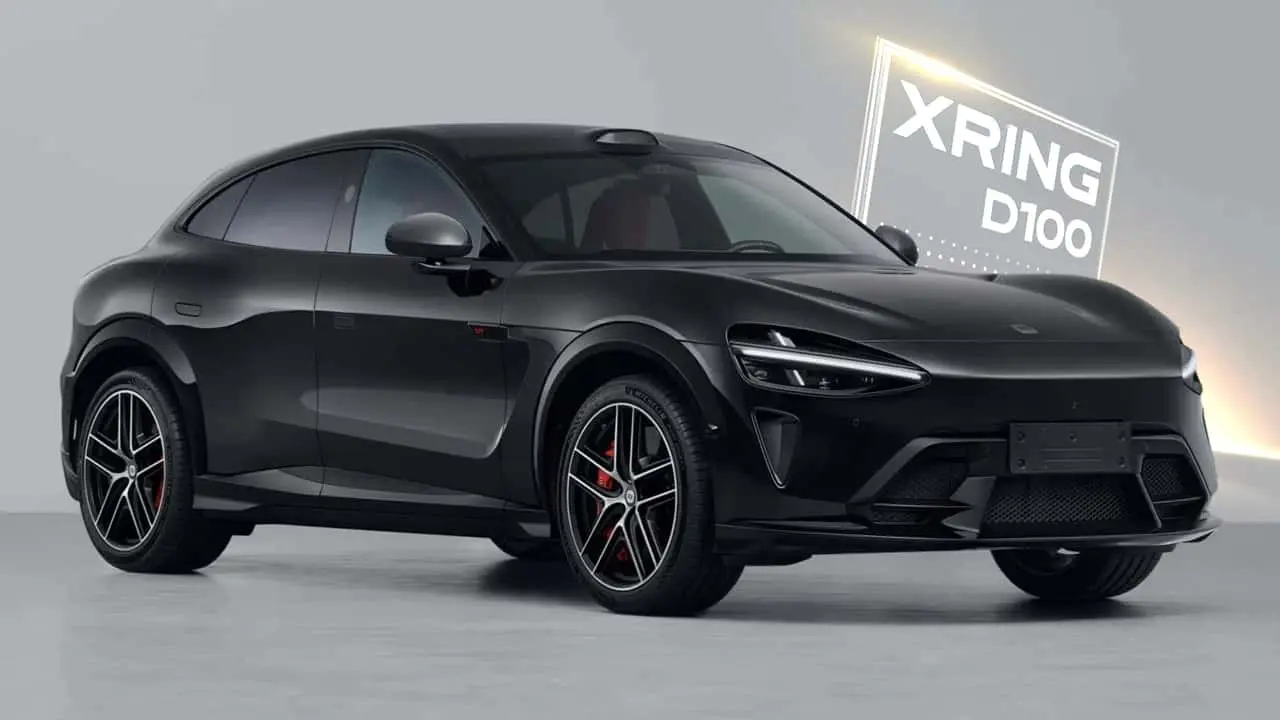
The Xring D100 intelligent driving chip will replace Nvidia Drive hardware in Xiaomi cars from 2027
2
4
. The processor features a 20-core CPU and 16-core neural processing unit on a 3nm process, supporting up to 160GB of unified memory2
3
. Xiaomi says this capacity is sufficient to run a 200-billion-parameter model directly on the vehicle2
3
. The company claims the D100 is China's first high-computing-power intelligent-driving chip based on a 3nm process3
. However, Xiaomi has not disclosed the chip's TOPS performance, with estimates placing it between 700 and 1,000 TOPS3
.
Source: InsideEVs
Vertical Integration Strategy Reduces Supplier Dependency
Xiaomi's custom chip development gives the company greater control over its product roadmap and could strengthen its negotiating position with outside vendors
1
. The Xiaomi custom chip strategy enables closer integration between hardware and software, allowing the company to optimize the D100 around data flows, memory requirements and large AI models used by its intelligent-driving system3
. Controlling the chip, domain controller and underlying software stack could help reduce component costs as production volumes increase3
. Bloomberg Intelligence analysts Steven Tseng and Rebecca Wang noted that Xiaomi is likely to produce the Xring O3 in limited volumes, leaving the company dependent on Qualcomm and MediaTek for much of its smartphone lineup1
.Related Stories

Chinese Automakers Accelerate In-House Silicon Development
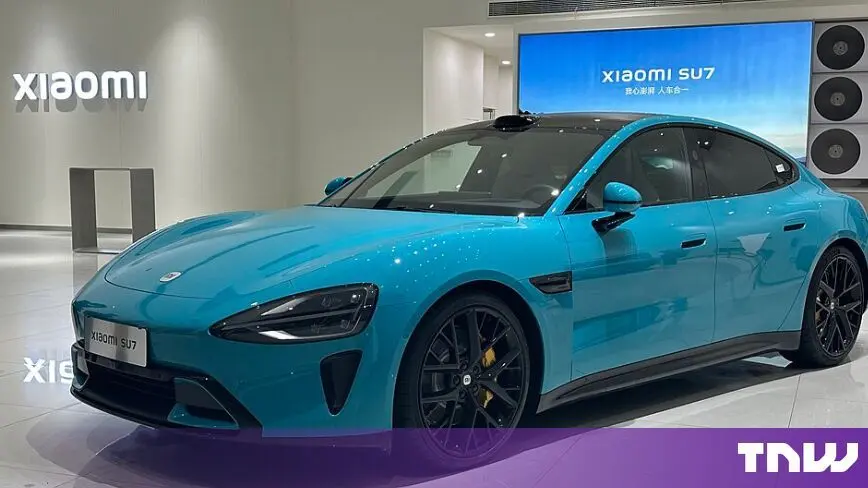
Xiaomi joins BYD, Nio, Li Auto and Xpeng in developing proprietary processors for advanced driver-assistance systems
3
4
. BYD introduced its 4nm Xuanji A3 intelligent-driving chip earlier this year, while Xpeng deployed four in-house Turing chips in its GX robotaxi platform, delivering a claimed 3,000 TOPS of onboard computing power3
. The trend reflects geopolitical concerns about AI chip exports and the desire for vertical integration in EV tech4
. Rivian recently announced a custom chip for advanced driving features debuting in the R2, while Tesla has designed its own chips to run Full Self-Driving for years4
.
Source: The Next Web
Manufacturing Challenges and Market Implications
TSMC's production of the Xring O3 gives Xiaomi access to one of the world's most advanced contract chipmakers
1
. Bloomberg Intelligence analysts noted that the Xring O3 stays at 3nm even as leading rivals move to 2nm, indicating Xiaomi is placing more weight on architecture and feature upgrades to drive gains1
. Europe's flagship ESMC plant in Dresden will run 28nm and 22nm planar CMOS alongside 16nm and 12nm FinFET, several generations away from the 3nm process used for Xiaomi's chips2
. The D100 has completed validation, but Xiaomi has not identified the first production vehicle that will use it3
. The chip must prove reliable across automotive operating conditions and integrate deeply with sensors, software and safety systems before reaching customers3
. Xiaomi's EV division lost 2.6bn yuan last quarter while continuing to invest heavily in silicon development2
.References
Summarized by

Navi
[2]
[3]
Related Stories
Xiaomi Unveils XRING O1: First In-House AI Chip Powering New Flagship Devices
23 May 2025•Technology

Qualcomm Announces Next-Gen Snapdragon 8 Elite Chip, Xiaomi to Pioneer Its Use
01 Aug 2025•Technology
Xiaomi commits $8.7 billion to AI as MiMo-V2-Pro model drives stock surge and investor optimism
20 Mar 2026•Technology
Recent Highlights



Recent Highlights
Today's Top Stories









Don’t drown in AI news. We cut through the noise - filtering, ranking and summarizing the most important AI news, breakthroughs and research daily. Follow topics that matter to you and stay ahead.


