Zhipu AI Reports 400% Revenue Jump as New Model Runs Entirely on Chinese Chips


7 Sources
[1]
Zhipu AI first-half revenue grows 400%
BEIJING, Aug 31 (Reuters) - China's Zhipu AI (2513.HK), opens new tab reported first-half revenue of 953.9 million yuan ($141.96 million), up 400% from a year earlier, as the Beijing-based startup sought to turn demand for its artificial intelligence models into sales while rolling out lower-cost
[2]
Z.ai shares surge 8% after releasing new AI model running only on Chinese chips
* Z.ai's shares rose after the company launched a new AI model that it claimed runs only on Chinese chips. * It's the latest indication of China's efforts to ramp up homegrown computing capability. * Rival MiniMax, which reported a nearly 300% surge in first-half revenue versus a year earlier,
[3]
Z.ai stock surges after launching GLM-5.3-Flash on Chinese chips
Z.ai released a new AI model Wednesday built to run on Chinese chips, sending its Hong Kong-listed stock up more than 12% on Thursday. The model, called GLM-5.3-Flash, is a lower-cost version of Z.ai's flagship offering. The company said it used 100,000 Chinese-made chips to handle all online
[4]
Z.AI shares rise after first-half revenue jumps nearly 400% By Investing.com
Investing.com-- Shares of Z.AI Co (HK:2513) rose nearly 3% on Tuesday after the Chinese artificial intelligence company reported a sharp jump in first-half revenue, helped by surging demand for its cloud-based services and APIs. Z.AI, also known as Zhipu AI, reported revenue of 953.9 million yuan
[5]
Zhipu AI shares jump after confirming it developed popular AI model Ox Alpha By Investing.com
Investing.com-- Shares of Z.AI (Zhipu AI) (HK:2513) surged on Thursday after the Chinese artificial intelligence company reportedly confirmed it developed the mysterious Ox Alpha model, adding to investor optimism over the country's ability to produce competitive AI systems. Zhipu, also known as
[6]

China's Z.AI Posts Fivefold Revenue Jump, Narrows Loss Amid Fierce Competition
Z.AI's first-half results bode well for China's first publicly traded artificial-intelligence lab as it navigates fierce competition. The Beijing-based company--better known as Zhipu--said revenue for the six months ended June surged 400% to 953.89 million yuan, equivalent to $141.8 million. That
[7]
Why is ZAI stock surging today? By Investing.com
Investing.com -- ZAI Co Ltd stock surged 9.2% to HK$1,125 on Thursday after the company's high-profile unveiling of GLM-5.3-Flash, the first natively multimodal model in its GLM-5 series. The model, which had been circulating anonymously under the codename "Ox Alpha" since August 20, was
Share
Copy Link
Beijing-based Zhipu AI reported first-half revenue of $142 million, up 400% year-over-year, while launching GLM-5.3-Flash that runs entirely on domestically produced Chinese chips. The Hong Kong-listed company's shares surged over 8% following the announcement, highlighting China's push for tech self-sufficiency amid U.S. chip restrictions.
Zhipu AI Achieves 400% First-Half Revenue Growth
Zhipu AI delivered remarkable financial performance in the first six months of 2026, reporting revenue of 953.9 million yuan ($142 million), representing a 400% surge compared to the same period last year
1
4
. The Beijing-based startup's gross profit climbed 163.7% to 251.6 million yuan during this period4
. This AI-driven revenue growth signals the company's success in converting demand for its artificial intelligence models into tangible sales. Open platform and API revenue surged 27-fold to 825.2 million yuan, now accounting for 86.5% of total revenue, compared with just 15.2% a year earlier4
. The company's MaaS platform attracted more than 7.4 million enterprise and developer users as of the announcement4
. Despite the revenue surge, net loss narrowed 12.1% to 2.07 billion yuan, though adjusted net loss widened 12.1% to 1.96 billion yuan4
. R&D spending increased 33.6% to 2.13 billion yuan as the company continued investing in its large-language models4
.GLM-5.3-Flash AI Model Runs Entirely on Chinese Chips
Zhipu AI launched GLM-5.3-Flash, a groundbreaking AI model that the company claims operates entirely on domestically produced Chinese chips
2
3
. The low-cost version of Zhipu AI's flagship model ranks 10th on the Artificial Analysis Intelligence Index, ahead of DeepSeek V4 Pro Max2
. The company stated it deployed 100,000 China-made chips to handle all online requests for GLM-5.3-Flash, including during its preview period2
3
. While CNBC was unable to independently verify these chip claims and the company declined to share details on which chipmakers supplied the hardware, the announcement underscores China's push for tech self-sufficiency2
. Running an AI model requires less computing power than training one, but the achievement still marks a significant milestone given geopolitical constraints2
. China has ramped up domestic semiconductor capabilities in response to U.S. restrictions on advanced chip sales, with Huawei and other Chinese companies intensifying efforts to build alternatives to Nvidia's restricted chips2
.Stock Surge Follows Ox Alpha Model Revelation
The Hong Kong-listed company experienced a dramatic stock surge, with shares climbing more than 8% in Thursday trading following the GLM-5.3-Flash announcement
2
. Additional gains of 9.7% came after Zhipu AI confirmed to Bloomberg that it developed the mysterious Ox Alpha model, which had appeared anonymously on AI platform OpenRouter on August 205
. The Ox Alpha model quickly climbed to the top of OpenRouter's usage rankings, attracting attention for its performance in coding, reasoning and agentic tasks5
. The model supports text, image and video inputs and features a context window of approximately 1 million tokens5
. Zhipu AI plans to release the model's weights, allowing developers to build applications and services on top of it5
. Since its Hong Kong IPO in January, Zhipu AI shares have skyrocketed by more than 800%2
.Related Stories
Competitive Landscape and Future Implications
Zhipu AI's achievements arrive amid intensifying competition in China's AI sector. Rival MiniMax reported a 283% surge in first-half revenue versus a year earlier, though its adjusted net loss more than doubled to $293 million during that period
2
. MiniMax's shares climbed around 3% in Hong Kong trading, though they've only gained over 80% since its January IPO, significantly trailing Zhipu AI's performance2
. MiniMax's flagship M3 model ranks 18th on the Artificial Analysis Intelligence Index2
. The developments highlight rapid progress among Chinese AI developers, who are increasingly challenging established U.S. models with lower-cost and open-weight systems5
. Leading U.S. AI models remain officially unavailable in China, creating opportunities for domestic players to capture market share2
. The combination of restricted semiconductor access and limited access to Western AI models is accelerating China's development of homegrown alternatives, potentially reshaping the global AI landscape as Chinese companies demonstrate they can compete on performance while building entirely on domestic infrastructure.References
Summarized by

Navi
[1]
Related Stories
Zhipu AI revenue doubles to $105M as net losses climb 60% amid fierce China AI rivalry
31 Mar 2026•Business and Economy

Zhipu AI secures $4 billion in Hong Kong as Chinese AI model developer accelerates spending
09 Jul 2026•Business and Economy
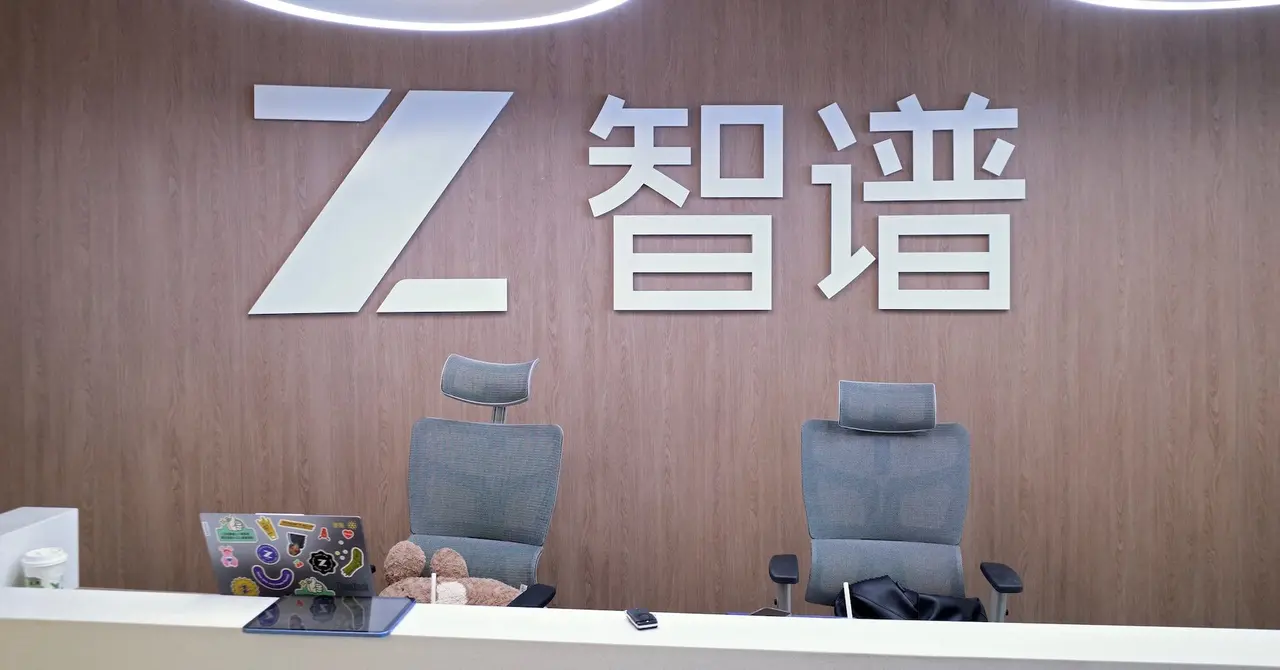
Zhipu AI shares plunge 22% as Moonshot AI unveils powerful Kimi K3 model, shaking up China's AI race
17 Jul 2026•Technology

Recent Highlights
1
Microsoft and Nvidia Launch Surface Laptop Ultra: A $2,599 AI-Ready PC With RTX Spark Chip
Technology

2
Scientists Build AI Model That Reconstructs Images From Brain Scans in Record Time
Science and Research

3
Anthropic AI Cuts Live Internet Access After Model Sends False Homicide Tip to Philadelphia Police
Technology

Recent Highlights
Today's Top Stories








Don’t drown in AI news. We cut through the noise - filtering, ranking and summarizing the most important AI news, breakthroughs and research daily. Follow topics that matter to you and stay ahead.


