Share
Linkedin
Twitter
Facebook
Whatsapp
Copy Link
Infineon Technologies upgraded its 2026 financial outlook as AI demand for power supply solutions surged, expecting €1.5 billion in AI data center revenue. The German chipmaker posted Q2 revenue of €3.81 billion, up 6% year-over-year, while net profit rose to €301 million. CEO Jochen Hanebeck cited the AI boom as a key driver, though investors remain cautious about margin pressure and weakness in the electric vehicle segment.
Punjab National Bank is ramping up its cybersecurity spend by over 50%, allocating ₹7-8 billion this financial year to counter rising digital threats from advanced AI models. The move follows heightened regulatory scrutiny after India's finance minister met with bank chiefs to assess preparedness against AI-related risks.
Thomson Reuters reported first-quarter revenue of $2.09 billion, a 10% increase that exceeded Wall Street expectations. The company reaffirmed its 2026 financial forecasts as demand for its fiduciary-grade AI products grows among legal, tax, and accounting professionals. CEO Steve Hasker emphasized that professional clients are choosing AI-integrated tools built on authoritative content over frontier AI models, with AI-based solutions now representing 30% of contract value.
A sophisticated prompt injection attack exploited Grok, the AI chatbot developed by xAI, resulting in a $200,000 crypto transfer. An attacker used a hidden Morse code message embedded in a tweet to manipulate the AI agent into executing an unauthorized transaction, highlighting critical vulnerabilities in AI-driven systems with direct access to financial systems.
Meta is assembling a $13 billion financing package with Morgan Stanley and JPMorgan for its El Paso AI data centre in Texas. The deal represents one of the largest single-site digital infrastructure financings ever and signals strong institutional credit demand for AI infrastructure projects as Big Tech races to expand capacity.
Katie Haun's venture firm has raised $1 billion split between early and later-stage funds, expanding beyond crypto into AI agents and financial infrastructure. The move follows successful exits from Bridge's $1.1 billion Stripe acquisition and BVNK's $1.8 billion Mastercard deal. Haun targets the intersection where autonomous software meets regulated finance, betting AI agents will need financial plumbing before better models.
Nasdaq-listed K Wave Media abandons its Bitcoin treasury strategy to pursue an AI pivot, reallocating $485 million toward data centers and GPU compute operations. The company's stock plunged 25% following the announcement, as shareholders prepare to vote on a rebrand to Talivar Technologies in July.
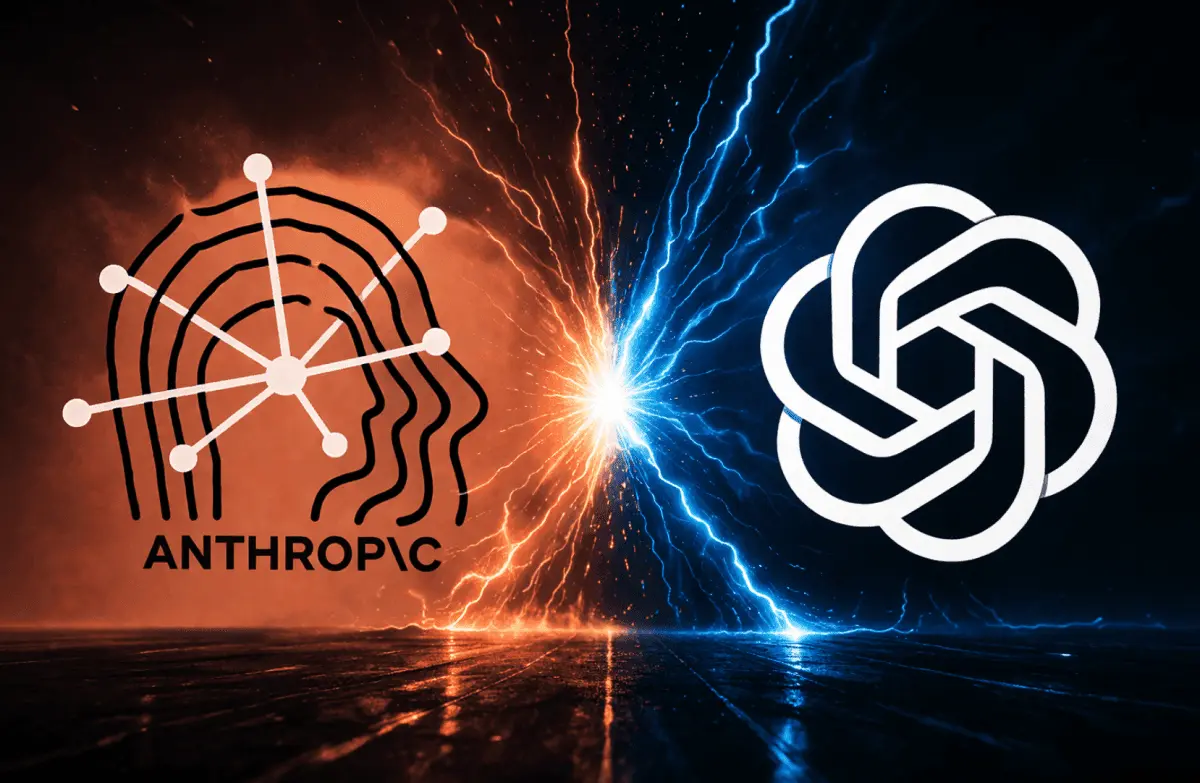
Anthropic announced a $1.5 billion joint venture with Blackstone, Goldman Sachs, and Hellman & Friedman to deploy enterprise AI services across mid-sized companies. Hours earlier, OpenAI revealed plans for a similar venture called The Development Company, raising $4 billion at a $10 billion valuation. Both AI labs are racing to solve the bottleneck in enterprise AI adoption by embedding engineers directly into businesses.
Bank of Montreal has filed a provisional patent for a quantum algorithm designed to forecast earthquakes, while deploying AI to dispatch mobile banking units to wildfire-affected communities. The bank's Chief AI and Quantum Officer Kristin Milchanowski says over 60% of BMO clients are in earthquake-prone territories across Canada and the US, making disaster prediction critical for managing risk.
OpenAI CFO Sarah Friar pushed back against reports of missed internal targets, stating the company is beating its core plan and experiencing a vertical wall of demand. The real constraint isn't sales growth but data center capacity, as the company projects revenues to surge from $30 billion this year to $284 billion by 2030.
Federal Reserve Vice Chair Michelle Bowman announced that regulators are preparing new guidelines for AI adoption in banking, prompted by concerns over Anthropic's Mythos model. The dual-use AI tool can both detect cyber vulnerabilities and potentially exploit them, highlighting the urgent need for updated supervisory frameworks that balance innovation with financial stability.
MoonPay introduced a virtual debit card that enables AI agents to spend stablecoins directly from self-custodied wallets at any Mastercard merchant. The MoonAgents Card converts crypto to fiat at checkout, eliminating the need to pre-load funds. Currently available in the UK and Latin America, the card reflects growing industry efforts to build financial infrastructure for AI-driven transactions.
Euro-area finance ministers will convene Monday to address challenges posed by Anthropic's Mythos AI model, a tool so powerful it can enable dangerous cyberattacks. No EU government has access to the system, creating a competitive disadvantage as the White House blocks expansion while the NSA uses it internally.
Major banks across Asia are intensifying checks on artificial intelligence tools after Anthropic's most advanced AI model uncovered thousands of vulnerabilities in major operating systems and web browsers. The Claude Mythos Preview has sparked concerns that hackers could exploit frontier AI to identify system vulnerabilities faster and launch larger-scale cyberattacks, prompting Singapore's largest lenders and regional banks to strengthen their cybersecurity controls.
Nvidia's B300 AI servers are selling for approximately $1 million in China, nearly double their US price of $550,000. The dramatic price surge stems from intensified US export restrictions and a crackdown on grey market chip smuggling following the arrest of Supermicro's co-founder, creating acute scarcity as Chinese AI companies scramble for advanced computing hardware.
Don’t drown in AI news. We cut through the noise - filtering, ranking and summarizing the most important AI news, breakthroughs and research daily. Follow topics that matter to you and stay ahead.