Core 4 Solutions Lists $60 Million AI Supercomputer With 9,600 Nvidia A100 GPUs On eBay


4 Sources
[1]
eBay lists a $60 million AI supercomputer with 9,600 Nvidia A100 GPUs and 4,200 AMD EPYC CPUs -- but you do get free shipping
Core 4 Solutions offers free FedEx Ground delivery for its $59.7 million supercomputer * Core 4 Solutions is asking $59.7 million for its 300-rack supercomputer * The eBay listing includes 9,600 Nvidia A100 accelerators and 4,200 AMD processors * Each compute node combines eight A100 GPUs with
[2]
$60 million AI rack cluster listed on eBay, with 1.4 petabytes of memory and almost 10,000 Nvidia AI GPUs
Who said those big AI companies have to get all the gear? If you had a cool $60 million hanging around yesterday, you could have picked up an AI supercomputer for yourself, complete with thousands of Nvidia A100 GPUs and AMD EPYC CPUs split over 300 racks. And if you went cheap, you could even get
[3]
eBay lists $59.7 million AI supercomputer with free shipping
Core 4 Solutions is seeking $59.7 million for a 300-rack supercomputer listed on eBay, comprising 9,600 Nvidia A100 accelerators and 4,200 AMD EPYC Rome processors. The installation is configured with four compute units and three administrative machines in each rack. The listing says it includes
[4]
An entire NVIDIA A100 AI cluster hit eBay at a staggering price, but at least shipping is free
A decommissioned AI cluster with 9,600 NVIDIA A100 GPUs and 4,200 AMD EPYC CPUs was listed on eBay by Core 4 Solutions for $59.7 million. Have you ever gone on eBay and wondered how much a supercomputer is going for? Well, one monster device with nearly 10,000 GPUs has been listed, and the asking
Share
Copy Link
Minneapolis-based IT hardware reseller Core 4 Solutions listed a massive 300-rack AI supercomputer on eBay for $59.7 million, featuring 9,600 Nvidia A100 GPUs and 4,200 AMD EPYC CPUs. The decommissioned cluster from a hyperscaler environment includes 1.4 petabytes of memory and came with free FedEx Ground shipping before the listing ended.
Minneapolis IT Reseller Lists Massive AI Infrastructure on Online Marketplace
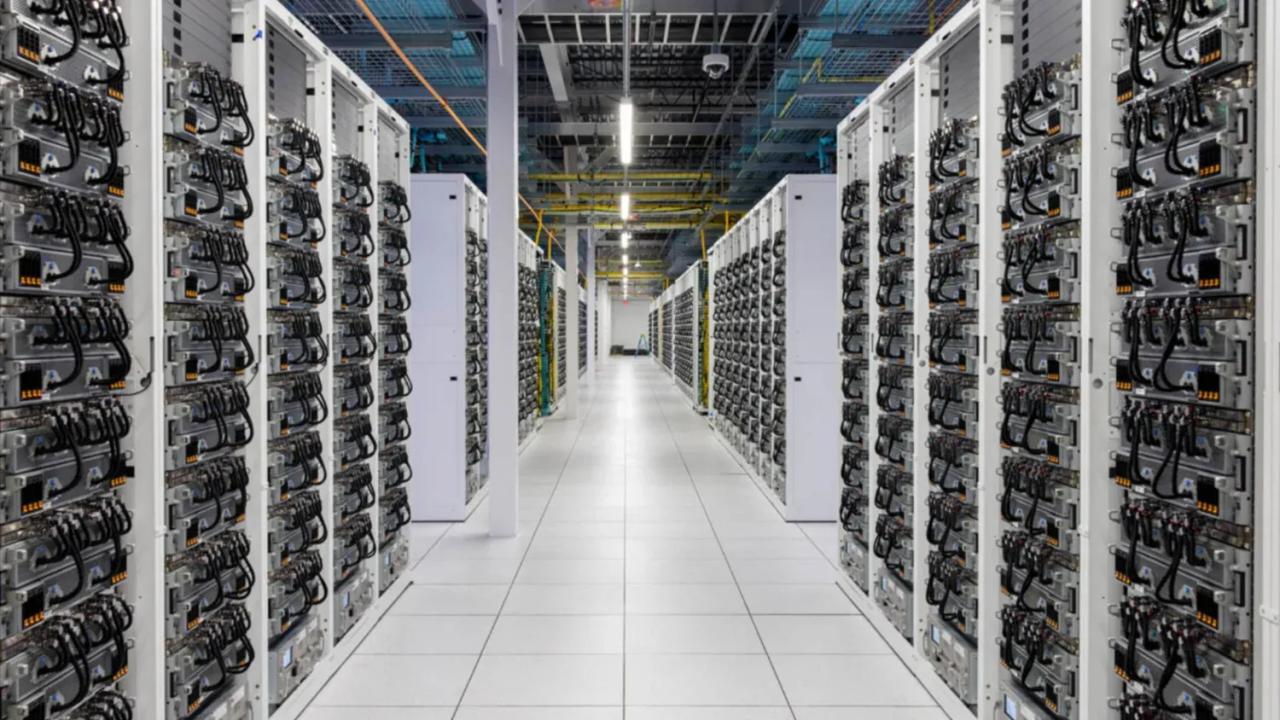
Core 4 Solutions, a Minneapolis-based IT hardware reseller that supplies companies like Amazon, Microsoft, Meta, and the US Department of Justice, placed an extraordinary eBay listing this week for a complete AI supercomputer installation valued at $59.7 million
1
2
. The 300 server racks contain 9,600 Nvidia A100 GPUs and 4,200 AMD EPYC CPUs, representing a decommissioned AI cluster from a hyperscaler environment4
. The listing ended on October 28, though it remains unclear whether the installation sold. Remarkably, the seller offered free shipping via FedEx Ground or FedEx Home Delivery for US buyers, with expedited options available for $25 for two-day service or $50 for overnight transportation1
.
Source: TweakTown
Technical Specifications Reveal Enterprise-Scale Computing Power
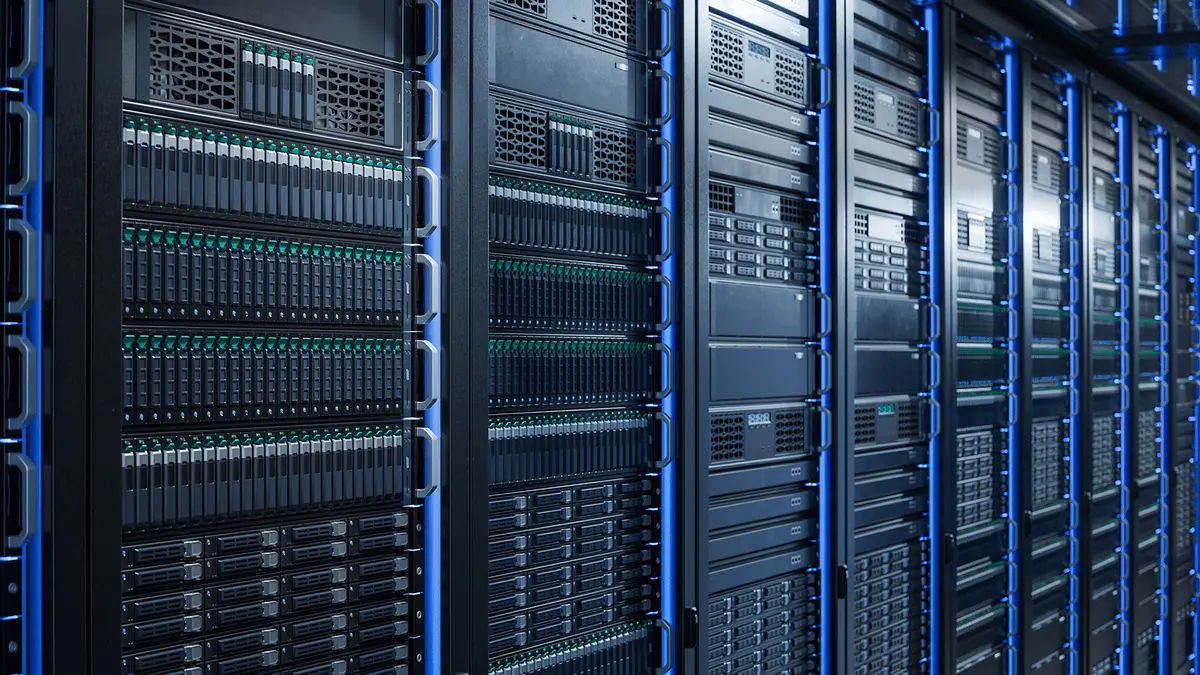
Each of the 300 server racks follows an identical configuration, containing four compute nodes and three administrative machines
3
. Every compute node combines eight Nvidia A100 SXM4 accelerators with 40GB of memory each, connected via NVSwitch, alongside two 64-core AMD EPYC Rome processors and 1TB of DDR4-2933 memory4
. The administrative machines each contain two 64-core processors and 192GB of memory3
. Across the complete installation, these specifications deliver 268,800 processor cores and approximately 1.4 petabytes of memory capacity2
3
. The infrastructure also includes Nvidia Mellanox ConnectX-6 SmartNICs operating at 200Gb/s, power systems, and thermal management equipment distributed throughout the racks1
4
.
Source: TechRadar
Older Generation Hardware Still Viable for Machine Learning Applications
The Nvidia A100 GPUs utilize the company's Ampere architecture, which launched in 2020 and served as Nvidia's flagship AI accelerator before the Hopper and Blackwell generations
4
. These enterprise-level GPUs were specifically designed for AI infrastructure, data analytics, and scientific workloads, featuring 6,912 CUDA cores per GPU2
. Similarly, the AMD EPYC Rome processors represent an earlier generation than the current EPYC Turin family1
3
. Despite using previous-generation technology, this equipment remains capable of supporting machine learning development and artificial intelligence applications, depending on software compatibility and processing requirements1
. The price difference between generations could influence purchasing decisions, particularly as Nvidia's newer GB300 NVL72 and VR200 NVL72 rack configurations reportedly cost $6.5 million and $7.8 million respectively1
3
.Related Stories


Pricing Analysis Reveals Infrastructure Costs Beyond Core Components
Core 4 Solutions' $59.7 million asking price substantially exceeds an estimated $28.1 million combined value for the major components alone
1
3
. That component estimate assigns approximately $24 million to the graphics accelerators, $3 million to the AMD EPYC CPUs, and $1.1 million to DDR4 memory1
. The asking price works out to roughly $6,219 per A100 GPU when accounting for all included hardware4
. However, these figures exclude critical infrastructure including server enclosures, networking equipment, cooling systems, and electrical components necessary for operation1
3
. The listing attracted 11 watchers, and one prospective buyer added the AI cluster to their eBay shopping cart, though neither activity confirms serious purchase intent1
3
.Market Implications for AI Hardware Acquisition and Deployment
This listing highlights how AI companies consume massive quantities of computing resources, with the 1.4 petabytes of memory alone equivalent to approximately 90,000 gaming systems with 16GB each
2
. Any serious buyer would need to inspect equipment condition, evaluate power consumption, verify software compatibility, and assess maintenance requirements before committing such substantial funding1
. Transporting 300 server racks would require extensive logistical coordination and appropriate receiving facilities, despite the free shipping offer1
. The appearance of decommissioned hyperscaler equipment on consumer marketplaces suggests potential opportunities for organizations seeking AI infrastructure at reduced costs compared to newer systems, particularly as advanced Nvidia systems carry substantial prices and sometimes involve lengthy procurement schedules1
. Watch for more decommissioned AI infrastructure entering secondary markets as hyperscalers upgrade to newer architectures.
Source: PC Gamer
References
Summarized by

Navi
[2]
Related Stories
Recent Highlights


Recent Highlights
Today's Top Stories









Don’t drown in AI news. We cut through the noise - filtering, ranking and summarizing the most important AI news, breakthroughs and research daily. Follow topics that matter to you and stay ahead.


