Accenture ramps up entry-level hiring as AI reshapes the workforce, bucking industry trend


2 Sources
[1]
Accenture exec says the consulting giant is hiring more entry-level workers out of college compared to last year | Fortune
Leaders are split on how AI will change the entry-level labor market: while some warn of a jobs armageddon, others believe it'll usher in a golden era of new opportunities for young workers. Some employers like Meta and PwC have already reeled back their hiring of fresh-faced graduates -- but
[2]
Accenture Employs 786,000 People -- And Is Looking for Entry-Level/Gen Z Workers With This Specific Skill
Accenture's global chief diversity officer, Beck Bailey, and CEO Julie Sweet recently spoke about the commitment. Leaders are sharply divided over AI's impact on entry-level employment. Some forecast mass job displacement, while others predict expanded opportunities for recent graduates. Accenture
Share
Copy Link
Accenture is increasing its intake of entry-level workers and Gen Z talent this year, betting on graduates who grew up with AI tools like ChatGPT. While firms like PwC cut campus recruiting by one-third and Salesforce eliminated 4,000 positions, the consulting giant sees AI-fluent young professionals as essential to navigating workplace transformation.
Accenture Doubles Down on Entry-Level Jobs as AI Transforms Hiring
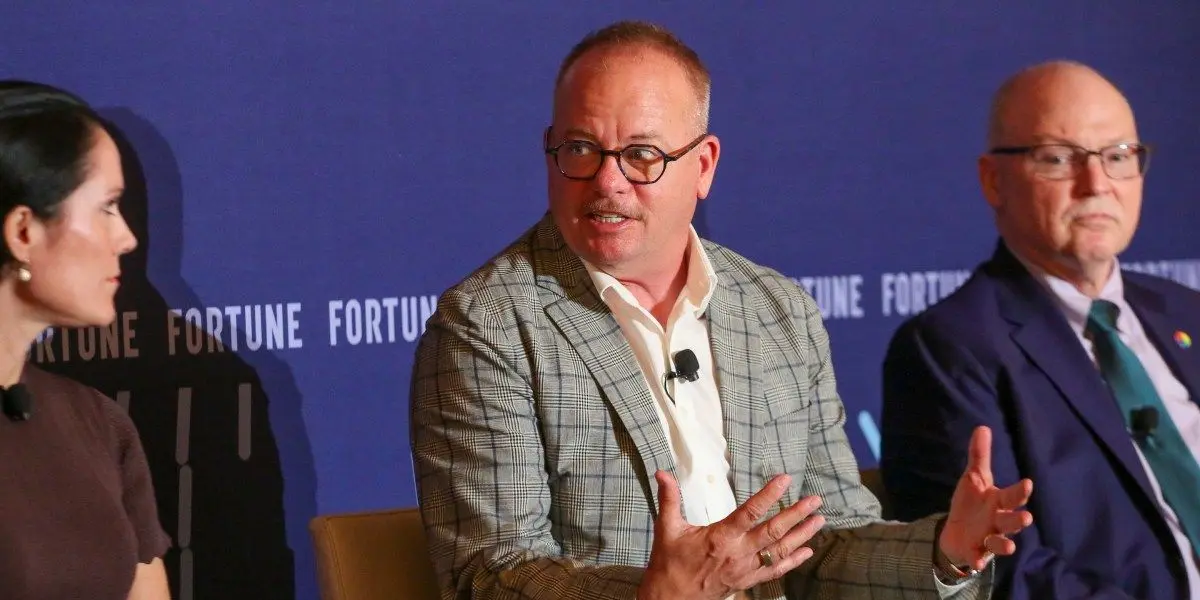
While business leaders remain divided over AI's impact on the job market, Accenture is taking a decisive stance. The consulting giant is ramping up its hiring of entry-level workers this year, directly countering predictions of widespread job displacement driven by artificial intelligence. Beck Bailey, Accenture's global chief diversity officer, recently announced the commitment at Fortune's Workplace Innovation Summit, emphasizing that the company wants graduates who entered college alongside AI tools like ChatGPT
1
.
Source: Fortune
"We've made a commitment to hire more entry-level people this year than we did last year," Bailey stated, overseeing a workforce of approximately 786,000 employees. "Our reasoning is that if you think about the folks who are graduating college this year, they entered college with ChatGPT...We want them in our workforce now to help us"
1
. This strategy reflects Accenture CEO Julie Sweet's remarks from March, when she told the Rapid Response podcast that the company is hiring more entry-level jobs across all major markets2
.
Source: Entrepreneur
Why Gen Z Workers Matter in an AI-Driven Workplace
Accenture's push for Gen Z talent stems from a critical advantage: AI fluency. Sweet explained that recent graduates are better equipped for AI-driven work environments because they use artificial intelligence constantly. "The number one advantage for the college graduates we are bringing is that they are much more AI-fluent than someone who has even been here two or three years," she noted
2
. Rather than eliminating junior positions, Accenture is redesigning roles and revamping training programs to emphasize communication, strategic thinking, and AI capabilities.This approach contrasts sharply with other major employers. PwC has reduced entry-level hiring in the U.S. by one-third over the next three years, cutting campus recruiting goals from 1,500 to 1,300 positions in 2025 alone, with plans to hire 661 fewer audit associates by 2028—a 39% reduction
2
. Meanwhile, Salesforce CEO Marc Benioff admitted that AI enabled the company to eliminate 4,000 workers in customer service and support roles2
.AI Augmenting Human Work, Not Replacing It Entirely
Maggie Hulce, Indeed's chief revenue officer, shared the panel stage with Bailey and offered perspective on AI's impact on entry-level employment. She dismissed "doomsday" headlines, noting that while some employers hire fewer people due to efficiency gains, others are supercharging existing employee capabilities. "The jobs are changing: it's the human plus AI transformation that's happening," Hulce explained. "They're morphing, and the counts of people you need at different types of jobs are changing, but most of the jobs we see will be augmented or aided with AI, not totally done 100% with AI"
1
.Bailey acknowledged the uncertainty facing young professionals hearing predictions of mass unemployment. While roles will "shift and change," he believes new opportunities will emerge as others fade. "We're in a place of perhaps the messy middle of this transformation," Bailey said. "People still need skilling and relationship-building with the technology, and leadership needs to still figure out where it's going"
1
.Related Stories

Which Roles Face the Greatest Risk from AI Automation
A Stanford University study released in August identified professions most vulnerable to AI automation: operations managers, accountants, auditors, general managers, software developers, customer service representatives, receptionists, and information clerks. Employment in these AI-impacted positions has declined by 13% since 2022
2
. Erik Brynjolfsson, Stanford professor and first author of the study, told Axios that the decline in entry-level recruitment represents the "fastest, broadest change" he has witnessed in the workplace, rivaled only by the emergency transition to remote work during the pandemic2
.Jeff DeGraff, University of Michigan's dean of innovation, noted that companies are currently fine-tuning their workforce strategies. "In the short term, you're going to adjust the workforce that you've got because you fight with the army you have, not the army you want," DeGraff said. "But in the long run there's going to be massive changes, enormous changes...What we don't know is what's going to emerge"
1
. Sweet emphasized that entry-level jobs remain economically important: "It's how we create more experienced people"2
. For now, Accenture's bet on AI-native graduates signals confidence that human talent remains essential, even as artificial intelligence reshapes how work gets done.References
Summarized by

Navi
Related Stories
AI's Impact on Entry-Level Jobs: Challenges and Opportunities for Gen Z
19 Jun 2025•Technology
AI's Impact on Entry-Level Jobs: A Growing Challenge for Recent Graduates
08 Aug 2025•Business and Economy

IBM will triple entry-level hiring in 2026 for jobs 'we're being told AI can do'
13 Feb 2026•Business and Economy

Recent Highlights



Recent Highlights
Today's Top Stories







Don’t drown in AI news. We cut through the noise - filtering, ranking and summarizing the most important AI news, breakthroughs and research daily. Follow topics that matter to you and stay ahead.


