7 Sources
7 Sources
[1]
Autonomous AI at Scale: Adobe Agents Unlock Breakthrough Creative Intelligence With NVIDIA and WPP
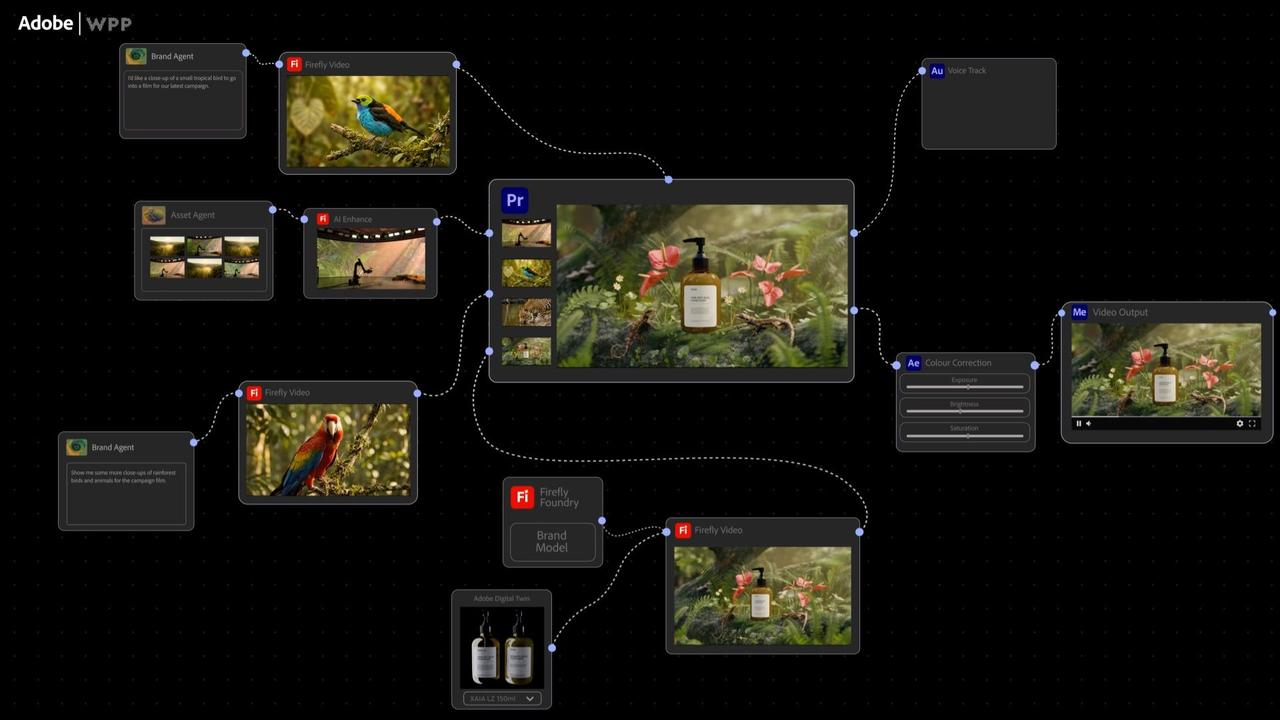
AI agents are transforming how work gets done across all industries, accelerating everything from content creation to decision-making. NVIDIA's expanded strategic collaborations with Adobe and WPP are bringing agentic AI to the center of enterprise marketing operations across creative production and customer experience orchestration. As demand for personalized customer experiences surges, brands require intelligent systems that can plan, create, produce and activate content continuously -- without compromising control, governance or brand integrity. Consider a global retailer delivering the right offer, image, copy and price, across millions of product, audience and channel combinations -- updated in minutes instead of months. For marketing and creative teams, that means moving from one-size-fits-all campaigns to tailored experiences that are always on, always relevant and on brand. All of it is powered by intelligent systems that continuously generate and deliver content without sacrificing control, governance or brand integrity. The expanded collaborations bring together three complementary strengths: Adobe's creative and customer experience platforms and the new Adobe CX Enterprise Coworker, WPP's global media and marketing expertise, and NVIDIA's accelerated computing and software stack, including NVIDIA Nemotron open models, NVIDIA Agent Toolkit and the NVIDIA OpenShell secure runtime for building and running secure agentic AI systems. As these agents begin orchestrating multistep workflows, tapping sensitive data and triggering actions across marketing stacks, enterprises need a way to enforce clear rules of engagement so every operation remains compliant, on brand and within defined risk boundaries. Powered by the NVIDIA OpenShell runtime, every agent operates within a secure, isolated environment, delivering enterprise-grade control, consistency and auditability across the entire marketing lifecycle, with verifiable policy management, answering the question, "What can the agent do?" and not just, "What policy is in place?" In governed environments, enterprises can also keep key workflows and intelligence services inside their trust boundary, including securely invoking Adobe CX Intelligence as part of customer experience agents. A live demo of CX Enterprise Coworker -- powered by NVIDIA Agent Toolkit, including the OpenShell runtime and Nemotron models -- will be featured during Adobe Summit's day-two keynote taking place Tuesday, April 21, at 9 a.m. PT. The collaboration enables: Governed environments such as the ones enabled by this collaboration act as a set of "guardrails" that keep AI operations observable and auditable, preventing the system from acting outside of a company's specific data boundaries or brand rules. By combining Adobe's creative platforms, WPP's media and marketing expertise and NVIDIA's secure infrastructure with CX Enterprise Coworker, brands no longer have to choose between speed and safety. Autonomous agents can now generate, adapt and activate content at scale while operating within governed, policy-driven environments. The result is a new foundation for agentic marketing -- where creative intelligence, performance and trust are built in from the start and delivered at global scale.
[2]
Adobe unveils AI agent to automate enterprise marketing
Adobe $ADBE announced a new AI agent called CX Enterprise Coworker at Adobe Summit in Las Vegas on April 20, designed to help enterprise marketing teams automate and orchestrate customer experience workflows across the company's software ecosystem. CX Enterprise Coworker is designed for continuous engagement instead of traditional campaign-based models. It uses business goals to track signals, suggest actions, and manage cross-channel experiences as they happen, while people stay in control. Adobe expects the tool to be generally available in the coming months. CX Enterprise Coworker gathers intelligence from Adobe's enterprise applications, such as Real-Time CDP, Customer Journey Analytics, Journey Optimizer, Marketo Engage, and Target $TGT. It also connects with CRM platforms and external market signals. Adobe says interoperability is key, with the tool following open standards like Model Context Protocol and Agent2Agent, and working with AI platforms from Amazon $AMZN Web Services, Anthropic, Google $GOOGL Cloud, Microsoft $MSFT, and OpenAI. A new partnership with NVIDIA adds the NVIDIA OpenShell secure runtime and NVIDIA Nemotron open models to the product. Adobe says this combination is especially useful for regulated industries that need strong AI governance. The agent is part of a broader product suite called CX Enterprise, which Adobe describes as an end-to-end agentic AI system for managing the customer lifecycle. That suite also includes an agent skills catalog, developer tools, and new agents natively integrated into Adobe applications. Adobe said it is extending its Marketing Agent into third-party surfaces including Amazon Quick, Anthropic Claude Enterprise, ChatGPT Enterprise, Gemini Enterprise, IBM $IBM watsonx Orchestrate, and Microsoft 365 Copilot. Along with the main announcement, Adobe introduced four new features: Adobe Engagement Intelligence, a decision engine for customer lifetime value; Adobe Journey Optimizer Loyalty, which helps build gamified loyalty programs; Adobe CX Analytics, which brings unified intelligence to interfaces powered by large language models; and an updated Real-Time CDP profile feature that combines unstructured and structured data. "By synthesizing intelligence from across Adobe applications, enterprise systems, and leading AI platforms, we are closing the gap between insight and action, enabling brands to deliver one-to-one personalized experience at scale," Anjul Bhambhri, SVP of engineering for Customer Experience Orchestration at Adobe, said in a statement. Adobe said its Adobe Experience Platform now drives more than one trillion experiences per year across global businesses, and that more than 20,000 global brands use its platform. The product launch arrives at a difficult moment for Adobe's stock, which has shed roughly 30% of its value in 2026 amid broader investor concern over competition from AI-native startups including Anthropic and OpenAI, according to Reuters. Shares climbed approximately 2.2% on the day of the announcement.
[3]
Five takeaways from CEO Shantanu Narayen's final keynote at Adobe Summit - SiliconANGLE
Five takeaways from CEO Shantanu Narayen's final keynote at Adobe Summit The 2026 edition of Adobe Summit this week marks a historic turning point for the software giant. It not only showcased the next frontier of "agentic artificial intelligence" but also served as the swan song for Shantanu Narayen, who delivered his final keynote as chief executive. Narayen, who has steered Adobe through the transition to the cloud and the birth of the digital experience category, used his final stage to outline a future in which AI doesn't just assist humans -- it performs work on their behalf. Though this idea has been heard before, what was unique was the sheer scale of the data foundation Narayen presented. By connecting agentic AI to the Adobe Experience Platform -- which already processes 35 trillion segment evaluations a day -- Adobe isn't just giving agents a "brain" but a complete memory of every customer interaction. This allows the AI to perform work that is contextually aware of a customer's entire history, not just the immediate task at hand. Here are the five key takeaways from Narayen's presentation: 1. The dawn of the "agentic enterprise." Unsurprisingly, the keynote's central theme was the shift from generative AI to agentic AI. While generative AI focuses on creating content from prompts, agentic AI is designed to execute multistep business goals. Narayen introduced Adobe CX Enterprise, an end-to-end system that uses specialized "co-workers" to identify prospects, orchestrate journeys and optimize brand visibility. As Narayen noted during the presentation: "Tools don't create; people do. But winning isn't just about producing the most content. It's about producing the right content, on brand, at scale, and delivered in a way that feels personal." This has always been Adobe's calling card, and AI lets its customers do what they have always done, but now much faster. 2. Digital twins and the marriage of physical and digital AI A highlight of the keynote was the appearance of Nvidia CEO Jensen Huang, a longtime friend and collaborator of Narayen. The two visionaries discussed the "Omniverse" and the necessity of high-fidelity digital representations of physical products. Huang emphasized that for AI to truly transform industries such as manufacturing and logistics, it must understand the physical world through "precision digital twins." Huang explained the evolution of the computing model: "In the future, you're going to come up with a seed of an original idea, and every time your customers enjoy it, your content is going to be processed by generative AI and presented, described and illustrated in a way that is contextually sensible." 3. Creativity is the new productivity Narayen and David Wadhwani, president of Adobe's Creative Business, argued that in an era flooded with "AI slop" and a "sea of sameness," creative differentiation is the only way for brands to survive. To address the "content crunch," where demand is expected to grow fivefold over the next two years, Adobe unveiled the Adobe Creative Agent. This agent serves as a human-led, agent-accelerated partner that can convert a strategic brief into a creative one, source assets, and even perform complex edits in Photoshop (such as the new "Rotate Object" feature) in seconds. By automating the mundane, Adobe aims to free humans to focus on the "human insight" that machines cannot replicate. 4. Brand intelligence as the new governance layer As AI-generated content proliferates, the risk of "hallucinations" or off-brand messaging is high. To address this, Adobe introduced Adobe Brand Intelligence. This "living, breathing system" learns from a company's past approvals, rejections, and brand guidelines to ensure every asset created, whether by a human or an agent, is compliant. For chief information officers and security leaders, accountability and governance raise questions such as: How are prompts logged? How are training and inference data governed? How do agents respect consent and privacy policies when acting across channels? The keynote implicitly challenged customers to "hold Adobe accountable" on these topics, which, in turn, means enterprises need their own internal AI governance playbooks to fully leverage the new platform's capabilities. 5. AI as a job multiplier, not a replacer This was a critical point to raise because it addresses the elephant in the room -- job displacement. Huang offered an excellent counter-narrative. He cited radiologists: When AI began reading scans with superhuman accuracy, demand for doctors actually increased because they could see more patients and focus on higher-level clinical outcomes. Huang argued that the same is happening to creators and engineers: "I think that the fact that we're now so productive, we can experiment and iterate so fast, we're going to be busier than ever. In the final analysis, what you pay for is work done." Translating Huang's "more doctors" point to the enterprise stack, Adobe's agentic framework becomes the clinical workflow in which many "AI opinions" (models, agents, segmentations, optimizations) are coordinated and triaged. The organizations that win won't be those that replace marketers, data scientists, or designers, but those that give these experts a richer panel of AI "second opinions" embedded directly in creative, analytics and journey-design tools. Every technology transition we have had has an initial wave of job elimination, followed by significantly more jobs created on the back end, and AI will do the same. The key for employees is to understand where the new bottlenecks are and to build the skills to address them. Narayen's keynote framed us as still in "the early innings" of a gen AI- and agent-driven era, and said leaders will be judged on whether they replatform their businesses around data-driven experiences, not just pilot features. His broader philosophy came through in a line he has used publicly: "If you can connect all the dots between what you see today and where you want to go, then it's probably not ambitious enough or aspirational enough." Amid the Summit announcements, the message was that CIOs and chief marketing officers cannot wait for a perfect playbook; they need to set bolder targets for real-time personalization, experimentation and AI-assisted workflows, even as the implementation path continues to evolve. For tech leaders, Narayen's challenge translates into rethinking funding models, governance and talent so that AI-driven experience transformation is treated as a multiyear platform shift rather than a series of tool budgets. Shantanu Narayen's 18-year tenure as CEO should be remembered as one of the most successful corporate pivots in history. He famously led Adobe's transition from perpetual "boxed" software to a software-as-a-service subscription model, which initially sent stock prices lower but ultimately led to nearly a 20-fold increase in market capitalization. By expanding Adobe's reach from the "Creative Cloud" into the "Experience Cloud" through landmark acquisitions such as Omniture and Marketo, Narayen transformed Adobe from a toolmaker for designers into a mission-critical platform for the world's largest enterprises. He leaves the company not only as a leader in digital media but also as the primary architect of the "Experience Economy."
[4]
Adobe Summit 2026 - AI has gone from know-it-all to actually getting work done, says Nvidia CEO
Adobe is holding its annual user event in Las Vegas this week, where it has revealed a big shift to agentic AI with the launch of CX Enterprise and the addition of Artificial Intelligence (AI) assistants to many of its creativity tools. To support its agentic AI push, CEO Shantanu Narayen brought out his long-time friend and collaborator, Nvidia CEO Jensen Huang, to join him on the keynote stage. As Adobe pushes its AI-first product line, Huang outlined how the core interface for software, whether that's imaging or video tools or SaaS systems, is now all about the AI agents. He said: We used to use tools by point and click and loading files and dragging down menus. I think my entire vocabulary of Photoshop is probably seven percent of it's capabilities. Now I have an agentic system that I can put in front of it, and an agentic system that Adobe can create for me, that allows it to understand my intentions and fully realize the capabilities of Photoshop, fully utilize Premiere. The user interface of the future, all the front end of SaaS, is now agentic, it's intelligent, allows us to interact directly to the tool if we like, through an agent if we like, in collaboration if we like. Huang urged delegates to engage agentic AI as soon as they can. He noted: I know that it's continuing to evolve, but I'm almost certain, dead certain, that your organizations are going to find it surprisingly amazing, relative to what's happened last year. In the last several months, there's been a very significant transition, evolving the technology from generative AI, which is able to understand what we say and produce information back to us, to agentic AI that can now perform work. Huang said: It's now collaborating with me and collaborating with all of our engineers and supporting us in all these different ways. For the very first time, AI is producing work. That's another way of saying, AI is finally valuable. People love AIs that know it all, but in the final analysis, what you pay for is work done. Not the fact that there's an AI that knows it all. And so we're now getting real work done. While the thought of AI agents across every piece of software might send shivers down the spine of certain workers concerned about the technology putting them out of a job, that's not how Huang views the situation. He cited a study carried out into the impact of deep learning and computer vision. Shortly after the technology was being applied in the real world, researchers identified radiology as the first profession to be wiped out by AI. Nobody would be able to be a radiologist, it warned, because every single CT and radiology scan would be studied by AI. He added: Well, 10 years later, it is completely true. 100% of radiology is now assisted by AI. Computer vision is completely superhuman. And the interesting thing is, the number of radiologists, the demand went up. This is because the purpose versus the task of a job has to be separated. The task of a radiologist includes studying scans, but the purpose of the job is to work with clinicians, doctors and patients to help diagnose this disease. Huang noted: The fact that these radiologists can now study scans so fast, they order more scans from more modalities. As a result, they're able to onboard patients a lot more quickly. The number of patients in a hospital can go up. The hospitals make more money taking care of more patients. Radiologists, busier than ever, demand more money. He sees the same thing happening to software engineers. At Nvidia, all its software engineers are now supported by agents, but they're busier than ever because the experimentation is happening a lot more quickly, and every single idea is expressed into code instantaneously. Huang said: More software engineers are working with each other, coming up with new ideas, new problems that we never even think of solving before because we just didn't have the time to do before. The fact that we're now so productive, we can experiment and iterate so fast, we're going to be busier than ever. Huang also fleshed out his vision around how the next innovation for AI will be on the physical side. He explained: The vast majority of the world is physical, and we want to be able to apply computing really for the first time to some of the largest industries in the world, whether it's life sciences or logistics and manufacturing or transportation. But in order to do this, if the computer can't understand the physical world, it's impossible to enhance or modify products. He explained: We're finally at a time where, if you simply realize that if you can go from language to images, images to language, why can't we go from language to chunks of actions, which is articulation; why can't we go from camera input to action. Vision, language, action models, just like LLMs, these are VLAs. We now have the ability to go directly from one sensory input to direct actioning on the computing system or the physical system. But in order to do that, you have to understand the physical world. Nvidia's work around physical AI is dubbed Omniverse, which sees autonomous systems like cameras and self-driving cars become much smarter. Huang explained the need for a high fidelity, truthful representation of many of the things we do in life to support these plans: The reason for that is because many of the people in this room are producing products and they're marketing those products, but those products are very specific. That product needs to be precise, the brand identity has to be precise, the design is precise. It's not an approximate representation of the product. And so many of the things that we do need to have a perfect digital plan. That starting point cannot be negotiated. From there, generative AI can be used to express the product and put it in all kinds of different environments - if it's in a forest, an approximate forest is fine; if it's on a mountain, an approximate mountain is fine. He added: But the product has to be precise. And so we need a digital representation of that grounded in its most precise representation, which is through graphics. And so the work that [Nvidia and Adobe] do together, creating a structured, precise, digital representation of the artifact, it could be a car, it could be a compute model, it could be a person, whatever it is. But that starting point is really vital. From there, we can then integrate it with generative AI and express our creativity to that. It's always handy having friends in high places, and the decades-long bond between the two CEOs - both immigrants to the US, as Narayen noted - is a boon for Adobe as it makes its agentic AI bid, supported by Nvidia tech. We'll see that in evidence later in the week in Las Vegas, during a demo of CX Enterprise Coworker, powered by NVIDIA Agent Toolkit. Adobe will continue to unveil and demo its agentic AI products through the week, and I'll be covering some of the capabilities, and customer reaction, in more depth. Sneak preview - I was sat next to and in front of a group of designers at the Monday keynote. When the new Firefly AI assistant was being demoed, they were wowed by it.
[5]
Adobe deploys AI agents across its customer experience tools - SiliconANGLE
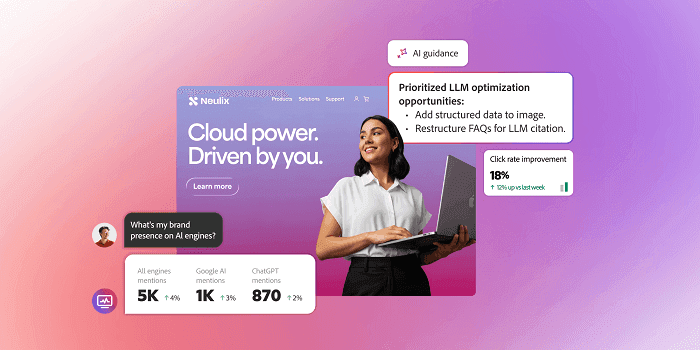
Adobe deploys AI agents across its customer experience tools Adobe Inc. today unveiled a new enterprise platform designed to coordinate artificial intelligence agents across marketing, content and customer engagement workflows, as the company seeks to position itself at the center of what it describes as "customer experience orchestration" in the AI era. The platform, called CX Enterprise, was introduced at the Adobe Summit conference and is intended to bring together AI agents, reusable "agent skills" and integration endpoints under a single governance and intelligence layer. Adobe said the system is designed to help organizations manage the full customer lifecycle, from acquisition through retention, while maintaining control over data, brand standards and compliance. Adobe is positioning CX Enterprise as a way to move beyond isolated AI use cases toward coordinated workflows that span content creation, campaign management and customer engagement. At the core of the platform are a Brand Intelligence System, which captures and applies brand-specific context to content and interactions, and an Engagement Intelligence System, which optimizes decisions based on customer lifetime value. Together, they are intended to ensure that AI-generated outputs remain consistent with brand guidelines and to improve personalization at scale. Adobe said CX Enterprise builds on its Experience Platform, which aggregates customer data and currently supports more than one trillion customer experiences annually. That data layer serves as the contextual foundation for AI agents operating within CX Enterprise. The company also introduced a component called CX Enterprise Coworker, which acts as a coordinating layer for multiple agents. The system can translate business objectives into sequences of actions, such as assembling audience segments, generating creative assets and monitoring campaign performance. Adobe emphasized that human oversight, governance and auditability are key components. Adobe also announced an expansion of its partner ecosystem, integrating CX Enterprise with platforms from Amazon Web Services Inc., Anthropic PBC, Google LLC's Cloud, IBM Corp., Microsoft Corp., Nvidia Corp. and OpenAI LLC. The company said the goal is to enable customers to deploy agent-driven workflows across a range of enterprise tools rather than within a single closed system. "Marketers shouldn't have to choose between their organization's AI tools and the marketing capabilities required to drive impactful outcomes," said Amit Ahuja, senior vice president of product for customer experience orchestration at Adobe, in a statement. Adobe is also extending agent capabilities into widely used enterprise environments, including Microsoft 365 Copilot and ChatGPT Enterprise, where it said its marketing agent can generate insights and recommendations based on customer data. The company also introduced updates to its GenStudio content platform, adding AI agents that automate tasks such as campaign planning, content production and workflow management. A new Brand Intelligence System within GenStudio learns from feedback and approval cycles, enabling AI systems to adapt to evolving requirements over time. Adobe also outlined new "brand visibility" tools aimed at helping companies optimize how they appear in AI-driven search and conversational interfaces. The company said internal data showed traffic from AI systems to U.S. retail sites increased 269% year over year as of March, underscoring the growing importance of visibility within AI-generated results. Adobe said more than 20,000 brands currently use its customer experience tools, and it expects demand for integrated AI workflows to grow as organizations move from pilot projects to production deployments.
[6]
Adobe Summit 2026 - Adobe gives CX an agentic makeover with the launch of CX Enterprise
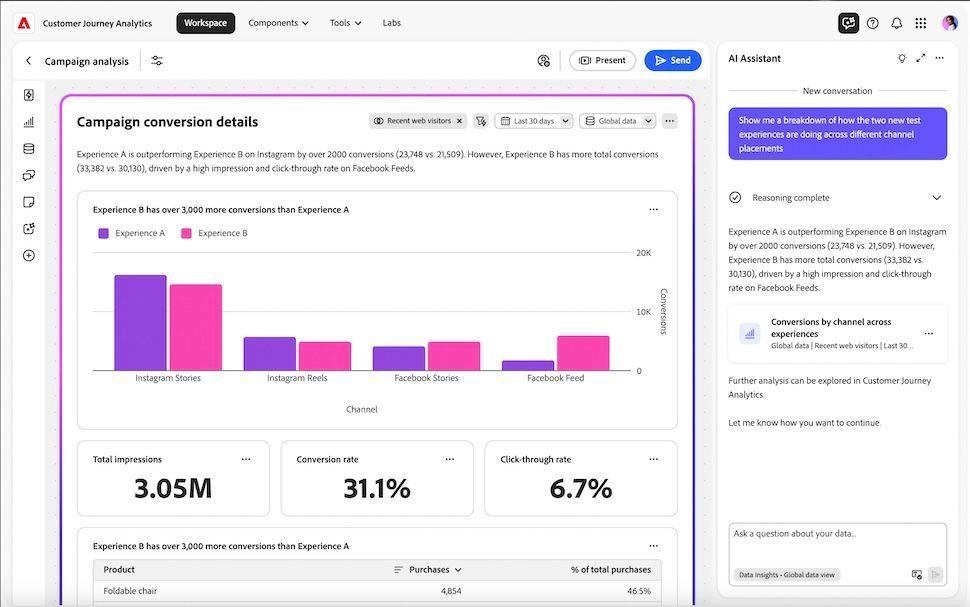
Adobe is offering its customers a new package of end-to-end agentic automations as it opens its annual conference today. The flagship announcement is CX Enterprise, a new agentic platform that builds on the longstanding Adobe Experience Platform and incorporates the agentic orchestration capabilities launched at last year's Summit, as well as adding built-in integration to third-party platforms. All of this connects into other Adobe components that are also getting agentic makeovers, including the Gen Studio content workflow platform with embedded brand governance, the customer journey optimization for B2B engagement, and a separate analytics layer. In common with other vendors, Adobe's agentic offering has evolved from a set of task- and role-based agents to a multi-purpose agentic assistant, in this case called the CX Enterprise co-worker. Sunil Menon, VP Adobe CX Enterprise Portfolio, explains: Last year, we talked about Agent Orchestrator and a collection of purpose-built agents that really help you automate activities and tasks. But again, they were in the realm of invoking the agent, performing the activity of the task, and then coming back and then helping you orchestrate across multiple agents. Where we are now as we think about the evolution, both from a technology standpoint and what we want to bring to market, it's really about this notion of an AI co-worker. Think of this as a super agent that is able to orchestrate multiple agents towards a goal, decompose that into this multi-step plan of execution, and to have the right permissions and guardrails and the scope of expertise that is required. And the other thing being, it is persistent and always on, so if you think about the need for this to take action based on signal or to schedule this. The agentic co-worker draws on Adobe's own domain expertise and its contextual understanding of the customer. Amit Ahuja, SVP, Products, Adobe Customer Experience Orchestration, says its capabilities will expand over time: We've been building capabilities around what is a more long-running agent with shared context of the enterprise, and this is one that we're super excited about. The first area that we're really going to showcase at Summit is around some more on the customer engagement side, ie, the journey building, the listening for signal. And how does this agent effectively help humans do the work in that realm of customer engagement? There's more detail in Adobe's press releases this morning on the new coworker agent as well as a new AI assistant for Firefly, Adobe's creative AI studio. We'll have more coverage of Adobe Summit from Madeline Bennett, who is at the event for diginomica. I have a sense that Adobe finds itself trapped between three conflicting forces and with no easy way to resolve the conflict. The first of those forces is the relentless progress of agentic AI, bringing end-to-end automation to its domain in ways that require a fundamental rearchitecture of its product set to emphasize cross-functional processes. This is challenging but manageable -- the technology is always the easy part. The two other forces are human, and far more intractable. First of all, there are the demands of its customers, who are set up to operate in particular ways. The new capabilities that AI brings will change those operating models, but there are two separate paths that change can take. The most obvious path is to use automation to improve existing processes, and this is where Adobe seems to be focusing, because that is the course that makes most sense and is most digestible for its customers. But the danger with this is that you risk automating processes that AI will ultimately make redundant. I believe this is a very real risk in the marketing domain, where for many years, the goal has been to separate the audience into ever-smaller segments in the name of 'personalization at scale'. This was always a workaround, a proxy for actually marketing to each person as an individual, which was seen as logistically and technologically impossible to achieve. But with AI, that goal of individualization at scale now becomes achievable, and the old model of marketing to ever-smaller segments becomes redundant. But organizations locked into that old model are so focused on continuing to perfect it that they aren't even thinking about how it might be replaced with something new. This is the classic bind for incumbent vendors, and it seems to me that Adobe is locked into continuing to servicing that redundant goal. Then there are the users, who are not even up-to-speed with ways of working that would allow any form of automation to work efficiently, whichever model it follows. In recent years, Adobe has been championing the notion of the content supply chain, in which assets are shared and teams progress their work through digital processes, with brand guidelines automatically enforced. Making these processes digital are a pre-requisite for applying AI to them. But many design and marketing professionals are wary of sharing their work in such a transparent fashion, fearing a loss of control and autonomy. Overcoming this resistance requires careful change management, and the additional disruption that AI will bring to work routines makes this challenge even harder. These twin forces -- or perhaps rather than a force, it's more accurate to describe them as inertia -- provide stubbon resistance to the way forward enabled by the technology. It's the curse of incumbency that Adobe has to deal with, and to a large extent placate, these factors, while new rivals aren't held back in the same way. All of this doesn't mean that Adobe can't succeed in the AI era -- there are huge revenues to be earned from continuing to serve its existing customers and users, even while they pursue less optimal paths than would be in their better interests. Meanwhile, Adobe is making heroic efforts to adapt its platform to the demand so of AI. But satisfying the more conservative desires of its customers and users while at the same time building an AI-native architecture that's fit for the future would strain the capacity of any organization, and Adobe is no exception. The next year or two will be decisive in showing whether it's up to the task.
[7]
Adobe Introduces Agentic Platform CX Enterprise at Adobe Summit 2026
Adobe also introduced CX Enterprise Coworker for task coordination Adobe introduced a new enterprise-focused platform at its Adobe Summit 2026 conference, focused on accelerating customer experience workflows. Dubbed Adobe CX Enterprise, it is an end-to-end agentic artificial intelligence (AI) system that allows businesses to manage the entire lifecycle of their customers, from acquisition and engagement to conversation and building stickiness. It comes with multiple agent support, skills, and more. Alongside introducing the new platform, the software giant also revealed several partnerships it has forged to make CX Enterprise's adoption seamless. Adobe Introduces Agentic AI Platform CX Enterprise In a press release, the company announced and detailed its new CX Enterprise platform. Essentially, it is a customer experience orchestration system that accelerates and automates manual tasks with the help of AI agents. Adobe says the platform combines AI agents, reusable agent skills and integration endpoints into a unified platform designed to manage customer journeys across acquisition, engagement and retention. The system includes a governance layer aimed at ensuring workflows are trackable and controlled. "Adobe's mission to empower everyone to create has never been more relevant, and with Adobe CX Enterprise, unveiled at Adobe Summit 2026, that mission now has operational force. The ability to scale creativity and personalisation together, with intelligence and governance built in, is no longer aspirational- it is here," said Prativa Mohapatra, Vice President and Managing Director at Adobe India. The platform builds on Adobe Experience Platform (AEP), which aggregates customer data from multiple sources to enable real-time insights and cross-channel engagement. Adobe said AEP will act as the contextual layer within CX Enterprise, supporting how AI agents interpret data and execute tasks. Adobe also introduced two new components within the platform. Brand Intelligence is designed to capture and interpret brand-specific signals over time, while Engagement Intelligence focuses on decision-making tied to customer lifetime value. These systems are intended to support personalised interactions at scale. As part of the rollout, Adobe announced a set of AI agents integrated across its applications, covering areas such as customer engagement, content workflows and marketing operations. These agents are powered by a central orchestration system that allows businesses to build and manage workflows across Adobe products and third-party tools. The company also introduced an agent skills catalogue, which allows organisations to create reusable workflows by packaging instructions into modular units. These can include tasks such as analysing performance metrics or automating campaign processes. For developers, Adobe said CX Enterprise will provide access to infrastructure such as Model Context Protocol (MCP) endpoints, agent skills and APIs, allowing integration with external platforms. The company confirmed interoperability with systems from Amazon Web Services (AWS), Anthropic, Google Cloud, IBM, Microsoft, Nvidia and OpenAI. Adobe also detailed a feature called CX Enterprise Coworker, designed to coordinate tasks across multiple AI agents. The system can take a defined business objective and translate it into a series of actions, such as building audience segments, generating content assets and tracking campaign performance. For instance, Adobe said a marketing team could set a goal to improve cross-sell performance, and the system would assemble the necessary data, tools and workflows to execute the campaign. The Coworker feature is expected to become generally available in the coming months.
Share
Share
Copy Link
Adobe introduced CX Enterprise at Adobe Summit, a platform that coordinates AI agents across marketing and customer engagement workflows. Powered by NVIDIA's OpenShell runtime and Nemotron models, the system enables brands to automate content creation while maintaining governance and brand integrity. CEO Shantanu Narayen used his final keynote to outline how agentic AI will transform enterprise marketing operations.

Source: diginomica
Adobe announced CX Enterprise at Adobe Summit in Las Vegas on April 20, marking a decisive shift toward agentic artificial intelligence for customer experience workflows
2
. The platform coordinates AI agents across marketing, content creation, and customer engagement, enabling organizations to manage the full customer lifecycle from acquisition through retention5
. At the core of this system is CX Enterprise Coworker, an AI agent designed to translate business objectives into sequences of actions such as assembling audience segments, generating creative assets, and monitoring campaign performance5
.
Source: NVIDIA
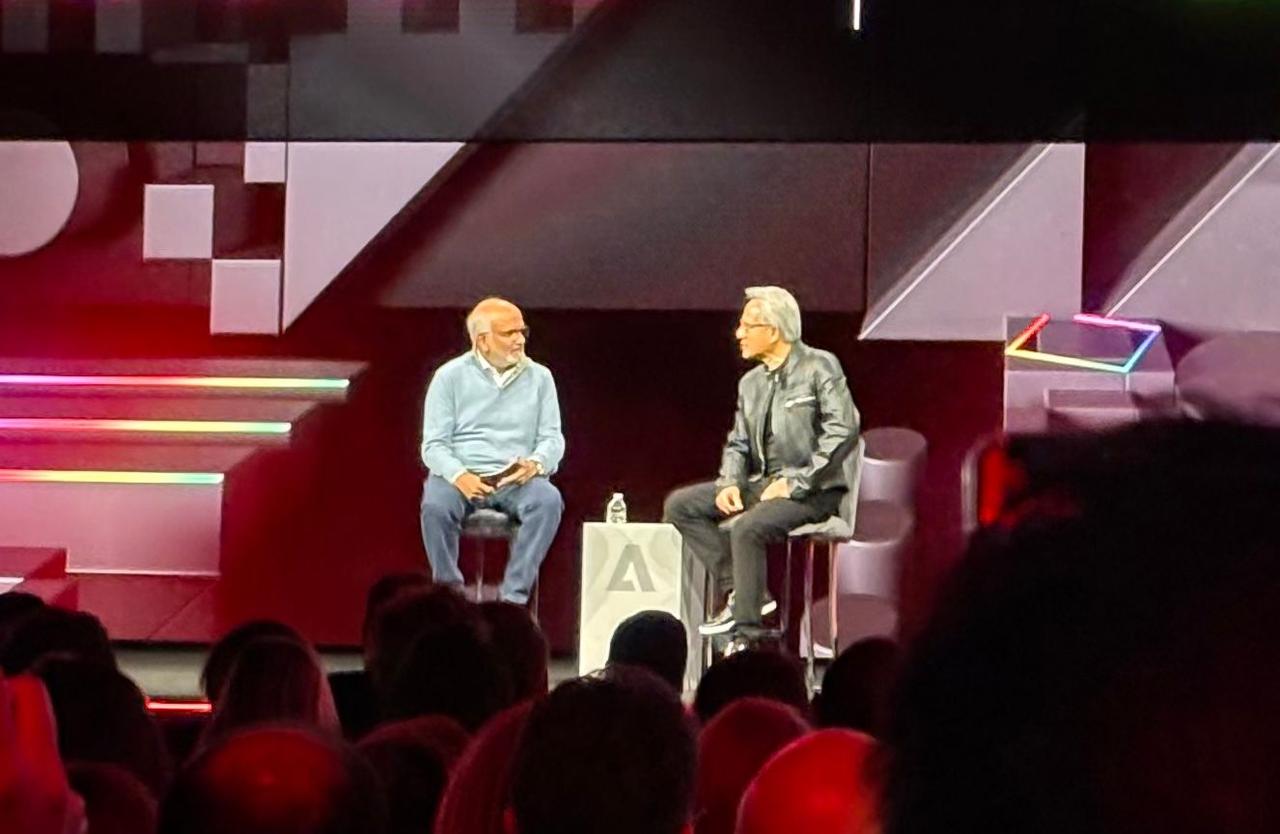
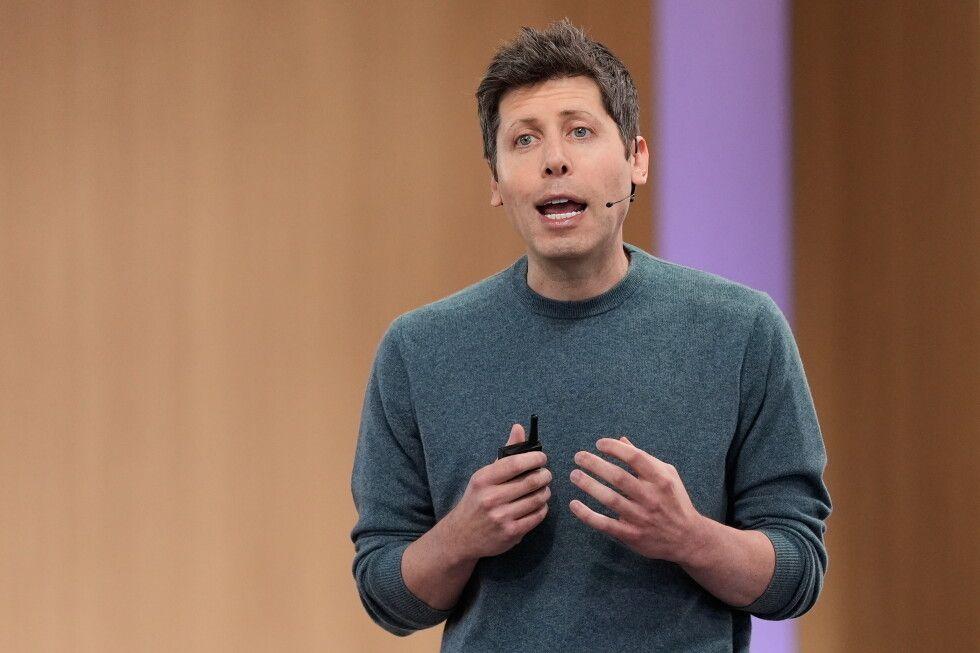
CEO Shantanu Narayen delivered his final keynote at the event, using the stage to outline a future where AI agents don't just assist humans but perform work on their behalf
3
. The announcement arrives as Adobe's stock has shed roughly 30% of its value in 2026 amid investor concern over competition from AI-native startups including Anthropic and OpenAI, though shares climbed approximately 2.2% on the day of the announcement2
.Adobe expanded its strategic collaboration with NVIDIA and WPP to bring agentic AI to enterprise marketing operations
1
. The partnership integrates NVIDIA's OpenShell secure runtime and NVIDIA Nemotron open models into CX Enterprise, providing enterprise-grade control and auditability across the entire marketing lifecycle1
. Powered by the OpenShell runtime, every agent operates within a secure, isolated environment with verifiable policy management, answering the question "What can the agent do?" rather than just "What policy is in place?"1
.
Source: diginomica
NVIDIA CEO Jensen Huang appeared alongside Narayen during the keynote, discussing how AI has evolved from generative AI to agentic AI that can now perform work
4
. "People love AIs that know it all, but in the final analysis, what you pay for is work done," Huang noted . This combination of Adobe's creative platforms, WPP's media and marketing expertise, and NVIDIA's secure infrastructure means brands no longer have to choose between speed and safety when deploying autonomous agents1
.Adobe introduced a Brand Intelligence System that learns from a company's past approvals, rejections, and brand guidelines to ensure every asset created remains compliant
3
. This "living, breathing system" addresses the risk of AI-generated hallucinations or off-brand messaging as content proliferates3
. The platform also features an Engagement Intelligence System that optimizes decisions based on customer lifetime value, enabling brands to deliver personalized content at scale5
.CX Enterprise builds on the Adobe Experience Platform, which already processes 35 trillion segment evaluations per day and drives more than one trillion experiences per year across global businesses
3
2
. By connecting agentic AI to this data foundation, Adobe provides agents with complete memory of every customer interaction, allowing them to perform work that is contextually aware of a customer's entire history3
.Related Stories
Adobe emphasized interoperability as a key component, with CX Enterprise following open standards like Model Context Protocol and Agent2Agent
2
. The platform integrates with AI platforms from Amazon Web Services, Anthropic, Google Cloud, Microsoft, and OpenAI2
. Adobe is extending its Marketing Agent into third-party surfaces including Amazon Quick, Anthropic Claude Enterprise, ChatGPT Enterprise, Gemini Enterprise, IBM watsonx Orchestrate, and Microsoft 365 Copilot2
.The company also introduced four new features: Adobe Engagement Intelligence, a decision engine for customer lifecycle management; Adobe Journey Optimizer Loyalty for gamified loyalty programs; Adobe CX Analytics for unified intelligence; and an updated Real-Time CDP profile feature combining unstructured and structured data
2
. More than 20,000 global brands currently use Adobe's customer experience tools2
.Adobe stressed that human oversight, governance, and auditability remain central to CX Enterprise
5
. Huang addressed concerns about job displacement by citing radiologists as an example of AI acting as a job multiplier rather than a replacer3
. When AI began reading scans with superhuman accuracy, demand for radiologists actually increased because they could see more patients and focus on higher-level clinical outcomes3
. "The fact that we're now so productive, we can experiment and iterate so fast, we're going to be busier than ever," Huang explained .Adobe also unveiled updates to GenStudio, adding AI agents that automate campaign planning, content production, and workflow management
5
. The company introduced new brand visibility tools as internal data showed traffic from AI systems to U.S. retail sites increased 269% year over year as of March5
. CX Enterprise Coworker is expected to be generally available in the coming months2
.Summarized by
Navi
[1]
[3]
[4]
12 Sept 2025•Technology

19 Mar 2025•Technology

10 Apr 2025•Technology

1
Policy and Regulation

2
Policy and Regulation

3
Technology