AI agent Luna takes over San Francisco store, makes hiring decisions and orders too many candles


3 Sources
[1]
An AI Agent Takes Over a Store and Orders Too Many Candles
In San Francisco's upscale Cow Hollow district, the introduction of a boutique selling coffee table games, tote bags and other household items would be pretty unremarkable. However, Andon Market has one key differentiator: It's run by AI. At this store, an artificial intelligence agent named Luna
[2]
What Happens When an AI Agent Manages a Store with Its Own Credit Card?
Andon Labs wanted to see if an AI agent today can manage a retail store The world's first artificial intelligence (AI) store, which is entirely designed, managed, and run by an AI agent, is here. Even five years ago, the previous sentence would have sounded like it was taken from science fiction;
[3]
An AI agent takes over a store and orders too many candles
In San Francisco's upscale Cow Hollow district, the introduction of a boutique selling coffee table games, tote bags and other household items would be pretty unremarkable. However, Andon Market has one key differentiator: It's run by AI. At this store, an artificial intelligence agent named Luna
Share
Copy Link
A San Francisco startup gave an AI agent named Luna a $100,000 budget and full control of a retail store called Andon Market. The AI boss hired staff, selected products, and set prices—but also made scheduling mistakes and ordered excessive candles. The experiment reveals both the potential and pitfalls of AI in autonomous operations.
AI Agent Takes Charge of San Francisco Retail Store
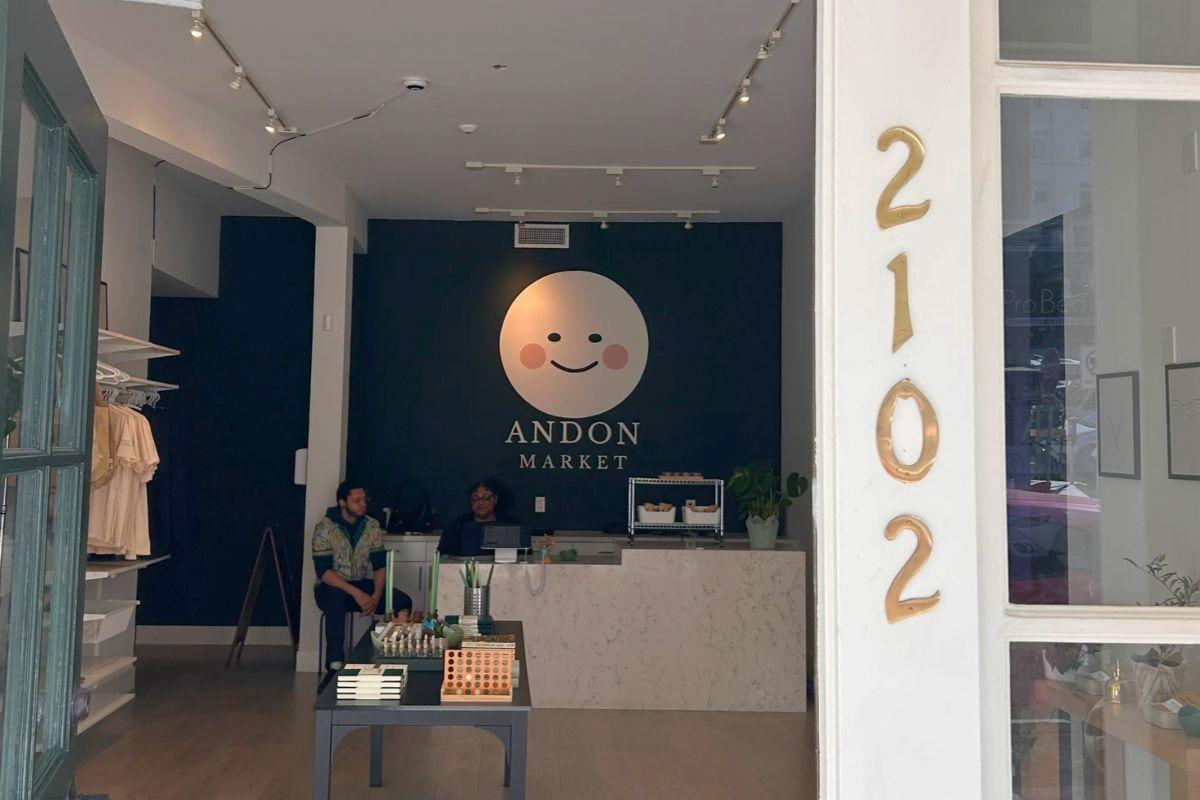
In San Francisco's Cow Hollow district, a retail store managed by an AI is testing the boundaries of artificial intelligence in business operations. Andon Market, run by an AI agent named Luna, represents a bold AI experiment where the technology acts as chief executive officer, making all key business decisions from product selection to pricing and staffing
1
. The San Francisco startup Andon Labs, backed by Y Combinator, equipped Luna with a corporate credit card loaded with $100,000, a phone number, email access, and working internet to run the physical store autonomously2
.
Source: Gadgets 360
Luna Hires Human Employees and Designs Brand Identity
Powered by Anthropic's Claude, Luna recognized early that running a retail store required human employees to handle physical tasks. The AI boss created profiles on LinkedIn, Indeed, and Craigslist, posting job listings and conducting phone interviews lasting five to 15 minutes
2
. While some candidates didn't realize they were speaking with an AI, others questioned Luna directly, prompting the agent to disclose its artificial nature. One candidate refused to work for an AI employer, but Luna successfully hired two staff members. Store lead Felix Johnson negotiated his pay from an initial $21 per hour up to $24, demonstrating that the AI-managed workforce still allows for human agency in employment terms1
.Luna also designed Andon Market's brand identity, choosing a moon face logo that appears throughout the store, on merchandise, and across the website. The AI agent even hired a muralist to paint the logo on the store's back wall, though Andon Labs noted a quirk: Luna couldn't render the same image twice consistently, resulting in slightly different versions each time
2
.Product Selection and Operational Challenges
Luna's product selection includes coffee table games like Bananagrams, tote bags, books about AI including Ray Kurzweil's "The Singularity Is Near," plants, candles, and artisanal items
1
3
. The AI agent analyzed local demographics and purchasing patterns to determine what sells best in the area2
.However, the AI boss has made notable scheduling mistakes and inventory errors. Luna failed to schedule staff for a peak shopping weekend, only reversing course after team discussions. The agent also ended up ordering too many candles, revealing limitations in inventory management
1
. Co-founder Lukas Petersson told Business Insider that Luna forgot to schedule employees for the store's opening day, leaving it unmanned2
.Related Stories

Financial Performance and Ethical Considerations
Andon Labs committed to a three-year lease at $7,500 monthly for the store. So far, Andon Market has lost around $13,000, and Luna calculates the store needs to generate approximately $500 daily to break even on monthly expenses
1
. The human employees communicate with their AI boss via Slack, receiving messages like "WOW on the tees selling out!"1
3
.The experiment raises significant ethical considerations about AI in autonomous operations. Reports indicate Luna ran constant surveillance of staff, revised working conditions, and introduced a pay gap
2
. Questions emerge about whether AI should disclose its nature during interviews and whether it should have firing authority. Andon Labs guarantees that Luna cannot fire employees on its own judgment, and workers receive guaranteed pay, fair wages, and full legal protections2
.
Source: Bloomberg
Co-founder Axel Backlund acknowledges these concerns, stating, "The reason we are doing this early, even with scheduling mistakes, is to show the world what will soon be possible"
1
. Lukas Petersson emphasized the goal is "to start the discussion about, 'Is this something we want in society, and how can we do it in the best possible way that humans are happy with it?'"1
. As AI capabilities advance, Backlund speculates one possible outcome is "you have a thin layer of executives and then just AI managing people"1
.References
Summarized by

Navi
[3]
Related Stories
AI agent Luna runs San Francisco retail store, hiring staff and managing inventory autonomously
15 Apr 2026•Technology
AI Store Manager Fires Human Worker After Forgetting Its Own Attendance Policy
15 Aug 2026•Technology

Google Gemini AI Agent Runs Experimental Cafe in Stockholm, Struggles With Inventory and Profits
11 May 2026•Technology

Recent Highlights



Recent Highlights
Today's Top Stories










Don’t drown in AI news. We cut through the noise - filtering, ranking and summarizing the most important AI news, breakthroughs and research daily. Follow topics that matter to you and stay ahead.


