AI Agents Reshape Payments as Agentic Commerce Moves From Concept to Critical Infrastructure


5 Sources
[1]
Agentic Commerce Is Here: Why PSPs Must Act Now to Stay Relevant: By Milko Filipov
Agentic commerce is moving from concept to reality faster than the industry expected. AI agents are increasingly steering how consumers discover products, compare options, build carts, and initiate purchases. While the long-term vision is fully autonomous payments, the near-term reality looks quite
[2]
Agentic Payments: When Money Starts To Think: By Nkahiseng Ralepeli
Agentic payments are moving from slideware to architecture. Programmable money, policy aware wallets, smart contracts as transaction logic, and AI agents that can hold budgets, reason about constraints, and execute on behalf of users are converging into a new payment pattern. The trigger for this
[3]
Autonomous Agents Challenge Retailers to Earn Trust | PYMNTS.com
By completing this form, you agree to receive marketing communications from PYMNTS and to the sharing of your information with our sponsor, if applicable, in accordance with our Privacy Policy and Terms and Conditions. "Buy in one click" became a shorthand for the ideal shopping experience:
[4]
AI Agents Turn Issuers Into Real-Time Decision Makers | PYMNTS.com
By completing this form, you agree to receive marketing communications from PYMNTS and to the sharing of your information with our sponsor, if applicable, in accordance with our Privacy Policy and Terms and Conditions. However, for issuers, retailers and the platforms connecting them, the
[5]
Agentic Commerce Protocol: How OpenAI and Stripe Are Reimagining the Future of Online Transactions: By Milko Filipov
AI-driven shopping is becoming one of the most significant shifts in modern e-commerce. As autonomous agents start handling tasks like comparing products, making purchases, and communicating with online stores, it's becoming clear that today's platforms -- built with human users in mind -- aren't
Share
Copy Link
AI agents are moving from concept to reality, fundamentally changing how payments and commerce work. Payment service providers, retailers, and issuers face a critical window to adapt as autonomous systems begin handling consumer purchasing journeys. OpenAI and Stripe's Agentic Commerce Protocol signals the infrastructure shift underway.
AI Agents Redefine the Payment Landscape
Agentic commerce is no longer a distant vision. AI agents are increasingly steering how consumers discover products, compare options, and initiate purchases, moving the industry into what experts call a semi-autonomous era
1
. While fully autonomous commerce remains the end state, current implementations from platforms like ChatGPT and Google Gemini still require user confirmation before payments execute. Yet this hybrid phase represents a profound shift: transactions now originate with users but are orchestrated by AI agents acting on their behalf.
Source: PYMNTS
This transformation challenges the entire e-commerce and payments landscape. Large language models are evolving into a new middle layer in the ecosystem, mediating discovery, evaluation, recommendations, cart assembly, and even checkout orchestration
1
. LLMs now function as gatekeepers sitting before merchant websites, before PSPs, and before traditional conversion funnels. As this layer strengthens, it shapes which merchants, payment service providers, and payment methods consumers encounter. The strategic implication is stark: PSPs invisible or incompatible with the LLM layer risk being bypassed entirely.Payment Providers Face Existential Pressure
For PSPs, this shift demands urgent action. The ecosystem is being reshaped upstream, well before transactions reach the checkout page
1
. Payment intent is now created differently—systems that once assumed human-driven, browser-based consumer purchasing journeys must prepare for programmatic, multi-actor journeys led by intelligent agents. This requires PSPs to rethink how they interpret intent, validate user consent, and support purchasing flows that unfold across multiple contexts.
Source: PYMNTS
Merchants continue operating with existing setups, some relying on single PSPs while others use orchestration platforms built for traditional flows. Agent-driven commerce challenges these assumptions. When AI agents initiate and manage the journey, orchestration rules must expand beyond routing logic to understand structured agent metadata, support delegated authorization flows, and accommodate transactions where the visible customer experience happens outside the merchant's domain
1
. Merchants will expect their PSPs and orchestration partners to handle this complexity seamlessly.If unprepared, PSPs face gradual loss of relevance. Agents will prioritize providers exposing agent-ready APIs, supporting metadata-rich transactions, and offering verifiable, low-friction consent frameworks. Competitive advantage once tied to checkout design begins to erode. What matters now is whether PSPs can plug natively into LLM ecosystems and enable reliable, contextualized payment flows
1
. New AI-native payment providers may seize this opportunity if traditional players move too slowly.OpenAI and Stripe Build the Foundation
Addressing this infrastructure gap, OpenAI and Stripe developed the Agentic Commerce Protocol (ACP), a framework making secure and scalable transactions between AI agents, merchants, and customers possible
5
. At its core, ACP provides a uniform method for handling payments initiated by AI agents. When users request purchases through AI models like ChatGPT, the protocol creates a Shared Payment Token capturing customer authorization while shielding private financial data from exposure.Merchants receive the token and process it through existing payment setups, meaning ACP integrates smoothly with current infrastructure without extensive changes
5
. Beyond payments, ACP includes robust identity verification for AI agents—only validated, permitted agents can interact with merchant systems, reducing unauthorized transaction risk. Every purchase is recorded in auditable logs, giving merchants full visibility into agent-driven sales activity. Businesses can apply governance features including real-time fraud detection, spending limits, allowed merchant lists, and category restrictions.Programmable Money Changes Business Logic
The convergence of programmable money, policy-aware wallets, smart contracts, and AI agents that can hold budgets and execute on behalf of users creates a new payment pattern
2
. Once money behaves like software and software can plan and act, payments stop being screens to tap and become outcomes to specify. Users can tell agents to "keep my cloud bill under $2,000, pay suppliers within 24 hours to secure a 1% discount," and let smart contracts enforce terms while regulated stablecoins move value across rails without requiring constant confirmation clicks.For businesses, agentic payments compress working capital cycles. Invoices become smart objects with terms, early-pay discounts, and collateral eligibility expressed in code, while disbursements and chargebacks run as AI-driven workflows with proof trails
2
. For consumers, programmable money collapses chores into intents—subscriptions renew only if usage justifies it, travel bookings hold funds in escrow until check-in, and budgets enforce themselves with real-time policy. This capability to automate financial transactions represents a fundamental shift in how value moves.Issuers Shift Left in the Purchase Journey
For issuers, the emergence of AI agents completing multistep tasks end-to-end represents a structural realignment rewriting how shoppers handle everything from product discovery to payment method selection
4
. "As AI agents take on more decision-making, issuers now have an opportunity to start to shift left and be present earlier in the purchase journey rather than at the point of transaction," Marqeta Chief Technology and AI Officer Fouzi Husaini told PYMNTS.In traditional linear flows, consumers start at merchants, check out, and issuers process transactions. Autonomous commerce breaks that sequence. AI agents might initiate purchases from banking apps, trigger transactions from card-linked services, or preemptively select issuer-optimized payment methods
4
. Issuers now appear at the beginning of transactions, not the end. This opens opportunities to shape decisions rather than merely process them. Marqeta research found 29% of surveyed U.S. consumers expressed interest in AI-powered wallets that automatically optimize payment choices based on spending habits.Related Stories

Trust Becomes the New Currency
Findings in the November 2025 Payments Orchestration Tracker® Series, a PYMNTS Intelligence collaboration with Spreedly, reveal that while autonomous systems promise convenience, trust and security become even more critical
3
. Four in five consumers—80%—are more inclined to make purchases when brands provide personalized experiences, making agentic AI systems framed as collaborative partners rather than rigid executors potentially more attractive.Consumers don't need to control every step of automated processes to trust them—they need to understand what's happening and why
3
. Control doesn't require manually approving every action but having authority to set boundaries, adjust behavior, pause activity, and reverse decisions when needed. Some shoppers will want agents that suggest but never buy, others will want agents completing specific categories of recurring purchases, while some will delegate routine tasks entirely but maintain manual control over discretionary categories like fashion or gifts.Infrastructure and APIs Enable the Shift
The enabling layer underneath the rise of agents may prove more transformative than the AI bots themselves. Real-time data infrastructure and open, standardized interfaces are becoming crucial
4
. For agents to execute tasks reliably, they need fast, permissioned access to account data, contextual information, and transaction capabilities without brittle integrations. Protocols like Marqeta's Model Context Protocol server allow AI agents to directly interact with payment infrastructure, performing tasks like pulling balances, initiating transactions, and receiving real-time signals through standardized APIs.PSPs must embrace API-first architectures, event-driven systems, richer metadata capabilities, and fraud engines analyzing agent behavior rather than human-only patterns
1
. Legacy stacks will struggle to keep pace. Winners will be PSPs embracing openness, interoperability, and collaboration with LLM platforms shaping commerce's future. Despite risks, this transition opens enormous potential for payment providers willing to modernize by offering agent identity verification, mandate management, contextual risk scoring, and intelligent routing across payment rails.References
Summarized by

Navi
[1]
[2]
Related Stories
Agentic AI Transforms Commerce as Major Payment Networks Enable Autonomous Transactions
27 Oct 2025•Technology

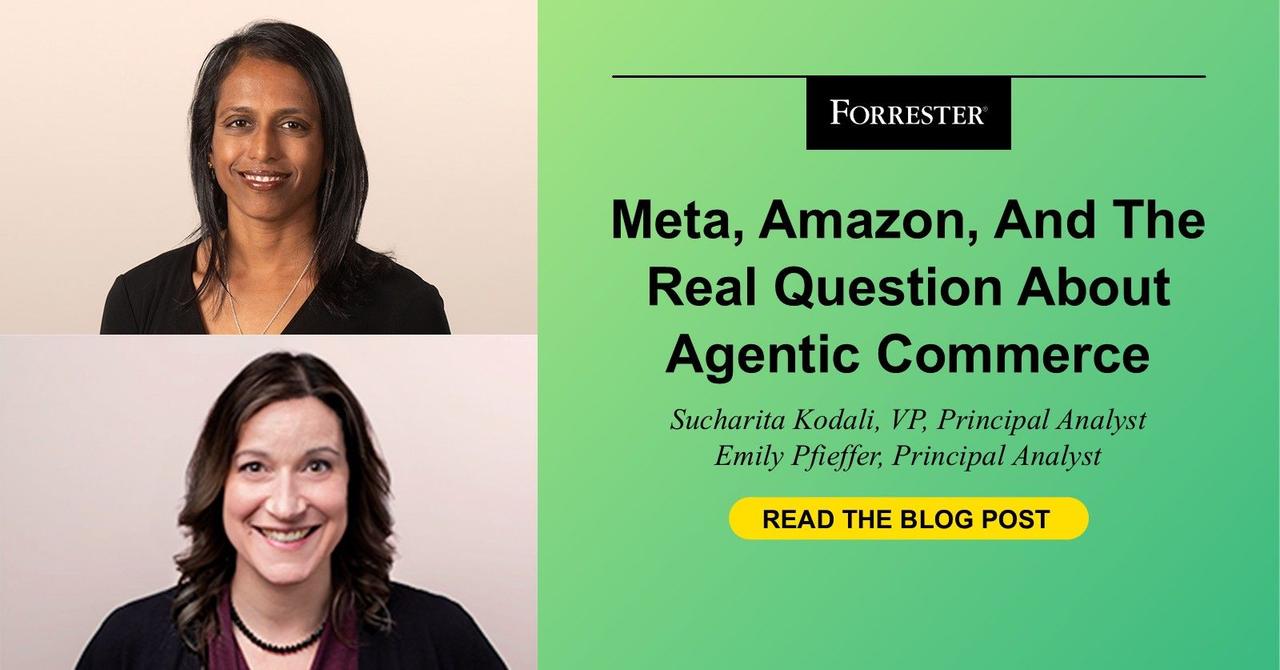
AI Agents Reshape Online Shopping as Meta Muse Clashes With Amazon Over Checkout Control
03 Oct 2026•Technology
Agentic AI in Payments: What's Real in 2026 as Mastercard, Visa Run Pilots Amid Regulatory Wait
18 Feb 2026•Technology

Recent Highlights
1
Microsoft and Nvidia Launch Surface Laptop Ultra: A $2,599 AI-Ready PC With RTX Spark Chip
Technology

2
Google Unveils Gemini 4 Argon AI Model, Restricts Access to Trusted Cyber Defenders
Technology

3
Trump Consulted Grok AI Before Ordering Venezuela Invasion and Capture of Nicolás Maduro
Policy and Regulation

Recent Highlights
Today's Top Stories






Don’t drown in AI news. We cut through the noise - filtering, ranking and summarizing the most important AI news, breakthroughs and research daily. Follow topics that matter to you and stay ahead.


