AI automation paradox: Workers face more complex responsibilities for lower pay, study warns


2 Sources
[1]
AI automation paradox: More work, not less
Workers face new mental health pressures as they shift from doing tasks to babysitting agentic AI A report on occupational health warns that AI adoption may paradoxically increase workplace burdens rather than reduce them. As AI automates routine tasks, workers will shoulder new responsibilities:
[2]
New report on AI adoption warns workers could face more complex responsibilities for lower pay
Long-term sustainability is key to negating many of our fears A new Occupational Medicine journal article has uncovered the potential impacts that AI could have on work, and it could mean that we'll face higher workloads without seeing a correlative pay rise. By automating routine and
Share
Copy Link
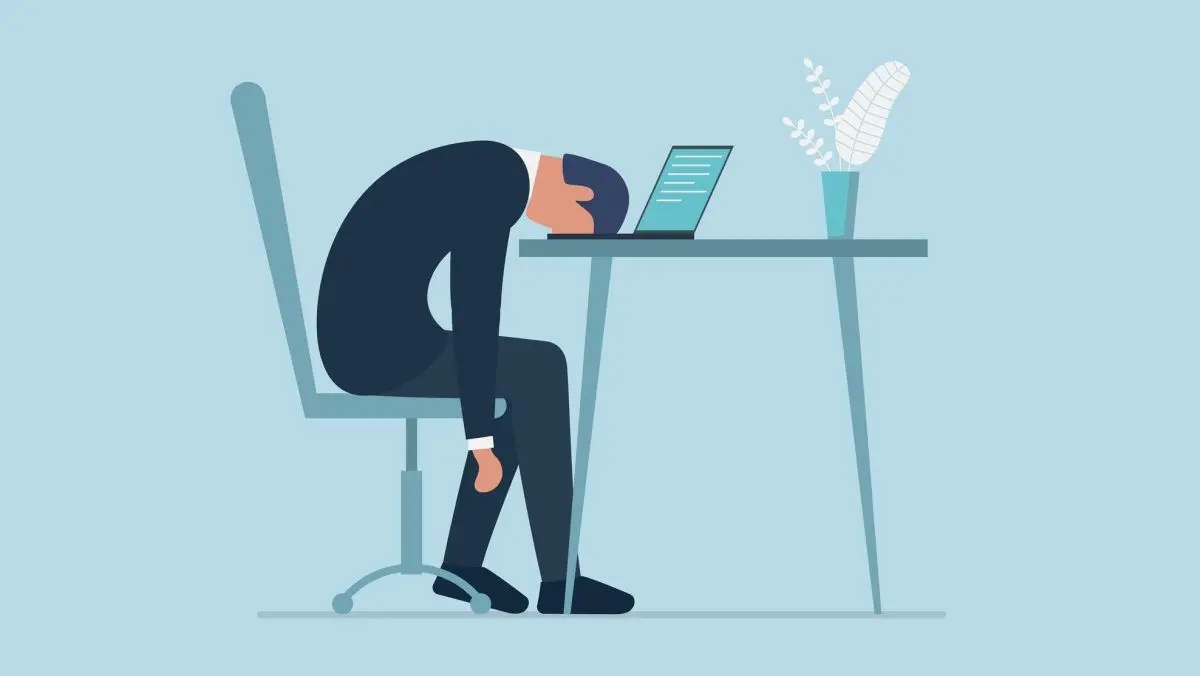
New research from Imperial College London and Microsoft reveals AI adoption could paradoxically increase workplace burdens instead of reducing them. As AI automates routine tasks, workers must now oversee AI systems, correct errors, and manage complexity—all while facing downward pressure on compensation and rising mental health pressures.
AI Adoption Creates Unexpected Workplace Burdens
A new report published in the Society of Occupational Medicine's journal Occupational Medicine challenges the assumption that AI adoption will lighten workplace demands
1
. Researchers from Imperial College London and Microsoft warn that the AI automation paradox is emerging: rather than reducing workloads, AI is transforming human roles in ways that may increase stress levels and create novel occupational hazards1
. The real impact on the workforce won't be mass job displacement, but a fundamental shift in how work gets done—and who bears the burden2
.
Source: TechRadar
Overseeing AI Systems Becomes the New Job
As AI absorbs routine tasks, human roles are evolving from performing work to stewarding AI agents across workflows. This includes briefing AI systems, reviewing outputs, and correcting AI-generated errors—essentially transforming workers into managers of artificial intelligence
1
. Dr Lara Shemtob, who led the research, explains that "as AI absorbs routine tasks, human roles may shift toward stewardship, problem-solving, or emotional labor, all with their own psychological demands"1
. This shift creates more complex responsibilities that not everyone is suited for, introducing mental health pressures that weren't previously part of job descriptions1
.Hidden Workloads Negate Automation Benefits
The report warns that AI may "paradoxically increase the knowledge worker's burden of handling complex tasks while simultaneously exerting downward pressure on compensation"
1
. This means increased responsibilities for lower pay, because AI supposedly makes work "easier"1
. Evidence already supports this concern. A 2024 study found AI coding tools actually slowed developers down due to time spent checking and correcting errors that wouldn't have existed otherwise1
2
. Researchers describe these as hidden workloads that negate the benefit of automating outsourcing tasks2
.
Source: The Register
Related Stories

AI Supervision Demands Require Urgent Attention
The research calls for quantifying AI supervision demands and building them into job descriptions to avoid hidden workloads
1
. As AI systems become more autonomous, problems like "hallucinations"—false or inaccurate outputs—may escalate and become harder to detect1
. The report emphasizes finding routes to manage where humans sit "in the human-in-the-loop"2
. Poor management may lead to productivity gaps as well as health and unemployment consequences across industries, age groups, and regions2
. A previous MIT study found that around one in nine US jobs could be replaced by artificial intelligence, while Bank of England and ONS data shows youth unemployment rising across the UK2
.Deployment Complexity Challenges Remain Uncertain
Whether this scenario fully materializes remains uncertain. Recent reports show companies have invested tens of billions in generative AI with little return, and many projects fail due to underestimated deployment complexity
1
. Researchers don't yet know the exact impact on human employees from having to work more closely with AI, but they say occupational health should be part of the dialog and analysis of how AI changes expectations of workers1
. The report concludes that greater care should be given to how we handle this transitionary period to ensure that humans continue to play a sustainable role in productivity2
. The question isn't just how AI will change work—it's whether widespread adoption will deliver the promised automation benefits at all1
.References
Summarized by

Navi
[1]
Related Stories
Harvard study reveals AI brain fry: Workers face mental fatigue managing multiple AI tools
06 Mar 2026•Business and Economy

AI Productivity Gains Come With a Hidden Cost: Employee Burnout and Longer Workdays
10 Feb 2026•Business and Economy
AI Implementation Increases Workload and Burnout Risk, Study Reveals
23 Jul 2024

Recent Highlights
1
Microsoft and Nvidia Launch Surface Laptop Ultra: A $2,599 AI-Ready PC With RTX Spark Chip
Technology

2
OpenAI Releases 722 AI-Generated Math Papers on GitHub, Igniting Fury Among Mathematicians
Science and Research

3
Trump Consulted Grok AI Before Ordering Venezuela Invasion and Capture of Nicolás Maduro
Policy and Regulation

Recent Highlights
Today's Top Stories











Don’t drown in AI news. We cut through the noise - filtering, ranking and summarizing the most important AI news, breakthroughs and research daily. Follow topics that matter to you and stay ahead.


