AI boom splits Bay Area housing market: luxury homes surge 13% as affordable properties decline


2 Sources
[1]
AI is quietly splitting the housing market in two: Bay Area luxury homes are up 13%, affordable ones are collapsing | Fortune
As AI mints new millionaires, billionaires, and even trillionaires, it's also threatening to replace entry-level workers and sparking fearful chatter of the "permanent underclass." There's no place that's more evident than in the Bay Area, at the heart of Silicon Valley, where technology is wedging
[2]
Exclusive | ChatGPT has sent San Francisco real estate rocketing to insane levels -- as the city eyes comeback
San Francisco was written off as tech workers were laid off and remote work became the norm. Then came the robots -- and with them, a real estate revival nobody saw coming. Since OpenAI unleashed GPT-3.5 on the world in November 2022, home prices in the Bay Area's wealthiest ZIP codes have
Share
Copy Link
A new Redfin report reveals how AI is creating a split housing market in the Bay Area. Since ChatGPT's launch in November 2022, luxury home prices have jumped 13.4% while lower-end properties have fallen 3.8%. The trend signals a K-shaped economy where AI executives and venture capitalists thrive while entry-level workers face uncertainty.
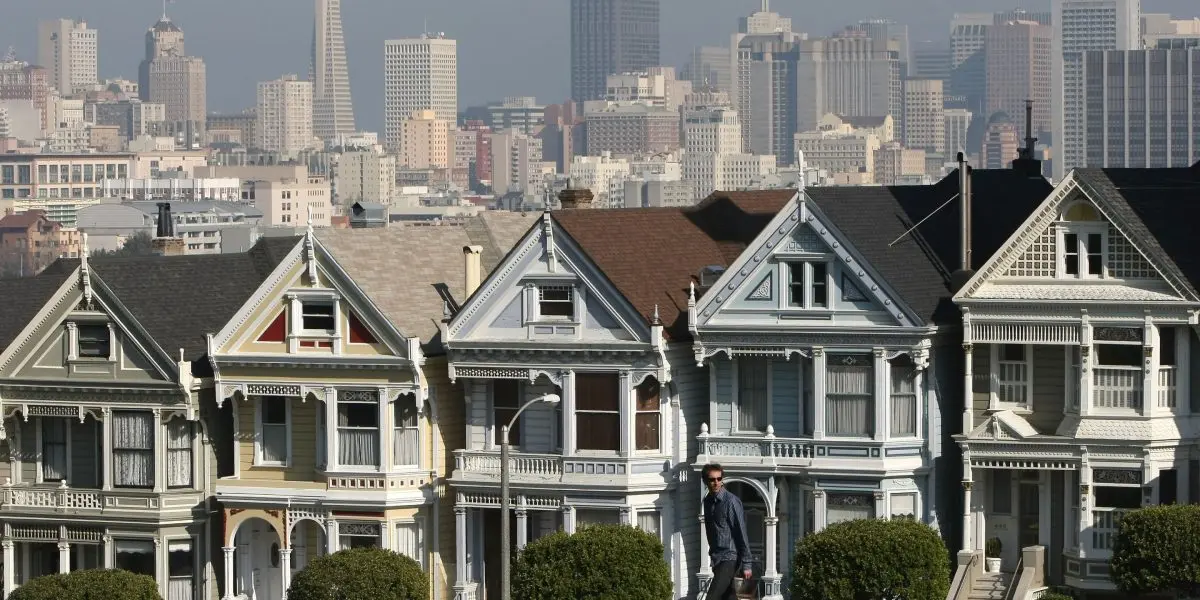
AI Creates Unprecedented Divide in Bay Area Real Estate
The AI boom is reshaping the Bay Area housing market in ways that starkly illustrate the growing economic divide in Silicon Valley. Since the launch of ChatGPT in November 2022, luxury homes priced between $3.1 million and $7.6 million have surged 13.4%, while affordable properties valued at $535,000 to $615,000 have declined 3.8%, according to a new Redfin report
1
. This split housing market represents a dramatic departure from pandemic-era trends when home prices grew uniformly at roughly 20% across all segments.San Francisco Real Estate Reaches Record Heights
The San Francisco metro area posted a record median sale price of $1.7 million in March, marking a 14.4% year-over-year increase—the largest gain among the 50 biggest U.S. metros and the steepest rise the city has seen in eight years
1
2
. Redfin Premier agent Ali Mafi described the current frenzy: "There has been an influx of AI companies opening up shop and they're giving employees giant compensation packages. Some people are getting $1 million bonuses. Homes are getting dozens of offers, which is driving up prices and causing many to sell for hundreds of thousands of dollars over the list price"2
.K-Shaped Economy Takes Hold in Silicon Valley
The divergence in home prices reflects a broader K-shaped economy where AI is lifting some households while leaving others behind. "Some owners of lower-end properties have missed out on the AI boom, with home prices in the most affordable Bay Area ZIP codes declining over the past two years," said Yingqi Xu, Redfin senior economist
1
. OpenAI, Anthropic, Google DeepMind, and heavily-backed startups are all headquartered within miles of each other in Silicon Valley, creating concentrated wealth creation at the executive and venture capitalists level while white-collar tech workers worry about job displacement1
2
.Related Stories

Why Lower-End Properties Aren't Bargains
While declining home values at the lower end might appear to create opportunities, the reality is more complex. Daryl Fairweather, Redfin's chief economist, noted that homes in this price range often require significant repairs and many are condos with high HOA fees that offset any savings from lower asking prices
1
. These properties aren't becoming more affordable—they're being devalued as buyers prioritize condition and amenities. Meanwhile, mortgage rates remain elevated, and the median age of first-time homebuyers has climbed to 40 in 2025, up from 33 in 20211
.A Trend Unique to the Bay Area
This housing market phenomenon remains largely confined to Silicon Valley. In New York, luxury ZIP codes saw the slowest growth in the two years after ChatGPT's launch, while Los Angeles luxury markets struggled despite modest outperformance
1
. Seattle saw gains spread relatively evenly across price tiers2
. "The fact that this trend is absent in areas with less AI wealth suggests that the AI boom is what is fueling divergence in the Bay Area," the Redfin report states1
. As AI continues to generate massive compensation packages and reshape the tech industry, the Bay Area housing market serves as a preview of how technological disruption can amplify economic inequality in tangible, geographic ways.References
Summarized by

Navi
Related Stories
AI Boom Fuels 39% Surge in Bay Area Luxury Homes Sales as OpenAI and Anthropic IPOs Loom
02 Sept 2026•Business and Economy

AI wealth boom sends San Francisco home prices surging 18% as OpenAI and Anthropic eye IPOs
11 Jun 2026•Business and Economy

AI Boom Sends San Francisco Housing Market Soaring as Homes Sell $1M Above Asking Price
08 Jul 2026•Business and Economy
Recent Highlights



Recent Highlights
Today's Top Stories







Don’t drown in AI news. We cut through the noise - filtering, ranking and summarizing the most important AI news, breakthroughs and research daily. Follow topics that matter to you and stay ahead.


