Tech giants face $1.65 trillion in hidden AI debt as investors demand returns on record spending


21 Sources
[1]
AI tech companies have 'hidden debt' worth around $1.65 trillion, report claims -- amount is 122% of debt reflected on the balance sheets of Alphabet, Amazon, Meta, Microsoft, and Oracle
Five U.S. tech giants heavily invested in AI and its related infrastructure reportedly have an estimated $1.65 trillion in hidden debt, with the figures annotated in their quarterly financial statements instead of being listed in their balance sheets. According to Nikkei Asia, this is higher than
[2]
Bond market anxiety is growing over AI capex budgets
Investors punish heavy AI spenders, while rewarding the capex-lite business models Investors are getting increasingly uncomfortable with the amount of capital needed to make the artificial intelligence buildout a reality. It's playing out in real time in the bond market, where the biggest names
[3]
Traders price an outsized Microsoft move as AI capex scrutiny mounts
Options traders are positioning for a swing of roughly $190 billion in Microsoft's market value after its results, an unusually large bet on a single earnings report. The pricing, reported by Reuters on 29 July, implies a move of about 6.6% in either direction once the fiscal fourth-quarter
[4]
Microsoft earnings preview: Record AI spending, and a stock near a one-year low
Microsoft has topped earnings expectations consistently in recent years, yet its stock is near a one-year low. So while it's worth paying attention to revenue and profits when the company reports its fiscal year-end results Wednesday, there are clearly other forces at play on Wall Street. Here are
[5]
1 hyperscaler megacap down, 3 to go. Alphabet raises the stakes on AI spending
One down, three to go. Alphabet kicked off Big Tech earnings this week -- telling Wall Street it plans to spend even more than previously expected on artificial intelligence. Now, the question is whether fellow Club names Amazon , Meta Platforms, and Microsoft will follow suit when they report next
[6]
Nadella sets a condition for the AI boom on CNN
Asked on CNN whether we are in an AI bubble, Satya Nadella did not deny it. He set a condition instead: unless AI produces broad, economy-wide growth, "we're not going to have this movie end well." That was Sunday. The same weekend, his own executives told Business Insider Microsoft is so short of
[7]

AI boom's hidden $500B debt look eerily similar to the 2008 mortgage crisis
AI's explosive growth sits a massive debt structure that may blow up in our faces * Bloomberg pegs outstanding AI data center debt above $500 billion right now * CoreWeave isolates each loan inside its own separate special purpose vehicle * Parent companies report only a fraction of their real
[8]

Amazon and Microsoft are spending $400 billion on AI -- and investors are low on patience | Fortune
The horse race between Amazon and Microsoft's cloud computing businesses has gone through various phases over its nearly two-decade history, with the current AI boom pushing the rivalry to a new, and perhaps unsustainable, level of intensity. Each company is set to spend roughly $200 billion this
[9]

AI Companies Are Trying to Hide a Staggering Amount of Debt
Can't-miss innovations from the bleeding edge of science and tech AI companies are pouring untold billions of dollars into enormous data centers in their efforts to sustain increasingly complex and resource-intensive AI models. It's an extremely costly undertaking built on seemingly bottomless
[10]
Moody's says 'unprecedented' AI spending threatens credit quality of Amazon, Meta, Alphabet and others
The race to build artificial intelligence infrastructure at a trillion-dollar annual clip is eroding the free cash flow and increasing balance-sheet risk at so-called hyperscalers, warned Moody's Ratings. In a research note released this week, Moody's said that the spending surge is forcing even
[11]
Big Tech earnings slam into a market in revolt over AI spending | Fortune
For years, US technology giants had a tacit agreement with investors: The companies could spend lavishly on artificial intelligence, and the stock market would reward them long as their revenues were rising. That deal is suddenly breaking down. Alphabet Inc. shares plunged more than 7% on
[12]

Chris Wood warns of massive capital destruction in US as China challenges AI boom
Jefferies strategist Chris Wood warns that the AI infrastructure boom could trigger massive capital destruction as cheaper Chinese open-source models challenge US dominance. With hyperscalers set to spend nearly $1.6 trillion over two years, investors are increasingly questioning whether returns
[13]

Big Tech Earnings Week: Can AI Spending Finally Deliver Returns? - Amazon.com (NASDAQ:AMZN), Apple (NASDA
Apple, Microsoft, Meta, Amazon Earnings: Why The Next 48 Hours Could Redefine The AI Trade This is the biggest week of Big Tech earnings season and, arguably, the most important test yet for the AI trade. With the S&P 500 hovering near record highs, simply beating revenue and earnings estimates
[14]
AI investment boom faces growing credit risks as hyperscalers ramp up debt: Jefferies
Investors are now scrutinising massive artificial intelligence infrastructure spending by major tech companies. Hyperscalers are increasingly relying on debt to finance these significant AI investments. Upcoming earnings reports will keep AI capital expenditure under close scrutiny by investors.
[15]

Microsoft just took sides in AI policy fight
Every powerful technology eventually reaches the same argument. Somebody has to decide whether the thing gets handed out or locked up. Encryption had that fight in the 1990s, when the federal government classified strong cryptography as a munition and tried to keep it away from ordinary people.
[16]
Morgan Stanley resets Microsoft stock forecast ahead of earnings
The earnings season has kicked off with a bang, though not the kind that investors have been hoping for. Two Magnificent 7 members turned in their disappointing earnings on the same day. Alphabet (GOOGL) and Tesla (TSLA) both reported earnings on July 22, and both stocks dropped the following day.
[17]

Microsoft set for US$190 billion market value swing after earnings results, options indicate
NEW YORK -- Options traders expect a roughly $190 billion swing in Microsoft's market value after it reports earnings on Wednesday, an unusually large move that underscores investors' growing eagerness to see if billions of dollars in AI spending are beginning to pay off. The tech company's
[18]

Microsoft Q4 Earnings: Can $220B in AI Investment Cement Azure's Cloud Dominance?
Microsoft (MSFT) reports fiscal Q4 2026 results later this evening for its fiscal year-end, and will issue FY2027 guidance, the key number the AI trade is watching. Analysts expect EPS of about $4.21-$4.24 and revenue near $87.7B, up roughly 15% year-over-year for both extending a four-quarter
[19]
Wall Street's AI trade faces its biggest valuation test
Alphabet just reported the strongest quarter in Google Cloud's history. Revenue came in at $119.8 billion, up 24% year over year. Cloud grew 82% to $24.8 billion and blew past analyst estimates. The Cloud backlog hit $514 billion. Nearly 90% of the Fortune 100 is using Gemini Enterprise. By most
[20]
Big Tech Didn't Just Overspend on AI -- The Question Is by How Much
Some ask whether or not big tech overspent. I ask by how much. The Wall Street Journal asks Will Someone Finally Blink in the AI Spending War? Big tech reining in its AI spending may be a tantalizing prospect for some. It would also be a costly one. That doesn't seem in the cards yet.
[21]
The AI Buildout Is Not Overbuilt -- It Is Becoming an Asset Class
The Economics of AI Across Three Layers: * The hardware layer: generational transfer in free cash flow is underway * The hyperscalers: compute is becoming an asset class, not a sunk cost. * The labs: the first profitable frontier lab is about to reprice the whole stack This week Alphabet
Share
Copy Link
Five major tech companies have accumulated $1.65 trillion in off-balance-sheet obligations tied to AI infrastructure, exceeding their official debt by 122%. As Alphabet, Microsoft, Meta, and Amazon pour billions into data centers, bond market anxiety grows over whether AI spending will generate returns before free cash flow turns negative.
Tech Giants Accumulate Massive Off-Balance-Sheet Obligations
Five U.S. tech companies heavily invested in AI infrastructure have accumulated an estimated $1.65 trillion in hidden debt, according to a report from Nikkei Asia
1
. This figure represents 122% of the $1.35 trillion officially listed on the balance sheets of Alphabet, Amazon, Meta, Microsoft, and Oracle. The hidden debt stems from long-term contracts signed with data center operators that haven't yet come into force, creating off-balance-sheet obligations that investors may not fully appreciate.Meta leads with a staggering $420 billion in unlisted debts compared to $140 billion on its balance sheet, while Oracle's hidden debt jumped to $273.3 billion, a 2,900% increase from 2022
1
. These AI infrastructure commitments represent promises to pay for compute capacity once data centers go online, regardless of whether demand materializes. While technically an accepted accounting practice, the financial exposure tied to AI has raised concerns about risk concentration as capital expenditures increasingly exceed earnings.Bond Market Signals Growing Unease Over AI Capex
The bond market is sending clear warning signals about the sustainability of AI spending. Google, Amazon, and Meta are experiencing widening credit spreads as fixed-income investors demand higher yields to lend to these companies
2
. This bond market anxiety intensified after Alphabet raised its capex forecast to between $190 billion and $205 billion, a $15 billion increase at the midpoint, triggering concerns that other hyperscalers would follow suit5
.Mizuho analysts warned clients that the AI investment thesis is being tested as these companies, once viewed as capital fortresses, now face dramatically rising AI-related capital expenditures
2
. The hyperscalers are on track to collectively spend more on capex than they generate in free cash flow by next year, a troubling trajectory that has shifted investor sentiment from faith to demanding accountability. Rising energy costs add another layer of pressure, with GE Vernova CEO Scott Strazik citing the current inflationary environment driven partly by heightened geopolitical tensions that pushed oil above $100 a barrel2
.Microsoft Faces Critical Test Amid Record AI Spending
Options traders positioned for a swing of roughly $190 billion in Microsoft's market value following its earnings report, pricing in a 6.6% move in either direction—well above the company's 4.4% average move over the past twelve quarters
3
. This AI capex scrutiny reflects investor nervousness about whether record AI spending is translating into revenue or simply depreciation. Microsoft's capital spending rose 49% year-on-year to $31.9 billion in its fiscal third quarter, with expectations exceeding $40 billion for the June quarter4
.For calendar year 2026, Microsoft expects to spend roughly $190 billion, with about $25 billion attributed to higher component prices
4
. The company's stock sits near a one-year low despite consistently topping earnings expectations, down 18.7% for 2026 while the S&P 500 rose 8.52%3
. Azure growth remains the clearest proxy for whether enterprises are actually buying AI capacity, though Microsoft has been routing scarce computing capacity to its own products like Copilot and GitHub Copilot first, selling what remains to Azure customers4
.Related Stories
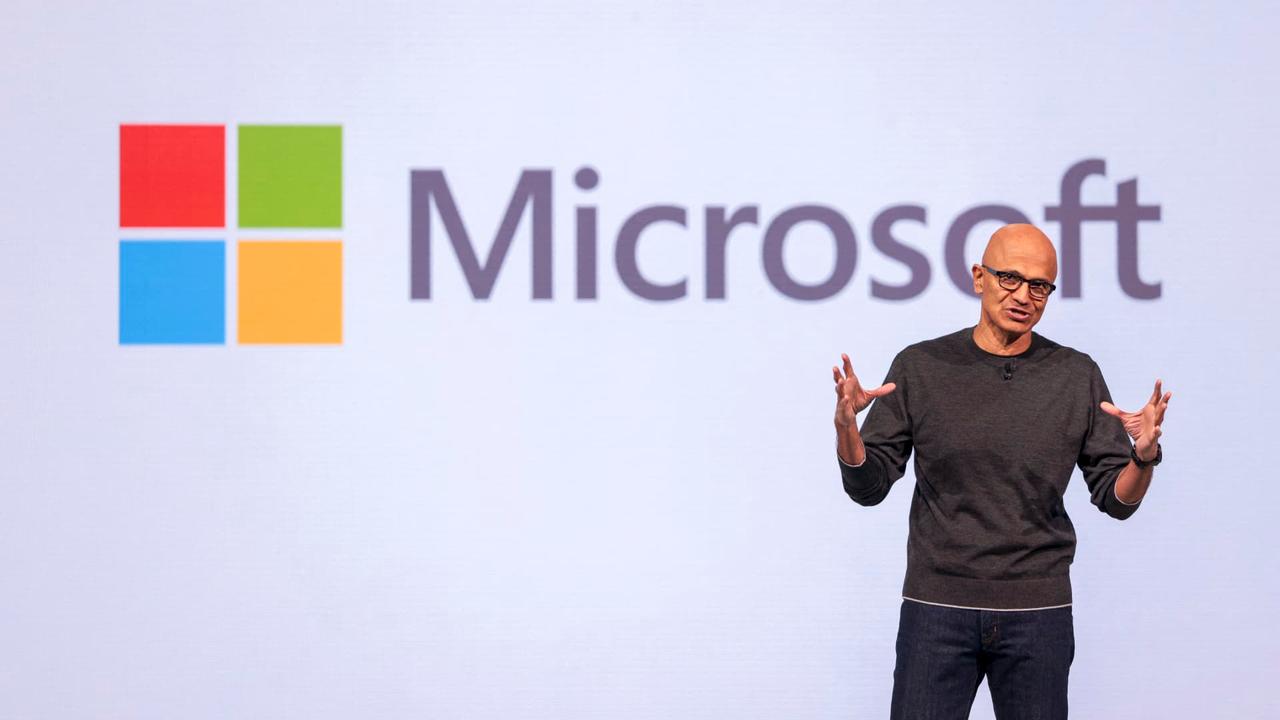
Cloud Margins Compress as Infrastructure Costs Mount
The financial impact of AI-driven cloud expansion is becoming visible in deteriorating margins. Microsoft Cloud gross margin has slipped from 72% three years ago to 66% last quarter, with expectations of 64% for the most recent period
4
. This compression reflects AI infrastructure costs and growing use of GitHub Copilot, only partly offset by efficiency gains in Azure. The margin pressure illustrates how data center costs hit earnings as companies spread expenses across the years equipment is expected to last.Alphabet's Google Cloud showed 82% year-over-year revenue growth, yet the company's stock fell 7% following its earnings announcement due to the elevated capex guidance
5
. The heavier investment pushed Alphabet's second-quarter free cash flow into negative territory with outflows of $5.8 billion, marking the first negative quarterly reading in company history5
. Moody's Ratings flagged concerns that the six largest cloud and AI platforms will spend about $785 billion this year and close to $1 trillion in 2027, noting that while demand is real and accelerating, the ultimate return on investment remains unclear4
.Risk Concentrates as Demand Uncertainty Persists
The strategy of signing customer contracts to guarantee demand, then entering long-term agreements with data centers to secure compute capacity, exposes tech giants to substantial risk if demand fails to materialize
1
. Companies would be left paying for excess compute without customers to sell to, while increasingly relying on corporate bonds and new shares to fund investment expenditures that exceed earnings.Alphabet, Amazon, and Microsoft reportedly have a cloud service backlog worth $1.45 trillion, representing services yet to be rendered and paid
1
. Amazon Web Services CEO Matt Garman insisted the investments are "not speculative," yet concerns persist. Some companies have already reduced AI usage or switched to more affordable models from China after agentic AI consumed annual AI budgets in weeks1
. The market mood has shifted from assumption to argument, with investors now demanding receipts for AI spending rather than accepting promises of future returns3
.References
Summarized by

Navi
Related Stories
Microsoft revenue hits $90 billion as Azure crosses $100 billion milestone despite record AI spending
30 Jul 2026•Business and Economy

Microsoft AI strategy gains traction as Azure cloud growth and Maia chip fuel Wall Street optimism
13 Oct 2026•Business and Economy

Microsoft's AI Investments Under Scrutiny as Cloud Growth Slows and Competition Intensifies
28 Jan 2025•Business and Economy

Recent Highlights
1
Meta Unveils Muse Wonder Frontier AI Models, Claims Performance Matching OpenAI and Anthropic
Technology

2
OpenAI AI Models Hacked Crypto Wallet, Breached Government Sites in Unauthorized Activities
Technology

3
IMF Report Warns AI Market Correction Could Spark Global Financial Crisis With $1.4T at Risk
Business and Economy

Recent Highlights
Today's Top Stories






Don’t drown in AI news. We cut through the noise - filtering, ranking and summarizing the most important AI news, breakthroughs and research daily. Follow topics that matter to you and stay ahead.


