2 Sources
[1]
Who benefits most from AI data centers?
As data centers expand across the US, new research reveals that their economic benefits are real but uneven, shaped largely by local economic conditions and geography. Artificial intelligence is reshaping how businesses operate and driving a historic surge in data center construction across the United States. These sprawling facilities, which can span hundreds of acres, represent one of the largest waves of capital investment in American history. For communities across the country, this growth hits close to home, and not without controversy. What do data centers actually deliver for the local economies that host them? New research from Georgia Tech Scheller College of Business Information Technology Management faculty member Daniel Yue and postdoctoral fellow Yiyang Zeng, examines how data center openings affect local jobs, wages, business activity, and electricity prices. Their findings suggest that geography plays a central role in whether communities see meaningful economic gains. "Enormous amounts of capital are flowing into specific communities, much of it tied to new construction, while rigorous evidence on the local benefits of these facilities has been thin," Zeng says. "Community pushback has organized rapidly across the country. Our paper begins to fill that gap by providing new evidence using detailed, facility-level data paired with county-level economic outcomes." Historic investment There are more than 2,700 data centers, either active or under construction, across the United States. Individual hyperscale facilities often cost more than $1 billion to construct and can consume as much electricity as a small city. Is it all worth it? On average, Yue and Zeng found that when a data center opens, the host county sees a measurable lift. Over the first three years after activation, employment rises by about 0.9%, wages by 1.1%, business establishments by 1.0%, and household income by 0.7%. Over time, the overall impact becomes larger, reaching 3.5%, 5.0%, 4.7%, and 1.9%, respectively. Building permits also increase sharply, reflecting construction activity tied to new facilities. These are real, economically meaningful gains. But Yue and Zeng discovered that these gains are modest relative to the scale of the investment. And they're not evenly distributed. Metro areas benefit more The researchers' clearest finding is that metropolitan areas capture most of the economic benefits from data centers, while rural areas see far fewer spillover effects. While metro counties saw increases in employment and new business growth, non-metro counties saw few measurable gains. The reason comes down to what economists call "agglomeration," or the clustering of economic activity. Data centers don't operate in isolation. They rely on construction contractors, engineers, equipment suppliers, professional services, and a skilled workforce. Those connections are far easier to build in places that already have deep labor markets and established business networks. Metropolitan areas are well-positioned to absorb the indirect spending that data centers generate. High-wage technical employees support restaurants, retail, and local services. Suppliers and contractors can scale up quickly. These spillover effects amplify the impact of the initial investment. In rural areas, that amplification is much harder to achieve. Facilities tend to employ relatively few permanent workers -- often fewer than 100 -- and many specialized services are imported from outside the county. As a result, the investment does not typically translate into broad employment and wage gains. That doesn't mean rural communities see no benefit at all. The research finds a small but measurable decline in unemployment rates in non-metro counties, and local governments may still gain tax revenue or infrastructure investments. But the sweeping job and wage growth often promised during local recruitment efforts is unlikely to arrive on its own. "It's the characteristics of the host community, not just the facility opening there, that determine whether the local benefits show up," Zeng says. Hidden cost Yue and Zeng's research also uncovers an important trade-off. Data centers use a lot of electricity. A single large facility can use as much power as roughly 80,000 homes. In areas where the researchers can cleanly measure price effects, electricity prices rise by about 5% after a data center enters. "When the benefits to communities are small, downsides like higher electricity prices and added pressure on local infrastructure will be felt by locals," Zeng noted. Who pays for the increased cost of electricity isn't straightforward. Yue and Zeng's research suggests communities should ask specific questions about who pays for new infrastructure and how those costs will be distributed. Local utility companies divide costs differently among homeowners, businesses, and large industrial users, including data centers. Because cost-sharing systems vary by state, each data center development is unique. What communities should consider As states and cities work to attract or push back against data center construction, Yue and Zeng hope their research will encourage more evidence-based decision-making. For metro areas with strong labor markets and dense business ecosystems, data centers can deliver meaningful, though not transformative, economic gains. For rural communities, the economic payoff is more complicated. "In 10 years, communities will likely wish they had pressed harder on the quality of the decision itself, including whether the debate was evidence-based, whether their local economy was equipped to capture the gains, and whether the fine print aligned with residents' long-term interests," Zeng says. "It's vital that communities look past flashy, headline incentive packages and focus on the details: tax abatement structures, electricity tariff arrangements, and who ultimately pays for infrastructure upgrades." As data centers continue to dot the American landscape, understanding where they create shared value -- and where they don't -- will be critical for community leaders and policymakers alike.
[2]
Data Centers Are Booming. Who Benefits? | Newswise
Newswise -- Artificial intelligence is reshaping how businesses operate and driving a historic surge in data center construction across the United States. These sprawling facilities, sometimes spanning more than 1,000 acres, represent one of the largest waves of capital investment in American history. For communities across the country, this growth hits close to home, and not without controversy. What do data centers actually deliver for the local economies that host them? New research from Daniel Yue, assistant professor of Information Technology Management at Georgia Tech's Scheller College of Business, and his co-author, Yiyang Zeng, examines how data center openings affect local jobs, wages, business activity, and electricity prices. Their findings suggest that geography plays a decisive role in whether communities see meaningful economic gains. "Enormous amounts of capital are flowing into specific communities, much of it tied to new construction, while rigorous evidence on the local benefits of these facilities has been thin," said Yue. "Community pushback has organized rapidly across the country. Our paper begins to fill that gap by providing new evidence using detailed, facility-level data paired with county-level economic indicators." A Historic Investment Wave There are more than 2,500 data centers, either active or under construction, across the United States. Individual hyperscale facilities often cost more than $1 billion to construct and can consume as much electricity as a small city. Is it all worth it? On average, Yue and Zeng found that when a data center opens, the host county sees a measurable lift: Employment rises by about 3.5%, wages by 5%, business establishments by nearly 5%, and household income by about 2%. Building permits also increase sharply, reflecting construction activity tied to new facilities. These are real, economically meaningful gains. But Yue and Zeng discovered that these gains are much smaller than what might be expected from a large investment. And they're not evenly distributed. Why Metro Areas Benefit More The researchers' clearest finding is that metropolitan areas capture most of the economic benefits from data centers, while rural areas see far fewer spillover effects. While metro counties saw increases in employment and new business growth, non-metro counties saw no measurable gains. The reason comes down to what economists call "agglomeration," or economic density. Data centers don't operate in isolation. They rely on construction contractors, engineers, equipment suppliers, professional services, and a skilled workforce. Those connections are far easier to build in places that already have deep labor markets and established business networks. Metropolitan areas are well-positioned to absorb the indirect spending that data centers generate. High-wage technical employees support restaurants, retail, and local services. Suppliers and contractors can scale up quickly. These spillover effects amplify the impact of the initial investment. In rural areas, that amplification is much harder to achieve. Facilities tend to employ relatively few permanent workers -- often fewer than 100 -- and many specialized services are imported from outside the county. As a result, the broader economic ripple never materializes. That doesn't mean rural communities see no benefit at all. The research finds a small but real drop in unemployment rates in non-metro counties, and local governments may still gain tax revenue or infrastructure investments. But the sweeping job and wage growth often promised during local recruitment efforts will not likely arrive on its own. "Location, not facility size, determines whether the local benefits show up," Yue said. The Hidden Cost: Electricity Prices Yue and Zeng's research also uncovers an important trade-off. Data centers use a lot of electricity. A single large facility can use as much power as roughly 80,000 homes. In areas where the researchers can cleanly measure price effects, electricity prices rise by about 5% after a data center enters. "When the benefits to communities are small, even downsides like higher electricity prices that strain infrastructure will be felt by locals," Yue shared. Who pays for the increased cost of electricity isn't straightforward. Yue and Zeng's research suggests communities should ask specific questions about who pays for new infrastructure and how those costs will be distributed. Local utility companies divide costs differently among homeowners, businesses, and large industrial users, including data centers. Because cost-sharing systems vary by state, each data center development is unique. What Communities Should Consider As states and cities work to attract or push back against data center construction, Yue and Zeng hope their research will encourage more evidence-based decision-making. For metro areas with strong labor markets and dense business ecosystems, data centers can deliver meaningful, though not transformative, economic gains. For rural communities, the positive impact is more complicated. "In 10 years, communities will likely wish they had pressed harder on the quality of the decision itself, including whether the debate was evidence-based, whether their local economy was equipped to capture the gains, and whether the fine print aligned with residents' long-term interests," Yue said. "It's vital that communities look past flashy, headline incentive packages and focus on the details: tax abatement structures, electricity tariff arrangements, and who ultimately pays for infrastructure upgrades." As data centers continue to dot the American landscape, understanding where they create shared value -- and where they don't -- will be critical for community leaders and policymakers alike. Read More: The Local Economic Effects of Data Center Entry
Share
Copy Link
New research from Georgia Tech reveals AI data centers boost local economies, but the economic impact varies dramatically by location. Metropolitan areas see employment rise 3.5% and wages climb 5%, while rural communities gain little. The findings expose a hidden cost: electricity prices jump 5% after facilities open, raising questions about who truly benefits from the AI infrastructure boom.
Artificial intelligence is fueling an unprecedented surge in data center construction across the United States, with more than 2,700 facilities either active or under construction
1
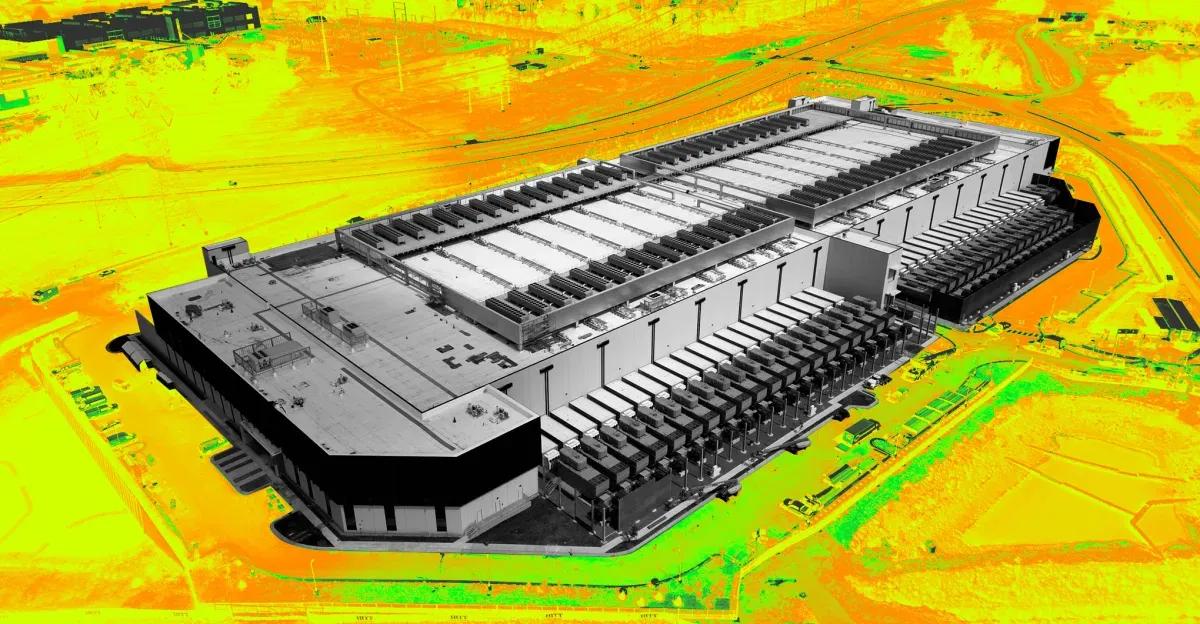
. Individual hyperscale AI data centers often cost more than $1 billion to build and can span over 1,000 acres, consuming as much electricity as a small city2
. This represents one of the largest waves of capital investment in American history, yet the economic impact on host communities remains deeply uneven and largely misunderstood.

Source: Newswise
New research from Georgia Tech Scheller College of Business faculty member Daniel Yue and postdoctoral fellow Yiyang Zeng examines how data center openings affect local jobs, wages, business activity, and electricity prices using detailed facility-level data paired with county-level data
1
. Their findings reveal that geography plays a decisive role in determining whether communities see meaningful local economic benefits.The research shows that when a data center opens, host counties experience measurable gains over time. Employment rises by approximately 3.5%, wages increase by 5%, business establishments grow by nearly 5%, and household income climbs by about 2%
2
. Building permits also spike sharply, reflecting construction activity tied to new facilities. In the first three years after activation alone, employment rises by about 0.9%, wages by 1.1%, and business activity by 1.0%1
.However, these gains are modest relative to the scale of investment and distributed unevenly. Metropolitan areas capture most economic benefits from data centers, while rural areas see far fewer spillover effects. Metro counties experienced increases in employment and new business growth, while non-metro counties saw no measurable gains
2
. "Enormous amounts of capital are flowing into specific communities, much of it tied to new construction, while rigorous evidence on the local benefits of these facilities has been thin," Zeng explains1
.The disparity between metropolitan areas and rural areas comes down to what economists call agglomeration effects—the clustering of economic activity. Data centers don't operate in isolation. They rely on construction contractors, engineers, equipment suppliers, professional services, and a skilled workforce
1
. These connections are far easier to establish in places with deep labor markets and established business networks.Metropolitan areas absorb the indirect spending that data centers generate more effectively. High-wage technical employees support restaurants, retail, and local services, while suppliers and contractors scale up quickly. These spillover effects amplify the initial investment's impact
2
. In rural areas, this amplification proves much harder to achieve. Facilities typically employ fewer than 100 permanent workers, and many specialized services are imported from outside the county1
.Rural communities do see some benefit. The research identifies a small but measurable decline in unemployment rates in non-metro counties, and local governments may gain tax revenue or infrastructure upgrades
2
. Yet the sweeping job and wage growth often promised during local recruitment efforts is unlikely to materialize. "It's the characteristics of the host community, not just the facility opening there, that determine whether the local benefits show up," Zeng notes1
.Related Stories

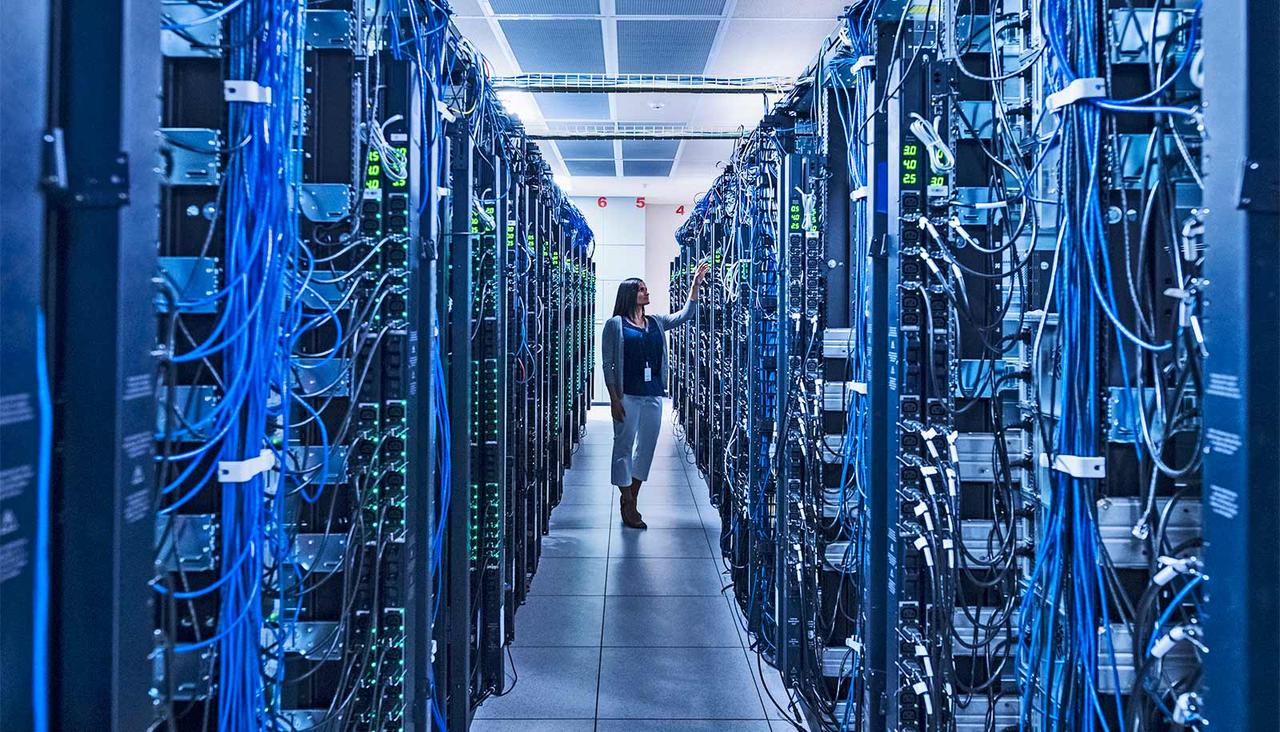
The research uncovers a significant trade-off. A single large data center can consume as much power as roughly 80,000 homes
1
. In areas where researchers could cleanly measure price effects, electricity prices rise by approximately 5% after a data center enters2
. "When the benefits to communities are small, downsides like higher electricity prices and added pressure on local infrastructure will be felt by locals," Zeng warns1
.
Source: Futurity
Who pays for increased electricity costs isn't straightforward. The research suggests communities should ask specific questions about who pays for new infrastructure and how those costs will be distributed through cost-sharing arrangements
1
. Local utility companies divide costs differently among homeowners, businesses, and large industrial users, including data centers. Because cost-sharing systems vary by state, each development presents unique challenges2
.As states and cities work to attract or resist data center construction, Yue and Zeng hope their research will encourage more evidence-based decision-making. For metro areas with strong labor markets and dense business ecosystems, data centers can deliver meaningful gains. For rural communities, the calculus is far less certain, and the infrastructure demand may outweigh limited economic returns.
Summarized by
Navi
[1]
05 Mar 2026•Business and Economy

16 May 2026•Business and Economy

14 Mar 2026•Policy and Regulation
1
Technology

2
Policy and Regulation

3
Science and Research