AI Data Center Boom Faces $68 Billion Setback as Community Opposition Grows Nationwide


21 Sources
[1]
Everyone can find a reason to dislike data center construction
Frontier AI labs are convinced that scaling up computation is the path to improving artificial intelligence, and they've put their money where their mouths are, to the tune of trillions of dollars of planned data center projects. The rest of us? Surveys of public opinion say that more than 60% of
[2]
What must happen for AI's trillion-dollar gamble to pay off
The AI hyperscalers will likely spend more than $1 trillion on data centers next year. Can they make enough money to sustain the infrastructure boom? When Jessica Wachter, a finance professor at the University of Pennsylvania's Wharton School, wanted to assess AI's impact on the economy over the
[3]
The AI data center boom is colliding with cities scarred by big industry
Across the country, Americans are debating how their lives might change if new AI data centers are built in their backyards. Data center companies and their customers are promising new jobs and economic growth, but that pitch hasn't won over a majority of Americans who oppose data center
[4]
Local opposition blocked $68 billion worth of data center projects in the second quarter of 2026 -- data center investments reportedly still on track to hit $32 trillion by 2050
Trump says opposing communities "want to end up being backwards and poor." Local opposition blocked or delayed $68 billion in data center projects between April and June this year, according to a September 21 Bloomberg report citing data from research group Data Center Watch. The report says 30
[5]
AI data center boom hits growing resistance as $68 billion in US projects are blocked or delayed
Serving tech enthusiasts for over 25 years. TechSpot means tech analysis and advice you can trust. A hot potato: Data center developers are facing stronger resistance as they try to add capacity for AI workloads across the United States. The pushback is delaying or blocking projects worth tens of
[6]

The Data Center Debate Is Divorced From the Facts
As the build-out of AI data centers has accelerated, the public has tended to focus on every possible downside of these industrial projects. Some wariness -- about the developments and the companies behind them -- is sensible. As with almost any new industrial development, and depending on where
[7]

Why doomsday warnings are not the only threat to the AI juggernaut
There is an eerie low hum that emanates from data centres, where tens of thousands of chips make trillions of computations a second to help drive the artificial intelligence (AI) revolution. These chips power the text, images and video generated by the queries made by the world of the advanced AI
[8]

Opinion | Railroads. Highways. Data Centers. One of Those Is Unlike the Others.
Mr. Greer is an essayist who frequently writes about politics and international affairs at The Scholar's Stage. Until recently, the artificial intelligence companies pioneering humanity's technological frontier were crowned with a certain air of inevitability. In their race to erect a silicon god,
[9]

The data center backlash is reshaping American politics -- one community at a time
With striking speed, the widespread debate around data centers has become a fault line in American communities, cutting across political parties, splitting constituencies and forging unexpected alliances. In city halls and county commission chambers, east to west and north to south, people are
[10]

AI environmental concerns build as lawmakers grapple with tech panic
* But it's unclear what, if any, role the AI backlash will play in the upcoming midterm elections, with voters split on who is better suited to handle the issue. Some Democratic lawmakers are reportedly hesitant to spend too much time discussing it on the campaign trail. * President Trump has
[11]

Have AI apocalypse warnings reached critical mass?
Jacob Coxon, the 27-year-old researcher who split his time between OpenAI and Anthropic on pre-training research, announced his resignation from Anthropic last week on X with a lethal thread. "Neither company is acting responsibly," he wrote. "They are racing straight to self-improving
[12]

Both Democrats and Republicans Are Increasingly Worried About AI's Environmental Impact
As data centers break ground in communities across the country, Americans are growing more concerned about the environmental impacts. That's according to a new poll from The Associated Press-NORC Center for Public Affairs Research and the Energy Policy Institute at the University of Chicago, which
[13]

60 Minutes Transcript: The data center uproar
America, and the world, are in the midst of one of the most profound technological revolutions in human history, with artificial intelligence poised to transform nearly every aspect of how we live and work. Behind this seemingly invisible revolution is something very physical: data centers. They
[14]

How concerned are Americans about AI's environmental impact? This new poll reveals the data
On the way home from a recent trip, Eriech Tapia drove past a sea of dark industrial buildings lining an already jam-packed northern Virginia road: data centers. "It was interesting to see how many were going up," said Tapia, a 30-year-old Republican from Arlington, Virginia, who works in higher
[15]

AI energy usage - is the industry scaling up when it should be scaling down?
In the cloud era, organizations wanted to offload their data centers, as they sought the advantages offered by of software, infrastructure, and compute as a service. In the global games of Tetris that followed, small on-premises blocks became vast agglomerations of computing power owned by
[16]

Wall Street is becoming wary of data centers
The backlash against data centers that is shaping elections and kitchen table debates across the country is now spilling onto Wall Street. Companies that house the data centers or supply them with energy and land for construction were expected to dominate the initial public offering market over
[17]

In Silicon Valley, AI Data Center Boom Meets Local Resistance
By Elizabeth Mendez and Nichola Groom SAN JOSE, California, Sept 17 (Reuters) - In Silicon Valley's biggest city, residents and environmental groups are organizing against a wave of proposed data center projects that officials have courted in a bid to position the city as a hub for AI
[18]

More Americans say AI will hurt the environment than help it: Poll
More Americans believe AI will have negative environmental impacts on the upcoming decade than those who think the technology will help the environment, a poll released Wednesday found. In the newly published survey from The Associated Press/NORC Center for Public Affairs Research, 47 percent of
[19]

One AI issue unites Republicans and Democrats: Data centre limits
Americans increasingly worry about artificial intelligence's environmental effects. Many citizens are concerned about data centers' local electricity and water usage. A majority of people support limiting new data center construction nationwide. Most Americans favor requiring data centers to use
[20]
Americans Are Increasingly Concerned About the Environmental Impact of AI, New Poll Finds
On the way home from a recent trip, Eriech Tapia drove past a sea of dark industrial buildings lining an already jam-packed northern Virginia road: data centers. "It was interesting to see how many were going up," said Tapia, a 30-year-old Republican from Arlington, Virginia, who works in higher
[21]
Data centers aren't the problem -- it's really about how we build them
New data center construction has become a controversial issue in many communities across the United States. They are electricity and water hogs, pushing utility costs higher for residents and businesses. Some areas have held referendums to keep them away. Despite such headwinds, more data centers
Share
Copy Link
AI hyperscalers face mounting resistance as $68 billion in data center projects were blocked in Q2 2026 alone. Communities across 49 states cite environmental concerns, rising power bills, and industrial trauma as major reasons for opposing construction.
AI Data Center Construction Meets Historic Resistance
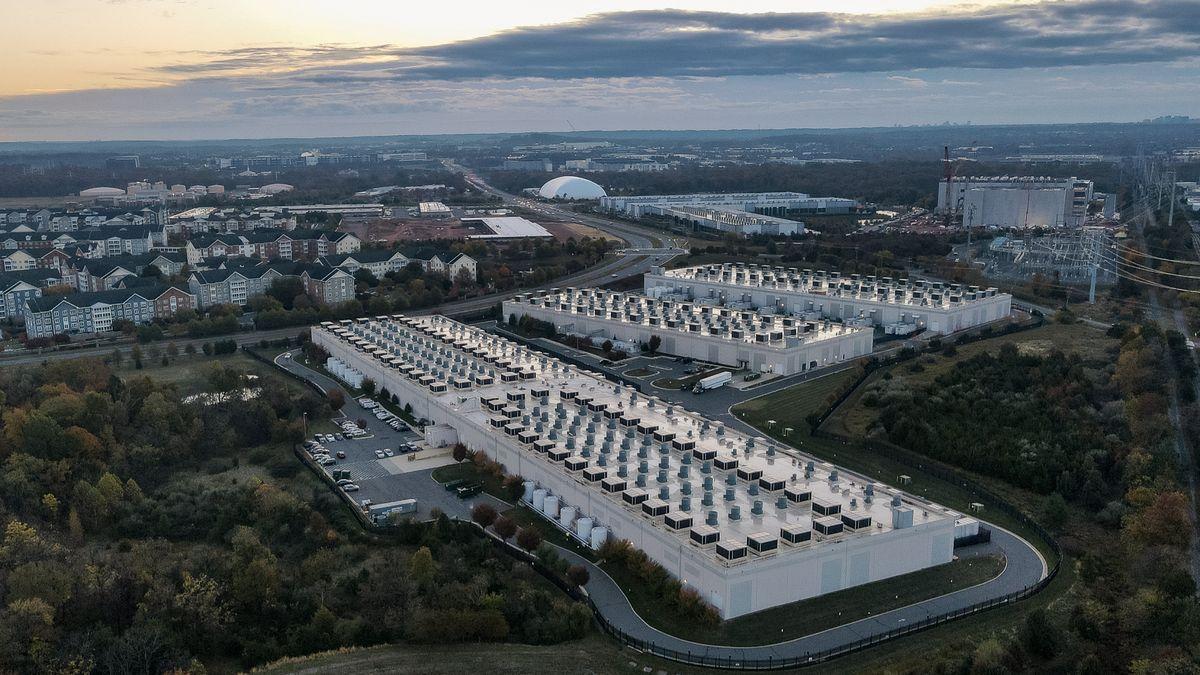
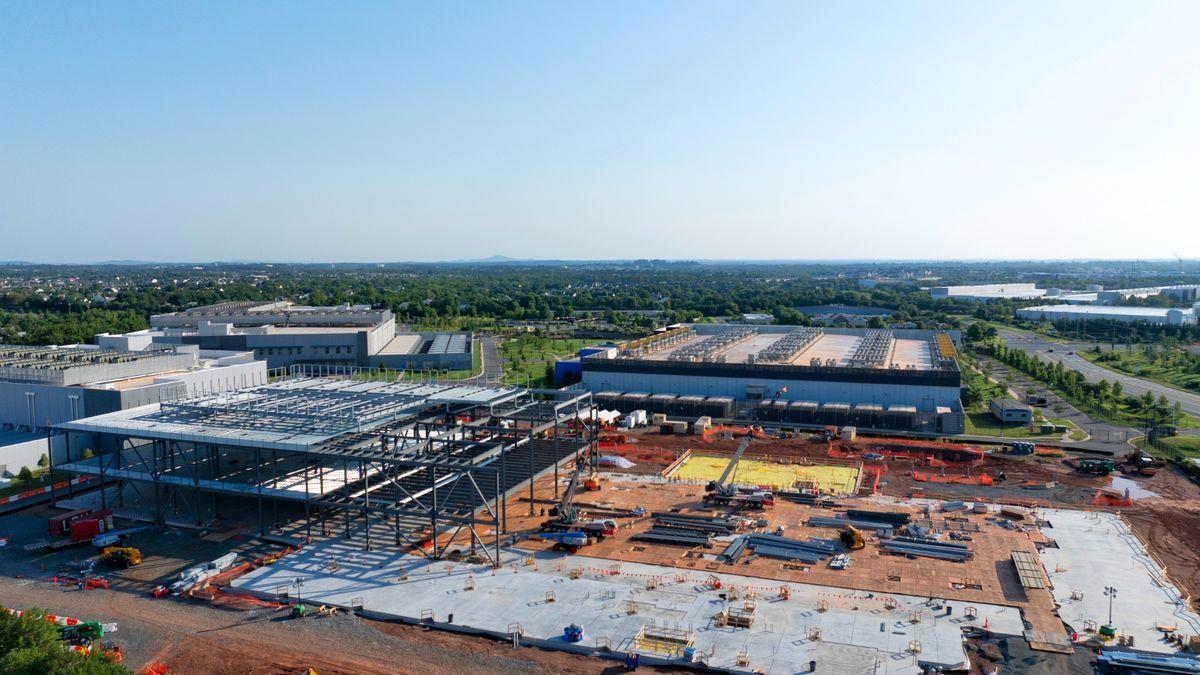
The AI data center boom is colliding with reality as community opposition blocked or delayed 45 data center projects valued at $68 billion during the second quarter of 2026, according to Data Center Watch
4
5
. These contested projects represent more than half of all large-scale data center construction proposals tracked during the period. The resistance to data centers spans 843 opposition groups across 49 states, with Hawaii being the only exception4
. More than 60% of Americans now favor limiting new AI data center development, particularly in their communities, marking a significant shift in public opinion1
.
Source: TechSpot
The Trillion-Dollar Gamble Behind AI Infrastructure
AI hyperscalers including Alphabet, Microsoft, Amazon, Meta, and Oracle are betting big on computational power, with planned spending exceeding $1 trillion on data centers in 2027 alone
2
. The companies have already spent over $1 trillion on AI infrastructure since 2023, with an additional $745 billion in capital expenditures expected in 20264
. Financial risks are mounting as hyperscalers increasingly rely on borrowed money. Alphabet reported its first free cash deficit since going public in 2004, with a shortfall of $5.9 billion in the latest quarter despite revenues of nearly $120 billion2
. University of Pennsylvania finance professor Jessica Wachter warns that AI companies will need to increase their productivity by a factor of 2.7 to break even by 20302
. If this productivity boom fails to materialize, the current AI data center boom could become "the largest misallocation of capital in history"2
.Environmental Concerns Drive Local Opposition
Electricity and water consumption top the list of environmental concerns fueling resistance to data centers. BloombergNEF projects that U.S. data centers will consume more natural gas than Germany and Japan combined by 2035, nearly double their projection from nine months earlier
3
. Analysts predict data centers will consume 20% of U.S. power by 20354
. The environmental impact extends to water resources, with AI projected to consume up to 600 billion gallons of water by 20304
. One AI data center project in Virginia secretly consumed 29 million gallons of water within 15 months before low water pressure alerted nearby residents4
. The same Virginia facility led to an irreversible 76% hike in residents' power bills4
.
Source: diginomica
Industrial Trauma Shapes Community Resistance
Communities with histories of industrial trauma are particularly skeptical of AI data center construction. Data & Society's 18-month ethnographic study in Pennsylvania, which included interviews with 44 residents between 2024 and 2026, reveals deep-rooted suspicions stemming from past industrialization waves
1
. "People in Pennsylvania especially have incredible experience with industrial change, have deep lineages of industrial trauma, enough to sniff when things don't feel right to them," said Maia Woluchem, program director at Data & Society1
. In Philadelphia's Grays Ferry neighborhood, activist Shawmar Pitts grew up next to the East Coast's largest oil refinery, which shut down after an explosion in 20193
. His experience with chronic health conditions in the community now fuels opposition to potential data center sites in the same area. The message from industry that AI is "inevitable" has landed poorly with Pennsylvania residents who have witnessed coal mining, early oil industry operations, steel manufacturing, and fracking1
.Related Stories

Material Interests and Post-Partisan Coalitions
Data & Society researchers found that resistance to data centers crosses traditional political lines, creating what they call "post-partisan" coalitions
1
. Material interests frequently drive local opposition. Residents worry that AI data center electrical usage will affect their power bills, fear declining property values from land use changes, and object to tactics developers use to secure approvals, such as asking local officials to sign non-disclosure agreements1
. The opposition includes classic NIMBYs against development, people who dislike AI technology and corporate interests, environmental groups concerned about water usage and emissions, and those with public health concerns1
. Online campaigns amplify this resistance. One petition against a proposed Tennessee project drew more than 500,000 signatures on Change.org during the second quarter, representing over one-third of all signatures collected on the platform during that period5
.Government Response and Industry Pushback
Thirty state legislatures have implemented rules on data center location and resource consumption
4
. Communities are pursuing moratoriums on data center construction even before developers apply for permits. Pennsylvania Governor Josh Shapiro, who headlined a July 2025 summit celebrating $90 billion in data center and AI infrastructure investment, reversed course a year later by signing an order imposing new requirements on data center projects and removing them from a regulatory fast-track initiative1
. New York Governor Kathy Hochul signed an executive order temporarily preventing new permits for large projects, stating "Progress shouldn't arrive with a higher utility bill, deleted water supply, or noise pollution"3
. Moratoriums have been approved in Denver, Indianapolis, Asheville, Charlotte, and Reno3
. The Data Center Coalition, a trade group, has responded with its own influence campaign, setting up websites like "Pennsylvania Connects" and spending at least $19,000 lobbying the state government last year1
. President Trump has condemned communities opposing data centers, claiming they "want to end up being backwards and poor" and suggesting China could be orchestrating opposition movements4
. Despite current setbacks, AI data center investments are still projected to hit $32 trillion by 20504
.
Source: TechCrunch
References
Summarized by

Navi
[2]
Related Stories
142 protests erupt across 42 states as public opposition to AI data centers reaches tipping point
16 Jul 2026•Policy and Regulation
Over 230 groups demand moratorium on AI data center expansion as communities revolt nationwide
09 Dec 2025•Policy and Regulation

AI Data Centers Face Over 500 Bans as Developers Sue Local Jurisdictions Over Moratoriums
07 Aug 2026•Policy and Regulation
Recent Highlights



Recent Highlights
Today's Top Stories



Don’t drown in AI news. We cut through the noise - filtering, ranking and summarizing the most important AI news, breakthroughs and research daily. Follow topics that matter to you and stay ahead.


