AI Supercomputers: Exponential Growth Raises Concerns Over Cost and Power Consumption


3 Sources
[1]
Within six years, building the leading AI data center may cost $200B | TechCrunch
Data centers to train and run AI may soon contain millions of chips, cost hundreds of billions of dollars, and require power equivalent to a large city's electricity grid, if the current trends hold. That's according to a new study from researchers at Georgetown, Epoch AI, and Rand, which looked
[2]
AI supercomputers may cost $200B, use 9 nuclear reactors' power
The next generation of AI supercomputers is shaping up to be massive in size, cost, and power demand. A new study by researchers from Georgetown, Epoch AI, and Rand reveals just how immense the infrastructure required to train and run AI systems may become by the end of the decade. Between 2019
[3]
AI Supercomputers May Run Into Power Constraints by 2030 | PYMNTS.com
While companies building artificial intelligence (AI)-powered supercomputers are likely to be able to get the chips and capital they need, they may run into power constraints by 2030, according to research institute Epoch AI. "If the observed trends continue, the leading AI supercomputer in June
Share
Copy Link
A new study reveals the staggering growth of AI data centers, projecting that by 2030, leading AI supercomputers may cost $200 billion and consume as much power as nine nuclear reactors, raising concerns about sustainability and infrastructure challenges.

Exponential Growth in AI Supercomputing
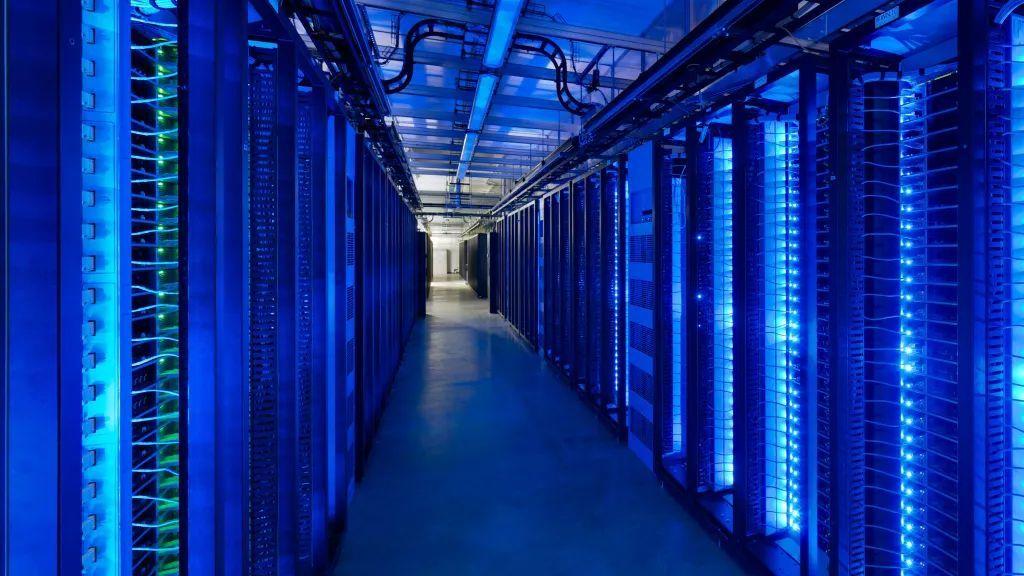
A groundbreaking study conducted by researchers from Georgetown, Epoch AI, and Rand has unveiled the staggering growth trajectory of AI data centers worldwide. The research, which analyzed over 500 AI data center projects from 2019 to 2025, reveals that the computational performance of these facilities is more than doubling annually
1
.Key findings show that hardware costs for AI data centers have increased 1.9x each year, while power requirements have climbed 2x annually during the same period. This rapid expansion is exemplified by projects like xAI's Colossus, which comes with a hefty price tag of around $7 billion and consumes an estimated 300 megawatts of power – equivalent to the energy needs of 250,000 households
1
.Projected Costs and Power Demands
If current trends persist, the study projects that by June 2030, the leading AI data center may require:
- 2 million AI chips
- $200 billion in construction costs
- 9 gigawatts of power (equivalent to the output of 9 nuclear reactors)
These projections highlight the immense scale of infrastructure needed to support AI technologies in the coming decade
2
.Industry Response and Investments
Tech giants are already making significant moves in response to these trends. OpenAI, in partnership with SoftBank and others, is reportedly working to raise up to $500 billion for establishing a network of AI data centers in the U.S. and potentially other locations. Similarly, Microsoft, Google, and AWS have pledged hundreds of millions of dollars this year alone to expand their data center footprints
1
.Energy Efficiency and Environmental Concerns
Despite improvements in energy efficiency, with computational performance per watt increasing 1.34x each year from 2019 to 2025, these advancements may not be sufficient to offset the growing power demands. The Wells Fargo analysis forecasts a 20% growth in data center energy intake by 2030, potentially straining renewable power sources and leading to increased reliance on fossil fuels
1
.Geographic Distribution and Ownership
Epoch AI's research indicates a significant shift in the ownership and location of AI computing power. The share owned by private companies has risen from 40% in 2019 to 80% in 2025. Geographically, 75% of AI supercomputers' computing power is hosted in the United States, followed by China with a 15% share
3
.Related Stories


Challenges and Potential Solutions
The exponential growth in AI supercomputing raises concerns about power constraints by 2030. To address this challenge, companies may need to explore decentralized training approaches, distributing their operations across multiple locations
3
.Market Dynamics and Future Outlook
While the projections paint a picture of unprecedented growth, recent market trends suggest a potential "cooling" in the data center market. Some hyperscalers, including AWS and Microsoft, have scaled back their data center projects in early 2025, indicating industry concerns about unsustainable expansion
1
.As the AI industry continues to evolve rapidly, balancing technological advancement with environmental sustainability and infrastructure capabilities remains a critical challenge for the coming years.
References
Summarized by

Navi
[2]
Related Stories
Recent Highlights
1
Meta Unveils Muse Wonder Frontier AI Models, Claims Performance Matching OpenAI and Anthropic
Technology

2
IMF Report Warns AI Market Correction Could Spark Global Financial Crisis With $1.4T at Risk
Business and Economy

3
OpenAI Releases 722 AI-Generated Math Solutions, Triggering Existential Crisis in Mathematics
Technology

Recent Highlights
Today's Top Stories









Don’t drown in AI news. We cut through the noise - filtering, ranking and summarizing the most important AI news, breakthroughs and research daily. Follow topics that matter to you and stay ahead.


