AI Breakthrough: First Functional Genomes Designed and Tested in Lab


3 Sources
[1]
AI generated its first working genome: a tiny bacteria killer
AI-designed bacteriophages could one day be used in phage therapy Artificial intelligence can dash off more than routine emails. It has now written tiny working genomes. Two AI models designed the blueprints for 16 viruses capable of attacking Escherichia coli in lab dishes, researchers report
[2]
Experts Alarmed That AI Is Now Producing Functional Viruses
In real world experiments, a team of Stanford researchers demonstrated that a virus with AI-written DNA could target and kill specific bacteria, they announced in a study last week. It opened up a world of possibilities where artificial viruses could be used to cure diseases and fight
[3]
AI Has Designed Living Genomes -- And They Worked in the Lab
The work hints at custom-designed phage therapies -- and raises urgent questions about governing generative biology. This week, while some headlines focused on the unsettling claim that an AI system had designed a working virus, a quieter preprint out of Stanford and the Arc Institute hinted at
Share
Copy Link
Stanford researchers have successfully used AI to design and create functional bacteriophage genomes, marking a significant milestone in synthetic biology. This achievement opens new possibilities for phage therapy and raises important biosafety concerns.
AI Creates First Functional Genomes
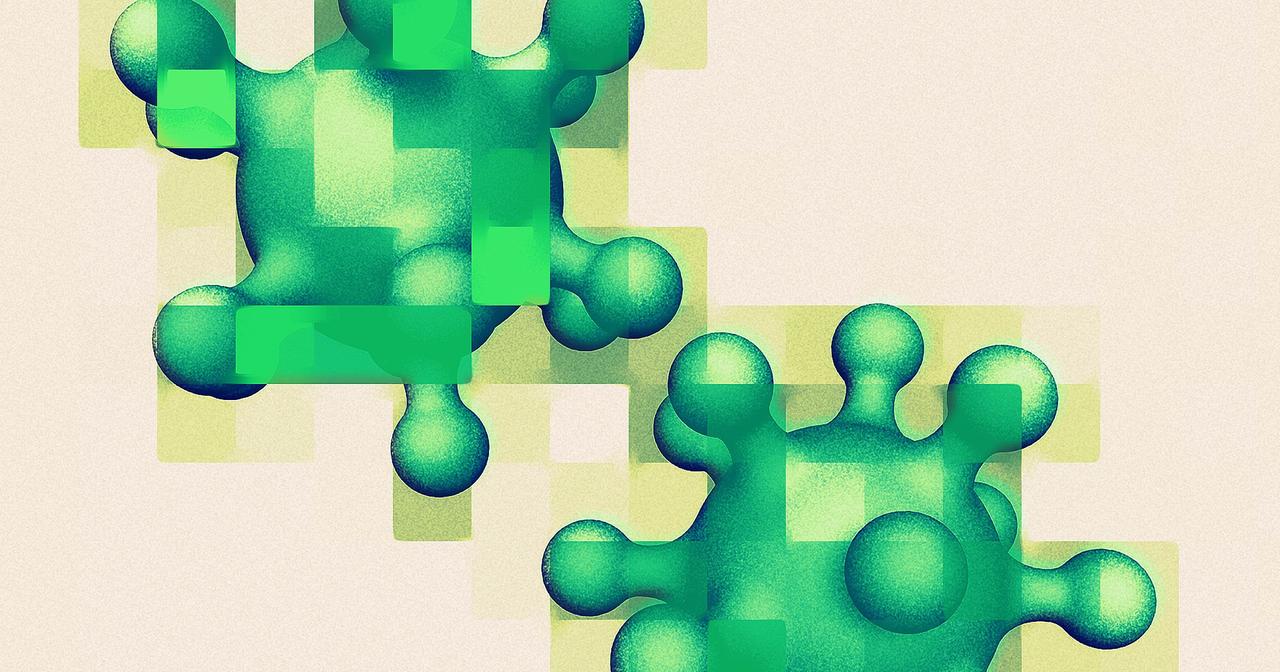
In a groundbreaking development, researchers from Stanford University and the Arc Institute have successfully used artificial intelligence to design and create functional bacteriophage genomes. This achievement marks the first time AI has generated entire working genomes, representing a significant milestone in the field of synthetic biology
1
3
.
Source: Futurism
The research team employed two AI models, Evo 1 and Evo 2, which were trained on billions of base pairs of viral DNA. These models generated approximately 300 potential phage genomes, of which 16 produced viable viruses capable of infecting Escherichia coli (E. coli) bacteria
1
.Potential Applications in Medicine
One of the most promising applications of this technology is in the field of phage therapy, which could offer a solution to the growing problem of antibiotic-resistant bacterial infections. The AI-generated phages demonstrated the ability to rapidly evolve and overcome bacterial resistance, suggesting potential use in treating challenging infections
1
2
.Kimberly Davis, a microbiologist at Johns Hopkins Bloomberg School of Public Health, highlighted the potential of AI in rapidly generating phage matches for urgent patient treatment. However, she also emphasized the need for tight control and extensive testing of AI-generated phages
1
.Implications for Synthetic Biology
This achievement is being compared to Craig Venter's 2010 creation of a minimal bacterial cell in terms of its significance for synthetic biology. The ability of AI to compose new genomes from scratch, balancing thousands of interdependent genes and regulatory elements, opens up new possibilities for designing custom viral treatments and programming microbiomes
3
.
Source: Science News
Related Stories

Biosafety Concerns and Regulatory Challenges
While the potential benefits are significant, experts have raised concerns about the biosafety implications of this technology. The ability to generate functional viruses using AI could potentially be misused to create biological weapons, necessitating careful regulation and oversight
2
.Tal Feldman and Jonathan Feldman, writing in the Washington Post, emphasized the need for proactive measures to address potential risks. They suggested prioritizing the development of high-quality datasets, building infrastructure for manufacturing AI-designed medicines, and overhauling regulatory frameworks to allow for faster deployment of AI-generated countermeasures
2
.Future Prospects and Challenges
The research team envisions potential applications beyond medicine, including microbial manufacturing processes and the cultivation of microbes for environmental purposes, such as plastic degradation. However, they acknowledge that significant work remains to be done, particularly in scaling up to more complex genomes like the human genome
1
3
.
Source: Decrypt
As AI continues to advance in its ability to design and create biological entities, society faces the challenge of keeping pace with these developments. The leap from text to test tube collapses the distance between simulation and creation, forcing researchers and regulators to confront a new reality where AI not only predicts biology but invents it
3
.References
Summarized by

Navi
[1]
Related Stories
AI-Designed Proteins Expose Biosecurity Vulnerabilities in DNA Screening
03 Oct 2025•Science and Research
AI-Designed Antibiotics Show Promise Against Drug-Resistant Superbugs
15 Aug 2025•Science and Research

Evo-2: AI Model Revolutionizes Genomic Research and DNA Generation
20 Feb 2025•Science and Research

Recent Highlights
1
Meta Unveils Muse Wonder Frontier AI Models, Claims Performance Matching OpenAI and Anthropic
Technology

2
IMF Report Warns AI Market Correction Could Spark Global Financial Crisis With $1.4T at Risk
Business and Economy

3
OpenAI Releases 722 AI-Generated Math Solutions, Triggering Existential Crisis in Mathematics
Technology

Recent Highlights
Today's Top Stories









Don’t drown in AI news. We cut through the noise - filtering, ranking and summarizing the most important AI news, breakthroughs and research daily. Follow topics that matter to you and stay ahead.


