2 Sources
[1]
Mamdani and AI industry flex political power in New York, plus more to watch in Tuesday's primaries
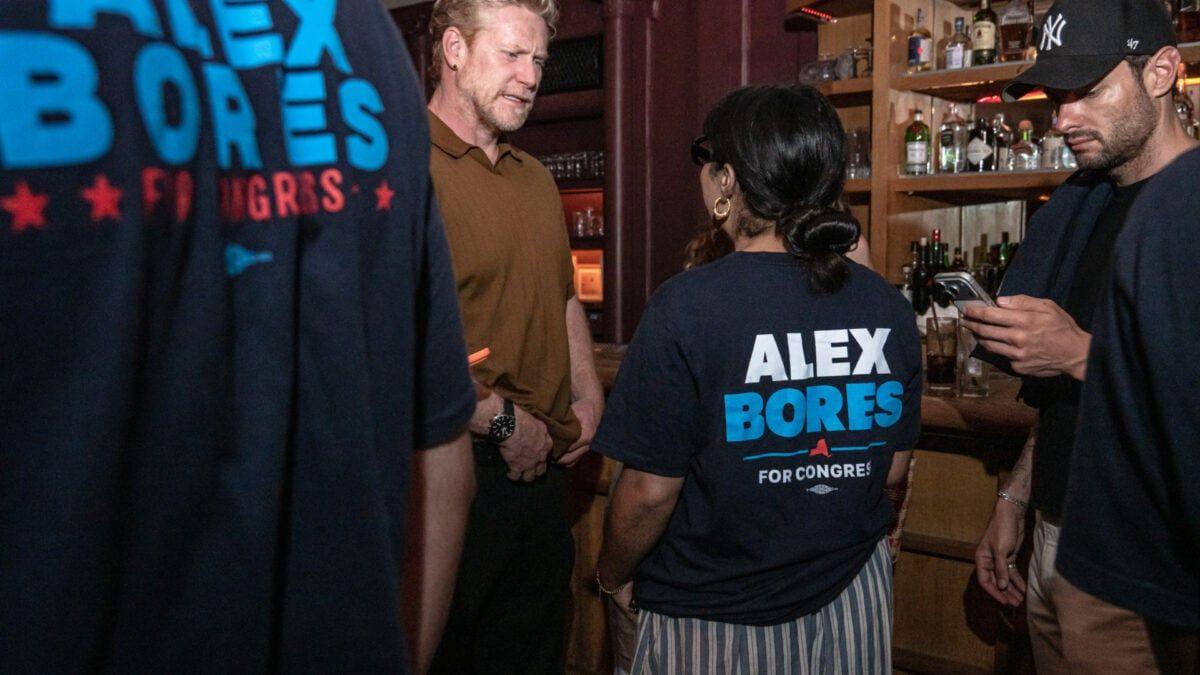
WASHINGTON (AP) -- Two opposing factions in the artificial intelligence industry square off in a Democratic primary for a U.S. House seat. New York City Mayor Zohran Mamdani tests his political clout by backing fellow democratic socialists. And President Donald Trump, after two of his chosen candidates for governor lost Republican primaries this month, ensured it won't happen again -- by endorsing both candidates in a South Carolina runoff. Those are a few of the races to watch on Tuesday as voters head to the polls for primaries in Maryland, New York, South Carolina and Utah. Manhattan House primary is a bellwether for pro-AI regulation candidates The crowded Democratic primary became a proxy battle between two powerful camps of the artificial intelligence industry because of one candidate: New York Assemblyman Alex Bores. Bores, a former Palantir employee who cited ethical concerns in leaving the company, pushed one of the more sweeping state-level AI regulation bills in the country. Now, Bores points to that legislation -- which faced some industry pushback -- as a framework for how he'd approach regulation in Congress. So when he stepped into the race for the New York congressional district being vacated by retiring Democratic Rep. Jerry Nadler, a political group underwritten by investors in OpenAI spent more than $7 million on ads against Bores. Then an opposing wing of the industry, one more in favor of regulation, rode to Bores' aid. Political groups partly funded by Anthropic, which makes the chatbot Claude, spent more $10 million to boost Bores' candidacy. Anthropic was co-founded by former OpenAI employee, Dario Amodei, who left the company partly over concerns about AI safety. The election will offer some measure of the political might of the two AI industry factions. Mamdani flexes his political influence by endorsing progressive insurgents The New York City mayor endorsed Democratic primary candidates hailing from his own political camp -- a progressive and two democratic socialists -- who are challenging more established candidates, some backed by party leadership. U.S. Rep. Dan Goldman, whose seat extends from lower Manhattan to a chunk of Brooklyn, is up against Mamdani-backed challenger Brad Lander, the former comptroller. A central contention between the two Jewish candidates is the war in Gaza, with Lander assailing Goldman for not being critical enough of Israel. North of that race, in upper Manhattan, Democratic U.S. Rep. Adriano Espaillat, 71, is facing off against Mamdani-endorsed Darializa Avila Chevalier, 32. The latter is a democratic socialist who hasn't held public office before and works at a public defender's office providing legal aid to victims of police brutality. For the seat covering parts of Brooklyn and Queens, where U.S. Rep. Nydia Velázquez is retiring, Mamdani endorsed Assemblymember Claire Valdez, another self-described democratic socialist. The departing Velázquez has endorsed another contender, Brooklyn Borough President Antonio Reynoso. The three primaries will help distinguish not just Mamdani's political clout, but the continued viability of democratic socialist platforms in New York City. Trump hedges in South Carolina after shaky endorsement record in gubernatorial races Trump often touts his otherwise strong record of endorsing winning candidates in Republican primaries, but his picks in gubernatorial races haven't found as much success: his choices in Georgia and Iowa lost this month. After the defeats, Trump ensured an ironclad victory for his endorsement in South Carolina's Republican runoff for governor: he backed both candidates on the same ballot. The president initially supported Lt. Gov. Pamela Evette in May, but on Friday, he added an endorsement for Evette's opponent, state Attorney General Alan Wilson. "I can't hurt one of them by only Endorsing the other, so therefore, I am going to Endorse, for Governor of South Carolina, both Pam Evette and Alan Wilson!" he wrote in a social media post Friday. "It's a Wealth of Riches - With either one you can't go wrong." The projected winner? Trump's endorsement record. Utah redistricting opens up a sole Democratic battleground, and a debate over the party's future It's unusual for Utah's Democratic primaries to draw much attention, but that's because the party hasn't had much of a shot in the staunchly red state. That is until redistricting last year. It created a lone Democratic island centered on Salt Lake City, which has a dark enough hue of blue that primary candidates have found themselves jostling for who's farther to the left. And Democratic primary voters, as in other left-leaning districts across the country, will decide how progressive they'd like their candidate. That's an unusual tune for Utah Democrats, and for primary candidate Ben McAdams. The former U.S. representative has tried to cast off his reputation as a moderate as he runs against three opponents from his progressive flank. When McAdams last ran in 2018, ousting a Republican, he described himself as pro-life and fashioned himself as a moderate. Now, in the new left-leaning district, he's pledged to support abortion rights and said he's only "moderate in tone." The more progressive candidates challenging him include state Sen. Nate Blouin, who has said the electorate has grown accustomed to Democrats who will "play nice" with Republicans and who has won support from Sen. Bernie Sanders. Another is political newcomer Liban Mohamed. Maryland Republicans seek an heir to Hogan in bid to retake governorship Republican Larry Hogan reigned as Maryland governor for eight years, standing on a more moderate conservative platform to keep his perch in the left-leaning, East Coast state. At Hogan's departure, Democratic Gov. Wes Moore took over in 2024, and is now seeking reelection for a second term. But so far Republicans haven't found a clear successor to Hogan as Tuesday's primary forces a decision from a field of nine candidates. One is Dan Cox, an attorney who lost his gubernatorial bid four years ago, and who has more embraced a rightward flank, pledging to cut taxes and invest in housing affordability programs. Then there's Ed Hale, owner of the Baltimore Blast soccer team and retired banking executive, who flipped his party from Democrat to Republican for this race.
[2]
Mamdani and AI Industry Flex Political Power in New York, Plus More to Watch in Tuesday's Primaries
WASHINGTON (AP) -- Two opposing factions in the artificial intelligence industry square off in a Democratic primary for a U.S. House seat. New York City Mayor Zohran Mamdani tests his political clout by backing fellow democratic socialists. And President Donald Trump, after two of his chosen candidates for governor lost Republican primaries this month, ensured it won't happen again -- by endorsing both candidates in a South Carolina runoff. Those are a few of the races to watch on Tuesday as voters head to the polls for primaries in Maryland, New York, South Carolina and Utah. Manhattan House primary is a bellwether for pro-AI regulation candidates The crowded Democratic primary became a proxy battle between two powerful camps of the artificial intelligence industry because of one candidate: New York Assemblyman Alex Bores. Bores, a former Palantir employee who cited ethical concerns in leaving the company, pushed one of the more sweeping state-level AI regulation bills in the country. Now, Bores points to that legislation -- which faced some industry pushback -- as a framework for how he'd approach regulation in Congress. So when he stepped into the race for the New York congressional district being vacated by retiring Democratic Rep. Jerry Nadler, a political group underwritten by investors in OpenAI spent more than $7 million on ads against Bores. Then an opposing wing of the industry, one more in favor of regulation, rode to Bores' aid. Political groups partly funded by Anthropic, which makes the chatbot Claude, spent more $10 million to boost Bores' candidacy. Anthropic was co-founded by former OpenAI employee, Dario Amodei, who left the company partly over concerns about AI safety. The election will offer some measure of the political might of the two AI industry factions. Mamdani flexes his political influence by endorsing progressive insurgents The New York City mayor endorsed Democratic primary candidates hailing from his own political camp -- a progressive and two democratic socialists -- who are challenging more established candidates, some backed by party leadership. U.S. Rep. Dan Goldman, whose seat extends from lower Manhattan to a chunk of Brooklyn, is up against Mamdani-backed challenger Brad Lander, the former comptroller. A central contention between the two Jewish candidates is the war in Gaza, with Lander assailing Goldman for not being critical enough of Israel. North of that race, in upper Manhattan, Democratic U.S. Rep. Adriano Espaillat, 71, is facing off against Mamdani-endorsed Darializa Avila Chevalier, 32. The latter is a democratic socialist who hasn't held public office before and works at a public defender's office providing legal aid to victims of police brutality. For the seat covering parts of Brooklyn and Queens, where U.S. Rep. Nydia Velázquez is retiring, Mamdani endorsed Assemblymember Claire Valdez, another self-described democratic socialist. The departing Velázquez has endorsed another contender, Brooklyn Borough President Antonio Reynoso. The three primaries will help distinguish not just Mamdani's political clout, but the continued viability of democratic socialist platforms in New York City. Trump hedges in South Carolina after shaky endorsement record in gubernatorial races Trump often touts his otherwise strong record of endorsing winning candidates in Republican primaries, but his picks in gubernatorial races haven't found as much success: his choices in Georgia and Iowa lost this month. After the defeats, Trump ensured an ironclad victory for his endorsement in South Carolina's Republican runoff for governor: he backed both candidates on the same ballot. The president initially supported Lt. Gov. Pamela Evette in May, but on Friday, he added an endorsement for Evette's opponent, state Attorney General Alan Wilson. "I can't hurt one of them by only Endorsing the other, so therefore, I am going to Endorse, for Governor of South Carolina, both Pam Evette and Alan Wilson!" he wrote in a social media post Friday. "It's a Wealth of Riches - With either one you can't go wrong." The projected winner? Trump's endorsement record. Utah redistricting opens up a sole Democratic battleground, and a debate over the party's future It's unusual for Utah's Democratic primaries to draw much attention, but that's because the party hasn't had much of a shot in the staunchly red state. That is until redistricting last year. It created a lone Democratic island centered on Salt Lake City, which has a dark enough hue of blue that primary candidates have found themselves jostling for who's farther to the left. And Democratic primary voters, as in other left-leaning districts across the country, will decide how progressive they'd like their candidate. That's an unusual tune for Utah Democrats, and for primary candidate Ben McAdams. The former U.S. representative has tried to cast off his reputation as a moderate as he runs against three opponents from his progressive flank. When McAdams last ran in 2018, ousting a Republican, he described himself as pro-life and fashioned himself as a moderate. Now, in the new left-leaning district, he's pledged to support abortion rights and said he's only "moderate in tone." The more progressive candidates challenging him include state Sen. Nate Blouin, who has said the electorate has grown accustomed to Democrats who will "play nice" with Republicans and who has won support from Sen. Bernie Sanders. Another is political newcomer Liban Mohamed. Maryland Republicans seek an heir to Hogan in bid to retake governorship Republican Larry Hogan reigned as Maryland governor for eight years, standing on a more moderate conservative platform to keep his perch in the left-leaning, East Coast state. At Hogan's departure, Democratic Gov. Wes Moore took over in 2024, and is now seeking reelection for a second term. But so far Republicans haven't found a clear successor to Hogan as Tuesday's primary forces a decision from a field of nine candidates. One is Dan Cox, an attorney who lost his gubernatorial bid four years ago, and who has more embraced a rightward flank, pledging to cut taxes and invest in housing affordability programs. Then there's Ed Hale, owner of the Baltimore Blast soccer team and retired banking executive, who flipped his party from Democrat to Republican for this race.
Share
Copy Link
Two opposing factions of the AI industry are pouring over $17 million into a Manhattan congressional primary, turning the race into a proxy battle over AI regulation. OpenAI-backed groups spent more than $7 million against Alex Bores, while Anthropic supporters countered with over $10 million in his favor, testing the political influence of competing AI industry camps.
The AI industry is demonstrating unprecedented political influence in Tuesday's primaries, particularly in a Manhattan congressional race that has become a proxy battle between two powerful industry factions. New York Assemblyman Alex Bores, a former Palantir employee who left citing ethical concerns, finds himself at the center of a multimillion-dollar campaign war over AI regulation
1
.When Bores entered the race for the New York primary seat being vacated by retiring Democratic Rep. Jerry Nadler, political groups underwritten by investors in OpenAI spent more than $7 million on ads opposing his candidacy. The opposition stems from Bores' record of pushing one of the more sweeping state-level AI regulation bills in the country, which he now presents as a framework for congressional action
1
.In response, an opposing wing more favorable to AI regulation mobilized significant resources. Political groups partly funded by Anthropic, the company behind chatbot Claude, spent more than $10 million to boost Bores' candidacy. Anthropic was co-founded by Dario Amodei, a former OpenAI employee who departed partly over AI safety concerns, making this primary election a measure of AI industry political power between competing visions for the sector's future
2
.
Source: AP
Beyond the AI industry showdown, New York City Mayor Zohran Mamdani is testing his own political influence by backing progressive challengers in multiple primary elections. Mamdani endorsed three candidates from his political camp—a progressive and two democratic socialist insurgents—who are challenging more established candidates backed by party leadership
1
.The Zohran Mamdani endorsements include Brad Lander, former comptroller challenging U.S. Rep. Dan Goldman in a race focused heavily on the Gaza war; Darializa Avila Chevalier, a 32-year-old democratic socialist challenging 71-year-old Rep. Adriano Espaillat; and Assemblymember Claire Valdez for the Brooklyn-Queens seat where Rep. Nydia Velázquez is retiring. These three primaries will help determine both Mamdani's clout and the viability of democratic socialist platforms in New York City
2
.Related Stories
President Donald Trump, after watching his chosen candidates lose gubernatorial races in Georgia and Iowa this month, took an unusual approach to the South Carolina runoff by endorsing both candidates. Initially supporting Lt. Gov. Pamela Evette in May, Trump added an endorsement for her opponent, state Attorney General Alan Wilson, on Friday, ensuring his endorsement record would claim victory regardless of the outcome
1
.Utah redistricting last year created a Democratic-leaning district centered on Salt Lake City, an unusual development in the staunchly red state. The shift has primary candidates competing over who stands farther left, forcing former U.S. representative Ben McAdams to shed his moderate reputation as he faces three progressive challengers. The race signals how Democratic primary voters will shape their party's direction in newly competitive territory
2
.The combined spending of over $17 million in a single congressional primary elections race demonstrates how the AI industry has emerged as a major political force, with the outcome likely to influence how other candidates approach AI regulation in future campaigns.
Summarized by
Navi
[1]
05 Jun 2026•Policy and Regulation
24 Jun 2026•Policy and Regulation

17 Jun 2026•Policy and Regulation

1
Technology

2
Business and Economy

3
Technology