AI giants spend $16 million to shape Manhattan primary as regulation debate intensifies


3 Sources
[1]
The A.I. Proxy Fight Roiling the Race for a New York House Seat
Groups tied to OpenAI, Anthropic and other industry players have spent $16 million trying to pick the next member of Congress from Manhattan. Super PACs tied to the nation's leading artificial intelligence giants have transformed the closing weeks of a race for a coveted New York City House seat
[2]
A Kennedy, Kellyanne Conway's ex-husband and a former Palantir data scientist debated AI regulation. Welcome to the Manhattan primary | Fortune
Democrats competing over a coveted congressional district in Manhattan slugged it out during a heated debate Thursday night, sparring over big tech and who would be President Donald Trump's toughest foe. But it was Alex Bores -- a state lawmaker whose plans to regulate artificial intelligence has
[3]
Democrats Spar Over Big Tech During Debate for Coveted Congressional District in Manhattan
NEW YORK (AP) -- Democrats competing over a coveted congressional district in Manhattan slugged it out during a heated debate Thursday night, sparring over big tech and who would be President Donald Trump's toughest foe. But it was Alex Bores -- a state lawmaker whose plans to regulate artificial
Share
Copy Link
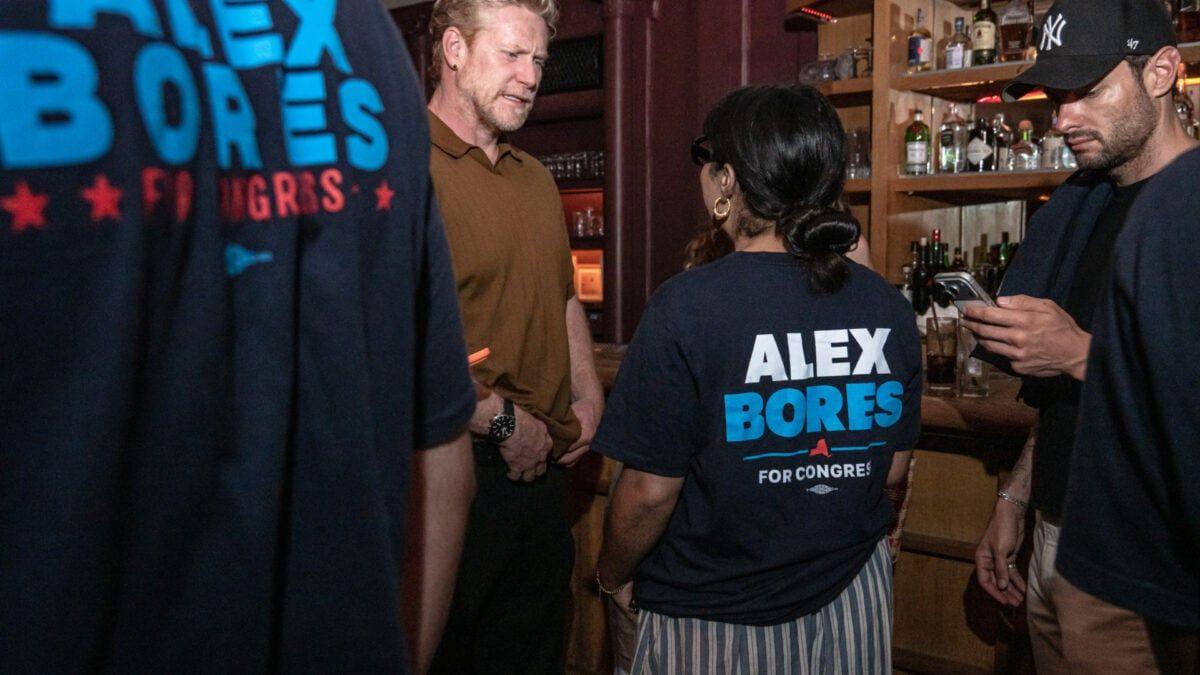
Super PACs tied to OpenAI and Anthropic have unleashed more than $16 million in the race for New York's 12th congressional district, transforming what began as attacks on state lawmaker Alex Bores into a national proxy battle over AI regulation. The spending has inadvertently elevated Bores into a front-runner, while exposing how quickly tech giants can reshape electoral politics.
AI Industry Influence Transforms Manhattan Primary Into Most Expensive Congressional Race
The Democratic primary for New York's 12th congressional district has become ground zero for a proxy battle over AI regulation, with super PAC spending from tech giants reaching unprecedented levels. Groups linked to Silicon Valley rivals OpenAI and Anthropic have already spent more than $12 million combined, while other industry-connected entities have contributed an additional $4 million
1
. Together with former Mayor Michael Bloomberg's unrelated $10 million infusion, the June 23 primary could become one of the most expensive congressional races in history.The massive campaign spending serves as a preview of an even larger battle expected during the fall midterms, when tech companies have pledged to spend hundreds of millions of dollars on elections that could determine whether Congress pursues new guardrails for the industry
1
. Retiring Representative Jerrold Nadler called it "a real test of whether corporate interests from California, from A.I., from crypto can control an election," adding that he hates to see it happening in his district1
.Alex Bores Emerges as Front-Runner Despite Initial Attack Campaign
The corporate influence in politics intensified when a super PAC connected to OpenAI and other industry players opposed to greater government regulation targeted Alex Bores, a 35-year-old state lawmaker who helped write legislation seeking to regulate advanced artificial intelligence models in New York
1
. A former data scientist at Palantir who says he quit after the company signed a deal to help the first Trump administration with immigration enforcement, Bores sponsored state legislation to require major AI developers to report dangerous incidents to the state2
.However, the attacks from Leading the Future and Think Big, which spent $6.5 million against him, inadvertently elevated the little-known state lawmaker into a front-runner
1
. In response, entities tied to Anthropic and other tech donors favoring greater big tech regulation came to his aid with millions of dollars. By Thursday, spending in favor of Bores's candidacy by industry players had actually narrowly exceeded spending against him, according to federal records1
.Heated Debate Exposes Deep Divisions Over AI Regulation and Tech Money
During a PIX11-hosted debate, Micah Lasher, Nadler's endorsed successor and a former aide to Bloomberg, suggested Bores would be beholden to big tech players supporting his campaign. "Alex only wants to tell you half the story, about one AI company that's spending millions to defeat him, and that's bad," Lasher said. "But he's not telling you the story about Anthropic, which is spending a million dollars to elect him, or a crypto billionaire who is spending $3.5 million to send him to Congress"
2
.Jack Schlossberg, the grandson of former President John F. Kennedy, made similar claims, arguing that Bores' proposed AI regulation "is a dream come true" for tech companies because it would give them too much control
3
. Bores responded by calling the attacks "Trump disinformation" coming from inside the party2
.The debate itself was interrupted by commercials highlighting the glut of spending—three of the five ads were about Bores, including one from the AI-backed Think Big PAC claiming he was "bought and sold" by corporate interests, and two supportive ads, one featuring a robotic voice identifying itself as "the AI super PAC funded by Trump's megadonors designed to destroy Alex Bores"
3
.Related Stories

Electoral Politics Collide With Tech Industry's Regulatory Future
Polls show Bores and Lasher in a statistical dead heat, followed by Schlossberg, George Conway (the anti-Trump commentator and former husband of Kellyanne Conway), and Nina Schwalbe, a global vaccine expert
1
. The winner is expected to easily win in November, representing a district that includes Broadway, Central Park, Times Square, and more Fortune 500 companies than any other congressional district1
.Bores has sought to use the initial attacks to present himself as a crusading tech reformer being punished for standing up to "Trump megadonors," a position that has attracted support from labor unions and progressive groups
1
. Josh Vlasto, the top strategist for the anti-Bores groups, has argued that Bores's plans would choke American innovation1
.The race has thrust thorny questions about corporate influence, political power, and rapidly evolving artificial intelligence technology onto the campaign trail at a time when anxieties and optimism over AI disruption are already soaring, particularly around impacts such as job losses
3
. What happens in this Manhattan primary could signal whether tech industry money can effectively shape congressional races and, ultimately, the regulatory environment for AI development.References
Summarized by

Navi
Related Stories
AI Super PACs wage $27 million proxy battle over regulation in New York congressional race
17 Jun 2026•Policy and Regulation

AI Super PACs Pour $27 Million Into Congressional Primary, But Winner Rejects Their Influence
24 Jun 2026•Policy and Regulation
AI industry floods midterm elections with $150 million as battle over regulation intensifies
19 Feb 2026•Policy and Regulation

Recent Highlights



Recent Highlights
Today's Top Stories



Don’t drown in AI news. We cut through the noise - filtering, ranking and summarizing the most important AI news, breakthroughs and research daily. Follow topics that matter to you and stay ahead.


