AI detects pancreatic cancer up to 3 years before diagnosis, outperforming radiologists by nearly 3x


9 Sources
[1]
AI Spots Pancreatic Cancer Years Before It Shows Up, Study Finds
The system could eventually be used to flag high-risk patients for closer follow-up, but it needs prospective testing to confirm it improves outcomes before routine use. An artificial intelligence system can spot pancreatic cancer long before it shows up on scans, raising the prospect of catching
[2]
AI model detects pancreatic cancer years before clinical diagnosis
BMJ GroupApr 28 2026 An AI model (REDMOD) can pick up the very early subtle tissue changes of pancreatic ductal adenocarcinoma, the most common form of pancreatic cancer, which conventional imaging and the human eye find difficult to detect, finds research published online in the journal Gut. As
[3]
Mayo Clinic Says AI Can Detect Pancreatic Cancer Years Before Human Doctors - Decrypt
REDMOD's detection capability nearly doubles that of specialists reviewing the same scans -- 39% for radiologists versus 73% for the AI. Mayo Clinic has developed an AI model that can detect pancreatic cancer up to three years before clinical diagnosis by identifying subtle changes in routine CT
[4]
AI finds signs of pancreatic cancer before tumors develop
The Mayo Clinic's AI model analyzes a CT scan to detect early tissue changes associated with pancreatic cancer.Mayo Clinic By the time doctors detect pancreatic cancer, it's often too late to treat effectively. But a new study suggests that artificial intelligence might be able to find signs of
[5]

Mayo Clinic AI Detects Pancreatic Cancer Up to 3 Years Before Diagnosis in Landmark Validation Study | Newswise
Newswise -- ROCHESTER, Minn. -- A Mayo Clinic-developed artificial intelligence (AI) model can help specialists detect pancreatic cancer on routine abdominal CT scans up to three years before clinical diagnosis. It identifies subtle signs of disease before tumors are visible, when curative
[6]

Study shows AI outperforms radiologists in early detection
An artificial intelligence framework named REDMOD can identify the earliest signs of pancreatic cancer on routine CT scans an average of 475 days before typical clinical diagnosis, according to a study published in the journal Gut. Developed by researchers at Mayo Clinic, REDMOD detects subtle
[7]

How AI Is Spotting Pancreatic Cancer Signals That Most Doctors Miss
Artificial intelligence may be able to detect pancreatic cancer more than a year before it's typically diagnosed, offering a potential breakthrough for one of the deadliest forms of cancer. Researchers at the Mayo Clinic developed a model called Redmond that identified subtle warning signs in
[8]

Cancer Never Saw the Algorithm Coming | PYMNTS.com
By completing this form, you agree to receive marketing communications from PYMNTS and to the sharing of your information with our sponsor, if applicable, in accordance with our Privacy Policy and Terms and Conditions. The same week that a new philanthropic push pledged $500 million to build
[9]

New tool can find deadliest cancer years before tumors can be seen on a scan
Many are split on whether AI is good for humanity, but a new AI-powered tool could prove revolutionary when it comes to cancer screenings. Pancreatic cancer is considered one of the most aggressive and difficult-to-detect cancers. It has a 13% five-year survival rate and is projected to cause more
Share
Copy Link
Mayo Clinic researchers developed REDMOD, an AI model that spots pancreatic cancer an average of 475 days before clinical diagnosis by identifying subtle changes invisible to the human eye on routine CT scans. The system correctly identified 73% of cases compared to 39% for radiologists, offering hope for shifting diagnosis from late-stage terminal disease to early-stage curative treatment.
AI Model REDMOD Achieves Breakthrough in Early Detection
Mayo Clinic researchers have developed an AI system that can detect pancreatic cancer on routine CT scans up to three years before clinical diagnosis, according to a validation study published in the journal Gut
1
. The AI model, called Radiomics-based Early Detection Model (REDMOD), identified the invisible signature of pre-clinical pancreatic ductal adenocarcinoma an average of 475 days before patients received their diagnosis2
. This temporal window holds profound significance for a disease where more than 85% of cases are found at a stage where curative treatment is no longer possible1
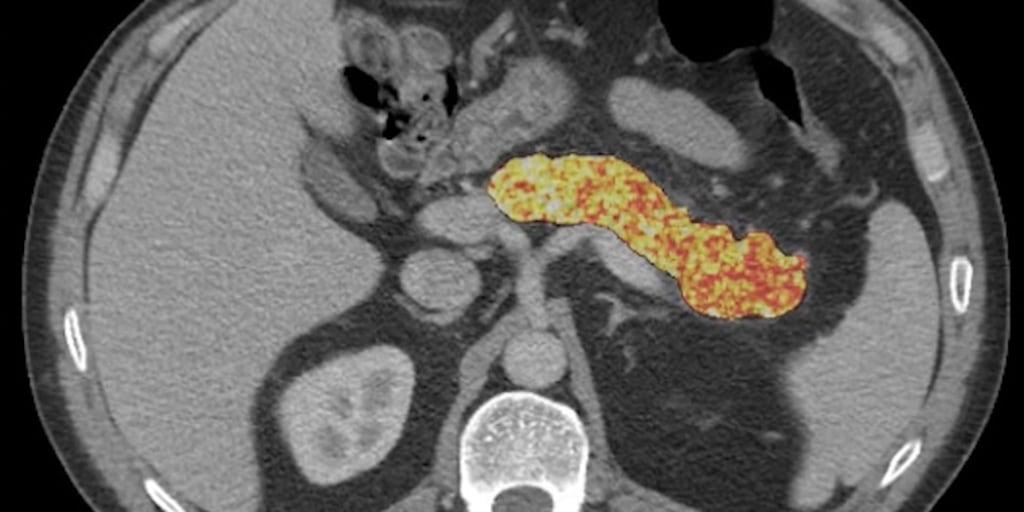
.
Source: NBC
The system analyzes patterns and tissue texture in imaging that aren't visible to the human eye, identifying subtle changes that signal cancer development before tumors appear
4
. REDMOD includes automated pancreatic segmentation, which clearly delineates the borders of the pancreas from surrounding tissue and organs, eliminating the need for manual preparation and reducing the risk of variable accuracy2
.
Source: PYMNTS
AI Outperforms Radiologists in Identifying Early Indicators of Pancreatic Cancer
In head-to-head testing, REDMOD demonstrated markedly superior performance compared to experienced radiologists reviewing the same CT scans. The AI correctly identified 73% of prediagnostic cancers, nearly double the 39% detection rate achieved by specialists analyzing identical images without AI assistance
5
. The advantage widened dramatically for scans obtained more than two years before diagnosis, where the system detected 68% of cases versus just 23% for radiologists1
.Researchers tested the AI framework on abdominal CT scans from 219 patients across several hospitals who showed no evidence of disease after radiologist review but were subsequently diagnosed with pancreatic cancer
2
. These scans were compared with those from 1,243 patients who hadn't developed the disease up to three years later. The model also correctly identified more than 81% of scans from people who didn't develop cancer, demonstrating strong specificity alongside its sensitivity1
.Detects Cancer Years Before Diagnosis Could Transform Survival Rates
"The greatest barrier to saving lives from pancreatic cancer has been our inability to see the disease when it is still curable," said Dr. Ajit Goenka, a Mayo Clinic radiologist and the study's senior author
3
. The timing of diagnosis represents the single most critical determinant of survival outcomes for this deadly disease. Modeling studies indicate that increasing the proportion of localized pancreatic ductal carcinomas from 10% to 50% would more than double survival rates1
.
Source: Decrypt
Pancreatic cancer remains one of the deadliest malignancies, with five-year survival rates hovering around 10% globally
1
. The disease is projected to become the second-leading cause of cancer-related death in the United States by 20303
. It's rarely detected early because tumors typically don't cause symptoms and often aren't visible on medical diagnostics until the disease has advanced. Early markers are too subtle to be seen by the human eye on a scan, and in many cases, patients' scans appear normal as little as six months before diagnosis4
.Related Stories

Identifying Subtle Changes in CT Scans Across Multiple Clinical Settings
REDMOD performed consistently across different hospitals, imaging systems, and scanning protocols, demonstrating its robustness beyond a single dataset
5
. The model's predictions remained stable over time, producing consistent results when the same patient was scanned months apart, with REDMOD giving the same answer for 90-92% of scans2
. This reliability supports its potential use for longitudinal monitoring and early detection in high-risk patients.One signature the AI identifies is abnormal cells in the pancreas that shelter and protect cancer from the body's immune defenses—cells that scientists have known exist but struggled to find on scans
4
. The system measures hundreds of quantitative imaging features that describe tissue texture and structure, capturing faint biological changes as cancer begins to develop5
.Path to Clinical Implementation and Improving Survival Rates
The tool could eventually be used to flag high-risk patients for closer follow-up, particularly older adults with unexplained weight loss and new-onset diabetes
1
. Mayo Clinic is now conducting AI-PACED, a prospective clinical trial evaluating how clinicians can integrate AI-guided detection into care for patients at elevated risk3
. The study combines AI analysis of routine imaging with longitudinal follow-up to assess performance, including early detection rates, false positives, and clinical outcomes5
.By catching signs before cancer spreads to major organs or blood vessels, the system might increase the number of patients who could be candidates for surgery, chemotherapy, or radiation
4
. However, the model needs prospective testing to confirm it improves outcomes before routine use1
. Goenka noted it could be several years before the technology reaches widespread clinical use, as clinical trials need to follow participants for three to five years to validate real-world effectiveness4
.References
Summarized by

Navi
Related Stories
AI model detects hidden pancreatic cancer up to 3 years before doctors spot it on CT scans
07 May 2026•Health
AI Revolutionizes Breast Cancer Detection: New Tools Predict Risk and Catch Missed Tumors
22 Oct 2025•Health

AI Breakthrough: Deep Learning Model Revolutionizes Pancreatic Cancer Diagnosis and Treatment
13 Dec 2024•Health

Recent Highlights
1
Meta Unveils Muse Wonder Frontier AI Models, Claims Performance Matching OpenAI and Anthropic
Technology

2
IMF Report Warns AI Market Correction Could Spark Global Financial Crisis With $1.4T at Risk
Business and Economy

3
OpenAI Releases 722 AI-Generated Math Solutions, Triggering Existential Crisis in Mathematics
Technology

Recent Highlights
Today's Top Stories












Don’t drown in AI news. We cut through the noise - filtering, ranking and summarizing the most important AI news, breakthroughs and research daily. Follow topics that matter to you and stay ahead.


