AI-Powered 'Pythia' Tool Revolutionizes Precision in CRISPR Gene Editing


3 Sources
[1]
AI meets CRISPR for precise gene editing
A research team headed by the University of Zurich has developed a powerful new method to precisely edit DNA by combining cutting-edge genetic engineering with artificial intelligence. The work has been published in Nature Biotechnology. This technique opens the door to more accurate modeling of
[2]
New method greatly improves the precision of genome editing
University of ZurichAug 12 2025 A research team headed by the University of Zurich has developed a powerful new method to precisely edit DNA by combining cutting-edge genetic engineering with artificial intelligence. This technique opens the door to more accurate modeling of human diseases and
[3]
Scientists Are Using AI for Improved Gene Hacking
Gene editing has made huge leaps in recent years, such as treating the congenital blood disorders sickle cell anemia and beta thalassemia, which can require lifelong blood transfusions. But scientists still fear that some snipping may lead to unwelcome surprises. However, a research team led by
Share
Copy Link
Researchers from the University of Zurich have developed an AI tool called Pythia that significantly improves the precision of CRISPR gene editing, opening new possibilities for disease modeling and gene therapies.
AI Meets CRISPR: A Breakthrough in Precision Gene Editing
Researchers from the University of Zurich, in collaboration with Ghent University and ETH Zurich, have developed a groundbreaking method that combines artificial intelligence (AI) with CRISPR gene editing technology. This innovative approach, detailed in a study published in Nature Biotechnology, promises to revolutionize the field of genetic engineering by significantly improving the precision of genome editing
1
.
Source: News-Medical
Introducing Pythia: AI-Powered DNA Repair Prediction
At the heart of this advancement is a new AI tool called "Pythia," named after the ancient Greek oracle. Pythia's primary function is to predict how cells will repair their DNA after it has been cut by gene-editing tools like CRISPR/Cas9
2
.Lead author Thomas Naert explains, "DNA repair follows patterns; it is not random. And Pythia uses these patterns to our advantage." By leveraging machine learning to simulate millions of possible editing outcomes, Pythia can determine the most efficient way to make specific genetic changes while considering the cell's likely repair mechanisms
1
.Tiny Templates for Precise Genetic Changes
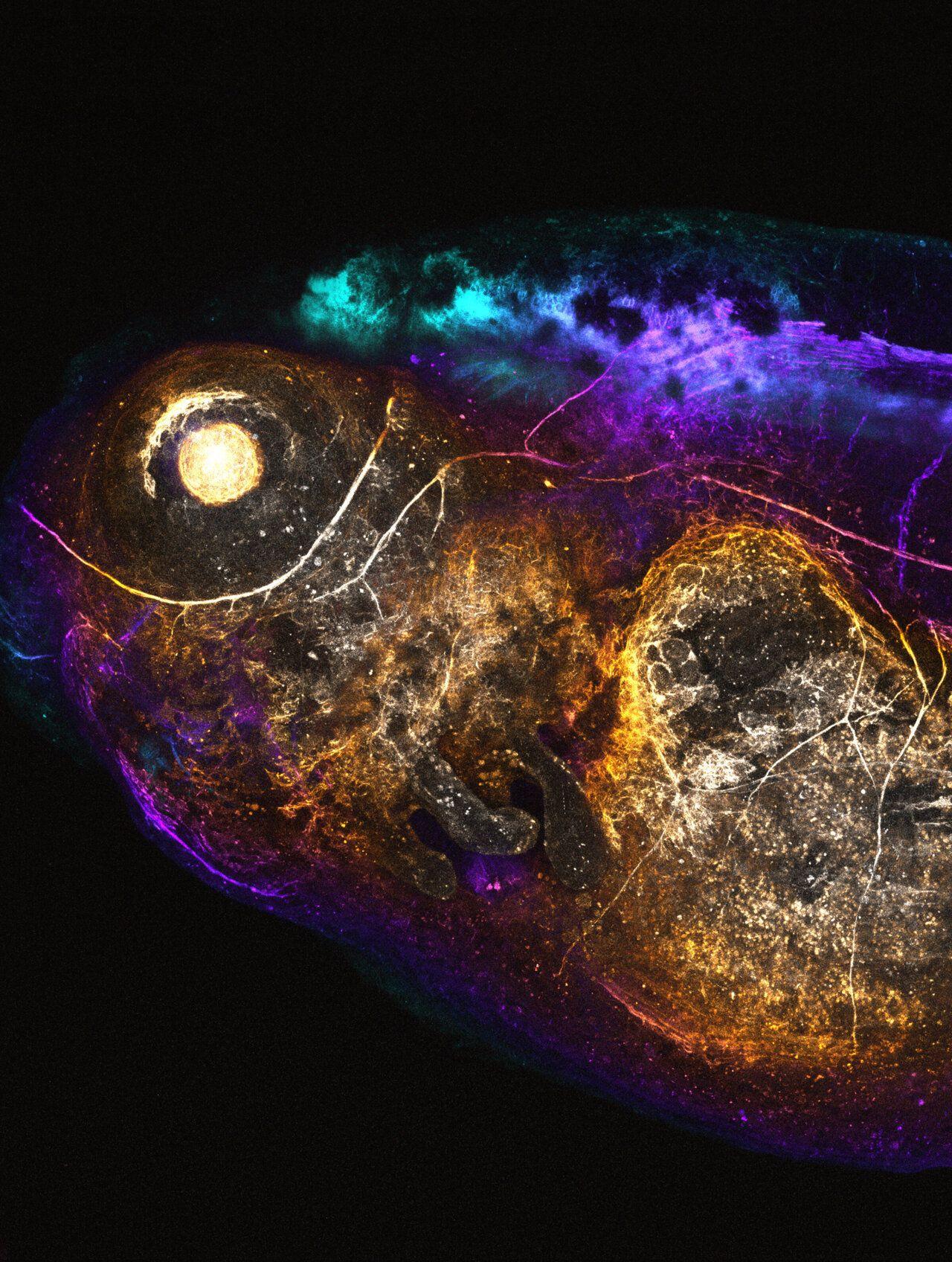
The research team developed small DNA repair templates based on Pythia's predictions. These templates act as "molecular glue," guiding cells to make precise genetic alterations. This approach has been successfully tested in human cell cultures, Xenopus frogs (commonly used in biomedical research), and living mice, where researchers even managed to edit DNA in brain cells
3
.
Source: Phys.org
Versatility and Power of the New Method
The Pythia-assisted method offers several key advantages:
- Precision: It allows for highly accurate gene edits and integrations, reducing the risk of unintended genetic changes.
- Versatility: The technique can change individual letters of the genetic code, integrate whole genes, and even fluorescently label specific proteins for observation.
- Wide applicability: It works effectively in all cells, including those in organs with no cell division, such as the brain
2
.
Related Stories

Implications for Disease Modeling and Gene Therapy
Professor Soeren Lienkamp, senior author of the study, emphasizes the potential of this technology: "Pythia brings together large-scale AI prediction with real biological systems. From cultured cells to whole animals, this tight loop between modeling and experimentation points is becoming increasingly useful, for example in precise gene therapies"
1
.This breakthrough creates new possibilities for understanding genetic diseases and developing safer, more effective gene therapies, including those for neurological conditions. The ability to observe protein behavior in healthy and diseased tissues through fluorescent labeling adds another powerful dimension to this tool
3
.
Source: Futurism
Future Prospects and Challenges
While the potential of Pythia is immense, researchers acknowledge that further validation and refinement will be necessary before its widespread application in clinical settings. However, the successful integration of AI and gene editing technologies marks a significant step forward in the field of genetic engineering, potentially accelerating the development of personalized medicine and targeted therapies for a wide range of genetic disorders.
References
Summarized by

Navi
[1]
[2]
Related Stories
CRISPR-GPT: AI-Powered Gene Editing Assistant Accelerates Drug Development
17 Sept 2025•Science and Research
AI Breakthrough: Designing Synthetic DNA Switches for Precise Gene Control
24 Oct 2024•Science and Research

AI Designs DNA to Control Gene Expression in Healthy Mammalian Cells
09 May 2025•Science and Research

Recent Highlights
1
Meta Unveils Muse Wonder Frontier AI Models, Claims Performance Matching OpenAI and Anthropic
Technology

2
IMF Report Warns AI Market Correction Could Spark Global Financial Crisis With $1.4T at Risk
Business and Economy

3
OpenAI Releases 722 AI-Generated Math Solutions, Triggering Existential Crisis in Mathematics
Technology

Recent Highlights
Today's Top Stories












Don’t drown in AI news. We cut through the noise - filtering, ranking and summarizing the most important AI news, breakthroughs and research daily. Follow topics that matter to you and stay ahead.


