AI Tool Achieves 91% Accuracy Predicting Lung Cancer Immunotherapy Outcomes Across Global Study


3 Sources
[1]
AI Tool Shows Promise for Assessing Pathologic Response in Lung Cancer Treatment
An AI algorithm achieved 91% accuracy in assessing pathologic response (PR) to neoadjuvant chemoimmunotherapy in patients with non-small cell lung cancer (NSCLC), with performance consistent across four international cohorts. The AI-based percentage of residual viable tumour (%RVT) scoring showed
[2]
AI tools help predict immunotherapy outcomes in lung cancer patients
University of Chicago Medical CenterSep 16 2026Reviewed Artificial intelligence (AI) tools can help physicians predict treatment and survival outcomes in patients with advanced non-small cell lung cancer (NSCLC) treated with immunotherapy, according to a new study published in Nature Medicine. The
[3]
AI Tool Successfully Predicts Outcomes of Immunotherapy in Lung Cancer | Newswise
Newswise -- Artificial intelligence (AI) tools can help physicians predict treatment and survival outcomes in patients with advanced non-small cell lung cancer (NSCLC) treated with immunotherapy, according to a new study published in Nature Medicine. The study reported findings from the I3LUNG
Share
Copy Link
Two breakthrough studies demonstrate how AI tools are transforming lung cancer treatment decisions. An AI algorithm achieved 91% accuracy in assessing pathologic response to neoadjuvant chemoimmunotherapy in NSCLC patients, while the I3LUNG project's AI models outperformed standard biomarkers in predicting immunotherapy outcomes across 2,396 patients from six international centers.
AI Tools Transform Lung Cancer Treatment Assessment
Artificial intelligence is reshaping how physicians evaluate and predict treatment outcomes in lung cancer patients, with two significant studies demonstrating the technology's clinical potential. An AI tool achieved 91% accuracy in assessing pathologic response to neoadjuvant chemoimmunotherapy in non-small cell lung cancer (NSCLC) patients, while the I3LUNG project's AI models successfully predict immunotherapy outcomes across diverse international populations
2
3
.
Source: Newswise
These developments address a critical gap in lung cancer care. Immunotherapy has transformed lung cancer treatment, achieving long-term benefit in 20% to 30% of patients, yet most patients experience resistance to treatment
2
. Current treatment decisions rely heavily on PD-L1 expression, a biomarker with well-known limitations that cannot reliably predict which patients will benefit from immunotherapy.Assessing Pathologic Response with 91% Accuracy
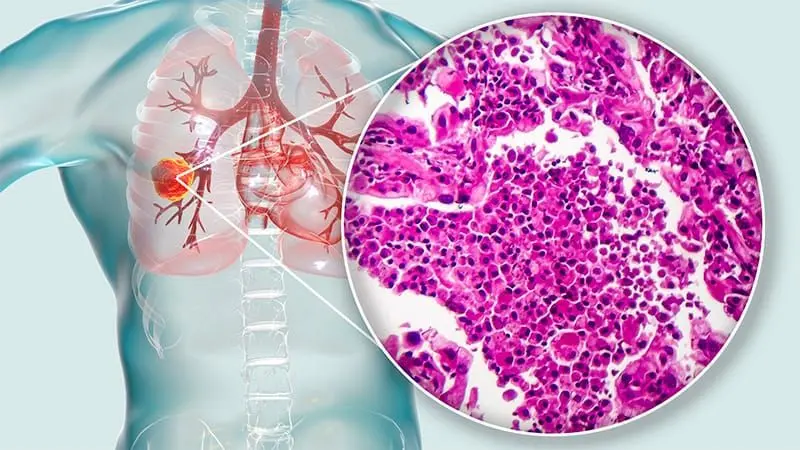
Researchers conducted a retrospective study across four independent NSCLC cohorts treated with neoadjuvant chemoimmunotherapy followed by surgical resection. The study included 135 patients and analyzed 1,344 hematoxylin and eosin-stained slides from primary tumors across cohorts in Spain, China, and Germany
1
.The AI algorithm quantified tumor, necrosis, and stroma areas to generate weighted average percentages of residual viable tumor (%RVT). When assessing major pathologic response (MPR), defined as less than or equal to 10% RVT in the primary tumor, the AI tool demonstrated remarkable consistency. The pooled overall accuracy reached 91% (95% CI, 85%-95%), with pooled sensitivity of 90% (95% CI, 82%-95%) and specificity of 93% (95% CI, 81%-99%)
1
.
Source: Medscape
Concordance between AI-based and manual assessment of pathologic response was at least moderate across all cohorts, with AUC scores of 0.95 or higher in all four cohorts. Discordant MPR classifications between manual and AI-based assessment occurred in only 12 of 135 cases (8.9%), predominantly false negatives rather than false positives
1
.I3LUNG Project Validates AI Models Across 2,396 Patients
The I3LUNG project, a large international trial published in Nature Medicine, enrolled 2,396 patients with advanced NSCLC treated with immunotherapy across six centers in Italy, Germany, Greece, Israel, Spain, and the United States
2
. The research team integrated clinical, imaging, pathology, and genomic data from each patient to build and test two families of AI models trained to predict treatment outcomes and survival.The AI models consistently outperformed all standard clinical biomarkers. The AI model using clinical and blood data achieved an AUC score of 0.77, while the model incorporating clinical and blood data along with imaging and digital pathology achieved an AUC score of 0.88—considered excellent by machine learning standards where scores between 0.8 and 0.9 indicate superior performance
2
3
.Human-AI Collaboration Enhances Clinical Decision-Making
A particularly revealing component of the I3LUNG study examined what happens when physicians collaborate with AI tools. Twenty physicians—10 lung cancer experts and 10 from other specialties—reviewed 100 real patient cases, first without and then with AI support
2
.Access to the AI tool improved sensitivity for identifying responders from an AUC of 0.72 to 0.87. Physicians who were not lung cancer experts showed the greatest improvements, a finding with direct relevance to community oncology settings where thoracic expertise may be limited. Inter-physician agreement rose from slight to moderate, suggesting the AI tool promotes more consistent clinical reasoning across different levels of experience
3
."This alignment between machine and clinical logic is essential for building trust in AI-assisted decision-making," said Marina Garassino, MD, Professor of Medicine at UChicago Medicine and senior author of the I3LUNG study
2
.Related Stories

Implications for Precision Medicine and Treatment Optimization
Better predictive biomarkers could identify which patients are likely to respond to immunotherapy at diagnosis, avoiding unnecessary toxicity and cost. The AI tool for assessing pathologic response offers a practical pathway toward greater standardization, particularly as perioperative treatment strategies continue to evolve and the demand for reliable surrogate endpoints increases
1
."I3LUNG establishes a new benchmark for AI in thoracic oncology. Decision support tools built even from routinely available clinical data can outperform the biomarkers we rely on today," Garassino explained. "For patients, this means fewer missed opportunities for treatment benefit. For community physicians, it means access to expert-level guidance at the point of care"
3
.
Source: News-Medical
The I3LUNG project is now prospectively enrolling more than 2,000 patients across the same six international centers, allowing researchers to focus on treatment optimization. This prospective phase is important because AI model evaluation should address not only model performance but also its usability in the clinic
2
.Challenges and Future Directions
Despite promising results, limitations remain. The pathologic response study lacked definitive prognostic information due to short follow-up and small cohort sizes. The AI algorithm classified no case as complete pathologic response (0% RVT), indicating it cannot autonomously adjudicate this clinically important category and requires pathologist review for cases with low %RVT
1
.The I3LUNG study was supported by funding from the European Union's Horizon 2020 research and innovation program, demonstrating international commitment to advancing AI applications in oncology
3
. As these AI tools move toward clinical implementation, the focus will shift to validating their performance across even more diverse healthcare systems and ensuring they can be seamlessly integrated into existing clinical workflows while maintaining the essential role of physician expertise and judgment.References
Summarized by

Navi
Related Stories
AI analyzes tumor biopsies to predict immunotherapy success in rare cancers, quadrupling survival
30 Jun 2026•Health

AI Model Predicts Immunotherapy-Related Pneumonitis Risk from Routine CT Scans Before Treatment
25 Sept 2026•Health

AI Tool SCORPIO Predicts Cancer Immunotherapy Response Using Routine Blood Tests
07 Jan 2025•Health

Recent Highlights



Recent Highlights
Today's Top Stories







Don’t drown in AI news. We cut through the noise - filtering, ranking and summarizing the most important AI news, breakthroughs and research daily. Follow topics that matter to you and stay ahead.


