28 Sources
[1]
Google justifies its massive AI spending with a booming cloud business
Alphabet investors have very publicly worried that the company's massive AI spending isn't worth the money. With the company's latest earnings report, those investors should be able to relax a little. The takeaway: Google's cloud business -- driven largely by enterprise AI adoption -- is booming. The search giant saw Google Cloud revenue spike 82% from where it was this time last year, climbing to $24.8 billion. That's well above last quarter's generous year-over-year growth, which showed a revenue jump of 63% to $20 billion -- and it also handily beats what Wall Street analysts expected for this quarter's growth (the expectation was $22.46 billion). Those cloud gains were driven largely by enterprise AI solutions and enterprise AI infrastructure adoption, the company said, while also noting that its backlog of cloud contracting work -- that is work that it hasn't yet converted into revenue -- had climbed to $514 billion. The company's profit hit $112.1 billion, which is a massive jump from this time last year, when the company reported $28.1 billion in profit, the company's earnings report shows. Meanwhile, Alphabet's overall revenue grew 24% year-over-year during the past quarter to $119.8 billion. The company also saw Google Services revenue jump 15% to $94.5 billion. "Our AI investments are redefining what's possible across every part of our business," said Google CEO Sundar Pichai during Wednesday's earnings call. "We have exciting momentum across the board." More people are also adopting Gemini, Google's AI chatbot, as the app currently enjoys 950 million monthly active users, the company said. In Q4 of 2025, Google reported that the app had 750 million users. It's worth noting that spiking revenue isn't unusual for Google. This marks the company's 12th consecutive quarter of double-digit revenue growth. But even by that standard, this quarter represents a particularly bountiful period for the tech giant. Alphabet's spending is still hefty, with its capital expenditures -- the money it spends building data centers, buying chips, and expanding infrastructure -- estimated to be between $180 billion and $190 billion for the year -- a fact not lost on analysts during Wednesday's earnings call. Several pressed Pichai on when, and how much, those investments will pay off. "I think our compute capacity investments in '27," he said. "We are seeing strong demand indicators, including long-term deals," he continued. "I think, if anything, the dynamics look healthier than where we were about a year ago, so that's what gives us the confidence to undertake those investments," he said.
[2]
Google quarterly cloud revenue growth beats expectations
July 22 (Reuters) - Alphabet (GOOGL.O), opens new tab topped Wall Street estimates for quarterly cloud revenue growth on Wednesday, as the Google parent benefited from strong demand for its cloud computing services from enterprises worldwide thanks to the AI boom. Revenue at Google Cloud rose 82% to $24.8 billion during the quarter ended June, accelerating from the 63% jump reported in the preceding three months. Analysts on average expected a 64% increase, according to data compiled by LSEG. Shares of the company were down more than 1% in extended trading. The third-largest cloud services provider behind Amazon Web Services (AMZN.O), opens new tab and Microsoft (MSFT.O), opens new tab, Google has seen demand surge as companies race to secure the cloud capacity needed to develop, train and run AI models, helping it land major deals with firms, including Anthropic. The robust cloud growth may ease some concerns over the company's hefty AI spending. Google has rapidly scaled up investments in data centers and advanced chips to build out its AI infrastructure, but investors have been worried whether the outlay would translate into sustainable revenue growth. Big Tech is expected to spend well over $700 billion this year primarily on AI, while Morgan Stanley has pegged the estimated spend at more than $1 trillion for the next year. While Google Cloud has made Alphabet a big beneficiary of the AI boom, the company's own AI efforts have lost some steam this year after it delayed the June launch of its next flagship model, Gemini 3.5 Pro. That has left Google trailing in the AI coding tools market and fueled concerns on Wall Street, especially as Anthropic and OpenAI have consistently rolled out enterprise-focused upgrades, and Chinese open-source models have also gained strong traction. Google's Search business has emerged as a bright spot, with the company's AI initiatives drawing more advertising dollars. Features such as AI Overviews and AI Mode have helped boost overall search queries and drive deeper engagement by allowing users to execute longer, conversational searches. Google has capitalized on the strong usage by expanding ads within those AI features. Alphabet shares have been among the best performers in the "Magnificent 7" group of stocks this year so far, rising nearly 11%. But concerns over the Gemini delays, some high-profile executive departures and regulatory pressures have dragged the stock about 9% lower since the end of April. Rivals Microsoft and Amazon are set to report their quarterly earnings next week. Reporting by Deborah Sophia in Bengaluru; Editing by Shilpi Majumdar and Aurora Ellis Our Standards: The Thomson Reuters Trust Principles., opens new tab
[3]
Google revenue surges on AI-driven boom in Cloud unit
Google's revenue jumped 24 per cent in the second quarter, driven by strong performance in its core search business and 82 per cent growth in cloud computing as AI demand continued to rise. Revenue surged to $120bn, from $96.4bn a year ago, beating the analysts' average estimates of $117bn, Google's parent company Alphabet said on Wednesday. Net income quadrupled to $112bn, beating analysts' expectations of $35.6bn, according to Visible Alpha data, benefiting from gains on Google's investments which include a stake in SpaceX. Google has gained ground in the AI race thanks to a "full-stack" strategy that combines its own chips, data centres, frontier models and consumer products. It is under pressure to release its latest flagship model, as OpenAI, Anthropic and competitors in China announce technical advances. Despite its strong earnings, Google's gargantuan AI infrastructure spending is rapidly transforming the group from an asset-light business into a capital-intensive one. The tech giant's free cash flow turned negative at minus $5.9bn for the quarter amid the splurge on data centres and other AI hardware. It once funded such investment from the cash thrown off by search, but the rising bills have begun to strain its finances. Alphabet has taken on tens of billions in debt and in June moved to raise about $85bn in its first share sale in more than two decades -- a sharp reversal after years of buying back its own shares. Google in April lifted its expected capital expenditure spending for the year to as much as $190bn and said it would rise further in 2027.
[4]
Alphabet is falling on a big spending forecast increase. What analysts are saying
Wall Street analysts had mixed reactions to Alphabet's latest financial results, with several lowering their price targets on the Google parent due to its plans to increase its artificial intelligence spending. However, shops on the Street seem to agree that there is still a lot to like about the stock. Its top line beat analyst expectations, with cloud revenue surging more than 80% from the year-earlier period. But while Alphabet is making more money, it plans to spend more too, according to its executives. The YouTube owner said it now expects capital expenditures for the year to fall in the range of $195 billion to $205 billion, or more than the previously forecasted $180 billion to $190 billion . Shares of Alphabet sank nearly 5% ahead of Thursday's open. Year to date, the stock is up roughly 9%, largely due to investor optimism around a boom in computing demand that has led to outsized growth in Alphabet's Google Cloud business. The company has also made several pushes into AI, integrating its Gemini AI model into its core search product, in addition to rolling out Gemini Spark personal AI agent and Google AI Studio for developers. However, its plan to invest heavily in AI, particularly at a time when competition from China is growing, has threatened to dampen sentiment and drive down shares. Nevertheless, Alphabet seems poised to grow on its AI initiatives in the long run, even if its investment into its vision is likely to limit share growth in the near to medium-term, according to Roth analyst Rohit Kulkarni. "We are increasingly worried about [long-term] structural capital requirements to keep Google winning...[but] we view rising [capital expenditures] as necessary to capture a rapidly expanding AI [total addressable market (TAM)]," Kulkarni said Thursday in a note to clients. "What do we do now? Buy on weakness as [revenue] estimates continue to rise." Roth has a buy rating on Alphabet. It also has a $440 price target on shares, implying 29% upside from Wednesday's close. Here is what other shops on the Street are saying about Alphabet. Citizens: outperform, $515 Analyst Andrew Boone $515 price target suggests 51% upside for Alphabet from its Wednesday closing price. "The key debate is not the absolute level of AI CapEx, but whether the returns justify continued investment...Our point is that the economics of AI infrastructure appear sufficiently attractive that the hurdle rate for continued investment remains high, supporting the case for sustained elevated AI CapEx across the industry, rather than a near-term moderation in spending." JPMorgan: overweight, $420 Doug Anmuth lowered his target on shares from $460. His new price target implies roughly 23% upside from Alphabet's closing price on Wednesday. "We would be buyers of Google shares on the pullback...We continue to believe Google is showing returns on AI spending, w/its differentiated full-stack positioning evident as it monetizes across Cloud, Search, Subscriptions, & other parts of the business." Evercore ISI: outperform, $420 Despite investors' concerns, Alphabet could still see its shares rise to $420, which is nearly 23% above the price at which shares close Wednesday, per analyst Mark Mahaney. "We have modestly raised our Revenue and Operating Income estimates, tho we have also increased our 2027 FCF loss from $20B to $50B, due to the raised capex guidance...The latter caused the stock to sell off moderately in the aftermarket. Our view is that the Core GOOGL Long Thesis is well intact." Cantor: overweight, $420 Deepak Mathivanan's price target, lowered from $435, corresponds to upside of nearly 23% from Wednesday's close. "GOOGL noted that the company is committed to reach the frontier in [large language models] with a large pre-training run for Gemini 4 currently underway. Overall, 2Q was a strong quarter for GOOGL. Shares are trading down ... due to the increase in FY26E capex and limited upside on 2Q EBIT. That said, we believe that the fundamental outlook for GOOGL in 2H26E remains strong." Citi: buy, $447 Alphabet could see upside of roughly 31%, per analyst Ronald Josey. "GOOGL's AI investments are driving results across both Search and Cloud...we also believe GOOGL's full-stack approach...and potential for greater model velocity with G-4 can deliver continued strong results." Piper Sandler: overweight, $395 The investment firm lowered its price target on Alphabet from $445. Its new target is 15% above Wednesday's close, per analyst Thomas Champion. "GOOG's ads business is growing well and Cloud service [is] expanding at a massive clip. But, to support ~25x+ '27 PE, the company should have a leading frontier model. We await the release of Gemini 3.5 Pro and later 4.0." Jefferies: Buy, $445 The bank's price target signals 30% upside ahead. In our view, the core search business is still attracting incremental ad dollars in the shift to digital and mobile. YouTube is the best-positioned platform to take advantage of a sizable online video opportunity. Google Cloud could be the next break-out play for shares. Call options in place for both the near and longer term: GCP, AI, Google Home, Pixel, YouTube TV, Waymo.
[5]
Alphabet Quadruples Profit to Nearly $120 Billion, Fueled by A.I. Investments
Google's parent company, which has spent heavily on artificial intelligence, also showed growth across its businesses, particularly in cloud computing. Alphabet, Google's parent company, said on Wednesday that its investments in artificial intelligence were paying off and fueling growth across its businesses, amid broader questions about whether tech companies' enormous spending on the powerful technology can be justified. The Silicon Valley giant, which has shelled out billions to develop cutting-edge A.I. models and to build data centers that provide the computing power for the technology, said revenue for the three months that ended in June totaled $119.8 billion, up 24 percent from a year earlier. In particular, Google's cloud business, which lets companies rent computing power and A.I. tools, surged 82 percent to $24.8 billion. Profit rose to $112.1 billion, quadrupling from $28.2 billion a year earlier, boosted by investments in other A.I.-related companies like SpaceX and Anthropic. Those investments were valued at about $99 billion, Google said. The results exceeded Wall Street's projections of revenue of $116.5 billion and profit of $35 billion. "Our A.I. investments are redefining what's possible across every part of our business," Sundar Pichai, Alphabet's chief executive, said in a statement. Google has been racing to lead A.I. as the powerful technology transforms jobs, workplaces and its own internet search business. To compete with rivals such as OpenAI and Anthropic, Google said in June that it was raising $80 billion to fund its data center projects by selling its stock, and that its capital expenditures for the year could be as high as $190 billion, more than double the $85 billion last year. That spending will continue to "significantly increase" next year, Google said. But some have questioned whether such spending is excessive. Last week, stock markets fell over concerns of increasing A.I. competition from China after a Chinese start-up, Moonshot AI, released an A.I. technology that was nearly as powerful as the leading American model, Claude Fable 5 from Anthropic. So far, A.I. has been a boon to Google's business. The company has melded A.I. into search, with its Gemini chatbot generating answers and users assigning A.I. "agents," or bots, to run continuous searches on their behalf. Advertisers on YouTube have new A.I. tools, and viewers have A.I.-curated video recommendations. And companies are clamoring to use Google's cloud computing services to run their A.I. projects. Google is "one of the best positioned A.I. companies around," said Brian Nowak, an analyst at Morgan Stanley. Apart from the growth in cloud computing, revenue for Google's advertising business rose 14.4 percent to $81.6 billion. In May, the company expanded its A.I. offerings in search, overhauling its iconic search bar for the first time in 25 years with new A.I. tools and adding the ability for people to assign continuous searches to A.I. agents that can act autonomously to function like digital personal assistants. The Silicon Valley company's subscription business, which includes users who pay for YouTube services and those who pay to use Google's A.I., grew 15 percent to $12.9 billion. On Tuesday, Google unveiled three A.I. models, which are intended to work more effectively and at a lower cost than previous versions. The company's flagship model, Gemini 3.5 Pro, was set to be released in June but has not been made available. Google said the Pro model remained in testing.
[6]
Google earnings live updates: Alphabet's AI outlook, cloud growth in focus
Google parent Alphabet reports fiscal second-quarter results after the bell. Here's what analysts are expecting, according to LSEG. * Earnings per share: $2.89 * Revenue: $116.9 billion estimated Google's earnings mark the first major test this earnings season for the ballooning capital expenditures trade fueling the artificial intelligence revolution. In recent months, technology giants have poured billions into building new data center infrastructure to keep pace with skyrocketing demand for compute. But those massive investments have started to raise questions over the sustainability of long-term demand. Consensus estimates from FactSet expect $187.1 billion in capex this year for Alphabet. Google's AI pipeline is also top of mind for investors after the company reportedly delayed the launch timeline for its flagship Gemini 3.5 Pro AI model. On Tuesday, the company debuted three cheaper Gemini models, including a cyber model geared to tackle cybersecurity concerns with the rise of highly capable models like Anthropic's Mythos. Investors want to see how the company's models compare to frontier model makers such as Anthropic and OpenAI, especially as businesses clamp down on rising token costs and competition rises from cheaper Chinese models. Google's search business is expected to hit $63.4 billion from $54.19 billion last year, according to StreetAccount. YouTube advertising revenue and cloud are estimated to reach $10.8 billion and $22.3 billion, respectively, from $9.8 billion and $13.62 billion a year ago. Google's cloud business has posted robust growth in recent quarters and investors will want to see if it can keep up the pace and gain on Microsoft's Azure and Amazon Web Services. Google's earnings call kicks off at 4:30 pm ET.
[7]
Alphabet beats expectations in second quarter, cloud revenue nearly doubles
San Francisco (United States) (AFP) - Google's cloud business grew by more than 80 percent, the company said Wednesday, exceeding investor expectations as markets look for signs that the company's AI investments are paying off. CEO Sundar Pichai said in a statement that the strong quarter was driven in part by growth in its Gemini AI models and AI-powered search queries, as well as YouTube, where more than 1.7 billion unique viewers tuned in to videos related to the 2026 FIFA World Cup. "Our AI investments are redefining what's possible across every part of our business," Pichai said, adding that the company's Gemini AI app had reached 950 million monthly active users. The company recorded more than $119 billion in total revenue between April and June, up 24 percent from the same period last year. Its cloud business brought in more than $24 billion in the quarter, and net profit skyrocketed to over $112 billion. The company's stock fluctuated after hours and dropped as much as 3 percent. Major US tech companies have been spending billions of dollars to build out AI infrastructure and develop increasingly advanced AI models. In June, Google parent company Alphabet announced it would raise up to $80 billion in stock to fund its AI efforts, with Warren Buffett's Berkshire Hathaway committing $10 billion. Capital expenditures reached $44.9 billion for the quarter, nearly double the year-earlier level though slightly below the $45.1 billion analysts had expected. Alphabet's AI-related capital expenditures are expected to reach $180-190 billion in 2026 and rise further in 2027. The spending is part of a broader race across the tech sector to stay competitive amid soaring demand for computing power. Amazon, Microsoft, Alphabet and Meta are collectively on track to pour roughly $700 billion into AI data centers, chips and computing infrastructure this year.
[8]
Alphabet's stock sinks after it bumps up AI infrastructure spending yet again
Google parent company Alphabet Inc. delivered better-than-expected revenue for the second quarter on Wednesday, thanks to strong growth in its cloud business. But the stock sank in extended trading after it missed expectations on earnings and lifted its forecast for capital expenditures. The company reported second-quarter earnings before certain costs such as stock compensation of $2.85 per share, trailing the $2.89 forecast by Wall Street analysts. However, revenue jumped by 24% in the quarter to $119.8 billion, surpassing the $116.93 billion target. Investors didn't like what they saw, and Alphabet's stock was down more than 2% in late trading. In a conference call with analysts, Chief Executive Sundar Pichai (pictured) revealed that the company spent $44.9 billion on capital expenditures during the quarter, just ahead of the Street's estimate of $44.8 billion. The company now expects capex for the year of $195 billion to $205 billion, up from the $180 billion to $190 billion forecast provided last quarter. Alphabet has been pouring money into artificial intelligence infrastructure to keep pace with booming demand. "We're still in a supply-constrained environment," said Chief Financial Officer Anat Ashkenazi on the call with analysts. "I think we've said this now for multiple quarters in a row, and we are seeing very strong demand both from external cloud customers as well as across the business." Even with the supply constraints, Google Cloud was able to deliver record-breaking revenue of $22.4 billion, up 64% from a year earlier. Google Cloud's order backlog now totals $514 billion, the company revealed. Google's cloud growth has been accelerating ahead of competitors Microsoft Corp. and Amazon Web Services Inc. In the previous quarter, Google Cloud topped $20 billion in revenue for the first time. Alphabet said it's planning to call on third-party cloud providers to meet feverish computing demand. "Given the supply constraints environment, we plan to expand the use of third-party capacity in Q3 as a bridging strategy while we build up more internal capacity," Ashkenazi told analysts. "The strategy allows us to keep growing our customer base and capture greater overall value. However, it will create modest margin pressure in the near term as we utilize this capacity." Alphabet signaled it was moving in this direction during the quarter when it struck a deal with SpaceX Corp. to rent graphics processing units to run artificial intelligence models for $920 million per month. Google's cloud rival Microsoft has been more active in leasing capacity from a series of outside clouds, including CoreWeave and Nebius Group N.V.. CoreWeave and Nebius shares leapt 4% and 5% in extended trading, respectively, following Ashkenazi's comments. "There are very, very large customers of ours on cloud, who we are trying to support them through this extraordinary moment, and the incremental opportunity they are bringing to us, while a short-term cost over a few months may be very high, in the lifetime of the deal, as we bring more capacity on, is highly ROI positive," Pichai said. Even as the competition in the AI industry heats up, Google Gemini is going from strength to strength. According to Pichai, the Gemini app now has more than 950 million monthly active users and can process 22 billion tokens per minute. This is happening even as Google is facing intensifying pressure from Chinese open-weight tools as businesses crack down on rising token costs. Google, which debuted three cheaper Gemini models this week, faced blowback earlier in the month after reportedly delaying the launch of its Gemini 3.5 Pro model Pichai said that model is undergoing testing, and the company is already investing compute into Gemini 4 to compete with frontier model makers like Anthropic PBC and OpenAI Group PBC. "It's a very ambitious effort," he said. "We wanted to compete at the frontier level of where the frontier will be when Gemini 4 comes out, so we are applying a lot of our compute and effort in that direction." As Gemini scales, Pichai said the company plans to release new models almost every month. Google Cloud's growing revenue was offset by a poor performance from Google Search, however, as revenue there came in at $63.3 billion, just below the Street's target of $63.4 billion. Investors are going to be looking much more closely at that business in the coming quarters. Ashkenazi told analysts they should brace themselves for some tougher comparisons when it comes to the company's search business. She said that while Google continues "to benefit from innovation in search by improving the user and advertiser experience with AI," the third quarter might be a bit different. "At the same time, in Q3, we will begin lapping an acceleration in search performance that began in the third quarter last year," she said. On the other hand, Google's YouTube advertising revenue rose 13% to about $11.06 billion, topping the analyst forecast of $10.81 billion. That's up from $9.8 billion in the year-ago period and about $9.9 billion last quarter. Alphabet's other bets category, which includes businesses like Waymo and Verily, came in at $382 million for the second quarter, representing a 2.4% year-over-year increase.
[9]
Google's Q2 Earnings of $112.11B Beat Wall Street's Expectations on AI Boom
Google parent company Alphabet Inc. posted stronger-than-expected results for its second quarter, a sign that it's massive artificial intelligence spending spree is paying off so far and advertising revenue is coming in strong. The Mountain View, California-based company said Wednesday it earned $112.11 billion, or $9.11 per share, in the April-June period. That's up from $28.2 billion, or $2.31 per share, in the same period a year earlier. Revenue grew 24% to $119.8 billion from $96.43 billion. Analysts, on average, were expecting revenue of $117.06 billion, according to a poll by FactSet. Google did not disclose an adjusted earnings figure that's comparable to analysts' expectations, which was $2.88 per share. "Our AI investments are redefining what's possible across every part of our business," said CEO Sundar Pichai in a statement. Alphabet's shares climbed $2.71 to $344.62 in after-hours trading.
[10]
Alphabet Stock Plunges as Investors React to Google's Massive AI Spending Plans
Get personalized, AI-powered answers built on 27+ years of trusted expertise. Google parent Alphabet's stock is taking a hit on growing worries about its AI spending. Shares of Alphabet (GOOGL) were down 7% in recent trading despite quarterly earnings that topped analysts' expectations, after the tech giant warned it could end up spending more than it previously anticipated to fuel its AI ambitions. It led the Dow Jones Industrial Average lower, and was among the worst-performing stocks in the S&P 500 and Nasdaq on a down day for the major indexes. Alphabet said it now sees capital expenditures of between $195 billion and $205 billion this year, up from an earlier forecast of $180 billion to $190 billion, marking the second time the tech giant has raised its 2026 forecast. CFO Anat Ashkenazi told investors during the company's earnings call that expenditures could also "increase significantly" in 2027, per a transcript provided by AlphaSense. The news overshadowed better-than-expected quarterly results. The company posted second-quarter earnings of $9.11 per share on revenue that rose 24% year-over-year to $119.80 billion, ahead of consensus projections compiled by Visible Alpha. Wall Street analysts were unfazed by Alphabet's higher spending plans and remain largely bullish on Alphabet's prospects. Bank of America, JPMorgan, Citi, Jefferies, Mizuho, and Wedbush all reiterated "buy" or equivalent ratings in their notes to clients after the results. "We would be buyers of Google shares on the pullback," JPMorgan analysts wrote, dismissing the market's reaction as a temporary and pointing to Alphabet's 82% Cloud growth and +17% Search growth as evidence that its AI spending is showing a clear return on the investment. Mizuho analysts said they believe a rebound for the stock could come as soon as Friday. With Thursday's slide, nearly all of Alphabet's year-to-date gains have been wiped out. The stock is down more than 20% from the record high hit two months ago.
[11]
Google increases capex forecast again after cloud-driven earnings beat
The search giant now expects to spend between $195 billion and $205 billion in capital expenditures, its finance chief Anat Ashkenazi said on a conference call with analysts. The company said last quarter that it planned to spend between $180 billion and $190 billion this year. Alphabet on Wednesday reported its best-ever quarter of growth for its cloud computing division, but faced investor scrutiny after concerns about continued delays to its flagship AI model were aggravated by a $15 billion increase in capital spending plans for 2026. The search giant now expects to spend between $195 billion and $205 billion in capital expenditures, its finance chief Anat Ashkenazi said on a conference call with analysts. The company said last quarter that it planned to spend between $180 billion and $190 billion this year. Shares of the company were down nearly 5% in extended trading. The stock was initially volatile but mostly flat, but dipped after Ashkenazi announced the capex update. "We have increased our capacity quite significantly over the past three years. The demand still outpaces that investment," Ashkenazi said in justifying the increased spending plans. She added that faster-than-expected delivery of capacity contributed to the hike. Revenue at Google Cloud rose 82% to $24.8 billion during the quarter ended June, driven by strong demand from AI-hungry enterprises worldwide. Analysts on average expected a 64% increase, according to data compiled by LSEG. Advertising revenue came in at $81.6 billion compared to estimates of $81.1 billion. Total revenue for the quarter was $119.8 billion, beating the consensus estimate of $116.9 billion. But, adjusted profit per share of $2.85 fell slightly short of Wall Street projections of $2.89. And the company reported negative free cash flow for the first time in its history, burning $5.9 billion this quarter. "After a negative cash flow quarter, the new raise in capex does not sit well for Alphabet," said Thomas Monteiro, senior analyst at Investing.com. "The market's most reliable cash generators are now spending more than they bring in. As long as revenue keeps accelerating, investors will tolerate it. But capital has a real cost again, and the room for error is shrinking every quarter." Model uncertainty tempers cloud gains While Google Cloud has made Alphabet a big beneficiary of the AI boom, the company's own AI efforts have lost some steam this year after it delayed the June launch of its next flagship model, Gemini 3.5 Pro. That has left Google trailing in the AI coding tools market and fueled concerns on Wall Street, especially as Anthropic and OpenAI have consistently rolled out enterprise-focused upgrades, and Chinese open-source models have also gained strong traction. During the question-and-answer portion of the earnings call, multiple analysts pressed Pichai for clarity around whether Google could keep with its rivals at the frontier of model development. "There are many attributes on which we are still at the frontier. There are areas where we've acknowledged we need to improve; coding and agentic coding is an example of that," CEO Sundar Pichai said on the call. Pichai said that while Google continued to test Gemini 3.5 Pro, it had also started training Gemini 4 and was "applying a lot of our compute and effort in that direction" in order to remain competitive. "We are both very committed and very confident of being at the frontier for the next generation," he said. Meanwhile, Google began recognizing revenue from direct sales of its TPU chips, which compete with Nvidia's GPUs, for the first time in the second quarter though the vast majority of revenue from business agreements would come through next year, Ashkenazi said. The third-largest cloud services provider behind Amazon Web Services and Microsoft, Google has seen demand surge as companies race to secure the cloud capacity needed to develop, train and run AI models, helping it land major deals with firms, including Anthropic. The robust cloud growth may ease some concerns over the company's hefty AI spending. Google has rapidly scaled up investments in data centers and advanced chips to build out its AI infrastructure, but investors have been worried whether the outlay would translate into sustainable revenue growth. Big Tech is expected to spend well over $700 billion this year primarily on AI, while Morgan Stanley has pegged the estimated spend at more than $1 trillion for the next year. Ashkenazi reaffirmed on the call that Alphabet planned another significant increase to capex in 2027. Alphabet shares have been among the best performers in the "Magnificent 7" group of stocks this year so far, rising nearly 11%. But concerns over the Gemini delays, some high-profile executive departures and regulatory pressures have dragged the stock about 9% lower since the end of April. Rivals Microsoft and Amazon are set to report their quarterly earnings next week.
[12]
Alphabet Raises AI Spending But Still Can't Meet Demand: 'We're Still in a Supply Constraint Environment'
Demand Continues to Outpace Available Capacity The Google parent company raised its 2026 capital expenditure outlook to $195 billion to $205 billion, up from its prior forecast of $180 billion to $190 billion. During Alphabet's second-quarter earnings call, CEO Sundar Pichai said Google continues to face capacity constraints as demand for AI products and cloud services exceeds available infrastructure. "Demand for our models is translating to strong token usage across developers and enterprise customers, and we continue to be supply constrained, a sign of momentum and rapid adoption," Pichai added. Expands Capacity to Meet AI Demand Alphabet plans to expand its use of third-party capacity in the third quarter as a bridging strategy while it continues building out internal capacity. "We're still in a supply constraint environment. I think we've said this now for multiple quarters in a row, we are seeing very strong demand, both from external cloud customers as well as across the business," CFO Anat Ashkenazi said. Wall Street Divided on AI Spending Alphabet's higher AI spending outlook became one of the biggest talking points after earnings, with Wall Street split between concerns over rising capital expenditures and optimism that accelerating cloud demand justifies the investment. Investor Gary Black said the higher spending could "potentially trigger a new CapEx arms race," while Deepwater Asset Management's Gene Munster called Google Cloud's performance "the most important number" in the quarter, pointing to strong enterprise AI demand. Earnings Beat Wall Street Estimate Alphabet reported second-quarter revenue of $119.80 billion, topping analyst estimates of $116.82 billion, according to Benzinga Pro. The company also reported second-quarter earnings of $9.11 per share, beating estimates of $2.87. Price Action: Alphabet Class A stock closed 1.46% lower on Wednesday at $342.09; it fell 3.31% in after-hours trading. The company's Class C stock closed 1.24% lower at $341.91 and fell 2.92% in extended trading. Benzinga edge rankings indicate that GOOG has a Momentum score in the 87th percentile and a Growth score in the 89th percentile. Disclaimer: This content was partially produced with the help of AI tools and was reviewed and published by Benzinga editors. Photo courtesy: Shutterstock Market News and Data brought to you by Benzinga APIs To add Benzinga News as your preferred source on Google, click here.
[13]
Alphabet Reports Strong Q2 With AI Momentum Driving Growth Across Its Service Offerings
The company reported a 24-percent surge in revenue for its second quarter, one day after unveiling a significant update to its Gemini Flash model portfolio. Google parent company Alphabet reported continued momentum in its 2026 second quarter -- the company's 12th consecutive quarter of double-digit growth -- driven by the company's AI technology in general and specifically its Gemini models. The financial results, for Alphabet's Q2 ended June 30, come a day after Google updated its AI model lineup, launching Gemini 3.6 Flash, 3.5 Flash-Lite and 3.5 Flash Cyber. During the company's quarterly earnings call with financial analysts Wednesday afternoon, Alphabet and Google CEO Sundar Pichai (pictured) said Alphabet's AI products, while themselves a profitable and growing line of business for the company, is also a major driver of many other aspects of Alphabet's operations including its software product stack, its cloud services, its cybersecurity and data analytics products, and its IT infrastructure offerings. [Related: Top 10 Biggest Google Cloud News Stories Of 2026 So Far: Wiz, Agentic AI And New Partner Program] "Our AI investments are redefining what's possible across every part of our business," Pichai said, pointing to the use of AI within Google's search and cloud computing businesses as examples. "We saw 17 percent [year-over-year] revenue growth in search and YouTube ads [revenue] grew 13 percent," the CEO said. "Cloud revenue grew 82 percent [year-over-year], powered by strong demand for AI infrastructure and AI solutions, and cloud backlog grew to $514 billion." The growth comes at a time when Google Cloud is investing in its partners as they seek to expand globally. Pichai said the company's "global product footprint...brings AI to more people than any other company." In the case of Google's search services, "AI continues to drive an expansionary moment with new experiences resonating with users and driving growth in queries." He noted that monthly users of Google Search AI Mode now exceed 1 billion since it was made globally available last October. This week Google introduced three new models: Gemini 3.6 Flash, 3.5 Flash-Lite, and 3.5 Flash Cyber, for building AI agents at scale. Google said the new models meet the demands of developers and customers building production AI agents that need higher token efficiency, lower latency, and more reliable performance, according to the company. Google is also testing Gemini 3.5 Pro with partners and "plan to make it broadly available as soon as it's ready," the company said in the announcement, and is already at work on Gemini 4. Google's model momentum and its position in the highly competitive AI model space was the focus for much of the Q2 earnings call. "I think, you know, the frontier is incredibly dynamic space and it's fiercely moving forward. At any given moment, when you take a snapshot, it feels dynamic," CEO Pichai said. "We have, clearly, frontier models. There are many areas on which we are still at the frontier. There are areas where we acknowledge we need to improve -- coding and agent decoding is an example of that -- and I think the teams are very very focused on it with 3.6 flash. Flash is our workhorse model and we see tremendous demand for it, given it generally hits a sweet spot of performance, cost, reliability, latency, et cetera." "Gemini 3.5 Pro is currently in testing, and our team is already building the next generation of models," CEO Pichai said. "We have started our most ambitious pre-training run yet for Gemini 4 and are excited by the progress we are seeing at the frontier. "Demand for our models is translating to strong token usage across developers and enterprise customers," he said, noting that the Gemini application now has 950 million monthly active users. And he said Gemini is a major driver of the growth of the company's cloud business. Google Cloud revenue in Q2 increased 82 percent year-over-year to $24.8 billion, led by an increase in Google Cloud Platform usage across enterprise AI solutions and enterprise AI infrastructure, as well as core GCP services. Google Services revenue grew 15 percent to $94.5 billion, led by 17 percent growth in Google Search, 15 percent growth in Google subscriptions, platforms and devices, and 13 percent growth in YouTube ads. (YouTube also got a boost from viewership gains through the company's partnership with FIFA and the just-concluded World Cup games.) "Gemini continues to be a key driver of growth and is deeply integrated across all of our cloud products, including Gemini Enterprise, data analytics, cybersecurity, and Google Workspace," Pichai said. "We are seeing strong, diversified demand across products, customers, geographies, and industries. "Gemini is transforming how millions of businesses use AI to build custom agents, automate processes, improve cybersecurity, manage customer relationships, data analytics, collaborate effectively, and more," the CEO said. A Closer Look At The Numbers Alphabet's consolidated revenue for the quarter increased 24 percent (23 percent in constant currency) to $119.8 billion from $96.4 billion in the same quarter one year earlier. The company said the revenue growth reflected "strong performance" across the business and was the company's 12 consecutive quarter of double-digit revenue growth. Operating income for the quarter was $40.8 billion, up more than 30 percent from $31.3 billion one year ago. Reported net income of $112.1 billion for the quarter, up from $28.2 billion in the second quarter of 2025, included a net gain of $98.0 billion -- primarily the result of net unrealized gains on the company's equity securities. CFO Anat Ashkenazi said Google continues to build out its data center capacity to meet the rapid growth in demand for its services. While the company takes a "long-term, multi-year view" with those efforts, for the immediate future Alphabet will continue to enlist help from third-party service providers for capacity -- and that will put some pressure on profit margins. And the company's R&D expenses were up 32 percent in the quarter, driven, in part, due to "compensation from investments in AI talent," Ashkenazi said. "As we previously shared, we continue to expect our capex to increase significantly in 2027 and will provide more details at a later date," the CFO said. "In terms of expenses, the significant increase in our investments in technical infrastructure will continue to put pressure on the P&L in the form of higher depreciation expense and related data center operation costs such as energy. We also expect to continue in key investment areas such as AI and cloud, and we are investing in marketing to support our AI products. "We expect the free cash flow will remain under pressure, driven by our investments in technical infrastructure, which enables us to capitalize on the AI opportunity and continue to drive attractive returns," Ashkenazi said.
[14]
Here's How Much Google Parent Alphabet's Stock Is Seen Moving After Earnings Wednesday
Get personalized, AI-powered answers built on 27+ years of trusted expertise. Google parent Alphabet is set to report earnings after the closing bell on Wednesday, with traders anticipating a sizable move from the tech giant's stock. Based on recent options pricing, Alphabet (GOOGL) shares are seen swinging up to about 5% in either direction by the end of the week following the results. A move of that size from the stock's recent level around $353 could see the Google and YouTube parent's shares rise above $372, approaching a high set in May, or slip below $335. Alphabet shares are up about 13% from where they started the year, but have pulled back about 14% from their May highs. Shares rallied after a solid report in April, but the last few weeks have been bumpy for the AI trade amid worries about Big Tech companies' spending. Alphabet last month announced plans to raise more than $80 billion to pay for its AI infrastructure buildout. Analysts from HSBC recently wrote that they will be looking for insights into whether customers are looking to manage their AI expenses by using lower-cost models, along with how the company sees rising hardware prices impacting its spending plans. Alphabet is expected to report $117.17 billion in second-quarter revenue, up more than 20% year-over-year, along with earnings of $2.90 per share, up from $2.31 the same time last year, per Visible Alpha estimates. Revenue in its Search business is seen coming in at $63.29 billion, while Google Cloud revenue, a key sign of demand for AI compute, is projected to have risen 65% to $22.50 billion. Wall Street analysts are overwhelmingly bullish on Alphabet. Eleven of the 12 analysts tracked by Visible Alpha have recommended buying the stock, with one neutral rating. Their mean target around $439 would suggest nearly 25% upside from the stock's recent level. This article has been updated since it was first published to reflect more recent prices and analyst estimates.
[15]
Alphabet's quarterly earnings beat Wall Street estimates, but here's what is spooking investors
Alphabet announced strong second-quarter earnings, but its shares declined significantly. The company plans to substantially increase its capital expenditures for artificial intelligence. This massive spending hike comes as Google Cloud revenue saw substantial growth. CEO Sundar Pichai addressed concerns about Google's competitive position in the AI race. Investors and analysts are weighing the potential returns of this significant AI investment. Google-parent Alphabet announced better-than-expected earnings for the second quarter of FY27, but its shares dropped more than 3% in extended trading hours as the tech giant's plan to further increase its massive AI spending goals may have spooked investors. Alphabet now expects to spend between $195 billion and $205 billion in capital expenditures, following which the stock tumbled in extended trading after trading mostly flat during the session. Last quarter, it had said that it planned to spend between $180 billion and $190 billion this year. US MarketsPowered By As on 23 Jul 2026, 01:30 AM IST S&P 500 Top Gainers Super Micro Computer30.56(19.84%) Westinghouse Air Brake290.00(10.04%) Dell Technologies441.80(9.32%) EQT54.01(8.45%) Gainers" S&P 500 Top Losers GE Vernova985.03(-8.69%) Coterra Energy32.56(-8.62%) ServiceNow95.46(-6.47%) PTC113.11(-6.34%) Losers" "We have increased our capacity quite significantly over the past three years. The demand still outpaces that investment," its finance chief Anat Ashkenazi said on a conference call with analysts, justifying the increased spending plans. She added that faster-than-expected delivery of capacity contributed to the hike. Alphabet Q2 earnings This came while Google Cloud's revenue jumped 82% to $24.8 billion during the June quarter, driven by strong demand from AI-hungry enterprises worldwide. This is higher than the 64% increase expected by analysts on average, Reuters quoted data compiled by LSEG. Google's advertising revenue stood at $81.6 billion in Q1, higher than estimates of $81.1 billion. Total revenue meanwhile also beat estimates at $119.8 billion. Adjusted profit per share of $2.85, however, fell slightly short of Wall Street expectations of $2.89. The company also reported negative free cash flow for the first time in its history, burning $5.9 billion this quarter. Sundar Pichai says Google is not losing ground in AI race Alphabet CEO Sundar Pichai pushed back concerns that the company is falling behind rivals in the AI race, after delaying a flagship model and ceding some ground in AI coding. This came as investor worries increased after Google delayed the release of Gemini 3.5 Pro, a model which was originally scheduled to be launched in June and was expected to bolster the company's standing in AI coding and autonomous "agent" tasks. "We have had clearly frontier models. There are many attributes on which we are still at the frontier; there are areas where we've acknowledged we need to improve and coding and agentic coding is an example of that," he said in response to a question during an earnings call on whether Gemini could remain competitive at the industry's leading edge. Also Read | Sundar Pichai pushes back on claims Google is losing ground in AI race Massive AI spending increase worries While Google's management continues to clear investor worries around it falling behind peers in the AI race, some analysts question whether the massive AI spending will actually bear fruit in the future. Legendary investor Warren Buffett recently acknowledged that he "made a mistake" by not investing in Alphabet sooner, although it was not among his favourites. "I would say that I don't like it as well as at least four or five other businesses that we own. The real question with Google and all of its competitors now, because they are all laying out hundreds of billions, and that is real money. That is the game they are playing now. They weren't playing that game with computer software," he told CNBC in a recent interview. He often explained why he avoided buying tech stocks, as he did not really understand how they were making money - a decision that he later said cost a lot of money for Berkshire investors. Also Read | Warren Buffett admits to a rare mistake with these 2 big tech stock bets Earlier this year, billionaire investor Ray Dalio said the booming artificial-intelligence market shows signs of a bubble that will eventually burst. "All great technology changes produce bubbles. Nobody can get it exactly right. You have to either spend a ton of money to capture your market share and not worry about whether it's too much or not, or you don't spend enough money and you lose your market share," Dalio, the founder of Bridgewater Associates, said during a Bloomberg Television interview. (With inputs from agencies) (Disclaimer: Recommendations, suggestions, views and opinions given by the experts are their own. These do not represent the views of The Economic Times)
[16]
Google Cloud Rides Enterprise AI Demand to 82% Growth | PYMNTS.com
For Google, the evidence is increasingly coming from enterprise customers, where demand for computing capacity, Gemini models and AI applications contributed to an 82% increase in Google Cloud revenue and pushed Cloud backlog to $514 billion. The scale of that demand has strengthened management's view of the AI opportunity over the past year. Asked during the analyst Q&A whether Alphabet's expectations for generative AI returns had changed, CEO Sundar Pichai said they had. He pointed specifically to conversations with corporate executives, saying many companies are "barely scratching the early stages of what's possible here." Management has discussed supply constraints for several quarters. CFO Anat Ashkenazi acknowledged that demand continues to run ahead of the capacity Alphabet has added. As a result, Google Cloud revenue reached $24.8 billion with Google Cloud Platform (GCP) growing faster than Cloud overall. AI infrastructure, core GCP products and AI solutions all contributed. Cloud operating income more than tripled to $8.8 billion. Search remains the clearest test of whether Google can introduce generative AI as a tailwind to its core business. Search and other revenue rose 17% to $63.3 billion, while AI Overviews and AI Mode increasingly operate as parts of a single Search experience. Pichai said users are asking longer and more complex questions, and Google is seeing growth in total queries as people use AI features for searches they previously might not have made. The company is also extending AI Mode into more commercial queries, putting the product closer to shopping and purchase decisions. Gemini Moves Into Search, Advertising and Commerce Gemini is becoming a larger part of that enterprise proposition. Nearly 90% of Fortune 100 companies are using Gemini Enterprise. Alphabet said nearly 500 Cloud customers have each processed more than 1 trillion tokens during the past year, while more than 2,000 enterprises have consumed more than 100 billion tokens. Customers are deploying Gemini within cybersecurity, data analytics and other applications, where the model operates as one component of a broader system. "The model is just an ingredient in those solutions," Pichai told analysts. The same strategy is appearing in Google's consumer businesses, particularly where Search intersects with advertising and shopping. Search and other advertising revenue saw retail making the largest contribution and finance also contributing significantly. YouTube advertising revenue increased 13% to $11.1 billion, driven by direct-response and brand advertising. Overall advertising revenue rose 14%. The company is also using Gemini throughout its advertising system, including query interpretation, advertiser tools and ads accompanying AI-powered search experiences. The company said Gemini helped produce a 20% improvement in showing relevant shopping ads. More than half of Google's small- to medium-sized business advertising customers now use AI to create or optimize advertising creative. Commerce is moving closer to those search and advertising products. Management said on the call that Target and Steve Madden are now live on its open-source Universal Commerce Protocol. It also announced Universal Cart, which lets consumers put merchandise from multiple retailers into one cart across Google services and complete a single checkout. YouTube is developing a similar connection between content, advertising and transactions. Google is expanding shoppable advertising formats and has introduced Buy with Google Pay, allowing connected-TV viewers to complete purchases directly from the television in two clicks. It is also using affiliate partnerships and YouTube Shopping commissions to connect creators more directly with sales. Gemini itself is also accumulating consumer scale. The Gemini app reached 950 million monthly active users, while daily active users have tripled over the past year. Alphabet's model application programming interfaces (APIs) are processing approximately 22 billion tokens per minute, up from more than 16 billion a quarter earlier. More than 9 million developers are building with Google's models each month. Overall, Alphabet revenue increased 24% to $119.8 billion, while operating income rose 30% to $40.8 billion. The cost of supplying AI demand remains part of the equation. Capital expenditures reached $44.9 billion during the quarter, and Alphabet raised its 2026 capital spending forecast to $195 billion to $205 billion from $180 billion to $190 billion. Management said the increase reflects faster deployment of computing capacity, while third-party capacity will temporarily supplement Google's infrastructure. Investors, perhaps eyeing that ramp-up in investment, sent shares down 3.5% in after hours trading. Asked about returns on additional computing investment in 2027, Pichai pointed to long-term customer agreements, renewals and continuing demand. "We are seeing strong demand indicators, including long-term deals," he said. "If anything, the dynamics look healthier than where we were about a year ago, and so that's what gives us the confidence to undertake those investments."
[17]
Alphabet Spending Too Much on AI? Wall Street Sees Both Opportunity and Risk After Earnings: 'The Cloud N
AI Budget Fuels CapEx Debate Investor Gary Black of The Future Fund LLC said the Google parent company's decision to raise its full-year 2026 capital expenditure guidance to $195 billion to $205 billion could "potentially trigger a new CapEx arms race," as the big technology companies race to expand AI infrastructure. Black said the higher spending reflects Google's effort to expand AI computing capacity and serve growing cloud demand, although the resulting negative free cash flow was fueling investor jitters. Former Wedbush analyst and founder of new merchant bank Yorkville Ives, Dan Ives said hyperscaler capital spending over the next 12 to 18 months remains the "laser focus" for technology investors. Cloud Growth Overshadows Search Misses Deepwater Asset Management's Gene Munster said Wall Street was paying too much attention to slight misses in Search growth and operating margins, calling Google Cloud's 82% year-over-year growth "the most important number" in the report. "The Cloud number is the most important number, and it was a massive beat," Munster said on X, adding that, based on the results, "the stock should be up tomorrow." Investors See More Evidence That AI Is Paying Off Future Equities' Strategist Shay Boloor said Alphabet is providing "one of the clearest answers yet" to whether hyperscalers are building profitable AI businesses. Boloor added that Google's $514 billion cloud backlog and rising customer consumption show "that demand is already translating into insane fundamentals." CNBC's Jim Cramer on his show 'Mad Money' called Google Cloud "terrific" but said investors focused on the company's nearly $6 billion in negative free cash flow after earnings. Earnings Top Wall Street Estimates Alphabet reported second-quarter revenue of $119.80 billion, topping analyst estimates of $116.82 billion, according to Benzinga Pro. Its second-quarter earnings of $9.11 per share beat estimates of $2.87. Price Action: Alphabet Class A stock closed 1.46% lower on Wednesday at $342.09; it fell 3.31% in after-hours trading. The company's Class C stock closed 1.24% lower at $341.91 and fell 2.92% in extended trading. Benzinga edge rankings indicate that GOOG has a Momentum score in the 87th percentile and a Growth score in the 89th percentile. Disclaimer: This content was partially produced with the help of AI tools and was reviewed and published by Benzinga editors. Photo Courtesy: Markus Mainka on Shutterstock.com Market News and Data brought to you by Benzinga APIs To add Benzinga News as your preferred source on Google, click here.
[18]
Google quarterly cloud revenue growth beats expectations
Google Cloud revenue surged eighty-two percent, fueled by strong enterprise demand for AI services. This significant growth helped offset concerns regarding Alphabet's substantial artificial intelligence investments. However, the company's own AI model development has encountered delays this year. Google's search business has shown strength, attracting more advertising dollars through AI features. Alphabet topped Wall Street estimates for quarterly cloud revenue growth on Wednesday, as the Google parent benefited from strong demand for its cloud computing services from enterprises worldwide thanks to the AI boom. Revenue at Google Cloud rose 82% to $24.8 billion during the quarter ended June, accelerating from the 63% jump reported in the preceding three months. Analysts on average expected a 64% increase, according to data compiled by LSEG. US MarketsPowered By As on 23 Jul 2026, 01:28 AM IST S&P 500 Top Gainers Super Micro Computer31.13(22.08%) Westinghouse Air Brake291.71(10.69%) Dell Technologies439.21(8.67%) EQT53.48(7.39%) Gainers" S&P 500 Top Losers Coterra Energy32.56(-8.62%) TE Connectivity195.41(-6.51%) GE Vernova1,012(-6.21%) Datadog243.72(-4.34%) Losers" The third-largest cloud services provider behind Amazon Web Services and Microsoft, Google has seen demand surge as companies race to secure the cloud capacity needed to develop, train and run AI models, helping it land major deals with firms, including Anthropic. The robust cloud growth may ease some concerns over the company's hefty AI spending. Google has rapidly scaled up investments in data centers and advanced chips to build out its AI infrastructure, but investors have been worried whether the outlay would translate into sustainable revenue growth. Big Tech is expected to spend well over $700 billion this year primarily on AI, while Morgan Stanley has pegged the estimated spend at more than $1 trillion for the next year. While Google Cloud has made Alphabet a big beneficiary of the AI boom, the company's own AI efforts have lost some steam this year after it delayed the June launch of its next flagship model, Gemini 3.5 Pro. That has left Google trailing in the AI coding tools market and fueled concerns on Wall Street, especially as Anthropic and OpenAI have consistently rolled out enterprise-focused upgrades, and Chinese open-source models have also gained strong traction. Google's Search business has emerged as a bright spot, with the company's AI initiatives drawing more advertising dollars. Features such as AI Overviews and AI Mode have helped boost overall search queries and drive deeper engagement by allowing users to execute longer, conversational searches. Google has capitalized on the strong usage by expanding ads within those AI features. Alphabet shares have been among the best performers in the "Magnificent 7" group of stocks this year so far, rising nearly 11%. But concerns over the Gemini delays, some high-profile executive departures and regulatory pressures have dragged the stock about 9% lower since the end of April. Rivals Microsoft and Amazon are set to report their quarterly earnings next week.
[19]
Alphabet Beats Q2 Estimates as Google Cloud Grows 82%: 'Our AI Investments Are Redefining What's Possible
* Alphabet stock is trending. Where are GOOG shares going? Alphabet Q2 Earnings Highlights Alphabet posted second-quarter revenue of approximately $119.80 billion, beating analyst estimates of $116.82 billion, according to Benzinga Pro. The Google parent company reported second-quarter earnings of $9.11 per share, which may not compare to estimates. Alphabet said earnings were up 294% year-over-year. Total revenue was up 24% on a year-over-year basis, driven by strong performance across the business. Here's a breakdown of revenue by category. * Google Search: $63.27 billion, up from $54.19 billion year-over-year * YouTube Advertising: $11.06 billion, up from $9.80 billion year-over-year * Google Cloud: $24.77 billion, up from $13.62 billion year-over-year * Google Advertising: $81.63 billion, up from $71.34 billion year-over-year "Our AI investments are redefining what's possible across every part of our business," said Sundar Pichai, CEO of Alphabet. "Q2 was an amazing quarter, with Alphabet revenues growing 24% year-over-year and Google Cloud revenues accelerating to 82% growth, driven by demand for AI infrastructure and AI solutions. It's great to see wide adoption of Gemini Enterprise, with nearly 90% of the Fortune 100 using it." Alphabet noted Gemini models now process 22 billion API tokens per minute and the Gemini app now has 950 million monthly active users. Alphabet ended the quarter with approximately $242.47 billion in cash, cash equivalents and marketable securities. Alphabet executives will further discuss the company's quarterly results on an earnings call at 4:30 p.m. ET. GOOG Shares Move Higher After the Bell GOOG Price Action: Alphabet shares were up 1.39% in after-hours on Wednesday, trading at $346.67 at the time of publication, according to Benzinga Pro. Image: Shutterstock.com Market News and Data brought to you by Benzinga APIs To add Benzinga News as your preferred source on Google, click here.
[20]
Alphabet stock outlook: why GOOGL is falling despite a record quarter By Investing.com
Investing.com -- Alphabet just delivered a strong Q2 2026 beat -- EPS of $9.11 against a $2.88 estimate (+216% surprise) and revenue of $119.80B topping forecasts -- yet GOOGL is down -6.72% to $319.12 intraday, a classic "sell the news" episode driven by capex anxiety. The fundamentals are arguably the strongest in the company's history, which means the selloff itself may be the setup for the next leg higher. Why It's Selling Off The culprit isn't the earnings -- it's the $15B capex hike Alphabet announced on top of already-elevated AI infrastructure spending. Markets are running the same playbook they used on every hyperscaler this cycle: "Show me the ROI before I pay for the ambition." The EU's fresh $1B fine for Digital Markets Act violations and Reddit's threat to block Google AI training access added to the pressure. Alphabet A (GOOGL): Trading at $319.12 (-6.72% today) || Q2 EPS Beat: +216% || Revenue: $119.80B vs $116.52B est || Cloud Backlog: $462B (nearly doubled QoQ) Catalyst #1 -- The $94B Wildcard The single most overlooked data point: Alphabet disclosed a $94B stake in SpaceX following its IPO. With $80B subject to a short-term lockup, this is essentially a hidden balance sheet asset the market hasn't priced efficiently. As the lockup expires, this stake alone could reprice the stock's net asset value meaningfully. Catalyst #2 -- Cloud Backlog Monetization A $462B cloud backlog that nearly doubled sequentially in Q1 2026 represents significant revenue visibility. KeyBanc's Justin Patterson -- who raised his target to $445 ahead of earnings -- specifically cited underestimation of Google Cloud's staying power. As that backlog converts to recognized revenue over coming quarters, the capex anxiety narrative structurally weakens. Catalyst #3 -- The Efficiency Inflection Google's experimental "Frozen v2" chip -- which etches Gemini directly onto silicon -- targets 6-10x power efficiency per token by 2028. If that materializes, the very capex hike weighing on markets today becomes a self-funding flywheel: lower inference costs → wider margins → higher FCF. Catalyst #4 -- Valuation Is Doing the Heavy Lifting With a PEG ratio of 0.6 (per BMO/BofA analysis), the market is pricing in very modest growth for a company where EPS estimates have been revised +15.5% over the past year. That's a significant margin of safety -- and the kind of setup that historically attracts value-oriented buyers into post-earnings dips. Warren Buffett's ~$31B personal Alphabet position (via Berkshire) adds a psychological anchor for institutional buyers considering re-entry. Catalyst #5 -- Sentiment Reversal Trigger The next concrete near-term catalyst: Q3 2026 earnings on Oct 27 with consensus EPS at $3.01 and revenue at $123.77B. If Google Cloud continues accelerating and the capex-to-revenue ratio starts compressing, the bear case evaporates rapidly. Any positive news on the Apple/Siri AI integration talks could also ignite a short-squeeze given the elevated short interest implied by today's sharp move. The Bear Case Deserves Airtime The risks are real -- Chinese AI models (Kimi K3's 2.8T parameters) are compressing model pricing globally, the Reddit content dispute could ripple to other publishers, and search monetization faces structural AI headwinds. If capex remains elevated without measurable Cloud margin expansion by Q4, the selling could deepen. Bottom line: Today's selloff is a capex-fear reaction to a fundamentally strong quarter. The SpaceX stake, $462B cloud backlog, efficiency chip roadmap, and a 0.6 PEG ratio form a compelling recovery thesis -- but the market needs a visible ROI milestone to turn the page. This article was generated with the support of AI and reviewed by an editor. For more information see our T&C.
[21]
Alphabet Q2 Earnings: Four key things investors should watch - Alphabet Q2 Earnings: AI Investments Face Reality Check
Alphabet Q2 Earnings: Four key things investors should watch 1/10 Alphabet Q2 Earnings: AI Investments Face Reality Check Alphabet is set to report its second-quarter FY2026 earnings this week. Investors are closely watching whether the company's heavy investments in artificial intelligence are translating into stronger financial performance. The results are expected to set the tone for AI-related technology stocks. (Sources: Yahoo Finance, CNBC) 2/10 Revenue and Profit Seen Climbing Analysts expect Alphabet to post revenue of around $117 billion, reflecting nearly 20% year-on-year growth, while earnings per share are projected at about $2.90, up from $2.31 a year ago. Google Search is likely to remain the company's biggest revenue driver, while Google Cloud is expected to continue delivering robust growth. 3/10 AI spending remains the biggest focus Alphabet has significantly increased spending on AI infrastructure, including data centres and computing capacity. Investors will be looking for signs that these investments are driving higher cloud demand, improving advertising products and creating new AI-powered revenue opportunities. Management's outlook on future capital expenditure will also be closely watched. 4/10 Custom AI Chips Could Be a Growth Driver The company continues to expand its portfolio of custom Tensor Processing Units (TPUs), which are designed to power AI workloads more efficiently. Investors will be keen to hear updates on next-generation AI chips, Gemini integration and how these technologies are helping Google Cloud attract enterprise customers. 5/10 What options markets are signalling Options market pricing suggests Alphabet's shares could move about 6% after the earnings announcement. Based on these expectations, the stock could swing sharply in either direction, highlighting investor uncertainty over AI spending, earnings performance and management's guidance. 6/10 Cloud business remains a key growth engine Google Cloud is expected to remain one of Alphabet's fastest-growing businesses as companies continue adopting AI-powered cloud services. Investors will focus on whether cloud revenue growth remains strong and whether profitability continues to improve despite increased AI investments. 7/10 Search business faces AI transition Google Search continues to generate the bulk of Alphabet's revenue, but investors are watching how AI-powered search experiences are affecting advertising performance. The company faces the challenge of introducing new AI features while maintaining the profitability of its core search business. 8/10 Wall Street Remains Bullish Despite concerns over rising AI spending, most analysts remain positive on Alphabet's long-term prospects. Many believe the company's leadership in digital advertising, cloud computing and artificial intelligence positions it well for sustained growth over the coming years. 9/10 A Key Test for the AI Rally Alphabet's quarterly results are expected to have an impact beyond the company itself. Strong earnings and upbeat guidance could reinforce confidence in the broader AI investment theme, while weaker-than-expected results may weigh on technology stocks that have benefited from AI optimism. 10/10 What investors should watch Investors will closely monitor whether Alphabet beats revenue and earnings expectations, the pace of Google Cloud's growth, the company's AI-related capital expenditure plans and management's commentary on Search, Gemini AI and demand trends. These factors are likely to shape the market's reaction to the results.
[22]
Alphabet Q2 Preview: Stock on Sale? Analyst Says 'Attractive Entry' Ahead of Earnings - Alphabet (NASDAQ:
Here are the earnings estimates, what experts are saying ahead of the report and the key items to watch. Alphabet Q2 Earnings Estimates Analysts expect Alphabet to report second-quarter revenue of $113.6 billion, up from $96.4 billion in last year's second quarter, according to data from Benzinga Pro. The company has beaten analyst estimates for revenue in five straight quarters and in nine of the last 10 overall. Analysts expect Alphabet to report second-quarter earnings per share of $2.87, up from $2.31 in last year's second quarter. The company has beaten analyst estimates for earnings per share in 13 straight quarters. What Experts are Saying A recent delay of Gemini raises questions ahead of earnings, Guggenheim analyst Michael Morris said in a new investor note. The analyst maintains a Buy rating with a price target of $450 ahead of earnings and sees a potential buying point for investors. "Competitive noise creates attractive entry for full-stack AI leader," Morris said. The analyst highlights Google Search, YouTube and cloud, return on capital, competition and capital spending as areas to watch in the financials and management commentary. The release of Moonshot AI's Kimi K3 product is viewed as a short-term headwind for Alphabet and a pullback in the stock price could be an "attractive entry point," the analyst said. Freedom Capital Markets Chief Market Strategist Jay Woods highlights Alphabet stock trading higher after four of the last five earnings reports, with an average move of +/- 4.8. Alphabet is the top performing Magnificent Seven stock over the last 52 weeks and is second in year-to-date gains to Apple in 2026, Woods highlights in a weekly newsletter. The delay of Gemini is worth watching according to the market expert, making it possible that Alphabet is "losing their edge" to rivals like Anthropic and OpenAI. "Watch for updates on Gemini and if the company's massive AI spending continues," Woods said. "With billions being poured into chips, data centers, and Gemini development, Wall Street wants evidence that AI is driving growth rather than simply driving expenses." Woods highlighted Google Search and Cloud revenue as two areas to watch to see if Alphabet's AI bets "are paying off." The market expert said that if the stock gains momentum after earnings, a run to all-time highs over the coming quarter "is quite likely." Here are recent analyst ratings for Alphabet stock and their price targets: * BMO Capital: Maintained Outperform rating, raised price target from $435 to $455 * Wedbush: Assumed with Outperform rating, no price target * UBS: Maintained Neutral rating, lowered price target from $410 to $400 * KeyBanc: Maintained Overweight rating, raised price target from $425 to $445 * Wells Fargo: Maintained Overweight rating, lowered price target from $435 to $416 Key Items to Watch Key attention will fall on the company's update on Gemini and its latest AI initiatives, especially after recent reports of delays. The company has been consistently beating analyst estimates and investors and analysts likely have another beat priced into shares. Any weakness in financials or weak comments on future guidance could spook investors. Services and Cloud could be two key areas to watch with growth of 16% and 63% year-over-year, respectively, in the first quarter. The first quarter was called the company's strongest quarter ever for consumer AI plans. The company also highlighted paid subscriptions hitting 350 million, with YouTube cited as a key driver. Alphabet's earnings could create volatility across several technology sectors and among tech stocks overall. The stock is one of two Magnificent Seven stocks reporting this week, with Tesla being the other. The company is one of the newest members of the Dow Jones Industrial Average, with Alphabet stock the eighth largest holding in the SPDR Dow Jones Industrial Average ETF (NYSE:DIA) at 4.03% of assets. Alphabet is also one of the largest members of the SPDR S&P 500 ETF (NYSE:SPY), with the two classes (GOOG, GOOGL) making up 5.51% of assets combined. In the Invesco QQQ Trust (NASDAQ:QQQ), which tracks the Nasdaq 100, the two Alphabet classes rank seventh and eighth and have a combined 6.50% of assets in the ETF. Alphabet Stock Price Action Alphabet stock is down 0.8% to $348.34 on Tuesday versus a 52-week trading range of $187.46 to $408.61. Alphabet stock is up 10.5% year-to-date in 2026 and up over 80% in the last 52 weeks. Market News and Data brought to you by Benzinga APIs To add Benzinga News as your preferred source on Google, click here.
[23]
Why is Alphabet stock sliding today? By Investing.com
Investing.com -- Alphabet stock is sliding 3.5% in pre-open trading today after the company's after-hours earnings report delivered a jarring capex surprise that overshadowed an otherwise strong quarter. Q2 capital expenditure doubled year-over-year to $44.9 billion, and the company updated its full-year 2026 capex guidance to a range of $195 billion to $205 billion, up from the prior estimate of $180 billion to $190 billion. The elevated spending caused free cash flow to turn negative at -$5.9 billion, signaling that AI infrastructure investments are pressuring cash generation even as top-line growth remains robust. The earnings report itself was impressive on the headline numbers. The company posted Q2 revenue of approximately $119.8 billion, a 24% year-over-year increase, with diluted earnings per share reaching $9.11, significantly beating Wall Street consensus expectations. Google Cloud emerged as a standout performer, surging approximately 82% year-over-year to $24.8 billion, fueled by intense enterprise demand for AI infrastructure and Gemini solutions, with the segment expanding its operating margins to over 35%. However, CFO Anat Ashkenazi's commentary that "we're still in a supply-constrained environment" with "very strong demand both from external cloud customers as well as across the business" did little to reassure investors worried about the pace of spending, particularly given her prior guidance that 2027 capex would significantly increase further. Investors are becoming increasingly skittish about hyperscalers' soaring capital expenditures and whether overall AI demand can absorb these costs. The broader market offered no cushion, with the S&P 500 down 0.3%, the Dow Jones down 0.3%, and the NASDAQ off 0.4%, reflecting a cautious tone across equities that compounded the pressure on Alphabet specifically. The combination of a record capex commitment, negative free cash flow, and forward spending signals pointing even higher into 2027 proved too much for markets to absorb alongside the headline beats. Analysts are now asking whether AI infrastructure spending is outpacing AI revenue -- a question that is driving today's pre-market decline and keeping the stock well below its 52-week high of $404.47. This article was generated with the support of AI and reviewed by an editor. For more information see our T&C.
[24]
Google Cloud surges on AI momentum, easing investor concerns
In the quarter ended in June, Google Cloud revenue jumped 82% to $24.8bn, up from 63% growth in the previous quarter. The result handily beat analysts' expectations, which had called for 64% growth. The world's third-largest cloud provider behind Amazon Web Services and Microsoft, Google is benefiting from rising corporate demand for computing capacity to build and deploy artificial intelligence models, notably supported by contracts signed with clients such as Anthropic. The results are likely to ease market questions about Alphabet's hefty spending on data centers and AI-specific chips. Big Tech groups are expected to invest over $700bn in the area this year, a figure that could top $1,000bn next year, according to Morgan Stanley. Even with that momentum, Google has seen some projects slow, including the delayed launch of Gemini 3.5 Pro, which has intensified competition from OpenAI, Anthropic and Chinese open-source models. Search remains a key growth engine for Alphabet. AI Overviews and AI Mode are boosting user engagement by encouraging longer, more conversational searches, while creating new advertising opportunities. YTD, Alphabet shares are one of the best performers of the "Magnificent 7", even though the stock is down about 9% since late April amid delays in some projects, executive departures and regulatory pressure.
[25]
Can Alphabet earnings reignite investor enthusiasm for the Magnificent Seven? By Investing.com
Investing.com -- Alphabet reports its second-quarter 2026 results after the bell on Wednesday, and for this cycle, Wall Street has made clear that the numbers themselves are almost beside the point. "Revenue and earnings are likely to not matter as much as the amount of capital spending completed in the quarter and the guide for the rest of the year," Wolfe Research analysts wrote on Tuesday. Raymond James analysts warned that Alphabet could guide for more than $300 billion in capital expenditures in 2027, well above Wall Street's current estimate of $261 billion. Consensus expectations, drawn from multiple previews published ahead of the close, put Q2 2026 EPS at roughly $2.87 to $2.90 on revenue of approximately $116.8 to $116.93 billion, implying year-over-year growth of about 21.3%. Google Cloud revenue is expected to grow 64 to 65% year-over-year, following a 63% surge to $20 billion in Q1. Citi is even more bullish, projecting Cloud Platform growth of 68.5% for the quarter. The harder number to watch is capital expenditure. Alphabet raised its full-year 2026 capex guidance to $180 to $190 billion in April, up more than fivefold from $32.3 billion in 2023. In Q1, capex spiked 107% year-over-year to $35.7 billion, a figure that amounted to 1.8 times the entire Google Cloud revenue line for that quarter. Free cash flow fell 46.3% in Q1 to $10.1 billion as a result. Investors will be watching closely to see whether Q2 capex trends toward the upper or lower bound of that annual range, and whether management updates its forecast. To backstop that spending, Alphabet has issued $20 billion in debt since Q1 ended and announced an $84.75 billion gross equity raise that includes a Berkshire Hathaway investment, giving the company a pro forma cash position of roughly $190 billion, io-fund.com reported. The cloud backlog and the backlog of doubts The structural bull case centers on Alphabet's $462 billion Cloud order backlog, which nearly doubled quarter-over-quarter in Q1. CFO Anat Ashkenazi committed on the Q1 call to converting more than half of that backlog to revenue within 24 months. Investors will want to hear whether that timeline remains intact and whether the conversion pace in Q2 supports it. On the cost side, Alphabet holds a structural advantage that rivals cannot easily replicate. Its custom Tensor Processing Units allow it to run AI inference without paying Nvidia's GPU margin, and CEO Sundar Pichai disclosed on the Q1 call that Gemini was processing 16 billion tokens per minute via direct API as of late April. That throughput, combined with the TPU cost structure, gives Alphabet a differentiated path to margin recovery if Cloud continues scaling. But execution risks have mounted since Q1. Reuters reported yesterday that Alphabet has delayed the launch of Gemini 3.5 Pro, originally expected in June, adding to concerns about the company's pace of AI monetisation and competitive positioning in coding and agentic AI. Raymond James analysts said investors are likely to place "a larger focus on Gemini 3.5 Pro cadence, as lack of a June launch has shifted perception from leading edge to trailing edge." "We view this as a byproduct of the pace of change amidst the ~20+ annual X.0/X.5 releases from AI Labs, Opensource and Neo Labs." The company has also lost key AI talent, including Gemini co-lead Noam Shazeer, who joined OpenAI, and Nobel laureate John Jumper of Google DeepMind, who departed to a rival, Reuters reported. Alphabet shares have declined roughly 9% since late April, when Q1 results were reported, lagging its Magnificent Seven peers over that stretch. The stock remains about 13% higher year-to-date, making it the second-best performer in that cohort for 2026. The stakes extend well beyond Alphabet itself. The four major hyperscalers spent a combined $129.8 billion on capex in Q1 2026, an 81% jump year-over-year, and UBS projects the group's combined capex will rise 76% for the full year to $673 billion. If Alphabet's Q2 figure or full-year guidance disappoints, or if management softens its tone on the return timeline for AI infrastructure, the read-through for semiconductor and memory chip demand could ripple across the sector. The Bank for International Settlements warned in a June report that any scaling back of Big Tech infrastructure spending would have a cascading impact on the global tech trade. Intel reports Thursday, July 23, offering a supplier-side read on data-center demand. Microsoft, Amazon, and Meta are due the week of July 28, with Alphabet's capex disclosures likely framing expectations for all three.
[26]
Google Cloud sharply accelerates on AI and reassures investors
In the quarter ended in June, Google Cloud revenue rose 82% to $24.8bn, up from a 63% increase in the prior quarter. The performance handily beat analysts' expectations, which had called for 64% growth. The world's third-largest cloud provider behind Amazon Web Services and Microsoft, Google is benefiting from companies' rising demand for computing capacity to develop and deploy artificial intelligence models, supported in particular by contracts signed with customers such as Anthropic. These results should ease market concerns about the sizable spending Alphabet is committing to data centers and AI-specific chips. Big tech groups are expected to invest more than $700bn in the area this year, a figure that could top $1,000bn next year, according to Morgan Stanley. Despite that momentum, Google has seen some of its projects slow, notably with the delayed launch of Gemini 3.5 Pro, which has intensified competition from OpenAI, Anthropic and Chinese open-source models. Search remains an important growth engine for Alphabet, however. The AI Overviews and AI Mode features are boosting user engagement by encouraging longer, more conversational searches, while creating new advertising opportunities. Since the start of the year, Alphabet shares remain among the best performers of the 'Magnificent 7', even though the stock has fallen about 9% since late April amid delays to certain projects, leadership departures and regulatory pressure.
[27]
Alphabet Earnings Preview: Is the $190 Billion AI Bet Beginning to Pay Off?
Alphabet (NASDAQ:GOOGL) will release second-quarter results today after market, giving Wall Street the first glimpse of big tech's earnings. Analysts forecast the company's quarterly capital expenditure will jump 101% to $45.1 billion as it scales AI infrastructure, while Google Cloud revenue is expected to climb 63% to $20 billion. Key Highlights: * Alphabet raised its 2026 capex guidance to $180-$190 billion and has already tapped an $84.75 billion equity raise plus about $40 billion in new debt to fund AI infrastructure this year. * The key question entering earnings is whether Google Cloud can sustain 60%+ growth while free cash flow which fell 47% year‑over‑year in Q1 remains strained by record AI spending. * Shares have climbed significantly from March lows near $186, peaking at an all-time close of $402.38 in mid‑May before retreating to the $340-$350 range ahead of the earnings report. * Alphabet's April 29 results raised the bar; revenue surged 22% year‑over‑year to $109.9 billion, the fastest growth in two years and adjusted EPS of $2.62 roughly matched expectations. * In Q1, Search and other revenue rose 19% to $60.4 billion, accelerating despite AI chatbots and Overviews changing search behavior. Paid subscriptions across Alphabet products hit 350 million, and Gemini Enterprise paid seats grew 40% quarter‑over‑quarter. * Cloud revenue surged 63% year‑over‑year to $20 billion in Q1. Its fastest pace in years while operating income nearly tripled as margins widened from 17.8% to 32.9%, outpacing Microsoft's mid‑30s Azure growth and Amazon's 19% AWS growth in comparable quarters. * GOOGL is building a new AI accelerator chip for cloud servers that would embed parts of its Gemini model in hardware. Code-named "Frozen v2" to create a more powerful, specialized server accelerator, according to The Information. * In May, Google unveiled Ironwood, its eighth-generation TPUs, designed for both AI model training and inference workloads. * Wall Street analysts will seek an update on the availability of Google's next‑generation Ironwood TPU, which customers include AI model maker Anthropic. * On Tuesday, Google unveiled three new AI models -- including its most powerful Flash model yet and a cybersecurity-focused system -- intensifying competition with OpenAI and Anthropic in the fast-evolving AI market. * HSBC analysts said they will look for clues on whether customers are cutting AI costs by using cheaper models and how rising hardware prices could affect Alphabet's spending plans. * A reported delay to Gemini Pro 3.5 grabbed attention before earnings, though BMO and others downplayed it. Q2 results will show whether AI search features boost ad revenue or are just costly defense against rivals. Analysts Expectation: * A Wells Fargo analyst reiterated an "overweight" rating on Alphabet A (GOOGL) and raised the price target to $438 from $416. * Wolfe Research reiterated an Outperform rating on Alphabet Inc. (GOOGL) with a $460 price target. * A BMO Capital analyst reaffirmed an "Outperform" on (GOOGL) and raised the price target to $455 from $435. GOOGL Q2 2026 earnings after market (4:03 pm ET) Wednesday, July 22, 2026 Expected Move by Option Expiration: Options pricing implies Alphabet (GOOGL) could swing about ±5.5% by week's end after results. A move from Tuesday's close would push shares toward roughly $366 (near May highs) or below $329. The put/call ratio favor calls for the next four expirations, indicating bullish positioning. Technical Analysis Perspective: * GOOGL began an uptrend in March 2026. * Price hit an all-time high near 404 in mid‑May 2026, then pulled back. * A rising trendline from the March '26 low (~271) was near 333 in late June. * The stock is testing that trendline heading into earnings. * Base case: if GOOGL holds 348-342 after earnings, expect a move toward the 370-373 resistance. * Alternate case: a break below would target the 334-330 zone. Daily Candlestick Chart GOOGL Seasonality Chart: Since 2009, GOOGL has finished July higher in 45% of years, with an average gain of 7.37%; August has averaged a 0.41% RISE in 53% of years. *** Ali Merchant is a seasoned financial market professional with expertise in Technical Analysis, Treasury & Capital Markets, Trading, Sales, Research, Training, & Fund Management. He is the founder of www.twtlearning.com providing financial education, research and advisory services to fund & hedge fund managers and family offices. He has been trading FX, FX options, US stocks & options, Indices, Commodities & Oil, and Metals Futures. He has a CMT charter, an AAPTA membership, and a CMT Canada membership. He has worked in various roles and organizations in North America and the GCC, such as ABN Amro bank, Thomson Reuters, Refinitiv, MAK Allen & Day Capital Partners, and Bridge Information Systems. He is regarded as an excellent mentor and has trained more than 2000+ users in North America, Gulf countries & Asia on financial markets & products, active and passive trading, and technical analysis strategies. He emanated technical analysis daily and weekly reports for BridgeNews Chicago bureau and updated technical analysis reports on Bloomberg and Reuters while working with ABN Amro bank treasury & capital markets. Has moderated and produced technical analysis reports for Thomson Reuters (Refinitiv) users' chat rooms and trained users on technical analysis techniques and models. Conducted TA & Global Markets outlook workshop with central banks, sovereign funds, global & regional banks & family offices.
[28]
Alphabet Expected to Post Higher 2Q Profit With AI Spending in Focus -- Earnings Preview
Google's parent company, Alphabet, is set to report its second-quarter earnings after the market closes on Wednesday. Here's what you need to know. NET INCOME: Analysts polled by FactSet expect Alphabet to report a profit of $35.21 billion, compared with $28.2 billion a year earlier. EARNINGS PER SHARE: Analysts expect per-share earnings to come in at $2.88, according to FactSet, compared with $2.31 a year prior. REVENUE: Revenue is expected to grow to $117.06 billion from $96.43 billion. Shares in Alphabet were recently trading roughly flat at $346.65, up 10% this year. WHAT TO WATCH: - A key focus of Alphabet's release and investor call is likely to be the massive capital expenditures needed to finance its buildout of artificial-intelligence infrastructure. The release comes off the heels of the company's $85 billion equity raise last month. Analysts polled by FactSet are expecting $187.1 billion in capital expenditures this year, but the company could raise its outlook, Raymond James analysts wrote in a note. Though eye-popping capital expenditures across the technology industry have raised red flags for investors, Truist analysts wrote that the company is expected to continue upping its investments, especially given its pricing power, strong financial model, and competitive moat. "In the current environment, it is more dangerous to under-invest in AI development and compute capacity than over-invest, given the 'fungibility' of this CapEx," they wrote. - Investors will also be looking to management for answers on the timing of Google's unreleased Gemini 3.5 Pro, its most powerful AI model yet. Bloomberg recently reported that the company is months behind schedule on releasing the model, citing people familiar with the matter. Google on Tuesday announced three other AI models, and said 3.5 Pro is testing with partners and will be released "as soon as it's ready." Raymond James analysts wrote that they expect Alphabet's release will include "a set of directionally positive fundamentals with likely a larger focus on Gemini 3.5 Pro cadence, as lack of a June launch has shifted perception from leading edge to trailing edge."
Share
Copy Link
Alphabet reported Google Cloud revenue jumped 82% to $24.8 billion, driven by enterprise AI adoption and infrastructure demand. The results exceeded analyst expectations despite concerns over capital expenditures rising to as much as $205 billion for the year. CEO Sundar Pichai defended the spending, citing strong demand indicators and long-term deals that justify the company's AI infrastructure investments.
Alphabet investors worried about the company's heavy AI investments received reassuring news as Google Cloud revenue surged 82% year-over-year to $24.8 billion during the quarter ended June
1
. The AI-driven boom in Cloud unit performance significantly exceeded analyst expectations of $22.46 billion and accelerated from the previous quarter's 63% growth to $20 billion2
. This quarterly cloud revenue growth was fueled primarily by enterprise AI adoption and AI-related cloud services, as companies race to secure the cloud capacity needed to develop, train and run AI models2
.Source: Market Screener
Alphabet earnings showed overall revenue grew 24% year-over-year to $119.8 billion, beating analyst expectations of $117 billion
3
. Net income quadrupled to $112.1 billion, up from $28.1 billion a year earlier, benefiting from gains on investments including stakes in SpaceX and Anthropic3
. Google Services revenue jumped 15% to $94.5 billion, while the company's search business emerged as a bright spot with AI Overviews and AI Mode driving deeper engagement2
.
Source: Benzinga
Despite strong results, Alphabet shares fell nearly 5% as the company raised its capital expenditure forecasts to between $195 billion and $205 billion for the year, up from the previously estimated $180 billion to $190 billion
4
. The Google AI investments have rapidly transformed the group from an asset-light business into a capital-intensive one, with free cash flow turning negative at minus $5.9 billion for the quarter amid spending on data centers and AI hardware3
.CEO Sundar Pichai defended the AI infrastructure investments during the earnings call, stating "Our AI investments are redefining what's possible across every part of our business"
1
. He pointed to strong demand indicators and long-term deals, noting that "the dynamics look healthier than where we were about a year ago"1
. The company's cloud contracting backlog climbed to $514 billion, representing work not yet converted into revenue1
.
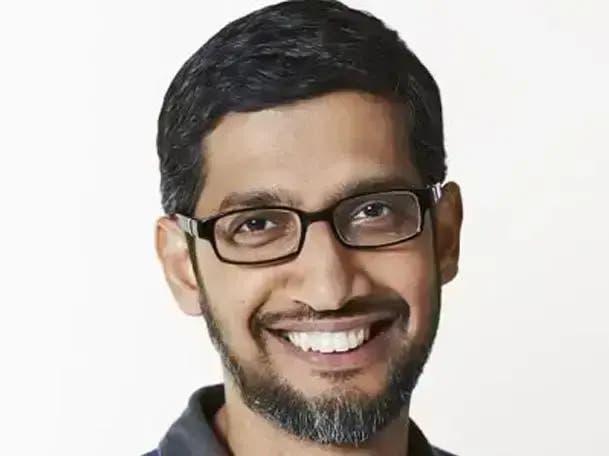
Source: CRN
Related Stories
Google has gained ground through a full-stack AI strategy that combines its own chips, data centers, frontier models and consumer products
3
. The company's Gemini chatbot now enjoys 950 million monthly active users, up from 750 million in Q4 20251
. As the third-largest cloud services provider behind Amazon Web Services and Microsoft, Google has landed major deals with firms including Anthropic2
.Analysts remain largely optimistic despite capital expenditures concerns. JPMorgan's Doug Anmuth noted that "Google is showing returns on AI spending, with its differentiated full-stack positioning evident as it monetizes across Cloud, Search, Subscriptions, and other parts of the business"
4
. Citi analyst Ronald Josey emphasized that "GOOGL's AI investments are driving results across both Search and Cloud"4
. However, some concerns persist as the company delayed the June launch of its flagship model Gemini 3.5 Pro, leaving Google trailing in the AI coding tools market while Anthropic and OpenAI roll out enterprise-focused upgrades2
5
. Share price pressure emerged partly from these delays and high-profile executive departures, dragging the stock about 9% lower since the end of April despite rising nearly 11% year-to-date2
.Summarized by
Navi
1
Technology

2
Policy and Regulation

3
Science and Research