Amazon Seeks to Offload $8bn of Nvidia Chips Through Special-Purpose Vehicle


6 Sources
[1]
Amazon seeks to offload $8bn of Nvidia chips to investors
Amazon is seeking to offload about $8bn of advanced Nvidia chips to external investors through a new vehicle aimed at strengthening its balance sheet, according to people familiar with the matter. The Seattle-based cloud giant has held talks with investors in recent weeks to gauge interest in the
[2]
Amazon hiking AI chip rental prices, exploring Nvidia leaseback
The cloud giant is also in talks with investors to move thousands of Grace Blackwell chips into a special-purpose vehicle Amazon $AMZN announced a roughly 15% price increase on its EC2 Capacity Blocks for ML service, which lets customers reserve access to Nvidia $NVDA chips ranging from the older
[3]
Report: Amazon to offload $8B worth of AI chips, lease them back
Amazon.com Inc. reportedly plans to offload some of its artificial intelligence chips and then lease them back. The Financial Times today cited sources as saying that the transaction would involve a special purpose vehicle, or SPV. A SPV is a type of legal entity that enterprises set up to
[4]
Amazon Looks to Offload $8B of Nvidia AI Chips From Its Balance Sheet
Get personalized, AI-powered answers built on 27+ years of trusted expertise. Amazon is looking to get $8 billion worth of AI chips off its balance sheet, per a report late yesterday. Amazon (AMZN) is considering spinning off thousands of Nvidia (NVDA) chips into a special purpose vehicle (SPV)
[5]

Amazon Interested In Moving $8 Billion Of GPUs Off Its Books As Report Suggests Wall Street Grows Wary Of NVIDIA's $500 Billion GPU Plan
Cloud computing giant Amazon is reportedly offloading roughly $8 billion worth of NVIDIA GPUs to shell companies in order to remove them from its balance sheet, suggests a report from the Financial Times. The move will see Amazon retain control of the GPUs and access to them, but also enable it to
[6]

Amazon Eyes $8 Billion Nvidia Chip Sale to Investors as AI Infrastructure Costs Surge: Report - Amazon.co
Amazon.com Inc. (NASDAQ:AMZN) is reportedly seeking to transfer about $8 billion of advanced Nvidia Corp. (NASDAQ:NVDA) artificial intelligence (AI) chips to outside investors through a new financing vehicle, in a move that could make the cloud provider's balance sheet more asset-light. The
Share
Copy Link
Amazon is negotiating with investors to transfer roughly $8 billion worth of Nvidia Grace Blackwell chips into a special-purpose vehicle. The cloud giant would lease the AI chips back while shifting ownership to external investors, marking a strategic shift toward an asset-light approach as tech companies seek creative ways to finance massive AI infrastructure spending.
Amazon Explores Creative AI Infrastructure Financing
Amazon is in active discussions with investors to offload $8bn of Nvidia chips through a special-purpose vehicle, according to sources familiar with the matter
1
. The Seattle-based cloud giant has held talks in recent weeks to gauge interest in a deal that would transfer thousands of Grace Blackwell AI chips already deployed across more than a dozen US data centers into an SPV2
. The chips are currently operating at facilities spread across five states, including Nevada and Virginia3
.
Source: Benzinga
Sale-Leaseback Arrangement Shifts Risk to External Investors
Under the proposed sale-leaseback arrangement, Amazon would lease the advanced AI chips back from the SPV while the entity taps outside investors through debt issuance
1
. The SPV would be funded through debt sold to outside investors, and Amazon plans to offer an equity stake of up to 10 percent in the vehicle, meaning it will not own any stakes in the entity2
. By moving these expensive semiconductors to investors, the company could adopt a more asset-light approach to its balance sheet while continuing to use the chips for its AI operations4
. Investors expect the entity will receive an investment-grade credit rating based on Amazon's current double A rating, paving the way for insurance and pension funds to join the deal1
.Massive Capital Expenditure Drives Financial Strategy
Amazon is expected to spend $220 billion in capital expenditure this year, with the majority allocated towards its cloud unit AWS for purchasing advanced chips and building AI data centers
1
. The company's capital expenditure budget for 2026 is set at $200 billion, up from $131 billion in 2025, with data centers, chips, and related hardware accounting for the bulk of those outlays2
. To fund this investment, Amazon tapped the market in March with plans to raise about $50 billion through corporate bond issuances, increasing the offering from $37 billion following strong demand1
. The company entered into a $17.5 billion term loan in June and raised £4.25 billion through a debut sterling bond offering, making it the largest bond issuer among major hyperscalers this year with cumulative sales equivalent to nearly $100 billion2
.Grace Blackwell Chips Central to Deal Structure
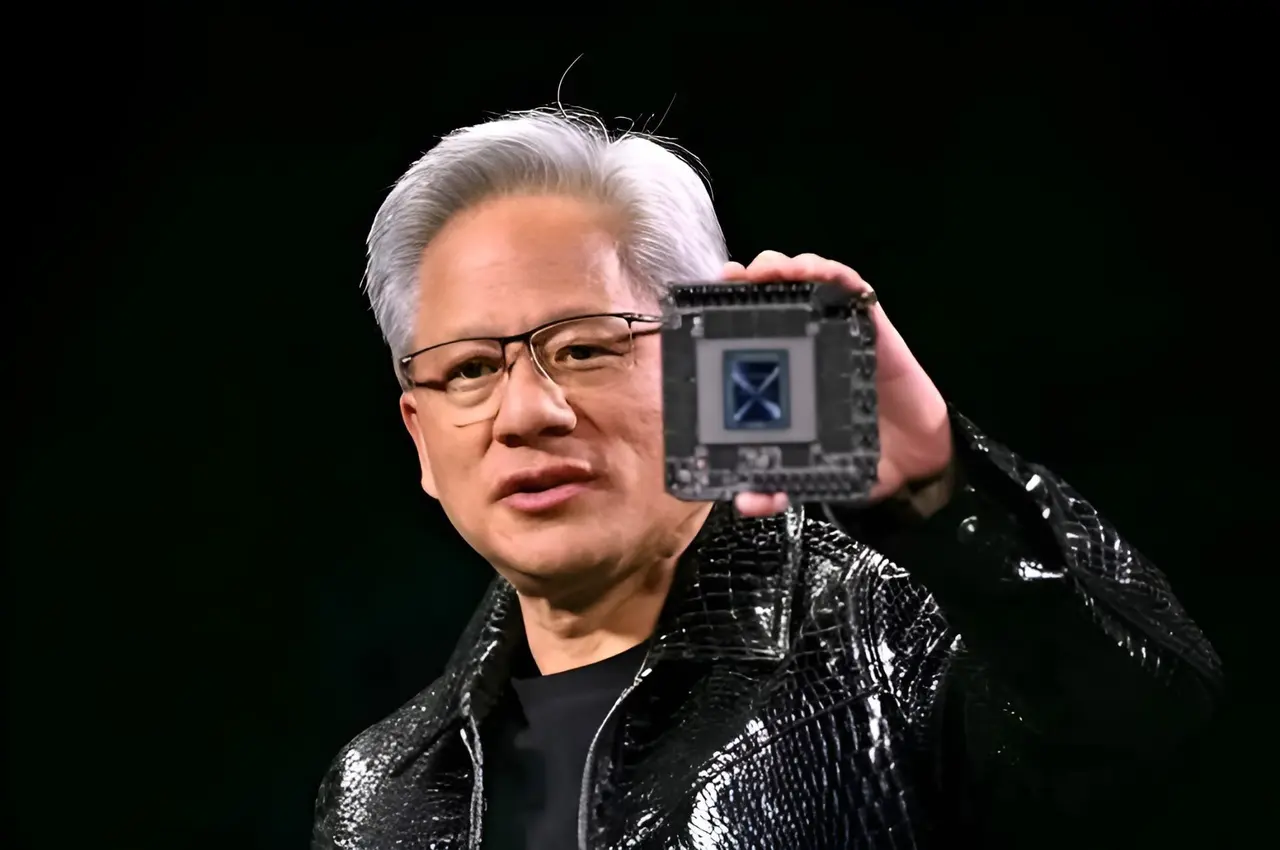
The chips at the center of the deal are Grace Blackwell accelerators, each including two of Nvidia's Blackwell graphics processing units and one Grace central processing unit linked by a custom NVLink-C2C interconnect
3
. Modal Inc., a venture-backed AI infrastructure provider, estimates that a Grace Blackwell accelerator costs between $60,000 to $70,000, suggesting Amazon intends to offload between 114,000 and 133,000 chips3
. Nvidia's Grace Blackwell chips are among the semiconductor group's most advanced but will soon be superseded by its latest Vera Rubin offering1
. Leading AI labs such as OpenAI and Anthropic use the latest chips to train their models, while previous generations continue running applications1
.
Source: Wccftech
Broader Trend Among Tech Giants to Remove Debt from Balance Sheet
The proposed move comes as tech giants seek creative ways to finance massive spending on data center expansion
1
. Tech companies are pursuing strategies to move debt off their balance sheets to preserve their creditworthiness and improve their debt-to-equity ratio, a metric that factors into credit rating3
. Nine of the largest tech companies in the US had about $3 trillion in off-balance sheet commitments as of August, indicating spending plans may be larger than they seem4
. Meta Platforms has sold an 80 percent stake in its flagship Hyperion data center campus to an investment firm, while the company has also claimed billions of dollars in innovation tax credits by characterizing its AI data centers as experimental projects3
.
Source: SiliconANGLE
Related Stories
Asset-Backed Financing Emerges as Industry Practice
Financing backed by graphics processing units has proven popular among companies such as CoreWeave, which have used their ready access to chips to fund borrowing
1
. Nvidia in August offered to backstop up to $125 billion of such debt through a $500 billion financing platform with major Wall Street groups1
. However, a recent report suggests Wall Street has grown wary of Nvidia's GPU financing plans5
. GPU-backed bonds have become another trend in the industry, with London-based Nuway Capital launching such securities that allow issuers to generate capital for AI infrastructure while bondholders profit through value appreciation5
.Pricing Adjustments Reflect Infrastructure Pressures
Separately, Amazon announced a roughly 15 percent price increase on its EC2 Capacity Blocks for ML service, which lets customers reserve access to Nvidia chips ranging from the older A100 to the newer B300, with updated rates taking effect next week
2
. The pricing page notes current rates are scheduled for the next update in October 2026, with the p5.48xlarge instance running eight Nvidia H100 chips listed at $41.528 per hour in major US regions2
. These moves together reflect the pressure Amazon faces in financing its AI infrastructure expansion as it balances massive capital requirements with maintaining financial flexibility2
.References
Summarized by

Navi
[3]
Related Stories
Amazon plans to sell Trainium AI chips directly, mounting a $50 billion challenge to Nvidia
18 Jun 2026•Technology

Amazon's AI chip business hits $20 billion run rate as Jassy hints at external sales
09 Apr 2026•Business and Economy

Amazon Tests AI Chips in Texas Lab to Reduce Nvidia Dependency
26 Jul 2024

Recent Highlights



Recent Highlights
Today's Top Stories






Don’t drown in AI news. We cut through the noise - filtering, ranking and summarizing the most important AI news, breakthroughs and research daily. Follow topics that matter to you and stay ahead.


