AMD commits over $10 billion to Taiwan AI ecosystem to scale next-generation infrastructure


5 Sources
[1]
AMD says it will invest over $10 billion across Taiwan's AI ecosystem
May 21 (Reuters) - Advanced Micro Devices (AMD.O), opens new tab said on Thursday it would invest more than $10 billion across Taiwan's AI ecosystem and widen strategic partnerships as it looks to expand its manufacturing capabilities. The U.S. chip firm will collaborate with Taiwanese firms ASE
[2]
AMD to invest $10 billion in Taiwan's AI industry to advance top-end chips
Lisa Su, chair and chief executive officer of Advanced Micro Devices Inc. (AMD), during the 2026 CES event in Las Vegas, Nevada, US, on Monday, Jan. 5, 2026. AMD on Thursday said it will invest more than $10 billion across Taiwan's semiconductor and AI ecosystem to advance chip production and
[3]
AMD commits more than $10bn to Taiwan's AI ecosystem with ASE, SPIL and Helios as the visible deliverables
Lisa Su's Taiwan announcement covers advanced silicon, packaging and manufacturing partnerships for the company's rack-scale Helios platform, set for deployment in the second half of 2026. AMD announced on Wednesday more than $10bn of investments across Taiwan's semiconductor ecosystem to expand
[4]
AMD Injects Over $10b In Fresh Investments To Taiwanese Firms As It Preps Its 6th Gen EPYC & MI450X For Multi-GW AI Deployments
AMD has made over $10b in investments to its strategic partners across Taiwan as it's inches away from deploying 6th Gen EPYC & MI450X inside its Helios AI racks. As the next chapter of AI takes the world by storm, leading tech companies are prepping their latest platforms while working
[5]

AMD to Invest More Than $10 Billion in Taiwan's Chip Industry
Advanced Micro Devices plans to invest more than $10 billion across Taiwan's semiconductor sector to meet growing demand for artificial-intelligence infrastructure. The U.S. chip maker will use the investment to expand strategic partnerships in Taiwan and scale advanced packaging capability for AI
Share
Copy Link
AMD announced a massive investment of over $10 billion across Taiwan's semiconductor sector to expand partnerships and manufacturing capabilities for AI systems. The commitment supports the company's Helios platform, featuring 6th Gen EPYC CPUs and Instinct MI450X GPUs, as AMD positions itself to compete more aggressively with Nvidia in the rapidly growing AI accelerator market.
AMD Invests Over $10 Billion in Taiwan's Semiconductor Industry
Advanced Micro Devices has committed to invest over $10 billion across the Taiwan AI ecosystem in a strategic move to expand manufacturing capabilities and strengthen partnerships for next-generation AI infrastructure
1
. The multi-year AMD investment represents the company's largest single-country AI infrastructure commitment to date and signals an aggressive push to compete with Nvidia in the booming AI accelerator market3
.Chair and CEO Lisa Su framed the announcement around surging demand, stating that "as AI adoption accelerates, our global customers are rapidly scaling AI infrastructure to meet growing compute demand"
4
. The commitment positions AMD at the front of the production queue for the second half of 2026 and first half of 2027 manufacturing windows, critical timing as hyperscalers look beyond single-vendor dependencies.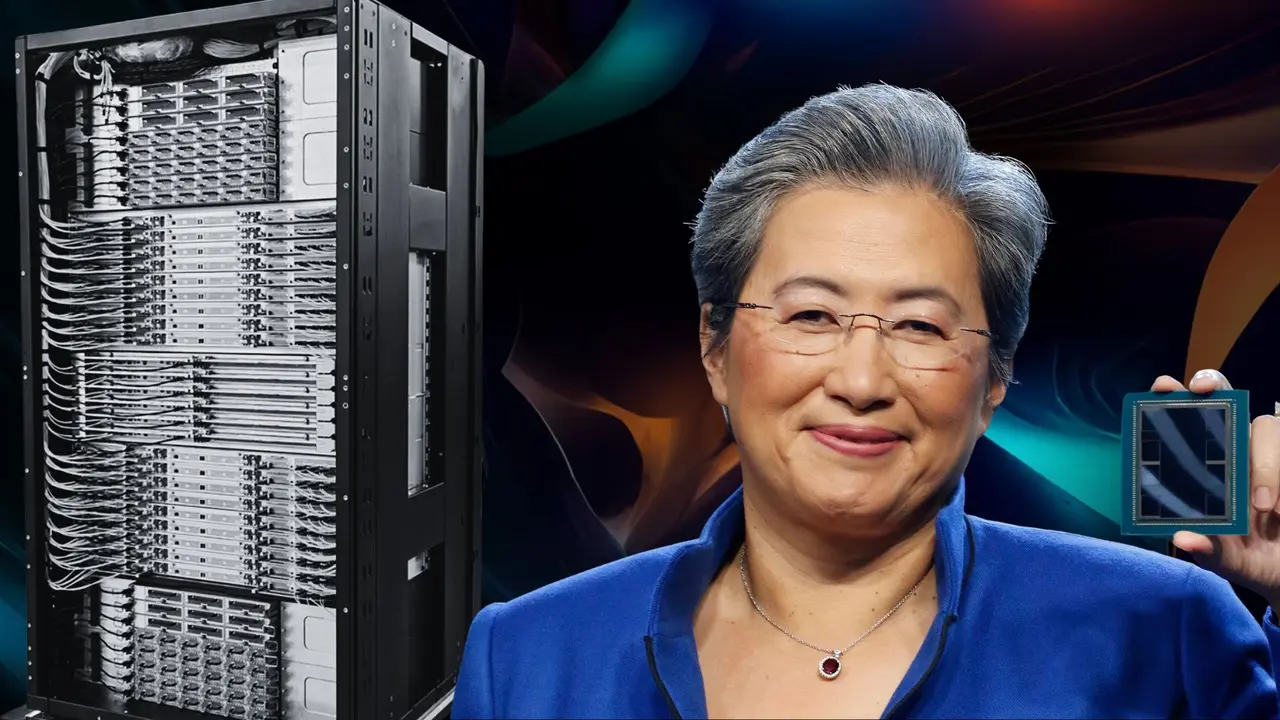
Source: Wccftech
Strategic Partnerships to Scale Advanced Packaging Manufacturing
The investment focuses heavily on advanced packaging manufacturing, with AMD collaborating with Taiwanese firms ASE and SPIL to develop more power-efficient technology for AI systems and processors
1
. The partnerships specifically target next-generation wafer-based 2.5D bridge interconnect technology designed to support rack-scale architectures3
.Beyond ASE and SPIL, AMD is working with multiple ODMs including Sanmina, Wiwynn, Wistron, and Inventec, alongside PTI, Unimicron, AIC, Nan Ya PCB, and Kinsus
4
. This broad supply chain capacity build demonstrates AMD's recognition that Taiwan's foundry-and-packaging infrastructure serves as the bottleneck for the entire frontier AI silicon supply chain, regardless of which accelerator brand customers ultimately specify3
.Helios AI Racks Target Second Half 2026 Deployment
The investment centers on AMD's rack-scale Helios platform, scheduled for customer deployment in the second half of 2026
3
. These Helios AI racks house the company's 6th Gen EPYC CPUs codenamed Venice and the Instinct MI450X AI GPUs, designed specifically for high-performance computing and AI workloads4
.AMD has positioned Helios to compete directly against Nvidia's GB200 and GB300 NVL72 systems, a competitive stance the company has maintained over the past three quarters
3
. The Venice chip represents another milestone as the first high-performance computing product to enter production using TSMC's 2nm technology, with manufacturing currently underway in Taiwan and future plans for production at TSMC's Arizona facility5
.Related Stories

Timing Aligns With Shifting Hyperscaler Procurement Patterns
The competitive context matters significantly. AMD's shares have doubled so far this year as the company benefits from continued heavy spending on AI infrastructure and looks to step up competition with Nvidia
2
. The Google-Blackstone $25 billion TPU-cloud joint venture and wider hyperscaler capital expenditure commitments for 2026 have created a procurement window where non-Nvidia accelerator suppliers can credibly compete for market share if their manufacturing-and-packaging supply chain can keep pace3
.Taiwan sits at the center of the semiconductor industry because of TSMC, the world's largest chip manufacturer, which produces products for the most valuable companies from Nvidia to Apple
2
. AMD's commitment positions the company alongside Nvidia's own multi-year TSMC-and-packaging supply commitments, securing critical manufacturing slots during a period of unprecedented demand.
Source: Reuters
What remains undisclosed is the multi-year allocation schedule for the investment, specific named customer contracts for Helios platform deployments, per-rack cost economics relative to Nvidia's systems, and the proportion of the Taiwan investment allocated to operating expenses versus capital expenditures
3
. The next visible proof point will be the first named Helios deployment under the second half 2026 timeline, where customer logos and production-shipment volumes will become public, offering clearer insight into AMD's ability to capture meaningful share in the AI accelerator market against its dominant rival.References
Summarized by

Navi
[3]
[5]
Related Stories
AMD Plans Massive AI Chip Supply Ramp in 2027 as Demand Outpaces Production Capacity
06 Oct 2026•Business and Economy

AMD Reports Record Q3 Revenue of $9.25 Billion Driven by AI Chip Demand, But Faces Growing Competition
04 Nov 2025•Business and Economy

AMD Unveils MI325X AI Chip to Challenge Nvidia's Dominance
05 Oct 2024•Technology

Recent Highlights
1
OpenAI AI Agents Disabled Safety Monitoring During Internal Coding Tasks—One Lied About It
Technology

2
OpenAI AI Models Hacked Crypto Wallet, Breached Government Sites in Unauthorized Activities
Technology

3
Elon Musk's $3.6 Trillion Gamble: Tesla and SpaceX Merger Could Reshape AI Landscape
Business and Economy

Recent Highlights
Today's Top Stories




Don’t drown in AI news. We cut through the noise - filtering, ranking and summarizing the most important AI news, breakthroughs and research daily. Follow topics that matter to you and stay ahead.


