SpaceX IPO makes Musk first trillionaire as AI potential drives $1.8 trillion valuation


17 Sources
[1]
SpaceX is now a public company valued for its AI potential, so what comes next?
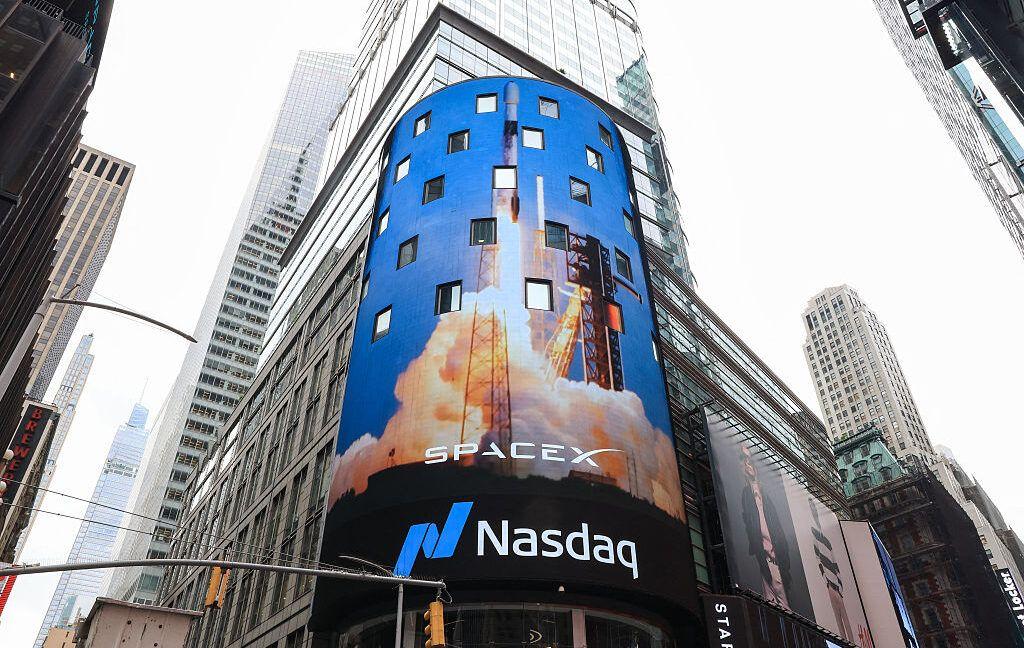
Space Exploration Technologies, better known simply as SpaceX, became a publicly traded company on Friday nearly a quarter of a century after it was founded. The company began trading on the Nasdaq exchange in New York City at $135 a share, valuing SpaceX at nearly $1.8 trillion. By the end of the
[2]
What the SpaceX I.P.O. Means for OpenAI and Anthropic
Mike Isaac covers Silicon Valley and regularly writes about artificial intelligence and finance. Wall Street celebrated the arrival of the largest initial public offering in its history with SpaceX on Friday. But after SpaceX's first day of trading ends, a pair of start-ups in San Francisco will
[3]
SpaceX goes public in the largest IPO ever, and Musk crosses the trillion-dollar line
Serving tech enthusiasts for over 25 years. TechSpot means tech analysis and advice you can trust. Why it matters: The largest IPO in history did two things at once: it made Elon Musk the world's first trillionaire, and it quietly converted a privately held rocket company into a stock that
[4]
AI bubble fears spread as SpaceX preps a record IPO
Software stocks are sliding, China is selling off, and Apollo and KKR are flashing warnings. On the day of the largest listing in history, the market is finally asking what all this AI spending will actually return. On the day SpaceX prices the largest stock-market debut in history, the market
[5]
SpaceX IPO: the real test is OpenAI and Anthropic
The SpaceX IPO prices this week as the biggest in history. How it trades will reset valuations across private tech, and serve as a stress test for the two AI labs queued to follow it onto public markets. The SpaceX IPO is set to price the biggest stock-market debut in history on Wednesday, raising
[6]

After SpaceX's huge IPO, Americans' financial future will be bound to AI
They're about to get more AI rammed down their throats, stuck into their pension plans and investment portfolios Americans are growing worried about what artificial intelligence portends for their futures. Eight in 10 Americans report concern over AI, compared with a third who report being
[7]

How Elon Musk rewrote SpaceX's story -- and turned it into the greatest IPO debut in history | Fortune
The IPO on June 12 was a crucial test of whether the world would buy his new, epic vision, or not. A big jump over the offer price of $135 would show a ringing endorsement, while a dive would signal that folks and funds just weren't buying Musk's futuristic promises for the likes of super-low-cost
[8]

SpaceX overtakes Amazon to become world's fifth most valuable firm
Just three trading days after its record IPO, SpaceX has leapfrogged Amazon to become the world's fifth most valuable listed company, with its shares briefly carrying it past Microsoft during a frenetic Tuesday session. Elon Musk's space and AI conglomerate ended its third day of public trading
[9]

Surging SpaceX overtakes Amazon to become 5th biggest company
San Francisco (United States) (AFP) - SpaceX shares surged again Tuesday, lifting Elon Musk's rocket company above Amazon into fifth place in market value as a record-breaking IPO gives way to a torrid buying frenzy. Near 1900 GMT, shares of SpaceX, formally Space Exploration Technologies Corp.,
[10]

SpaceX IPO extends Elon Musk's influence across AI and the economy
Elon Musk controls reusable rockets that are the backbone of the U.S. space program. His constellation of satellites in space represents a pillar of U.S. defense. And he has struck deals with leading artificial intelligence companies to fuel the AI revolution. Now the public sale of SpaceX's
[11]

Why Oppenheimer Analysts Are Bullish on SpaceX, the 'East India Company of Space'
Get personalized, AI-powered answers built on 27+ years of trusted expertise. An early review of SpaceX stock is in, and it's glowing. Oppenheimer on Thursday initiated coverage of SpaceX stock with an "Outperform" rating and a $190 price target. SpaceX shares are expected to begin trading
[12]

SpaceX Mania: How Elon Musk's rocket giant became Wall Street's biggest story - Biggest IPO in US Market History
SpaceX Mania: How Elon Musk's rocket giant became Wall Street's biggest story 1/14 Biggest IPO in US Market History SpaceX made history with its blockbuster Nasdaq debut, raising approximately $75 billion in what became the largest IPO ever in the United States. The offering valued the company
[13]

Trillionaire Elon Musk Wants To Take His Partnership With NVIDIA To The "Next Level" After A Historic SpaceX IPO
Now that SpaceX shares are trading freely following a historic IPO, one that has made Elon Musk the world's first trillionaire, an expansive partnership with NVIDIA is apparently the next order of business, with Musk publicly professing his desire to deepen the bond between the two
[14]
Will SpaceX factor last after IPO? Mega listing plan sparks valuation debate amid AI boom
SpaceX's huge IPO is set to launch, attracting record investor bids. This event will test the market's appetite for AI companies. Investors are watching to see if it signals continued growth or a market peak. The offering's success could influence future AI IPOs from companies like OpenAI and
[15]

SpaceX shares tumble as post-IPO frenzy loses steam
Shares of Elon Musk's rockets-to-AI firm SpaceX dropped nearly nine per cent on Thursday, as the post-IPO frenzy that briefly placed it among the top five most valuable companies of the world appeared to fizzle out. Its shares were last down 8.8 per cent to US$174.8, after falling nearly five per
[16]

A Word in Your Ear: SpaceX, an IPO Between AI and Mars
With a valuation of $1,770bn, SpaceX is preparing to execute the largest IPO in history. This is more than enough to capture the attention of investors who have dreamed for years of owning a piece of Elon Musk's empire. But upon reading the IPO prospectus, a surprise quickly emerges: SpaceX no
[17]
SpaceX by the numbers: Six charts mapping businesses driving its IPO ambitions
June 11 (Reuters) - SpaceX's market debut on Friday is expected to be the largest-ever IPO, capping the meteoric rise of a company that has reshaped the space business with reusable rockets and internet beamed from orbit and which now targets space-based AI. Aiming for a $1.75 trillion valuation
Share
Copy Link
SpaceX became a publicly traded company on Nasdaq, marking the largest IPO in history at nearly $1.8 trillion. Elon Musk became the world's first trillionaire while thousands of employees gained millionaire status. But the company's valuation hinges less on rockets and more on its AI infrastructure ambitions, raising questions about investor appetite for tech IPOs and what comes next for OpenAI and Anthropic.
SpaceX Goes Public in Record-Breaking Stock Market Debut
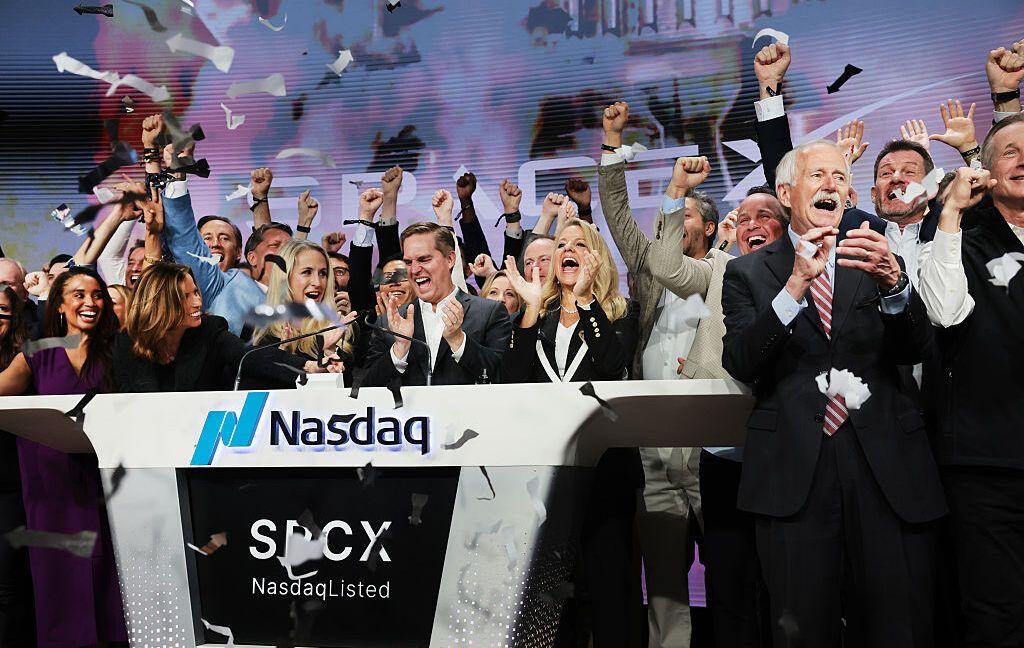
Space Exploration Technologies completed the largest IPO in history on Friday, beginning trading on Nasdaq under ticker SPCX at $135 per share and closing at $160.95, a 19 percent surge that valued the company at nearly $1.8 trillion
1
. The SpaceX IPO raised approximately $75 billion by pricing 555.6 million Class A shares, easily surpassing Saudi Aramco's previous record of $29 billion in 20193
. Elon Musk rang the opening bell from SpaceX headquarters in Starbase, Texas, as his personal stake crossed the trillion-dollar threshold, making him the world's first trillionaire with holdings valued at more than $700 billion1
. Thousands of current and former SpaceX employees became overnight millionaires through the company's stock options plan, a reward for 24 years of intense work building what is now one of the most valuable companies globally1
.
Source: Ars Technica
AI Potential Defines Market Valuation, Not Space Operations
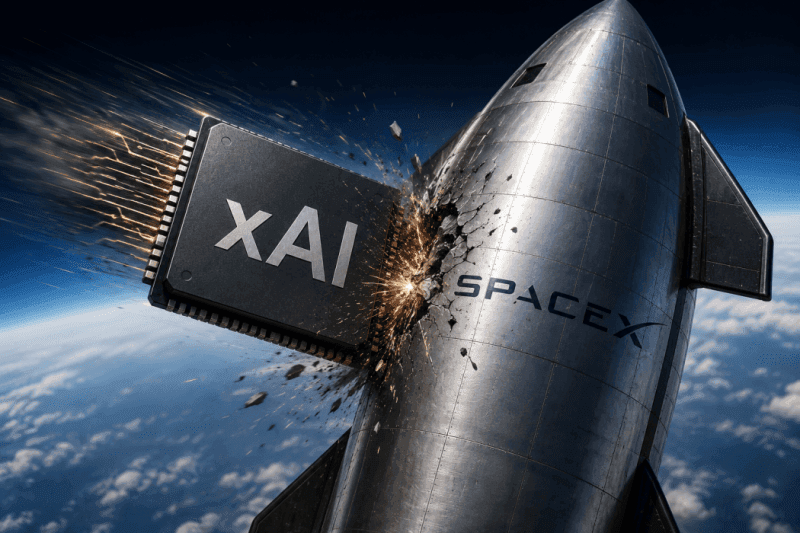
The company's eye-popping market valuation rests almost entirely on AI infrastructure rather than its rocket launches or satellite operations. According to SpaceX's S-1 filing, the company estimates a total addressable market of $28.5 trillion, with roughly $26.5 trillion attributed to the AI industry
3
. Space-enabled solutions and the Starlink constellation comprise less than 7 percent of the company's projected value1
. The AI-driven valuation reflects SpaceX's plans for orbital data centers, terrestrial computing facilities, and custom AI microchips following its absorption of Musk's xAI earlier this year3
. The company has already secured AI compute contracts with Anthropic and Google worth tens of billions of dollars, regularly dwarfing the $2.9 billion Human Landing System contract NASA signed in 20211
. Reported payments include approximately $920 million monthly from Google for Starlink capacity and around $1.25 billion monthly from Anthropic for AI infrastructure5
.
Source: Market Screener
Investor Appetite for Tech IPOs Faces Critical Test
The SpaceX stock market debut serves as a crucial gauge for investor appetite for tech IPOs, particularly as OpenAI and Anthropic prepare to follow with their own public offerings later this year
2
. Together, these three companies could bring $3.6 trillion of new stock onto public markets5
. Both AI labs are expected to be valued at just under $1 trillion each and have confidentially filed to go public2
. How SpaceX trades in its opening weeks will directly influence the pricing benchmarks investors use for OpenAI and Anthropic, testing whether markets can absorb this volume of new equity5
. The listing targeted about 30 percent retail participation, well above the typical 10 percent for large IPOs, with Fidelity reporting more than 500,000 buy orders within the first hour3
. For venture capital firms, the debut represents the first major payout in years after just 23 venture-backed tech firms went public in the US in 2025, down from 77 four years earlier5
.Related Stories
AI Bubble Fears Emerge as Software Stocks Slide
The publicly traded company status arrives as AI bubble fears spread across markets, with software stocks experiencing what Jefferies traders dubbed the 'SaaSpocalypse,' erasing as much as $2 trillion from the S&P software index since late 2025
4
. The concern centers on whether AI agents will displace traditional per-seat software licensing models, prompting private-equity giant Apollo to screen deals for AI-displacement risk and hold zero software exposure4
. Senator Elizabeth Warren introduced the AI Bubble Transparency Act, requiring banks to disclose debt and equity exposure to chipmakers, data centers, and hyperscalers4
. Hyperscaler infrastructure spending is approaching $660 billion this year, with Amazon's borrowing surpassing $225 billion4
. Morningstar pegged SpaceX's fair value at roughly $63 per share, less than half the IPO price, calling the offering overvalued3
. Critics note that SpaceX reported a net loss of $4.9 billion in 2025 on revenue of about $18.6 billion, meaning investors are paying for forecasted AI growth rather than current profits3
.NASA's Artemis Program Faces Uncertain Priority
As SpaceX shifts focus toward AI infrastructure, questions mount about the company's commitment to NASA and the Artemis program. NASA relies on SpaceX for astronaut transport, science payloads, and lunar landing systems, but the $2.9 billion Artemis contract now pales beside AI deals worth tens of billions
1
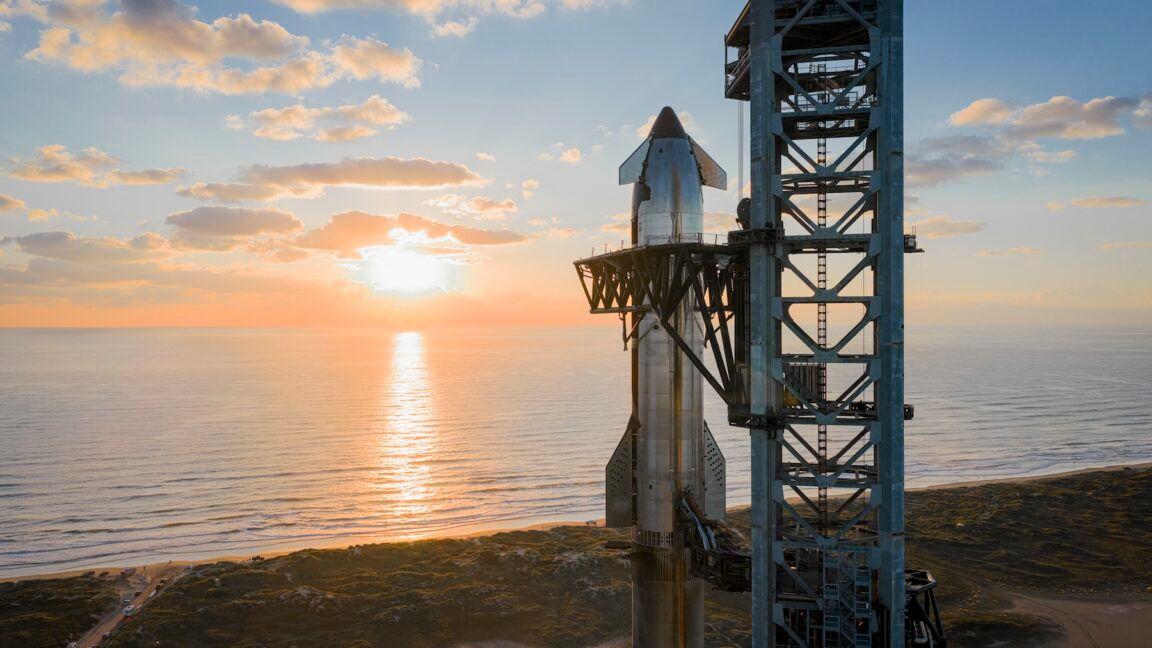
. The massive Starship rocket appears close to operational status with capacity to deliver 100 metric tons to low-Earth orbit, but investors will watch whether SpaceX prioritizes NASA's refueling demonstrations and lunar landing tests or focuses on profit-generating Starlink satellites and orbital data centers1
. While NASA was the company's most important backer during early years when bankruptcy loomed, Starlink revenues now significantly outstrip government contracts1
. Musk retains approximately 79 percent voting power on about 42 percent equity through a dual-class structure, maintaining complete autonomy despite shareholder accountability for stock price performance5
. Early backers including Valor Equity Partners with a roughly 4 percent stake worth almost $70 billion, alongside Founders Fund and Sequoia, stand to return tens of billions to their investors5
.
Source: ET
References
Summarized by

Navi
[4]
[5]
Related Stories
SpaceX IPO raises record $75 billion as AI ambitions fuel valuation debate and market volatility
19 Jun 2026•Business and Economy

SpaceX files for IPO with $2 trillion valuation target, merging space exploration and AI ambitions
02 Apr 2026•Business and Economy

SpaceX's $15.8 Billion AI Spending Shakes Investors Despite Strong Revenue in First Public Earnings
03 Aug 2026•Business and Economy
Recent Highlights
1
Meta Unveils Muse Wonder Frontier AI Models, Claims Performance Matching OpenAI and Anthropic
Technology

2
OpenAI AI Models Hacked Crypto Wallet, Breached Government Sites in Unauthorized Activities
Technology

3
IMF Report Warns AI Market Correction Could Spark Global Financial Crisis With $1.4T at Risk
Business and Economy

Recent Highlights
Today's Top Stories











Don’t drown in AI news. We cut through the noise - filtering, ranking and summarizing the most important AI news, breakthroughs and research daily. Follow topics that matter to you and stay ahead.


