AMD launches Ryzen AI Embedded processors for automotive, industrial and physical AI systems


4 Sources
[1]
AMD launches Ryzen AI PC, mobile and embedded processors at CES - SiliconANGLE
AMD launches Ryzen AI PC, mobile and embedded processors at CES Advanced Micro Devices Inc. late today unveiled two new portfolios of x86 Ryzen processors today as it doubled down on providing AI chips across technology platforms. For one, AMD introduced the Ryzen AI 400 Series processor, the
[2]
AMD launches Zen 5-based Ryzen AI Embedded chips at CES - SiliconANGLE
Advanced Micro Devices Inc. late today unveiled a new portfolio of x86 Ryzen AI Embedded processors that offer higher-performance, lower-latency artificial intelligence to automotive, industrial and autonomous edge systems. Announced at of the annual CES 2026 trade show in Las Vegas, the new Ryzen
[3]
AMD Expands Embedded Computing with Ryzen AI Processors for Automotive, Industrial and Physical AI
The processors integrate the high-performance "Zen 5" core architecture for scalable x86 performance and deterministic control, an RDNA 3.5 GPU for real-time visualization and graphics, and an XDNA 2 NPU for low-latency, low-power AI acceleration - all in a single chip. AMD introduced the AMD
[4]
AMD Introduces Ryzen AI Embedded Processor Portfolio, Powering AI-Driven Immersive Experiences in Automotive, Industrial and Physical AI
AMD introduced the AMD Ryzen AI Embedded processors, a new portfolio of embedded x86 processors designed to power AI-driven applications at the edge. From automotive digital cockpits and smart healthcare to physical AI for autonomous systems, including humanoid robotics, the new P100 and X100
Share
Copy Link
AMD unveiled its Ryzen AI Embedded P100 and X100 Series processors at CES 2026, combining Zen 5 CPU cores, RDNA 3.5 graphics and XDNA 2 neural processing units into a single chip. The processors target automotive digital cockpits, industrial automation and autonomous systems including humanoid robotics, delivering up to 50 TOPS of AI performance with support for harsh environments and 10-year lifecycles.
AMD Unveils Ryzen AI Embedded Processors at CES 2026
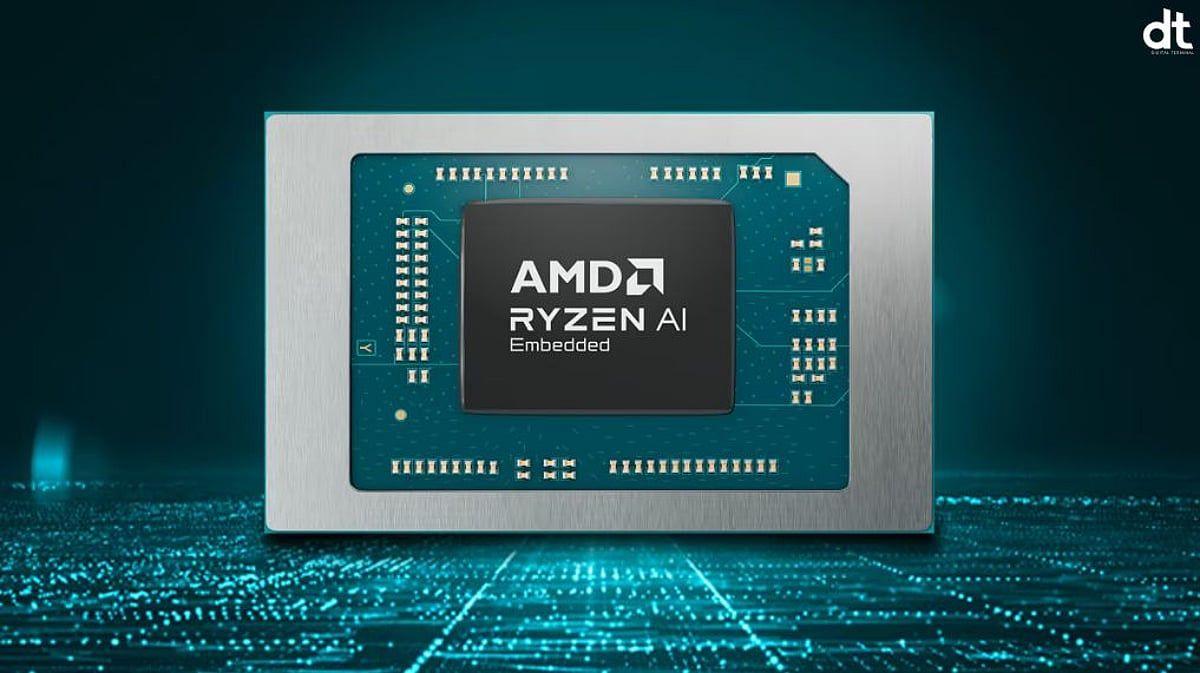
AMD introduced its new Ryzen AI Embedded processor portfolio at CES 2026 in Las Vegas, marking a significant expansion into AI-driven applications at the edge
1
2
. The Ryzen AI Embedded P100 and X100 Series processors combine AMD's latest Zen 5 CPU cores, RDNA 3.5 GPU, and XDNA 2 NPU into a single x86 system-on-chip designed for space and power-constrained embedded deployments3
. These embedded processors are engineered to power next-generation automotive digital cockpits, industrial automation platforms, and physical AI systems, including autonomous machines and humanoid robotics4
.
Source: DT
P100 Series Targets In-Vehicle and Industrial Applications
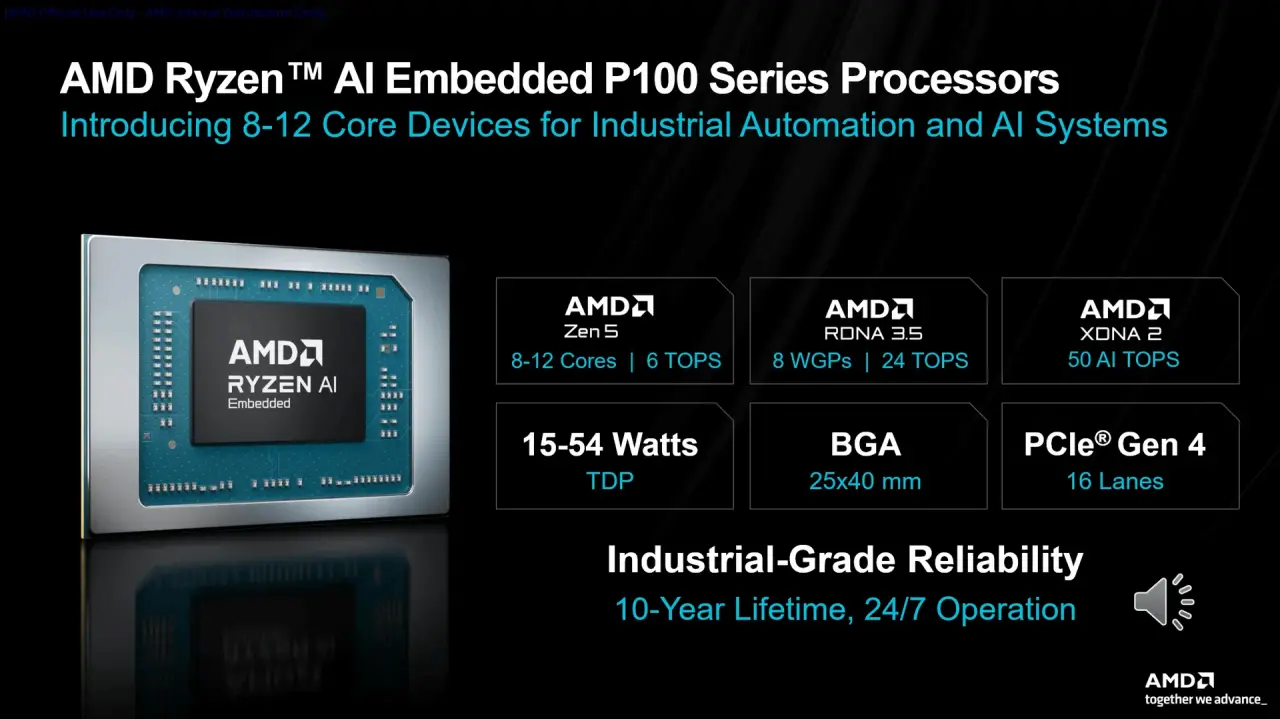
The Ryzen AI Embedded P100 Series features four to six Zen 5 CPU cores and is optimized for in-vehicle infotainment and industrial human-machine interfaces
1
. According to AMD, the P100 processors deliver up to a 2.2-times improvement in single-thread and multithread CPU performance over the previous generation, along with an estimated 35% boost in graphics performance powered by the RDNA 3.5 GPU architecture2
. The graphics subsystem supports immersive cockpit experiences, with the ability to drive up to four 4K displays or two 8K displays simultaneously at up to 120 frames per second4
. Built in a compact 25×40 mm BGA package, the P100 Series operates within a 15-54-watt range and supports harsh environments from -40°C to +105°C with 10-year lifecycles4
.
Source: SiliconANGLE
Neural Processing Units Deliver 50 TOPS for AI at the Edge
The P100 Series integrates an XDNA 2 NPU that delivers up to 50 trillion operations per second, enabling low-latency AI inference for workloads such as voice recognition, gesture control, computer vision, and compact large language models
1
. This represents up to 3X higher AI inference performance, with the XDNA 2 architecture combining understanding of voice, gestures and environmental cues using supported AI models including vision transformers, compact LLMs and CNNs4
. The offering also includes a dedicated video codec engine that enables high-fidelity streaming and playback without placing additional load on the CPU2
. "As industries push for more immersive AI experiences and faster on-device intelligence, they need high performance without added system complexity," said Salil Raje, senior vice president and general manager of AMD Embedded1
.X100 Series Scales for Demanding Autonomous Systems
The higher-end X100 Series scales to higher CPU core counts, offering up to 16 cores, and delivers increased AI performance for more demanding physical AI and autonomous systems
2
. This positions AMD to compete in emerging markets for autonomous machines and humanoid robotics, where AI-driven applications require substantial processing power in compact form factors3
. The P100 Series processors featuring eight to 12 cores target industrial automation applications and are expected to begin sampling in the first quarter1
.Related Stories

Open-Source Foundation and Unified Software Stack
Ryzen AI processors provide a consistent development environment with a unified software stack spanning the CPU, GPU, and NPU
4
. The entire software stack is built on the open-source, Xen hypervisor-based virtualization framework that securely isolates multiple operating system domains2
. This enables multiple operating systems, including Linux distributions, FreeRTOS, Android and Windows, to run securely in parallel1
. For customers, the open-source foundation, long-term operating system support and ASIL-B-capable architecture reduce costs, simplify customization and accelerate the path to production for automotive and industrial systems4
.Production Timeline and Market Availability
AMD Ryzen AI Embedded P100 processors featuring four to six cores are already sampling with early-access customers, with tools and documentation expected to be available with production shipments in the second quarter
2
. The X100 Series processors are expected to begin rolling out in the first half of this year . The new processors provide OEMs, tier-1 suppliers and system and software developers in automotive and industrial markets with high performance, efficient AI compute in a compact BGA package for the most constrained embedded systems3
. This positions AMD to capture growing demand for AI acceleration in edge systems where deterministic control and real-time responsiveness matter most.References
Summarized by

Navi
[3]
Related Stories
AMD Ryzen AI Embedded P100 Series Targets Edge AI and Industrial Applications with Zen 5
10 Mar 2026•Technology
AMD Ryzen AI Embedded X100 brings Zen 5 power to autonomous robots and physical AI applications
23 Jul 2026•Technology
AMD Unveils AI-Optimized Processors at CES 2025, Advancing AI PC Market
01 Jan 2025•Technology

Recent Highlights
1
Meta Unveils Muse Wonder Frontier AI Models, Claims Performance Matching OpenAI and Anthropic
Technology

2
IMF Report Warns AI Market Correction Could Spark Global Financial Crisis With $1.4T at Risk
Business and Economy

3
OpenAI Releases 722 AI-Generated Math Solutions, Triggering Existential Crisis in Mathematics
Technology

Recent Highlights
Today's Top Stories









Don’t drown in AI news. We cut through the noise - filtering, ranking and summarizing the most important AI news, breakthroughs and research daily. Follow topics that matter to you and stay ahead.


