AMD Ryzen AI Embedded X100 brings Zen 5 power to autonomous robots and physical AI applications


4 Sources
[1]
AMD's new X100 chip lineup puts Strix Halo into robots - APUs for physical AI bring Zen 5 CPU, RDNA 3.5 GPU cores to compete with Intel's Panther Lake
AMD is bringing its Strix Halo APUs into the world of physical AI. The new X100 series of processors come with similar specs as the various Ryzen AI Max models floating around in client devices, but they're tailored for 24/7 operation, with a 10-year lifecycle in embedded applications like
[2]
SAPPHIRE Unveils EDGE+ Apex Robotics Platform Powered by AMD Ryzen AI Embedded X100
SAPPHIRE Technology has introduced the EDGE+ Apex SOM/Carrier Robotics Platform, a production-ready embedded hardware solution designed for autonomous robotics and physical AI applications. Demonstrated during AMD Advancing AI 2026 in San Francisco, the platform combines AMD's newly announced Ryzen
[3]
AMD's Ryzen AI Embedded X100 Series processors are built for autonomous robots and physical AI
At its annual Advancing AI 2026 event, AMD has not only launched its next-gen Zen 6-powered AMD EPYC 'Venice' CPUs and AMD Instinct MI455X GPUs for large-scale AI, but it has also announced the new AMD Ryzen AI Embedded X100 Series processors for physical AI and robotics. These new processors
[4]
AMD Ryzen AI Embedded X100 Combines 16-Core Zen 5 CPU, GPU and NPU
AMD has introduced the Ryzen AI Embedded X100 Series for robotics, industrial automation, medical equipment and other physical AI systems. The processors combine up to 16 Zen 5 CPU cores, an integrated Radeon GPU and an NPU within a single embedded SoC. Physical AI refers to systems that receive
Share
Copy Link
AMD launched its Ryzen AI Embedded X100 Series processors at the Advancing AI 2026 event, combining 16-core Zen 5 CPU, RDNA 3.5 GPU with 40 compute units, and XDNA 2 NPU for robotics and physical AI. The chips support 24/7 operation with a 10-year lifecycle, unified memory architecture up to 128 GB, and extreme temperature tolerance from -40°C to 105°C, directly competing with Intel Panther Lake and Nvidia's robotics platforms.
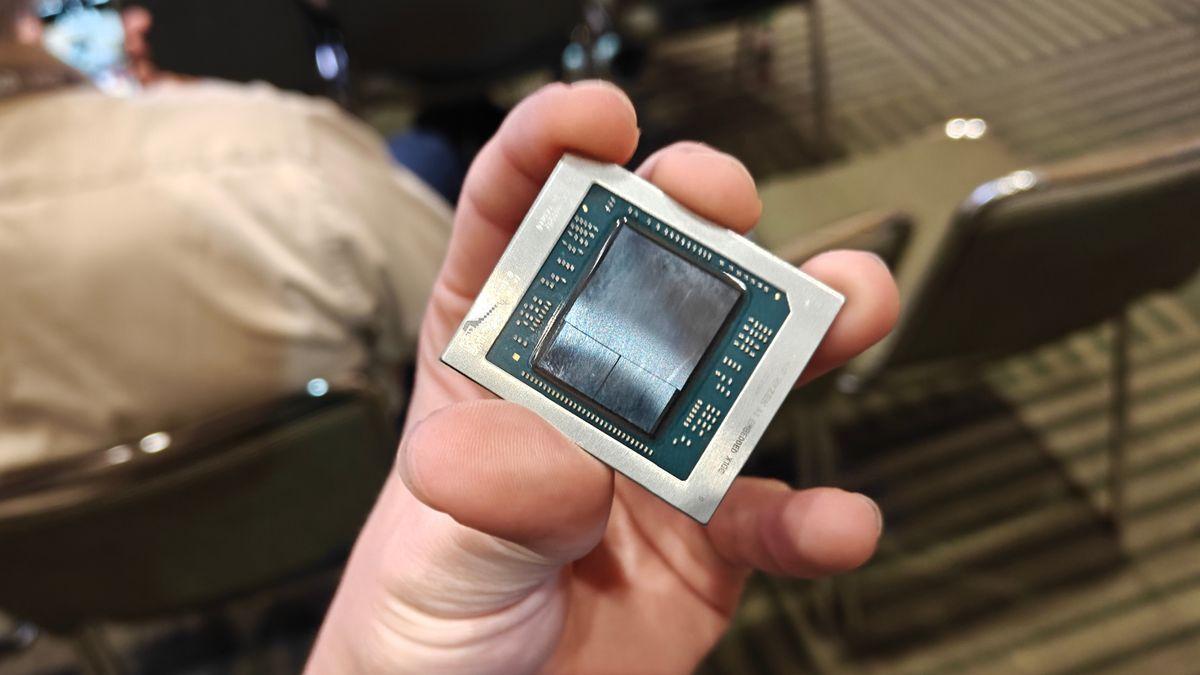
AMD Targets Physical AI Market with Embedded X100 Processors
AMD has introduced the AMD Ryzen AI Embedded X100 Series processors at its Advancing AI 2026 event, marking a strategic push into physical AI and robotics applications
1
. These embedded processors combine up to 16 Zen 5 CPU cores with an integrated RDNA 3.5 GPU featuring 40 compute units and an XDNA 2 NPU delivering up to 50 TOPS of AI performance3
. The lineup directly challenges Intel Panther Lake SoCs and positions AMD to compete with Nvidia Thor T5000 in the growing market for autonomous robots and industrial automation.Physical AI refers to systems that perceive their environment through sensors, process information locally, and generate physical responses—capabilities essential for industrial robots, autonomous machines, medical imaging equipment, and unmanned platforms
4
. The X100 series addresses these demands with a unified memory architecture supporting up to 128 GB of LPDDR5x memory, reducing latency by eliminating data transfers between separate CPU and accelerator memory spaces2
.Three SKUs Tailored for Different Deployment Scenarios
The X100 lineup includes three models aligned with AMD's Strix Halo architecture. The flagship X199 delivers 16 Zen 5 CPU cores and 40 RDNA 3.5 compute units, while the X188 steps down to 12 cores and 32 CUs
1
. The entry-level X168 features eight cores paired with 32 compute units. All models support configurable TDP between 45W and 120W with boost clocks reaching 5.1 GHz, enabling flexible power profiles for different robotics applications.Critically, these chips are engineered for long-term lifecycle support with 24/7 operation capability and availability for up to 10 years—essential for industrial deployments where hardware consistency matters
4
. Operating temperature ranges from -40°C to 105°C allow deployment in harsh environments including aerospace, defense, and outdoor autonomous systems3
.Performance Claims Against Intel and Nvidia Competitors
AMD positions the X100 series with substantial performance advantages over competing platforms, though the benchmarks require careful interpretation. Against Intel's Core Ultra X7 358H from the Panther Lake lineup, AMD claims 2.1x higher multithreaded performance and 1.7x faster OpenGL graphics
3
. For AI inference with local language models, AMD reports 3.5x higher token generation throughput and 1.4x faster time-to-first-token performance4
.However, these figures come with significant caveats. AMD tested a Ryzen AI Max+ 395 configured to approximate X199 specifications rather than production X100 hardware
1
. The Intel comparison involved testing at 30W and projecting 45W performance using scaling factors from public benchmark data. Against Nvidia's platform, AMD claims up to 3x peak FP32 performance versus the Jetson T5000, though actual robotics workloads will determine real-world advantages.Related Stories

Kria System on Module and Developer Ecosystem
AMD supports the X100 processors through its Kria System on Module platform, offering a 120mm x 120mm board conforming to the COM-HPC form factor
1
. The Kria AI Robotics Developer Platform integrates the X100 SOM with AMD's Spartan UltraScale+ FPGA baseboard, creating what AMD describes as the first open, turnkey integrated platform for autonomous robotics development.SAPPHIRE EDGE+ Apex represents a production-ready implementation, combining the COM-HPC Client Type-B system-on-module with a robotics-oriented carrier board built around an AMD UltraScale+ FPGA
2
. This platform provides GMSL camera inputs with integrated power delivery, CAN-FD, EtherCAT and TSN networking for industrial automation, multi-gigabit Ethernet through QSFP, USB4 Type-C, PCIe Gen5 expansion via OCuLink, and an integrated IMU. Functional Safety-capable power systems and TPM 2.0 support address security requirements for safety-critical deployments.Software Strategy and CUDA Migration Tools
AMD supports Linux, ROCm, and Xen Hypervisor alongside AI frameworks including PyTorch, ONNX, and TensorFlow
4
. The company continues efforts to attract developers from Nvidia's CUDA ecosystem through its HIPIFY tool, which AMD claims now handles 70-80% of the effort required to port CUDA applications to AMD's HIP C++ portable code1
. AMD tested this claim by porting 15 CUDA applications comprising 1,199 lines of code.The unified memory architecture enables machine vision applications to capture images, perform neural network AI inference, and send results to control software without copying complete datasets between separate memory spaces—a workflow advantage for real-time processing in robotics
4
. System-on-module partners including Arbor, Congatec, iBase, IEI, SAPPHIRE, and Seavo will deliver production hardware in Q4 2026, following customer sampling that began in June 2026.References
Summarized by

Navi
[1]
[3]
Related Stories
AMD launches Ryzen AI Embedded processors for automotive, industrial and physical AI systems
06 Jan 2026•Technology

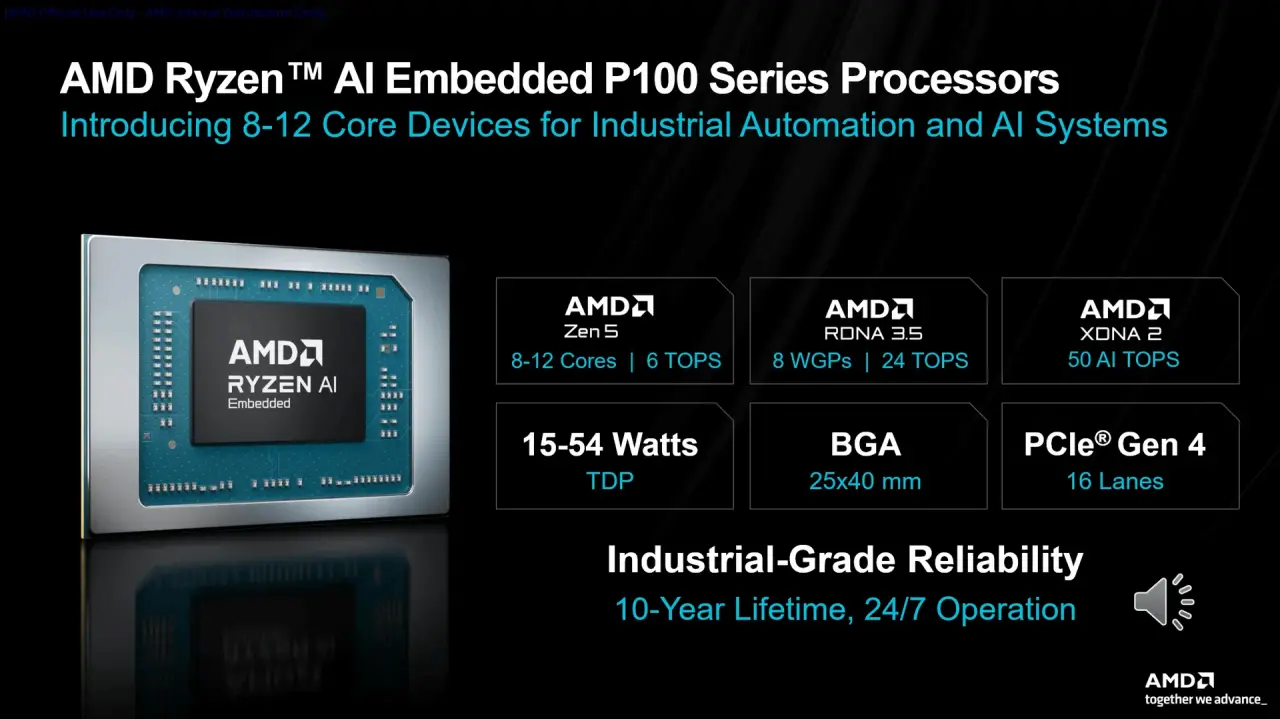
AMD Ryzen AI Embedded P100 Series Targets Edge AI and Industrial Applications with Zen 5
10 Mar 2026•Technology
AMD prices Ryzen AI Halo at $3,999 with June preorders, challenges Nvidia's DGX Spark dominance
21 May 2026•Technology
Recent Highlights
1
Meta Unveils Muse Wonder Frontier AI Models, Claims Performance Matching OpenAI and Anthropic
Technology

2
IMF Report Warns AI Market Correction Could Spark Global Financial Crisis With $1.4T at Risk
Business and Economy

3
OpenAI Releases 722 AI-Generated Math Solutions, Triggering Existential Crisis in Mathematics
Technology

Recent Highlights
Today's Top Stories







Don’t drown in AI news. We cut through the noise - filtering, ranking and summarizing the most important AI news, breakthroughs and research daily. Follow topics that matter to you and stay ahead.


