5 Sources
5 Sources
[1]
Trump ignores biggest reasons his AI data center buildout is failing
Donald Trump is facing significant hurdles after declaring, in a series of executive orders last year, that rapid construction of AI data centers was among his top priorities to ensure the US wins the AI race against China. Perhaps most likely to frustrate the president, his aggressive tariffs on Chinese imports are reportedly hindering most data center projects. Earlier this week, Bloomberg reported that "almost half of the US data centers planned for this year are expected to be delayed or canceled" because developers can't import enough transformers, switchgear, and batteries to build out the power infrastructure that every data center needs. These parts, which China has primarily manufactured for US manufacturers "for decades," used to take between 24 and 30 months to get delivered prior to 2020. Now, they can require wait times up to five years, Bloomberg reported. That lag could matter, since China is reportedly about five years behind the US in the AI race. Rather than rely on China, Trump would prefer that the US manufacture its own equipment. However, currently, "US manufacturing capacity for these devices cannot keep up with demand," Bloomberg reported. Analysts at the market intelligence firm Sightline Climate told Bloomberg that "only a third" of the largest AI data centers that are supposed to come online in 2026 are "currently under construction." For firms feeling "hamstrung" by the circumstances, many are willing to pay tariffs and take on alleged national security risks to try to get the goods from China on faster timelines. Trump seems to be avoiding this harsh reality. In March, he didn't mention the power infrastructure problem when ordering tech companies to "build, bring, or buy" the power for their data centers. But data center builders can't as easily ignore the fact that it doesn't matter where the power comes from if there's nothing to plug in. Data center moratoriums are coming For Trump, the March order requiring firms to pay power bills was meant to address concerns in communities that increasingly oppose any data center construction that might spike electricity costs in areas neighboring facilities. But Trump is seemingly losing ground fast on that front, too, as community fears that extend beyond utility costs are helping enact moratoriums on data center construction gain traction at local, state, and national levels. Last month, Sen. Bernie Sanders (I-Vt.) and Rep. Alexandria Ocasio-Cortez (D-N.Y.) announced the Artificial Intelligence (AI) Data Center Moratorium Act, which they said "would enact a reasonable pause to the development of AI to ensure the safety of humanity." Among the requirements to lift the moratorium, if passed, is a national safeguard ensuring that "AI does not increase electricity or utility prices, harm communities, or destroy the environment." At the state level, Maine is "poised" to become the first to pause all data center construction, The Wall Street Journal reported on Thursday. Local stakeholders think it's a "foregone conclusion" that the bill will pass, WSJ reported, and that it will most likely ban any substantial new AI data center construction until 2027. That delay will give state lawmakers a chance to "assess the impact of such development on the environment and electricity grid," the WSJ reported, so communities won't have to enter into agreements with data center builders blindly. Maine residents already deal with "some of the country's highest residential electricity prices," the WSJ noted, which is likely why communities have urgently pushed for the measure. At least 10 other states are closely watching as the legislation advances there. While no major city has yet passed a moratorium, Denver and Dallas are mulling similar bans. Meanwhile, smaller cities and municipalities in Indiana and Michigan have already imposed "temporary pauses," the WSJ reported. Perhaps the biggest hurdle for Trump and Republicans across the board ahead of midterms won't be how hard people's pocketbooks are getting hit. Rather, it could just be the general bad vibes about what all these data centers Trump is racing to build will mean for communities that don't want their lives changed by a rushed buildout. On Friday, Axios reported results from a Harvard/MIT poll that found Americans are more worried about how "giant projects might alter their communities" and "quality of life" than they are about rising utility bills. That poll comes on the back of recent research that studied land surface temperatures around AI data centers and found the facilities could drastically increase temperatures in communities, Gizmodo reported, creating so-called "heat islands." "Heating up the entire neighborhood" could impact rainfall patterns, "worsen pollution, and even have a direct, disproportionate link to heat-related deaths," Gizmodo reported. Communities are increasingly protesting construction nationwide, with some firms facing lawsuits from longtime landowners who fear that data centers will forever change their most treasured corners of America. Tony Buxton, a climate and energy attorney at a legal and lobbying firm in Maine, told the WSJ that opposition to AI data centers in the state is unlikely to subside. He joined others forecasting that the state's moratorium would likely pass as the bipartisan bill advances to a majority Democratic Senate and the governor signals intent to sign. "That's the political reality," Buxton said. "There is a very strong voter fear of data centers and AI." On Bluesky, the Athena Coalition, a group representing dozens of grassroots organizations seeking to protect the planet from Amazon's operations, celebrated Maine's efforts to research potential impacts before approving data center construction statewide. "Proof that data center development isn't inevitable!" the Athena Coalition posted.
[2]
Half of planned US data center builds have been delayed or canceled, growth limited by shortages of power infrastructure and parts from China -- the AI build-out flips the breakers
U.S. still depends on China, despite years of onshoring efforts. The trade-war between the U.S. and China has forced server makers out of the People's Republic, greatly reducing reliance of American companies on producers from Tianxia. However, China remains the world's largest producer of electrical equipment that is required to build power infrastructure inside and outside of AI data centers. To that end, shortages of power delivery equipment, including devices from China and other countries, are slowing project timelines, Bloomberg reports. Despite the unprecedented level of investment in AI infrastructure -- Alphabet, Amazon, Meta, and Microsoft are expected to spend more than $650 billion in 2026 to expand AI capacity -- close to half of the planned U.S. data center builds this year are projected to be delayed or canceled, according to Bloomberg. One major reason behind these setbacks is the availability of key electrical components -- such as transformers, switchgear, and batteries -- that are used both at data center sites and outside of them, as AI companies must expand grid infrastructure to supply enough power to their data centers. Meanwhile, grid infrastructure is also stressed by electric vehicles and electrified heating systems. Approximately 12 gigawatts (12 GW) of data center capacity is expected to come online in the U.S. in 2026, according to data by market intelligence firm Sightline Climate cited by Bloomberg. Yet only about one-third of that capacity is currently under active construction because of various constraints. Electrical infrastructure represents less than 10% of total data center cost, but it is as vital as compute hardware. A delay in any single element of the power chain can halt the entire project, which makes transformers, switchgear, and similar devices critical items despite their relatively small share of CapEx. Due to high demand, lead times for high-power transformers have expanded dramatically in the U.S.: delivery typically took 24 to 30 months before 2020, but waiting periods can stretch to as long as five years today, according to Sightline Climate cited by Bloomberg. For AI data centers, this is a catastrophe as their deployment cycles are under 18 months. To address shortages, companies are turning to global markets. As a result, Canada, Mexico, and South Korea became the biggest suppliers of high-power transformers for AI data centers to AI data centers. At the same time, imports of high-power transformers from China surged from fewer than 1,500 units in 2022 to more than 8,000 units in 2025 through October, according to Wood Mackenzie data cited by Bloomberg. The volatility of exports from China does not end with transformers, as the PRC accounts for over 40% of U.S. battery imports, while its share in certain transformer and switchgear categories remains near 30%, according to Bloomberg. Without resolving constraints in transformers, switchgear, and batteries, even trillions of dollars in AI investment may not translate into actual AI capacity, as deployments will depend on power infrastructure availability, not capital or compute hardware constraints. Despite a decade of reshoring initiatives, U.S. manufacturing capacity for electrical equipment remains insufficient, which means that AI companies continue to rely on imports even amid tariffs and national security concerns. Meanwhile, tensions between China and the U.S. threaten to further disrupt supply chains, which will raise costs and could delay deployments of advanced AI data centers. Follow Tom's Hardware on Google News, or add us as a preferred source, to get our latest news, analysis, & reviews in your feeds.
[3]
America's AI Build-Out Hinges on Chinese Electrical Parts
In the red dirt of Abilene, Texas, more than 6,000 workers travel around on electric buggies, spending day and night constructing a massive data center that will feed the world's growing artificial intelligence needs. When completed this year, the eight sprawling buildings -- which OpenAI will use -- will consume 1.2 gigawatts of power, or enough electricity for nearly 1 million American households. As the global AI race heats up, there is a huge rush to build data centers fast. There's no lack of money chasing these projects, with tech giants Alphabet Inc., Amazon.com, Meta Platforms Inc. and Microsoft Corp. committed to spending more than $650 billion this year alone. Yet neither ambition nor capital is enough to materialize all the necessary components for these power-hungry computers. Almost half of the US data centers planned for this year are expected to be delayed or canceled. One big reason is the shortage of electrical equipment, such as transformers, switchgear and batteries. They are needed not just for powering AI, but also for building out the grid that is seeing increased consumption from electric cars and heat pumps. US manufacturing capacity for these devices cannot keep up with demand, and the scarcity has caused data center builders to rely on imports. Electrification is a key solution to both tackling climate change and powering AI ambitions. But America's AI prowess on computer chips and cutting-edge software is being hamstrung by the country's inability to manufacture the electrical parts. "There's not enough domestic capacity to go around, so people are pretty much forced to go to the export market," says Benjamin Boucher, senior analyst with Wood Mackenzie. The import dependence is putting data center companies in a bind. "There's only going to be one winner," President Donald Trump said in December, "and that's probably going to be the US or China." While he wants the US to win, his America First doctrine calls for installing trade barriers to cut imports. Data centers consuming as much as 12 gigawatts of power are supposed to come online in 2026 in the US, according to analysts at think tank Sightline Climate, who will be releasing a new report in the coming weeks. However, only a third of that is currently under construction, Sightline estimates. Crusoe Energy Systems won the contract to build the Texas data center campus because of its promise of speed. Cully Caveness, Crusoe's chief strategy officer, says the company pledged to get a portion of the data center powered up in less than a year after starting construction. The secret to achieving that was buying enough of the right electrical equipment through early orders, securing some supplies before export barriers were erected. Electrical infrastructure adds up to less than 10% of the total cost of the data center, but it's impossible to build the operation without it. "If one piece of your supply chain is delayed, then your whole project can't deliver," says Andrew Likens, Crusoe's energy and infrastructure lead. "It is a pretty wild puzzle at the moment." Most companies contacted by Bloomberg News declined to comment on the problems they are facing or where they source their equipment from. The few that responded highlighted the solutions they have enacted. Spokespeople for Amazon and Microsoft said they plan electrical equipment procurement ahead of time when building their data centers, and a spokesperson for Equinix Inc. pointed to a recent investment in a manufacturing facility that makes switchgear. Google, Oracle, Nebius Group NV, and Coreweave Inc. declined requests to comment. Though few companies are eager to talk about it, the US has been outsourcing its manufacturing to other countries, primarily China, for decades. That has contributed to a significant shortage of electrical components in the US, says WoodMac's Boucher. In January, a group of US utility executives visited a transformer factory in China as part of a tour of Chinese electricity and technology plants and noticed that around half the transformers slated for delivery sported the US flag. Some were specifically going to data center companies, according to one person on the trip who requested anonymity to share commercially sensitive information. Over the past 10 years, the US government has tried a series of policies to reshore manufacturing, but they haven't yet yielded a significant boost to domestic capacity, forcing businesses to look to China regardless of the tariffs or the alleged national security risk. That means the US needs crucial parts from China to dominate it in the AI race, while China needs advanced chips from American companies to stay in the race. In March, Trump issued a new framework to speed up permitting of new power plants for data centers. Without addressing electrical equipment shortages, many are worried that the trillions of dollars of spending aimed at data centers won't yield the decisive steps the US must take to win the AI race. "We've seen firsthand the value it can create if you are not hamstrung by electrical infrastructure lead times," says Crusoe's Likens. "They can make or break a project." Data centers have rapidly grown in size and now consume more electricity than their predecessors a decade ago. That demands bigger transformers, which safely pull electricity from the high-voltage grid to feed to tiny computer chips. Without the right transformers, there's no way to make the data center work. Before 2020, these high-power transformers typically arrived 24 to 30 months after an order was placed. Those timelines were "totally manageable in the old world" when data centers didn't need such large transformers or at such short timelines, says Philippe Piron, chief executive officer of GE Vernova's electrification division. But AI companies "want something typically in less than 18 months." The spike in demand from data centers and grid expansion have pushed up prices and extended delivery times to as much as five years. That is why some, like Crusoe, have even resorted to refurbishing old transformers from shuttered power plants as a stopgap measure. In October, GE Vernova spent $5.3 billion to buy the remaining stake in Prolec, a transformer company, to fully acquire it. In February, Siemens Energy announced an investment of $1 billion to expand its US manufacturing capacity of transformers and gas turbines over the next two years. Neither immediately relieves demand, which forces data center developers to look abroad. While most of the US's transformers come from Canada, Mexico and South Korea, US utilities imported more than 8,000 high-power transformers in 2025 through October from China, up from fewer than 1,500 imported in all of 2022, estimates WoodMac's Boucher. This build-out "is going to be highly dependent on the import market," he says. Once transformers lower the voltage of electricity so it can be used in data centers, it then needs to be distributed across the data center safely. That's done through switchgear, which includes circuit breakers and fuses. There too, data center developers are seeing delivery delays - though not as extreme as the timelines for transformers. Equinix Inc.'s solution is to commit at least $350 million to support Hanley Energy's new manufacturing facility in Ireland, which will make switchgear and other data center components. Equinix expects to achieve 10% to 15% faster lead times as a result. Crusoe Energy's answer to that shortfall has been to pre-order lots of the equipment. That means spending many millions of dollars on supplies before the company even knows it has an order to fill, but it's proved a winning strategy. Recently, Crusoe also began manufacturing their own switchgear. To speed deployment, Crusoe started packaging the switchgear in what the company calls power distribution centers. The PDCs look like a shipping container that someone could live in - they have a sloped roof, gutters and a door, although no windows. Crusoe manufactures all parts of the building from the raw materials it buys, including the roof trusses, foundation and walls. Inside the PDCs are refrigerator-sized circuit breakers, like a much larger version of the breaker panels on the outside of houses. It now sells its PDC equipment to other data center companies. "We felt like that was a risk in the marketplace and wanted to kind of secure our own destiny," says Likens. With transformers and switchgear secured, the data center can open for business. But without additional equipment, the racks full of expensive computer chips could degrade quickly, and that's where lithium-ion batteries come in. The moment an office worker uploads a huge dataset and asks AI to analyze, it can cause a spike in electricity demand at a data center. That spike can cause the flow of electricity to change very quickly, which reduces the lifetime of the equipment. Lithium-ion batteries smooth out the sudden spikes in power consumption. They store extra electricity when there's too much and release it when there isn't enough, helping keep power steady and manage how servers use it. The share of US imports of transformers and switchgear from China has declined steadily in recent years - although for specific types of equipment that share is still hovering around 30%. The Chinese share of battery import volumes remains stubbornly above 40%. China dominates the supply of electrical equipment because it controls so many parts of the supply chain, from materials to processing to manufacturing, and the gulf between China and the US is set to widen. In its new five-year plan, the Asian giant revealed last month that it will double down on building out its grid with renewables, while the Trump administration has dismantled policies to deploy solar and wind power. In March, the US opened trade investigations into China to justify tariffs; the country then retaliated by starting its own investigations against the US. Rash attempts to end Chinese imports of electrical equipment would mean further delays and harm the US in the AI race, says Joshua Busby, a professor of public affairs at the University of Texas at Austin. "If we're too indiscriminate in our effort to diminish our reliance on China to zero, that could come at excessive cost to American companies," he says.
[4]
Half of the AI data centers in the US are cancelled, because supply shortage of parts from China is so great
The US of A made it clear, that they want to stay ahead in artificial intelligence by restricting China's access to advanced chips and chip-making technology. And now, according to Tech 4 Gamers, half of the AI data center construction projects in the US have been canceled because of supply shortage of parts from China. This is because China produces most of the necessary equipment and electrical components, and since the demand is so overwhelming, it causes shortages and delays. It is clear, that the US doesn't want to rely on China, and China doesn't want to rely on the US. But since China is the leading producer of electrical equipment and components for data center infrastructure, it might cause something big: the US may not be able to complete all its data center development projects. The issue is not the chips themselves, as previously thought, but meeting electrical demands, which they cannot do without components obtained from China. According to Sightline Climate by Bloomberg, the US expects to consume 12 GW of energy in AI data centers, but has only reached 4 GW (33%), with plans to exceed this limit as the year advances. Transformers and batteries account for only 10% of the entire cost of an AI data center, but without them, the centers cannot function. This situation does not appear to be improving anytime soon, and tensions between the US and China needs to be considered, as they will affect the supply chain.
[5]
America's AI build-out hinges on Chinese electrical parts
In the red dirt of Abilene, Texas, more than 6,000 workers travel around on electric buggies, spending day and night constructing a massive data center that will feed the world's growing artificial intelligence needs. When completed this year, the eight sprawling buildings -- which OpenAI will use -- will consume 1.2 gigawatts of power, or enough electricity for nearly one million American households. As the global AI race heats up, there is a huge rush to build data centers fast. There's no lack of money chasing these projects, with tech giants Alphabet, Amazon, Meta and Microsoft committed to spending more than $650 billion this year alone. Yet neither ambition nor capital is enough to materialize all the necessary components for these power-hungry computers. Almost half of the U.S. data centers planned for this year are expected to be delayed or canceled. One big reason is the shortage of electrical equipment, such as transformers, switchgear and batteries. They are needed not just for powering AI, but also for building out the grid that is seeing increased consumption from electric cars and heat pumps. U.S. manufacturing capacity for these devices cannot keep up with demand, and the scarcity has caused data center builders to rely on imports.
Share
Share
Copy Link
Nearly half of planned US AI data centers for 2026 face delays or cancellation as critical power infrastructure shortages expose America's dependence on Chinese electrical components. Despite tech giants committing over $650 billion this year, tariffs and supply chain constraints are crippling the buildout, while growing community opposition adds another layer of resistance to Trump's AI ambitions.
The ambitious push to construct AI data centers across the United States is encountering severe obstacles, with almost half of planned facilities for 2026 expected to be delayed or canceled
1
2
. The crisis stems from a shortage of electrical components—specifically transformers, switchgear, and batteries—that form the backbone of critical power infrastructure needed to energize these massive facilities3
. Despite tech giants Alphabet, Amazon, Meta, and Microsoft committing to spend more than $650 billion in 2026 to expand AI capacity, neither capital nor ambition can overcome the fundamental supply chain constraints now throttling progress2
5
.
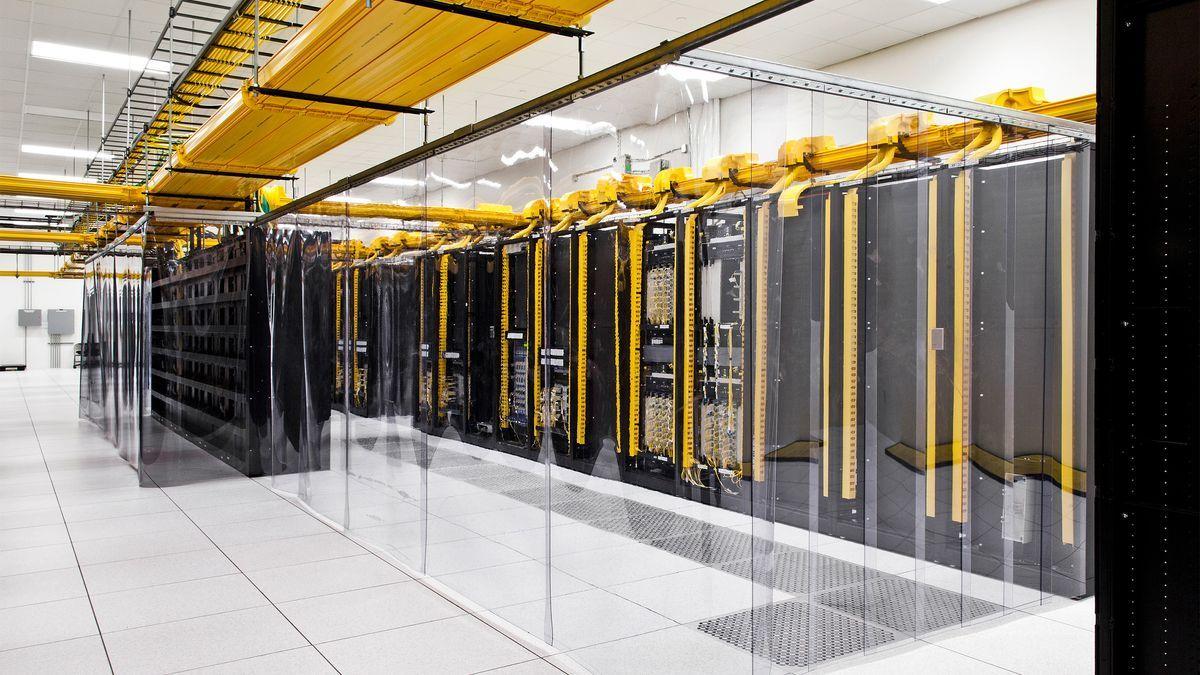
Source: Tom's Hardware
China has manufactured electrical equipment for US data center construction "for decades," making the supply shortage from China particularly devastating
1
. The country accounts for over 40% of US battery imports and maintains nearly 30% market share in certain transformer and switchgear categories2
. Imports of high-power transformers from China surged from fewer than 1,500 units in 2022 to more than 8,000 units through October 2025, according to Wood Mackenzie data cited by Bloomberg2
. During a January visit to a Chinese transformer factory, US utility executives observed that around half the transformers bore US flags, with some specifically destined for data center companies3
.
Source: Japan Times
Donald Trump's aggressive tariffs on Chinese imports are reportedly hindering most data center projects, creating an ironic obstacle to his declared priority of ensuring the US wins the global AI race against China
1
. Lead times for high-power transformers have expanded dramatically—what took 24 to 30 months before 2020 now requires wait times up to five years1
2
. For AI data centers operating on deployment cycles under 18 months, these delays represent a catastrophe2
. The lag could prove significant, as China is reportedly about five years behind the US in the AI race1
.
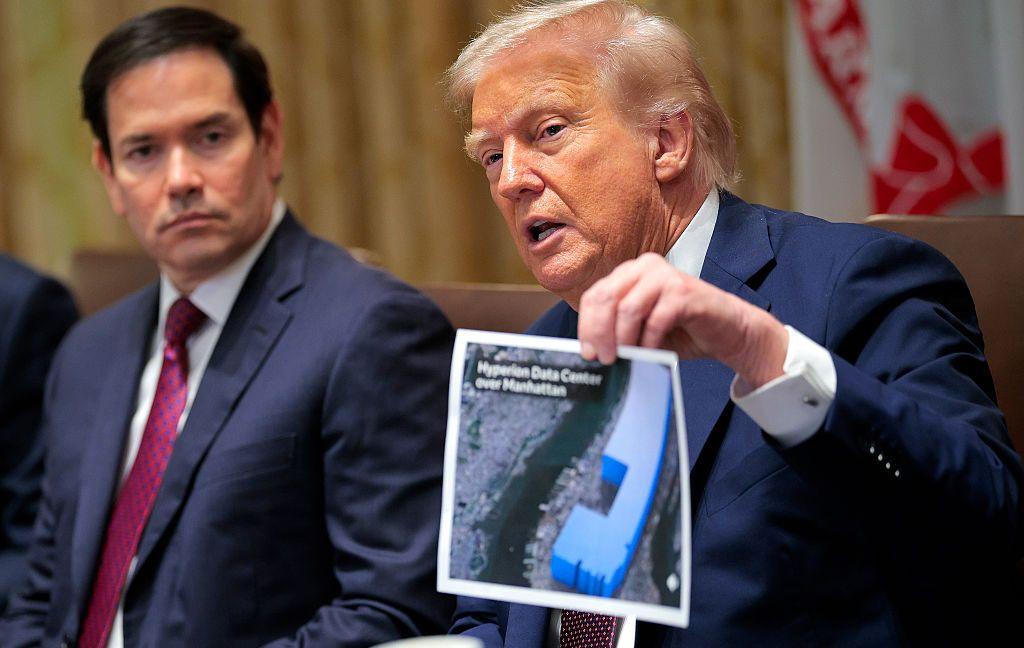
Source: Ars Technica
Related Stories
While Trump would prefer the US manufacture its own equipment, domestic manufacturing capacity for electrical devices "cannot keep up with demand"
1
5
. Despite a decade of reshoring initiatives, US manufacturing capacity for electrical equipment remains insufficient, forcing AI companies to continue relying on imports even amid tariffs and national security concerns2
. Approximately 12 gigawatts of data center capacity is expected to come online in the US in 2026, according to Sightline Climate, yet only about one-third of that capacity is currently under active construction2
3
. "There's not enough domestic capacity to go around, so people are pretty much forced to go to the export market," says Benjamin Boucher, senior analyst with Wood Mackenzie3
.Beyond supply chain issues, growing community opposition threatens to impose moratoriums on data center construction nationwide
1
. Senator Bernie Sanders and Representative Alexandria Ocasio-Cortez announced the Artificial Intelligence Data Center Moratorium Act, which would pause development until safeguards ensure "AI does not increase electricity or utility prices, harm communities, or destroy the environment"1
. Maine is poised to become the first state to pause all data center construction, with legislation likely banning substantial new AI data center construction until 20271
. At least 10 other states are watching closely, while Denver and Dallas consider similar bans. Smaller cities in Indiana and Michigan have already imposed temporary pauses1
. A Harvard/MIT poll found Americans are more worried about how "giant projects might alter their communities" and quality of life than rising electricity costs1
.Summarized by
Navi
[4]
[5]
24 Feb 2026•Business and Economy

10 Jul 2025•Technology

15 Aug 2025•Business and Economy

1
Technology

2
Science and Research

3
Technology