7 Sources
[1]
Android Auto Now Fits Weirdly Shaped Screens, Streams Video While Parked
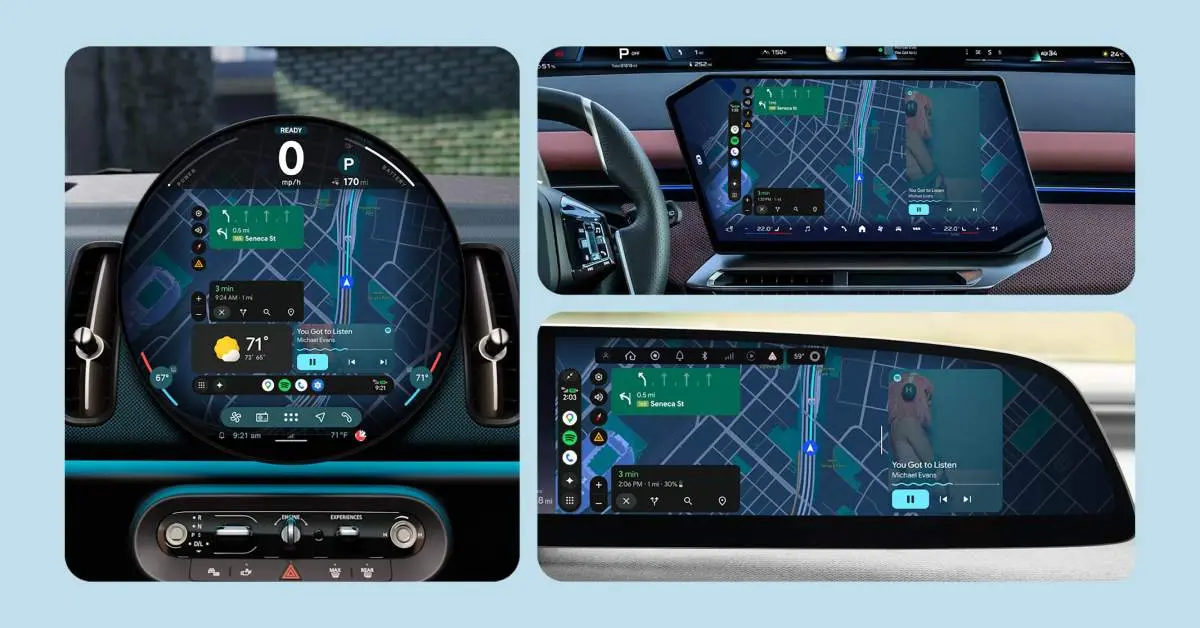
North American Car, Truck and SUV of the Year (NACTOY) Awards Juror Google is rolling out a sweeping update to Android Auto and cars powered by its Google Built-in software. The suite of changes and new features includes an overhaul to Google Maps, the addition of in-dash video playback and a full visual refresh rolling out to compatible vehicles and devices throughout 2026. As cars get smarter and in-car screens get weirder, the previewed changes should keep Google's automotive ambitions competitive with Apple CarPlay. Android Auto is getting a full visual refresh built on Google's Material 3 Expressive design language, bringing new fonts, animations, and wallpapers from the phone experience to the dashboard. The interface can now adapt to any screen shape, including the familiar portrait and landscape orientations, but also new ultrawide and non-rectangular display geometries. Google showcased just how non-standard Android Auto can get, filling the circular OLED display of the latest generation Mini vehicles and the skewed hexagonal screen of BMW's Neue Klasse EVs. Also new are home screen widgets, letting drivers keep glanceable information -- such as favorite contacts, garage door controls, weather info -- surfaced alongside active navigation. The centerpiece of the update is Immersive Navigation, which Google describes as its biggest Maps update in over a decade. The feature brings a 3D map view with rendered buildings, overpasses, and terrain, and highlights lane markings, traffic lights, and stop signs to aid complex maneuvers. The new look is, to my eye, not dissimilar to what I've seen on Apple's Maps and a welcome aesthetic and functional upgrade. Cars running native Google Built-in get even more new navigation capability not available in standard Android Auto. The biggest new feature is Live Lane Guidance, which uses the vehicle's front-facing camera to determine the driver's current lane position and provide real-time guidance through lane changes and exits. Android Auto is adding full HD video playback at 60fps for parked and charging scenarios, launching later this year on vehicles from BMW, Ford, Genesis, Hyundai, Kia, Mercedes-Benz and Volvo in the US. (Outside of the States, that list grows to include Mahindra, Renault, Skoda and Tata cars.) When your charge sesh is complete and the car shifts from park to drive, Android Auto will also be able to seamlessly transition content to audio-only in apps that support background audio, so you can keep listening to that video podcast you just started. Dolby Atmos spatial audio is also coming to Android Auto in supported apps and vehicles, starting with BMW, Genesis, Mercedes-Benz and Volvo. After hours of listening to Dolby Atmos in cars, this might be the feature I'm most excited about. Media app interfaces, including YouTube Music and Spotify, are also receiving visual updates, breaking out of the standard and familiar Android Auto template we've seen since the software's launch. Meanwhile, cars with Google Built-in will receive the same video and audio improvements, along with support for meeting apps like Zoom. Gemini is now broadly available in Android Auto for general assistance while driving, rolling out to drivers over the last year. Devices with Gemini Intelligence -- Google's context-aware AI tier -- will gain additional capabilities later this year, including Magic Cue, which can surface relevant information from messages, email, and calendar to respond to incoming texts in a single tap. In the demo, Google shows a driver getting a text message notification asking for their destination, which is then sent via a single tap-to-reply. Google is also enabling in-car food ordering through DoorDash via voice command. I'm sure someone will find that useful. In Cars with Google Built-in, Gemini integrates directly with vehicle hardware, enabling queries specific to the car itself. For example, a driver could ask Gemini to identify a dashboard warning light or to estimate whether the bulky TV they're buying will fit within their car's specific cargo dimensions. The announcement comes as part of this year's Gemini-fueled Android Show: I/O Edition and hot on the heels of General Motors' April announcement that it's rolling Gemini functionality into its Google Built-In infotainment stack. For GM alone, you're talking about roughly 4 million Cadillac, Chevrolet, and Buick vehicles in the US that will benefit from today's updates. Globally and across all supported vehicle brands, Google was boasting that 250 million cars currently support Android Auto at last count, with more than 50 models running Google Built-In natively -- most of which will be getting these upgrades over the coming months.
[2]
Android Auto is getting a big makeover for 2026 - Engadget
Google says 2026 is going to be one of the biggest years for Android. However, that sentiment isn't restricted to just its mobile OS because today during the Android Show: I/O Edition, the company revealed a ton of major changes coming to Android Auto and cars with Google built-in. The first big change is a full rework of Android Auto's user interface featuring Google's Material 3 Expressive design, which adds more striking fonts, updated wallpapers and smoother animations. Furthermore, the company is borrowing widgets from its mobile division and adding support for them to your car's display, giving you more freedom to customize your layout while also providing more info at a glance. Widgets include things like shortcuts for your favorite contacts, a weather bug and virtual buttons for digital garage door openers. Google even says that Android Auto will be able to adapt its layout to accommodate cars with unusually shaped displays like the funky parallelogram screen BMW uses in the new i7. That said, perhaps the most impactful improvement coming to Android Auto is what Google is calling Immersive Navigation, which is based around detailed 3D maps that show much more detail including things like the location of traffic lights, stop signs, the number of lanes and nearby buildings. Meanwhile, Google is continuing with its push for AI in Android Auto thanks to some new Gemini features including better contextual awareness and support for Magic Cue, the latter of which we first saw last year on the Pixel 10 family. In some respects, the ability for Gemini to surface things like addresses, appointments and other tidbits of info is arguably even more helpful while driving because this should give you more freedom to focus on the road instead of staring at a screen (or even worse, your phone). As for general entertainment, Google is upgrading Android Auto's video capabilities with support for HD playback at up to 60 fps. This will arrive later this year across a wide range of brands including BMW, Ford, Kia, Hyundai, Volvo and Mercedes-Benz. On top of that, if you start driving while watching a movie, Android Auto will be able to transition the clip to audio-only mode, which is great if you're watching something like a video podcast. Google says other media apps like YouTube Music and Spotify are also getting visual updates, while Android Auto gets support for spatial sound via Dolby Atmos (assuming your car has the proper speakers and a green light from the manufacturer). Finally, for cars with Google built-in (which is sometimes called Android Automotive), the company is unlocking much deeper integration between the OS and the hardware in your vehicle. For example, if you use Gemini to ask questions in a supported vehicle, the AI can respond with specific answers like the meaning of an indicator light on your dashboard or if an item you're trying to bring home will actually fit in your trunk. Alternatively, when using Immersive Navigation in Google Maps, models with Google built-in will be able to provide more exact guidance by using your car's onboard cameras to better understand which lane you're in while providing real-time directions. While there's no precise timetable for when these features will be available on your car/phone, Google says the updates to Android Auto and vehicles with Google built-in will be rolling out sometime later this year.
[3]
Android Auto is about to change the way you drive: 3D Google Maps, redesigned interface, video support, Gemini and more
Android Auto is about to see its biggest makeover in years, as the Android Show: Google I/O Edition teases some impressive features. Not only is the interface getting an overhaul courtesy of Google's Material 3 Expressive design, but it's also bringing Gemini's task automation features to the car. Your driving experience is going to change tremendously with this update, and it gets even better for cars with Google built-in. That's because apps like Gemini and Google Maps are going to be deeply integrated into the vehicle's hardware. Soon enough, Gemini will be able to tell you exactly what's up with that warning indicator light on your dashboard -- or perhaps, be used to access climate controls. Frankly, all of this seems like a direct response to Apple's CarPlay Ultra, which, despite being announced a year ago, has been isolated mostly to Aston Martin's latest luxury models. Google is making sure this new version of Android Auto is accessible to millions more vehicles. Based on what's been announced, it's looking mighty impressive compared to CarPlay Ultra. Here's everything coming to the new Android Auto. Visual overhaul with Material 3 Expressive As much as I love using Android Auto whenever I test the best electric cars, it's not always optimized to fit different screens -- and the Mini Cooper Countryman EV's circular OLED is a perfect example. With this new update, Google is giving the interface an overhaul using the Material 3 Expressive design found on its phones, but re-engineered to dynamically adapt to different screens. You can see in the gallery above how this updated interface can fit all sorts of dashboard displays, rather than leaving dead space with current layouts. In addition, the interface is getting injected with smoother animations, striking fonts, and customizable wallpapers that match your phone. Google Maps continues to be a central pillar of the experience, but I really like how you can customize the layout to include certain widgets -- a big step in the right direction compared to the current locked view. 3D Google Maps navigation I already use Google Maps all the time wherever I drive, but it's only going to get better with this new Android Auto experience because it's going 3D. This update introduces Immersive Navigation, which makes the map come to life with vivid 3D views of buildings, terrain, and overpasses. This represents a dramatic change in how you'll navigate with Google Maps via Android Auto. I'm especially eager to see how it directs me in tougher situations, like merging onto a four-lane highway or finding a specific exit. Small details, like transparency when passing under overpasses, show just how much more detailed the system has become at directing you. Gemini Intelligence integration With its recent rebrand, Gemini Intelligence is set to make your driving easier and safer as the AI chatbot brings a host of new functions to the Android Auto experience. As I've alluded to earlier, it'll bring Gemini's task automation features to the car, allowing you to perform complex tasks simply by speaking to the AI assistant. For example, you can ask it to reorder the same meal you had from DoorDash last week -- a feature I was impressed with when I tested it on my Galaxy S26. Now that it's coming to the car, you can handle logistics while keeping your eyes strictly on the road. Additionally, Android Auto is gaining the same Magic Cue feature that debuted with the Pixel 10 last fall. This context-aware tool understands your needs and proactively makes suggestions without your intervention. For instance, if a friend texts you an address, Magic Cue understands the context, finds the location in your messages, and offers to send a reply or start navigation with a single tap. Finally, video play support This is a holy grail feature that I'm excited to see finally arrive on Android Auto -- mostly because, let's face it, I'm still waiting for it to show up on CarPlay. I'm specifically talking about the introduction of video playback support for apps like YouTube. It's going to be perfect for keeping the kids occupied or simply killing time while you wait for your EV to charge. Naturally, you'll only be able to watch videos while the car is in park, but I really like how Google seamlessly transitions the feed to audio-only once you start moving. This is ideal if you want to keep listening to a video podcast while you drive. If that's not enough, Android Auto is also rolling out immersive spatial sound support using Dolby Atmos in supported apps and vehicles. Cars with Google built-in get smarter Finally, cars with Google built-in are getting features that integrate even more deeply with the vehicle's hardware. Most notably, Google Maps will tap into the car's sensors and systems to provide better navigation through complex traffic patterns. For example, the system can check the vehicle's front-facing camera to ensure you're in the proper lane for your exit -- which is far more helpful than a simple instruction to "stay left" or "stay right". This live lane guidance feature is invaluable and can help optimize your route; if you're driving an EV, that means preserving more of your battery. While Google hasn't given an exact date for when these updates will hit Android Auto and cars with Google built-in, the company confirmed they are all arriving throughout this year. Follow Tom's Guide on Google News and add us as a preferred source to get our up-to-date news, analysis, and reviews in your feeds. Subscribe to Tom's Guide on YouTube and follow us on TikTok.
[4]
Android Auto gets a massive AI-powered upgrade with YouTube, Dolby Atmos, and immersive 3D Maps
Google's next-gen in-car software is getting smarter and slicker * Google is giving Android Auto its biggest redesign yet * Widgets, immersive 3D Google Maps navigation, and video are all coming * Gemini AI is becoming deeply integrated into Android Auto and Google built-in cars Google has announced major upgrades to its Android Auto product, with the company stating that the next generation of the software features a "stunning new experience, premium entertainment, and a more helpful Gemini". On top of this, Google has been working alongside most of the major automotive manufacturers to improve the proposition on the more than 100 models from 16 brands that feature an infotainment system that runs the Android Automotive operating system. The most obvious upgrade is the redesign itself. Android Auto is adopting Google's Material 3 Expressive design language, bringing slicker animations, bolder typography, and more personalization options to the dashboard. Widgets are also arriving, allowing drivers to pin key information directly onto the home screen. Think weather updates, most-used contacts, and even smart-home shortcuts like garage door controls. But the biggest visual leap is Google Maps' new "Immersive Navigation" mode. Google describes it as the biggest Maps upgrade in over a decade, adding slick and detailed 3D visuals for roads, buildings, and terrain, alongside enhanced lane guidance, traffic light indicators, and stop sign overlays. For drivers using increasingly massive infotainment displays -- especially in modern EVs -- this could make navigation dramatically clearer and more intuitive. Dolby Atmos comes to the dashboard After a long wait, video playback is finally coming to Android Auto, which allows parked motorists to stream apps like YouTube in full HD at 60fps directly on compatible car screens. Supported brands at launch include BMW, Ford, Genesis, Hyundai, Kia, Mercedes-Benz, Renault, Skoda, and Volvo. Crucially, Google says playback won't simply cut off once you start driving. Instead, supported apps, such as Spotify and other Pod-catchers, can transition from video into audio-only mode, ideal for podcasts and long-form YouTube content. Audio is also getting an upgrade, with Dolby Atmos spatial sound support arriving in compatible vehicles and apps. Combined with the increasingly impressive speaker systems in premium EVs and luxury vehicles, this could turn charging stops into genuine cinema-style experiences. Gemini gets a big boost Gemini is already rolling out more widely across Android Auto, but later this year, users with Gemini Intelligence-enabled phones will get deeper contextual features. The idea is to make your car assistant proactive rather than reactive. Google's example includes Gemini automatically understanding a friend's text asking for an address, finding the relevant information in your emails, messages, or calendar, then suggesting a one-tap reply. The system will even handle food orders while driving. Google demonstrated users asking Gemini to reorder meals through DoorDash, with pickup ready by arrival. What's more, those vehicles with Google built in will enjoy deeper integration between Gemini and the vehicle itself, with the AI assistant able to access vehicle information. Ultimately, it means you can ask Gemini questions about the car, such as what a warning light might mean or, as Google demonstrated, whether something will fit in the trunk. Google Maps will also be able to tap into the vehicle's front-facing cameras (if it has them), so it has a better understanding of lane position and can then give the appropriate guidance in real-time. The software giant hasn't given a specific date for these upgrades to arrive, simply stating that they will be coming to your car "throughout the year". Follow TechRadar on Google News and add us as a preferred source to get our expert news, reviews, and opinion in your feeds. Make sure to click the Follow button! And of course, you can also follow TechRadar on YouTube and TikTok for news, reviews, unboxings in video form, and get regular updates from us on WhatsApp too.
[5]
This Android Auto update is trying to change how you drive and use your car
I use Android Auto every day, and at this point, it feels like a quiet co-driver sitting on my dashboard. That's exactly why this upcoming refresh from Google actually matters. It is not just a visual tweak; it is a proper overhaul of how Android Auto should feel inside a modern car. The biggest change is the design. Google is bringing its Material 3 Expressive design language from phones into cars. That means Android Auto is getting a more modern, more fluid look with expressive fonts, smoother animations, and even support for wallpapers. This should really make the entire interface feel less rigid and more alive while you are driving. Widgets finally make Android Auto feel useful at a glance What really caught my attention, though, is widgets. Android Auto is finally leaning into glanceable information in a meaningful way. Instead of digging through menus, you can quickly see things like weather updates or tap a widget to control smart home functions, like opening your garage door as you pull in. It is small, but this is the kind of convenience that actually changes how you use the system day to day. Google Maps is also getting a major upgrade with something called Immersive Navigation. This is where things start to feel genuinely next-gen. Maps will now show a more realistic 3D view of your surroundings, including buildings, overpasses, and terrain. On top of that, it will highlight traffic lights, stop signs, and lane details, which should make complex turns and highway merges feel a lot less stressful. Turning your car into a movie theatre when parked And then there is the entertainment side, which is where things get a bit surprising. Google is bringing a more relaxed, parked-car experience to Android Auto, almost like turning your dashboard into a mini theatre. When your car is stationary, apps like YouTube will support full HD playback at up to 60 fps on supported vehicles from brands like BMW, Hyundai, Kia, Tata, Renault, and Mercedes-Benz. Importantly, Google is also keeping safety in mind. Once the car is in motion, supported apps will automatically switch to audio-only mode, so you can continue listening without video distracting you. Recommended Videos Audio is getting an upgrade, too. Android Auto will soon support spatial sound with Dolby Atmos in compatible apps and vehicles, making in-car listening noticeably more immersive. On the AI side, Google is going all in with Gemini. The idea is to make Android Auto more about talking. You will be able to brainstorm ideas, get information, and handle tasks using voice while driving. Features like Magic Cue can surface quick actions for incoming messages, while integrations like DoorDash ordering are designed to reduce friction for everyday errands. Even meeting apps like Zoom are being brought into the car experience, depending on region and rollout.Gemini is also being positioned as a kind of car assistant. If a warning light pops up on your dashboard, you can ask it what it means instead of immediately spiraling into confusion or searching forums at a red light. All of this makes Android Auto feel like it is slowly turning into something far more capable than just a mirror of your phone. And yes, I am genuinely curious to see how smoothly this actually works in real life, especially before I start trusting it with anything beyond music and maps.
[6]
Android Auto Getting a Full Refresh With Widgets, YouTube...
As a part of today's "The Android Show: I/O Edition," Google shared the future of Android Auto, as well as Cars with Google built-in (Android Automotive). There are big changes coming to both, but Android Auto is getting what they are referring to as a "full refresh." READ: 13+ new Android features coming from I/O Google is bringing Material 3 Expressive to Android Auto, so when you connect to your car, you'll have more expressive fonts, all of the lovely M3 Expressive animations, and wallpapers. Google is also adding widgets to Android Auto, giving you more info at a glance, including favorite contacts, one-tap access to garage doors, weather overviews, and more. Oh, remember the Immersive Maps update that Google first told us about back in March? That's a part of this huge Android Auto update. This will add a vivid 3D view with buildings and terrain, with critical details (lanes, traffic lights, stop signs, etc.) being highlighted as you drive. After all of these years, Google is finally adding video playback through Android Auto, with YouTube as a big part of that. Now, you'll be able to watch YouTube at 60fps when stopped. Should you switch your car to drive, the experience will automatically flip to an audio-only experience, so you can keep listening as you drive. Dolby Atmos support is coming as a part of this too. The first cars to see this support are from BMW, Ford, Genesis, Hyundai, Kia, Mahindra, Mercedes-Benz, Renault, Å koda, Tata and Volvo. Spotify and YouTube Music are slated to get big visual updates. Finally, Android Auto is getting the Gemini Intelligence we've been talking about all day. This will mean a more helpful Gemini that'll let you brainstorm in the car with your AI assistant, Magic Cue bringing info from Messages or your calendar, and the ability to order food from places like Doordash as you drive. For the Android Automotive experiences out there, Google is bringing improved media apps and that same video-to-audio transition we just talked about with Android Auto. Google will also rollout Gemini and improved Maps experiences. Gemini will know about your car, so asking what status lights mean or if a big item might fit in your trunk are things you'll be able to do.
[7]
Google's Bringing Big Changes to Android Auto this Year - Phandroid
It's a busy day for Google -- along with the debut of its Googlebook platform, the company also confirmed that it was rolling out a new overhaul of Android Auto, which comes with major changes to the user interface, more AI, and updates to Google Maps. Part of Google's announcement reads: With more than 250 million Android Auto-compatible cars on the road today, we continue to bring the best of your phone to every drive. The next generation of Android Auto features a stunning new experience, premium entertainment and a more helpful Gemini. That said, the new update brings the Material 3 Expressive design language from smartphones to the dashboard, which includes support for custom fonts, smoother animations, and new wallpapers. Google says that the new interface is designed to easily adapt to any display configuration, including ultra-wide, circular, and even non-standard screen shapes. One key part of the software roll-out is Immersive Navigation, which renders a 3D view of buildings, overpasses, and terrain while highlighting road details like traffic lights, stop signs, and specific lane data. For vehicles with Google built-in, a new live lane guidance feature will use a vehicle's front-facing camera to analyze the road in real-time, offering precise instructions for exits and lane changes. For in-car entertainment, Google is bringing full HD video support, allowing users to watch YouTube and other content in 60fps full HD while parked or charging. It should be noted that video playback will switch to an audio-only background mode once a vehicle shifts into drive. There's also support for spatial sound via Dolby Atmos, supported by different brands including BMW, Mercedes-Benz, and Volvo. Of course, AI is part of the new update. Later this year, users with Gemini Intelligence on their phones will get access to context-aware features like Magic Cue which can scan messages, emails, and calendars to draft replies or provide addresses. The built-in AI can also be used to place food orders via DoorDash using voice commands, such as requesting specific menu items and quantities for pickup. For cars with Google built-in, Gemini will soon be able to diagnose specific dashboard indicator lights or calculate if a large item will fit in the trunk based on the vehicle's unique dimensions. Google adds that users can expect more updates throughout the year.
Share
Copy Link
Google unveiled a comprehensive Android Auto update featuring Immersive Navigation with detailed 3D Google Maps, deep Gemini AI integration, and HD video playback for parked vehicles. The redesigned user interface adapts to any screen shape, from circular displays to ultrawide formats, while new widgets and Material 3 Expressive design bring smartphone-like customization to the dashboard across supported vehicles from BMW, Ford, Hyundai, and more.
Google announced a sweeping Android Auto update during the Android Show: I/O Edition, marking what the company describes as the biggest transformation of its in-car platform in over a decade
1
. The comprehensive refresh targets the 250 million cars currently supporting Android Auto globally, with changes rolling out throughout 2026 across vehicles from major manufacturers including BMW, Ford, Genesis, Hyundai, Kia, Mercedes-Benz, and Volvo1
. For General Motors alone, roughly 4 million Cadillac, Chevrolet, and Buick vehicles in the US will benefit from these updates1
.
Source: Droid Life
The Android Auto update introduces Material 3 Expressive design language, bringing expressive fonts, smoother animations, and customizable wallpapers from the smartphone experience directly to vehicle dashboards
2
. This adaptive interface can now accommodate any screen geometry, including traditional portrait and landscape orientations, plus ultrawide and non-rectangular displays1
. Google demonstrated how the system fills the circular OLED display of latest-generation Mini vehicles and the skewed hexagonal screen of BMW's Neue Klasse EVs1
. Home screen widgets now let drivers surface glanceable information like favorite contacts, garage door controls, and weather updates alongside active navigation1
.The centerpiece feature, Immersive Navigation, represents Google's biggest Maps update in over a decade
1
. The 3D Google Maps view renders buildings, overpasses, and terrain while highlighting lane markings, traffic lights, and stop signs to aid complex maneuvers3
. Vehicles running native Google Built-in software gain exclusive access to Live Lane Guidance, which uses the vehicle's front-facing camera to determine current lane position and provide real-time guidance through lane changes and exits1
. Small details like transparency when passing under overpasses demonstrate the enhanced precision of the navigation system3
.Related Stories
Android Auto now supports full HD video playback at 60fps for parked and charging scenarios, launching later this year on vehicles from BMW, Ford, Genesis, Hyundai, Kia, Mercedes-Benz, and Volvo in the US
1
. Outside the States, support extends to Mahindra, Renault, Skoda, and Tata cars1
. When vehicles shift from park to drive, Android Auto seamlessly transitions content to audio-only mode in apps supporting background audio, perfect for continuing video podcasts2
. Dolby Atmos spatial audio support arrives in compatible apps and vehicles, starting with BMW, Genesis, Mercedes-Benz, and Volvo1
. Media apps including YouTube and Spotify receive visual updates that break from the standard Android Auto template1
.
Source: CNET
Gemini AI is now broadly available in Android Auto for general assistance while driving
1
. Devices with Gemini Intelligence gain additional capabilities later this year, including Magic Cue, which surfaces relevant information from messages, email, and calendar to respond to incoming texts with a single tap1
. The AI-powered upgrade enables in-car food ordering through DoorDash via voice command1
. In cars with Google Built-in software, Gemini AI integrates directly with vehicle hardware integration, enabling queries specific to the car itself4
. Drivers can ask Gemini to identify dashboard warnings or estimate whether bulky items will fit within specific cargo dimensions1
. More than 50 models currently run Google Built-in natively, with most receiving these upgrades over coming months1
. The announcement positions Google competitively against Apple CarPlay, particularly Apple's CarPlay Ultra, which remains limited mostly to Aston Martin's luxury models despite being announced a year ago3
. GM vehicles recently announced integration of Gemini functionality into their Google Built-in infotainment stack1
. The shift toward voice-driven interactions and contextual awareness aims to reduce driver distraction while handling everyday tasks5
. Support for meeting apps like Zoom also arrives on vehicles with Google Built-in2
. The updates transform in-car entertainment from basic smartphone mirroring into a sophisticated platform that understands driver context and vehicle capabilities5
.Summarized by
Navi
[3]
[4]
24 Nov 2025•Technology

26 Mar 2025•Technology

08 Nov 2025•Technology

1
Business and Economy

2
Technology

3
Technology