5 Sources
5 Sources
[1]
Anker made its own AI chip
Anker has announced its own custom silicon that the company says will bring local AI to audio devices, mobile accessories, and IoT devices. The Thus processor is the world's first neural-net compute-in-memory AI audio chip, which is smaller than traditional chips, and requires less power to run complex computations. That makes it an attractive solution for smaller devices. When comparing Thus to existing chips, Anker CEO Steven Yang said, "Every AI chip built until now stores the model on one side and does the computation on the other. To think, the device has to carry all those parameters across, many times per second, every single inference. Thus puts the computation where the model already lives. The model never has to move again." The first Thus chip will integrate into Soundcore's upcoming flagship earbuds. The company says it's starting with earbuds because they're the most challenging devices to put AI chips in due to size constraints. The small space limits the amount of power available, and because the chip is always active while you're wearing the earbuds, previous designs had to rely on small neural networks capable of handling a few hundred thousand parameters. But Anker says that with the more energy-efficient compute-in-memory design, the Thus chip is capable of handling several million parameters, significantly increasing the computing power to handle things like complex world noise. Traditional call noise canceling relies on those small onboard neural networks and can have difficulty isolating your voice in very noisy environments, which results in ambient noise leaking through or voices getting highly compressed, making it difficult to hear. Anker says the larger neural network available on the Thus chip, plus eight MEMS (micro-electromechanical systems) microphones and two bone conduction sensors to focus in on your voice, in its yet-to-be-announced earbuds will have significantly cleaner call audio, regardless of the environment. It sounds intriguing, but we'll have to see how the compute-in-memory Thus chip performs in the real world against the competition -- including the Apple AirPods Pro 3 and Sony WF-1000XM6. Based on a leak in March, the first earbuds to include the Thus chip are likely the Liberty 5 Pro Max and Liberty 5 Pro, expected to be priced at $229.99 and $169.99, respectively. Anker will release full earbuds product details, as well as additional AI-powered features, at Anker Day on May 21.
[2]
Anker's 'Thus' chip brings AI to its headphones and other products
Anker has announced its own chip that can give its small, wearable products AI capabilities that run locally on device. The company is planning to debut the chip called "Thus" on a new model of headphones, slated to be unveiled at its Anker Day event on May 21. Anker calls Thus the "first Compute-in-Memory (CIM) AI audio chip with neural networks." The company explains that Thus is "inspired by the workings of the human brain" in that the storage and processing of information takes place in one location instead of keeping them separate, similar to how it works on modern chips for computers. Thus integrates computing power directly into NOR flash memory cells, which provide faster read speeds than NAND memory. A NOR-based CIM system requires only a tiny space inside devices, which makes it an ideal option for small products like headphones. Anker says headphones are a particularly challenging environment to demonstrate what a new chip can do, because "hardly any other device places higher demands on an AI chip." They have a tiny space allotted for components and operate with just a few milliwatts of power, even though they have to consistently provide noise cancellation. If the model delivers, it could be a huge advertisement for Thus, which Anker plans to put in other mobile accessories and IoT devices, as well. While the company has yet to reveal all its upcoming headphones' AI-powered capabilities, it did announce one particular feature. Clear Calls, as it's called, will cancel noise "with a large neural network running entirely on the device, supported by eight MEMS microphones and two bone conduction sensors." Anker says it will enable significantly clearer conversations even in environments that are challenging for conventional noise cancellation.
[3]
Anker is betting its new chip can change how AI runs in earbuds
Serving tech enthusiasts for over 25 years. TechSpot means tech analysis and advice you can trust. First look: Anker is attempting to shift how artificial intelligence runs on small devices by moving computation out of the cloud and directly into the hardware people carry every day. Its newly announced Thus processor is designed to run larger neural networks locally in compact, battery-constrained products such as earbuds, where tight power budgets have traditionally limited what on-device AI can do. The processor's compute-in-memory architecture departs from the conventional separation between processing and storage. Traditional chips shuttle data back and forth between memory and compute units, a process that consumes both time and energy. In Thus, computation happens directly inside the NOR flash cells themselves, so models run in the same place where they are stored. This architectural shift is not new in theory, but it has seen limited real-world deployment. CIM has long been explored as a way to reduce energy consumption, particularly for neural networks, which mirror the parallel, localized processing patterns of biological systems. Anker's implementation uses NOR flash, which trades slower write speeds for faster read performance and low power consumption. The company is positioning Thus as a way to bring larger models onto devices that typically rely on smaller neural networks or offloading to the cloud. In earbuds, that constraint is especially pronounced. Those limitations have historically kept on-device models relatively small - on the order of hundreds of thousands of parameters - rather than the multi-million-parameter range Anker now targets. The first application will be Soundcore-branded wireless earbuds expected to debut at Anker Day on May 21. The company is deliberately starting with earbuds because of their tight power and compute constraints. Those demands are most visible in real-time audio processing. Conventional call noise-cancellation systems often struggle in complex environments, where multiple sound sources can interfere with voice isolation. Smaller onboard models can introduce artifacts such as compressed or distorted speech, or allow background noise to leak through. Anker's approach combines a larger on-device neural network with a multi-sensor hardware stack that includes eight MEMS microphones and two bone-conduction sensors. The system is designed to better isolate the speaker's voice and suppress ambient noise without relying on cloud processing. The company says its "Clear Calls" feature will make conversations significantly clearer even in difficult acoustic environments. Additional features, including "Signature Sound" and "Voice Control," are planned but have not yet been detailed. The broader goal extends beyond audio. Anker describes Thus as the first step in a longer-term effort to bring local AI processing to mobile accessories, wearables, and IoT devices - categories that have traditionally depended on cloud-based models due to power and size limitations. f it works as advertised, the approach could influence other device makers. Local inference reduces latency, improves privacy, and lowers reliance on network connectivity - all of which are increasingly important as AI features expand across consumer hardware. The question is whether CIM, a concept often sidelined in favor of scaling traditional architectures, can deliver consistent performance at scale. For now, the answer will depend on how Thus performs in shipping products. The upcoming earbuds - rumored to include models such as the Liberty 5 Pro Max and Liberty 5 Pro - will provide the first real-world test against established competitors like Apple and Sony. Anker plans to release full details alongside the product launch in May.
[4]
Anker raises the bar for on-device AI with a hugely optimized chip for earbuds
The first Thus-powered earbuds will debut next month, but Anker plans to get Thus into a whole lot more products. To listen to some of the most vocal AI proponents, these systems are going to solve every problem known to man and usher in a new utopian age. While the reality is a bit less transformative, there's no denying that AI is capable of some remarkable feats -- when we throw sufficient processing power behind it, anyway. But now Anker is trying to show us that even devices with limited resources can get it on the benefits, as it introduces its new AI chip solution.
[5]
Anker THUS chip breaks computing rules to put big AI models on wearable devices
* Anker unveils THUS * The new chip uses Computer in Memory * It could enable larger AI models on lower-powered devices Anker is getting into the silicon business, specifically building a CIM (Compute In Memory) solution that will support onboard large model processing inside tiny, low-powered Bluetooth earbuds. THUS is Anker's first step in a long-term plan to bring local, large-model AI to mobile, wearable, and IoT technologies. Anker's chip technology relies on Neural network-style computing, eschewing the traditional compute architecture in which the CPU processes the commands based on data and instructions it derives from memory. The transit from one to the other is an energy-intensive process. Neural Networks, like the human brain, don't really respect that division. Letting it all work in one place saves considerable energy. That's why CIM is attractive to Anker as a solution for bringing more powerful AI to its small-battery, lower-powered devices. Basically, THUS, which is being fabbed in Germany, performs its computations inside NOR flash memory cells, which are known for their low-power operation; they're slower than traditional memory for writing data but actually faster than NAND memory for reading operations. By putting the models the AI need in the same spot as computation, THUS could not only conceivably lower power consumption, but also, Anker claims, make it possible to put larger models in devices that normally cannot house them because of their tiny batteries (at least based on traditional energy needs). The first platform will be a pair of as-of-yet-unnamed Bluetooth earbuds where THUS will support more powerful environmental noise cancellation than was possible with traditional on-board AIU platforms. A larger on-bud model means the AI can more effectively cut out unwanted noise for better call clarity. Anker will call the feature, naturally, Clear Calls. The chip will also add a pair of other features, "Signature Sound" and "Voice Control," though Anker didn't offer any further details on these features in our briefing. What we do know is that Anker will reveal all the details about its first THUS-bearing headphones on May 21, 2026. Thinking in memory CIM (also known as "in-Memory Compute") isn't a new concept, and it's been widely ignored by most chip designers (some wonder if "it's still alive") and certainly by most people building ever-larger models, for bigger, more powerful, and more agentic AI operations. Still, if Anker, which says it's not becoming a chip company, succeeds, it could be a big moment for all kinds of low-powered devices, which have traditionally relied on cloud-based AI and the larger models they can house there. Imagine smarter smart watches. Even smartphones could be impacted if other companies, like say, Apple, adopt CIM technologies for future Apple Silicon builds. Follow TechRadar on Google News and add us as a preferred source to get our expert news, reviews, and opinion in your feeds.
Share
Share
Copy Link
Anker unveiled Thus, its first custom AI chip designed to bring local AI processing to compact devices like earbuds. The compute-in-memory architecture processes neural networks directly inside NOR flash memory cells, enabling larger AI models to run on battery-constrained wearable devices. The chip debuts in Soundcore earbuds on May 21.
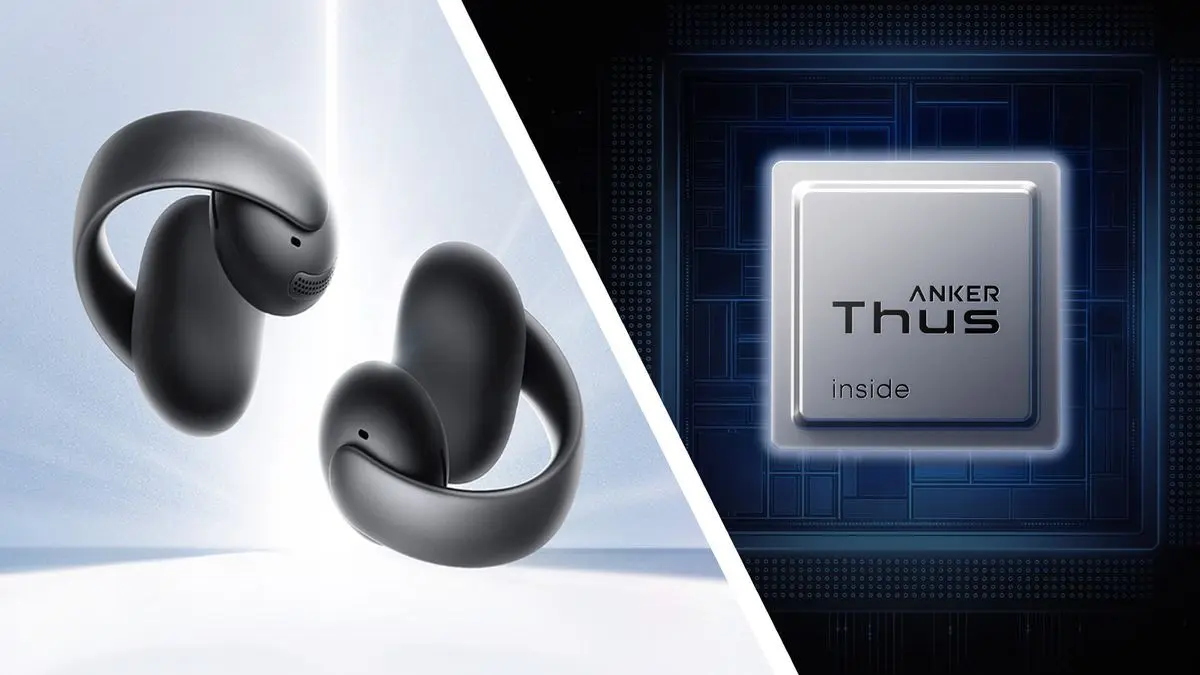
Anker has announced Thus, its first custom AI chip designed to bring on-device AI capabilities to audio devices, wearable devices, and IoT devices
1
. The company describes the Thus chip as the world's first neural-net compute-in-memory AI audio chip, marking a significant departure from traditional chip architectures1
. Unlike conventional chips that separate processing and storage, Thus integrates computation directly into NOR flash memory cells, where AI models are already stored2
. This architectural shift eliminates the energy-intensive process of shuttling data between memory and compute units, reducing both power consumption and latency3
.Source: TechSpot
Anker CEO Steven Yang explained the fundamental difference: "Every AI chip built until now stores the model on one side and does the computation on the other. To think, the device has to carry all those parameters across, many times per second, every single inference. Thus puts the computation where the model already lives. The model never has to move again"
1
. The Compute-in-Memory approach, while not entirely new in theory, has seen limited real-world deployment until now3
.The first Thus chip will integrate into Soundcore's upcoming flagship Soundcore earbuds, set to debut at Anker Day on May 21
1
. Anker deliberately chose earbuds as the launch platform because they represent the most challenging environment for AI implementation2
. These devices operate with just a few milliwatts of power within extremely tight space constraints, yet must consistently provide noise cancellation and other AI-powered features2
.
Source: Android Authority
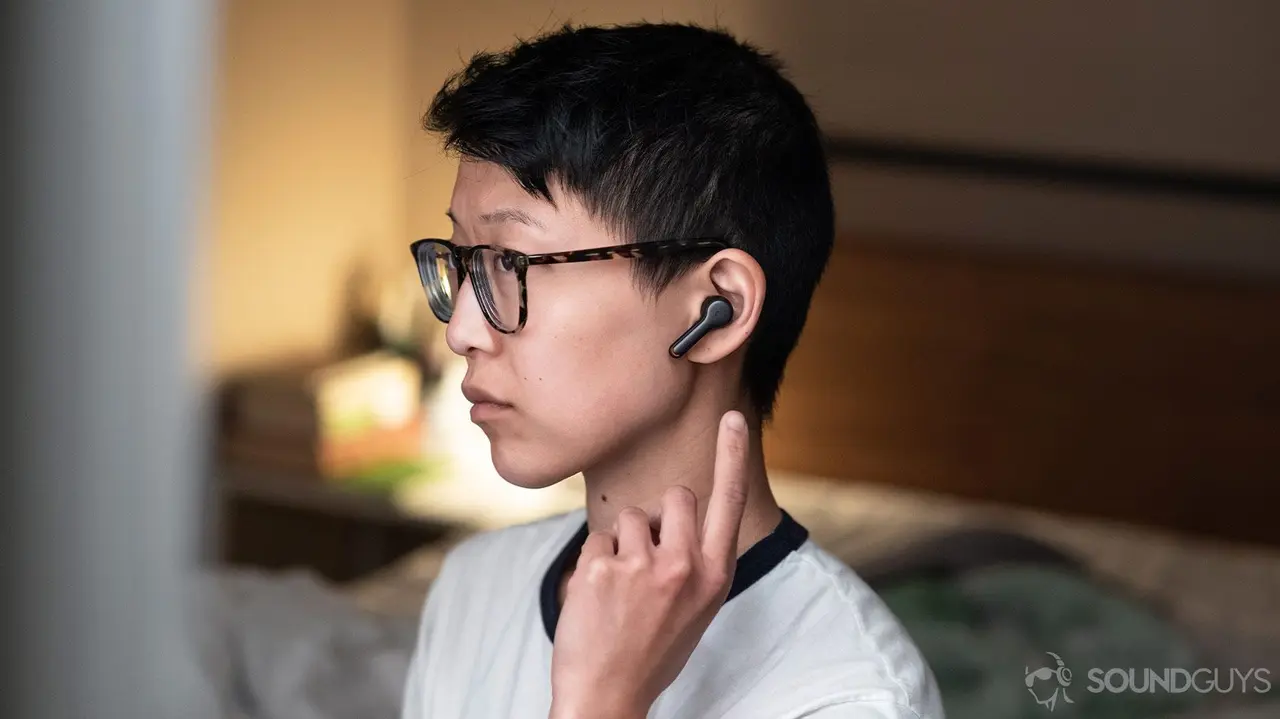
Traditional earbuds rely on small neural networks capable of handling only a few hundred thousand parameters due to limited power availability
1
. However, the energy-efficient compute-in-memory design enables the Thus chip to handle several million parameters, significantly expanding computing power for complex tasks1
. Based on leaks, the first earbuds featuring the Thus chip are likely the Liberty 5 Pro Max and Liberty 5 Pro, expected to be priced at $229.99 and $169.99, respectively1
.The Clear Calls feature demonstrates how local AI processing can transform everyday audio experiences
2
. Traditional call noise cancellation struggles in very noisy environments, often resulting in ambient noise leaking through or voices becoming highly compressed and difficult to hear1
. Anker addresses this by combining the larger neural network available on the Thus chip with eight MEMS microphones and two bone conduction sensors to isolate the speaker's voice1
3
.This multi-sensor hardware stack, powered by the chip's ability to run larger models locally, promises significantly cleaner call audio regardless of the environment
1
. The system suppresses ambient noise without relying on cloud processing, which improves privacy and reduces latency3
. Additional AI-powered features including "Signature Sound" and "Voice Control" are planned, though Anker has not yet detailed these capabilities3
.Related Stories

Anker positions Thus as the first step in a longer-term effort to bring local AI processing to mobile accessories, wearables, and IoT devices—categories that have traditionally depended on cloud-based models due to power and size limitations
3
. The NOR flash memory used in Thus provides faster read speeds than NAND memory while maintaining low power consumption, making it ideal for battery-constrained products2
5
.
Source: TechRadar
If the approach succeeds, it could influence other device makers and potentially impact how companies like Apple and Sony approach AI in compact devices
3
5
. The chip is being fabricated in Germany, and while Anker says it's not becoming a chip company, the technology could enable smarter smartwatches and other low-powered devices that have traditionally relied on cloud-based AI5
. The real-world test arrives when the upcoming earbuds launch in May, competing against established players like Apple AirPods Pro 3 and Sony WF-1000XM61
.Summarized by
Navi
[1]
[4]
16 Jan 2026•Technology

07 Feb 2026•Technology

13 Jan 2026•Technology

1
Technology

2
Science and Research

3
Technology