Apple lawsuit accuses OpenAI of stealing trade secrets, threatening its AI hardware ambitions


6 Sources
[1]
Can an Apple lawsuit derail OpenAI's hardware plans?
Apple recently filed a trade secrets lawsuit against OpenAI, accusing the AI company of a pattern of misconduct aimed at getting current and former Apple employees to share confidential information. (In response, OpenAI said it is "not aware of any evidence that this complaint has merit.") On the
[2]
What Apple's OpenAI lawsuit is really about
Today on Decoder, I'm talking with Hayden Field, The Verge's senior AI reporter, about the major trade secrets lawsuit between Apple and OpenAI and what this tells us about OpenAI's future. By now I'm sure most Decoder listeners are familiar with Apple's allegations in this case. The company says
[3]
AI companies are trying to escape the screen. Apple's lawsuit against OpenAI shows how hard it will be
OpenAI, the company behind ChatGPT, has been a key player in the current wave of consumer artificial intelligence (AI) flooding the world. But so far it has all been software behind a screen. Last week, that began to change: the tech giant released its first branded hardware. At the same time, it
[4]
Sam Altman and Jony Ive formed a dream team to reinvent hardware. Now it's at the center of a battle for OpenAI's future | Fortune
As Jony Ive and Sam Altman hugged and sipped espressos at a picturesque North Beach cafe in May 2025, a new war was brewing. The coffee date was featured in a viral video to announce that Altman's OpenAI was acquiring io Products, a small hardware startup founded by Ive, the legendary designer of
[5]

Apple Sues OpenAI Over 400 Allegedly Poached Engineers
Apple has filed a lawsuit against OpenAI, alleging intellectual property theft and unethical recruitment practices. The legal filing claims that OpenAI hired over 400 Apple engineers, some of whom allegedly had access to proprietary information, including unreleased product designs and
[6]

Apple paints a damning picture of OpenAI's interview process
Yesterday we brought you the news that Apple's relationship with OpenAI has turned ugly, with the Cupertino company suing the AI brand and accusing it of stealing trade secrets. And a closer look at Apple's filing reveals wild details about OpenAI's interview process that are huge if true. Apple
Share
Copy Link
Apple filed a trade secrets lawsuit against OpenAI, alleging the AI company poached over 400 engineers with access to confidential product designs and manufacturing techniques. The case targets OpenAI's hardware ambitions led by former Apple designer Jony Ive, potentially disrupting the company's plans to launch AI-powered consumer devices and its upcoming IPO.
Apple Targets OpenAI's Hardware Dreams with Trade Secrets Lawsuit
Apple has launched a trade secrets lawsuit against OpenAI, accusing the AI company of orchestrating a systematic effort to extract confidential information from current and former Apple employees
1
. The lawsuit alleges that OpenAI hired over 400 Apple engineers, some with access to proprietary product designs and unreleased manufacturing techniques, in what Apple describes as a pattern of misconduct at the highest levels5
. OpenAI has responded by stating it is "not aware of any evidence that this complaint has merit"1
.
Source: Geeky Gadgets
The timing of this Apple lawsuit matters deeply for OpenAI's strategic pivot into AI hardware. The company spent $6.5 billion in 2025 to acquire io Products, a startup founded by Jony Ive, Apple's legendary former chief design officer
4
. This acquisition brought together Sam Altman and Ive in what was positioned as a dream team to build the next great consumer product for the AI age. Now, before any products have launched, Apple's legal action threatens to derail these carefully laid AI hardware plans4
.The Allegations Behind the Trade Secrets Lawsuit
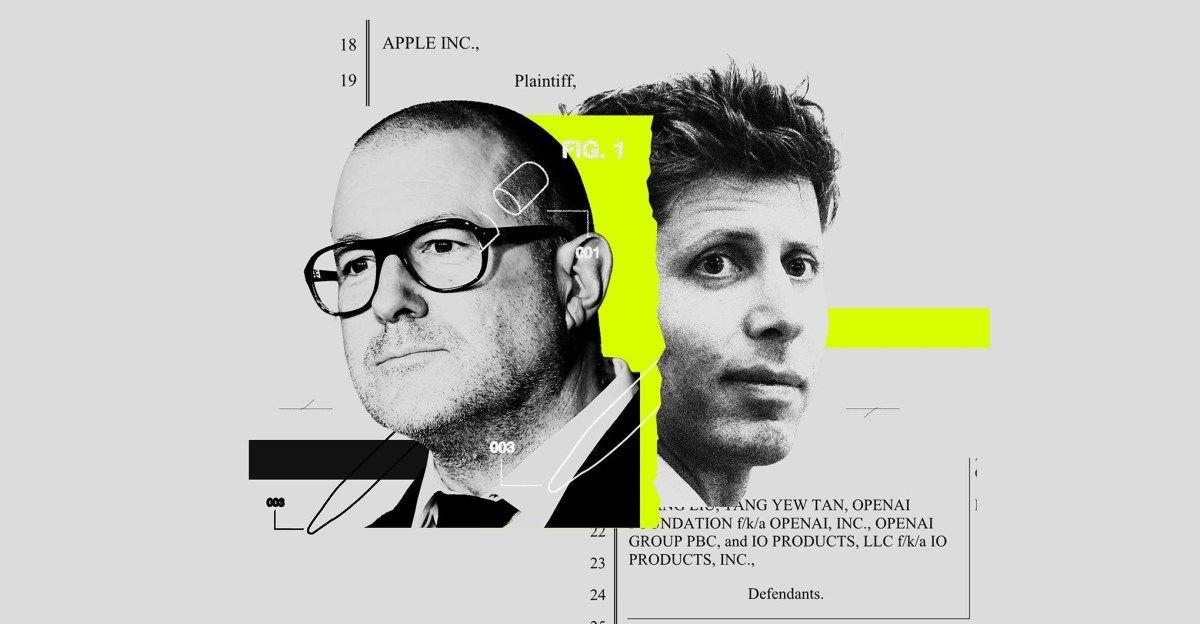
Apple's legal filing details shocking claims about OpenAI's recruitment practices. The lawsuit names Tang Yuan, OpenAI's chief hardware officer and a former Apple Vice President of Product Design, alleging he led efforts targeting poached engineers with insider knowledge
5
. Paul Meade, a former Vision Pro engineer, is also accused of bringing detailed knowledge of unreleased product plans to OpenAI5
.The allegations include claims that OpenAI conducted "show and tell" sessions during job interviews, where candidates were allegedly asked to share Apple prototypes and internal documents
2
. Apple also accuses OpenAI of unauthorized access to over 1,000 pages of confidential engineering documents and deceptive practices involving Apple's manufacturing partners to obtain proprietary manufacturing techniques5
. Evidence presented includes text messages, access logs showing unauthorized downloads, and a "need-to-know checklist" allegedly distributed by OpenAI5
.OpenAI's Hardware Ambitions Now Under Threat
OpenAI has been signaling its move into physical AI for some time. Last week, the company launched its first branded hardware: the Codex Micro, a $230 keyboard with six illuminated keys that indicate the status of AI coding agents
3
. While the initial run sold out quickly, this modest device is far from the ambitious portable AI companion OpenAI has been developing with Jony Ive.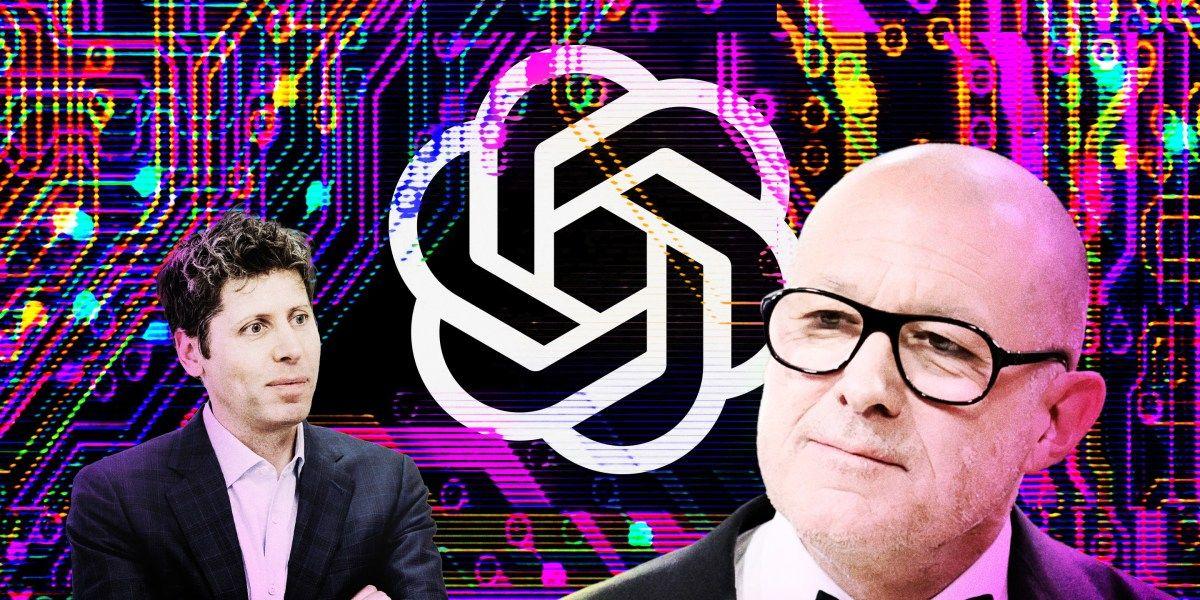
Source: Fortune
According to reports, OpenAI's flagship device—sometimes referred to as the Sweet Pea hardware project—will be a home-speaker-like device with moving mechanical parts designed to mimic human behavior, creating a sense that it is alive rather than just responding to commands
3
4
. A source familiar with OpenAI's plans told Fortune that the design of the initial hardware device has been finalized, with work on a broader family of AI-powered consumer devices proceeding4
.The OpenAI hardware group, integrated from io Products, now employs more than 400 people working out of the original io building in San Francisco's Jackson Square
4
. Jony Ive, while not technically an OpenAI employee, is spearheading the project through his design firm LoveFrom, which is providing design services for the company's family of devices4
.Related Stories

Legal Risks and Strategic Implications
Even without a court granting injunctive relief or a restraining order, the lawsuit could naturally cause delays in what OpenAI is working on, which was likely part of Apple's reasoning
1
. Apple is known as a tenacious litigator, having previously pushed copyright law to the limit against Microsoft in the 1990s and patent law against Samsung in the 2000s2
. While those companies could afford prolonged litigation, OpenAI faces different constraints.The company has filed confidentially for an IPO, with speculation it might happen as early as the end of this year or early next year
1
. This lawsuit raises questions about that timeline because if OpenAI is pitching bankers and investors on a significant addressable market tied to a potential hardware division, the legal risk could change calculations dramatically1
. Legal experts interviewed by The Verge noted that while individual allegations aren't unprecedented in trade secret cases, having all of them in one case involving two major players is unusual2
.The Broader Battle for Physical AI
This legal battle represents more than intellectual property disputes—it signals where the industry is heading. AI companies are attempting to escape the chat window and move into the physical world through devices that can move, listen, watch, and respond
3
. For OpenAI, the move into hardware is driven by more than just selling gadgets. With the company no longer the undisputed leader in large language models, hardware represents a strategic evolution—a way to control user experience and lock consumers into OpenAI's models even if competitors offer comparable alternatives4
.
Source: The Verge
However, hardware operates under different rules than software. Competitive advantage is harder to copy and slower to build, embedded in manufacturing processes, supply chains, and design expertise
3
. The lawsuit also raises questions about employee mobility in the tech sector and whether successful outcomes for Apple could set precedents that complicate transitions between competing firms5
.Possible legal outcomes range from financial settlements and hiring restrictions to preliminary injunctions that could halt hardware development, or a lengthy battle that delays product launches and affects market strategy for both companies
5
. Whether OpenAI will settle quickly or endure a trial remains uncertain, though the company recently achieved a courtroom victory against Elon Musk, suggesting it may be willing to fight1
. For now, the case casts a shadow over OpenAI's transformation from a software company into a hardware player, with reputational harm and operational disruption already beginning to mount.References
Summarized by

Navi
[1]
[2]
[3]
[5]
Related Stories
OpenAI's first hardware device is a screenless AI smart speaker launching in 2027
15 Jul 2026•Technology

OpenAI Calls Apple's Trade Secrets Lawsuit 'Careless and Oddly Personal' as Legal Battle Escalates
04 Aug 2026•Business and Economy
OpenAI confirms family of devices coming soon as it pushes into voice-first hardware
29 Jul 2026•Technology

Recent Highlights
1
Microsoft and Nvidia Launch Surface Laptop Ultra: A $2,599 AI-Ready PC With RTX Spark Chip
Technology

2
Google Unveils Gemini 4 Argon AI Model, Restricts Access to Trusted Cyber Defenders
Technology

3
OpenAI Releases 722 AI-Generated Math Papers on GitHub, Igniting Fury Among Mathematicians
Science and Research

Recent Highlights
Today's Top Stories








Don’t drown in AI news. We cut through the noise - filtering, ranking and summarizing the most important AI news, breakthroughs and research daily. Follow topics that matter to you and stay ahead.


