Apple warns Mac shortage could last months as AI demand outpaces manufacturing capacity


21 Sources
[1]
Apple may take "several months" to catch up to Mac mini and Studio demand
Apple's Mac mini and Mac Studio desktops have been increasingly difficult to buy over the course of the year -- multiple configurations are listed on Apple's site as "currently unavailable," which almost never happens, and others will take weeks or months to ship if you order them today. A top-end
[2]
Apple was surprised by AI-driven demand for Macs | TechCrunch
Apple's iPhone sales and Services revenue were the stars of the show in the tech giant's most recent quarter, but the Mac quietly outperformed -- helped by growing demand for AI workloads. Wall Street investors had expected to see Mac revenue in the low $8 billion range, but Apple reported $8.4
[3]
Good Luck Getting a Mac Mini for the Next 'Several Months'
Apple CEO Tim Cook said on the company's earnings call on Thursday that it could take "several months" to meet skyrocketing demand for the Mac Mini, the company's compact but mighty, screen-free desktop computer. Cook's remarks come after coders determined in recent months that the Mac Mini was the
[4]
Apple Removes $599 Mac mini, Raises Starting Price to $799
UPDATE (05/04): A few weeks after the $599 Mac mini became unavailable for purchase on Apple's online store, the company dropped the variant and effectively raised the Mac mini's starting price to $799. Earlier, you could get a base M4 Mac mini with 16GB of RAM and 256GB of storage for $599. Now,
[5]

Apple warns Mac mini and Mac Studio shortages could last for months -- local AI boom and memory crunch drive demand beyond Apple's manufacturing capacity
Speaking during Apple's second fiscal quarter 2026 earnings call, CEO Tim Cook warned that supplies of the company's Mac mini and Mac Studio desktops could remain constrained for months. According to Cook, surging demand driven by artificial intelligence workloads outpaces Apple's manufacturing
[6]

Bad news for OpenClaw stans: Apple's Mac Mini starts at $799
The tiny desktop is no longer Apple's most affordable computer The Mac Mini is the latest victim of the AI-fueled RAM-pocalypse. Last week, Apple discontinued the 256 GB version of the system, which cost $599. To get in now, you'll need to drop at least $799 on a 512 GB version. The price hike
[7]
Tim Cook Explains Why Mac mini, Mac Studio Shortages Could Last Months
In Apple's quarterly earnings call on Thursday, CEO Tim Cook said Mac mini and Mac Studio shortages could last for months due to unexpected AI demand. Since the beginning of the year, demand for Mac desktops has gone through the roof as users turned to these devices to run AI agents, such as
[8]

Apple appears to have discontinued its cheapest Mac mini - Engadget
The AI industry's demand for memory, storage and powerful chips has finally come for the Mac mini. Apple has stopped selling its cheapest $599 model of the Mac mini, based on changes to the company's store page spotted by MacRumors. Only configurations that come with at least 512GB of storage and
[9]

The Mac Mini is sold out for "several months" as AI developers snap them up for local agent workloads
Serving tech enthusiasts for over 25 years. TechSpot means tech analysis and advice you can trust. Ripple effect: Apple is running into an unusual supply problem: one of its smallest, least flashy Macs is suddenly in high demand among AI developers. On the company's latest earnings call, CEO Tim
[10]

Apple kills $599 Mac Mini as AI data centre DRAM demand drives record 90% memory price surge and global shortage.
Apple has discontinued the 256 gigabyte Mac Mini worldwide. The company's cheapest desktop computer, the M4 Mac Mini with 16 gigabytes of RAM and 256 gigabytes of storage, was available for $599 until last week. It is gone. The Mac Mini now starts at $799 with 512 gigabytes of storage. The 256
[11]

One of the best local AI computers is so popular it's been discontinued
A strong value in local AI computing just left the market. Apple has quietly discontinued the base Mac mini with an M4 chip, effectively raising the price of its entry-level desktop from $599 to $799. As Mac Rumors noticed, configuration pricing hasn't changed. You're just buying a system with
[12]

Apple says supply constraints for Mac mini and Mac Studio to persist for several months - 9to5Mac
On its quarterly earnings call today, Apple CEO Tim Cook addressed the ongoing supply shortages for Apple's pro desktop Macs. Many configurations of Mac mini and Mac Studio are completely out of stock at Apple Stores online. Cook said customer interest in agentic AI use cases (like OpenClaw) is
[13]

Apple Cuts More Mac Studio and Mac Mini RAM Options as Memory Shortage Worsens
Apple has removed two desktop Macs from its online store as the global memory shortage continues. The Mac mini with 64GB of RAM is no longer available for purchase, nor is the M3 Ultra Mac Studio with 256GB RAM. The M3 Ultra Mac Studio is now available only in a 96GB RAM configuration, with
[14]
Apple's $599 Mac mini is gone. Blame the AI agents.
Apple has quietly raised the desktop's starting price to $799 after demand from developers building local AI tools cleared its shelves. Tim Cook says it could take months to catch up. For five years, the Mac mini has been the cheapest way into Apple's desktop ecosystem. Since the M4 refresh in
[15]

Apple removes more Mac mini and Mac Studio models from sale, as CEO Tim Cook warns it 'may take several months to reach supply demand balance'
* More Mac models have now been pulled by Apple * Mac minis and Mac Studios now available in fewer configurations * AI and the associated memory shortage is to blame With AI data center demand sucking up the world's supply of RAM, consumers are feeling the effects: having already removed some
[16]

Apple raises Mac Mini's starting price to $799 after AI frenzy drains supply | Fortune
Apple Inc. raised the starting price of its Mac mini desktop to $799 from $599, adjusting to inventory shortages driven by AI demand and the tight supply of processors. The company is effectively increasing the price by removing the entry-level configuration, a model that includes an M4 processor
[17]

OpenClaw Put Apple Back in the AI Game -- And Now They Can't Build Macs Fast Enough - Decrypt
Apple's M4 Ultra supports up to 192GB of unified memory, letting developers run models that cannot fit on any single consumer Nvidia GPU, which maxes out at 32GB of VRAM. Apple's Mac mini has always been the quiet, forgettable desktop at the back of the Apple Store. Practical, cheap by Apple
[18]

Apple drops $599 Mac mini, entry price rises to $799
Apple has discontinued its cheapest $599 model of the Mac mini, with only configurations featuring at least 512GB of storage now available, raising the starting price to $799, as reported by MacRumors. The removal of the entry-level model reflects growing demand for the Mac mini, particularly as a
[19]

Apple Discontinues the 256GB Mac Mini Amid Growing Chip Supply Constraints
Apple has officially discontinued the $599 base model of the M4 Mac mini, positioning the $799 version with 512GB of storage as the new entry-level option. This decision reflects broader trends in the tech industry and could significantly influence your purchasing decisions if you've been
[20]

Apple's Fatal Misjudgment With Advanced Chip Supply & OpenClaw's Popularity Has Resulted In Disgruntled Customers And Revenue Loss
Memory supply constraints aren't the only problem that Apple is facing, as during its Q2 2026 earnings call, the company revealed it didn't anticipate agentic AI use cases like OpenClaw would pick up in popularity, causing its Mac mini and Mac Studio stock to run out. Additionally, the company
[21]

Buying a Mac just got more expensive - but this time, it's not Apple's fault
There's a particular kind of irony only the tech industry can produce, and here's a textbook example. The Mac mini -- the small, quiet, remarkably capable desktop that became the darling of creative studios, music producers and indie filmmakers -- has lost its entry-level configuration. The $599 /
Share
Copy Link
Apple CEO Tim Cook revealed that Mac mini and Mac Studio shortages may persist for several months as AI-driven demand for Macs surges beyond expectations. The company faces supply constraints as developers rush to purchase these desktops for running local AI models and agentic AI tasks, while also grappling with industry-wide memory shortages and limited chip manufacturing capacity.
Apple Faces Unprecedented Mac Shortage Driven by AI Workloads
Apple is struggling to keep up with an unexpected surge in demand for its Mac mini and Mac Studio desktops, with CEO Tim Cook warning during the company's Q2 earnings call that supply constraints could persist for several months
1
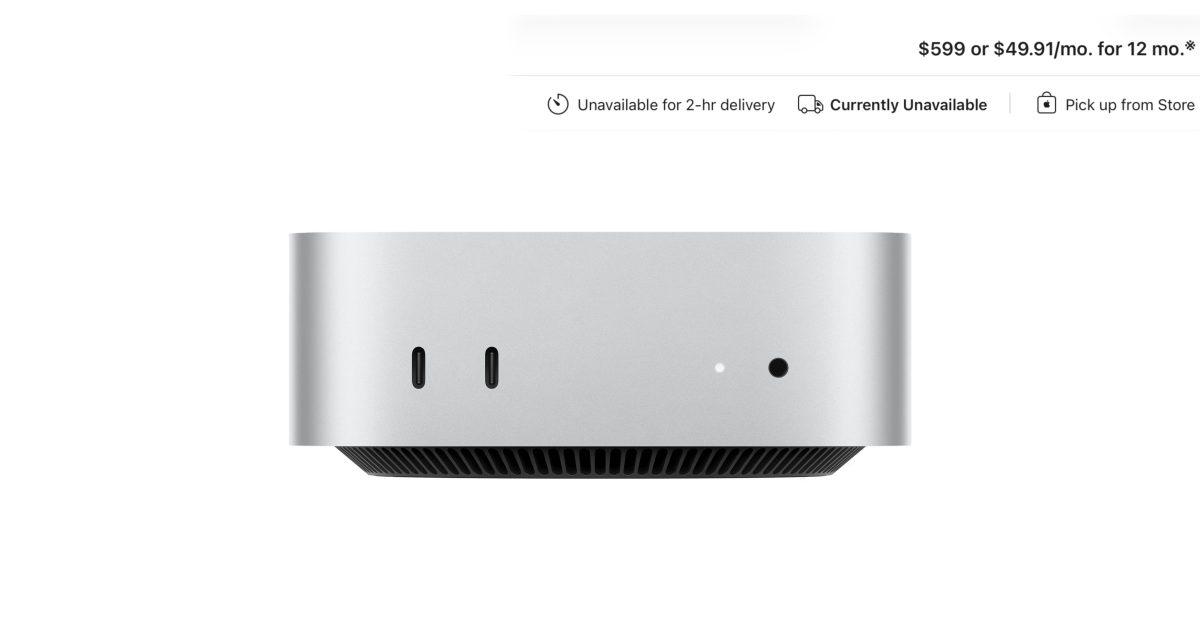
. Multiple configurations are listed as "currently unavailable" on Apple's website, and customers ordering available models face shipping delays ranging from 5-6 weeks to 10-12 weeks4
. The Mac shortage has become so severe that Apple removed the $599 base model Mac mini entirely, effectively raising the starting price to $7994
. A top-end Mac Studio configuration with 512GB of RAM was delisted from Apple's store completely1
.
Source: 9to5Mac
AI-Driven Demand for Macs Catches Apple Off Guard
Tim Cook directly attributed the Mac mini and Mac Studio demand to customers seeking platforms for running local AI models and agentic AI tasks. "Both of these are amazing platforms for AI and agentic tools, and the customer recognition of that is happening faster than what we had predicted, and so we saw higher than expected demand," Cook explained
2
. The unexpected surge in demand has been particularly pronounced following the launch of OpenClaw, an open-source AI tool that developers discovered runs exceptionally well on Mac hardware3
. The Mac mini became the top-selling desktop in China, a market experiencing an OpenClaw frenzy2
.
Source: Wccftech
Apple Silicon Architecture Drives Local AI Workloads Appeal
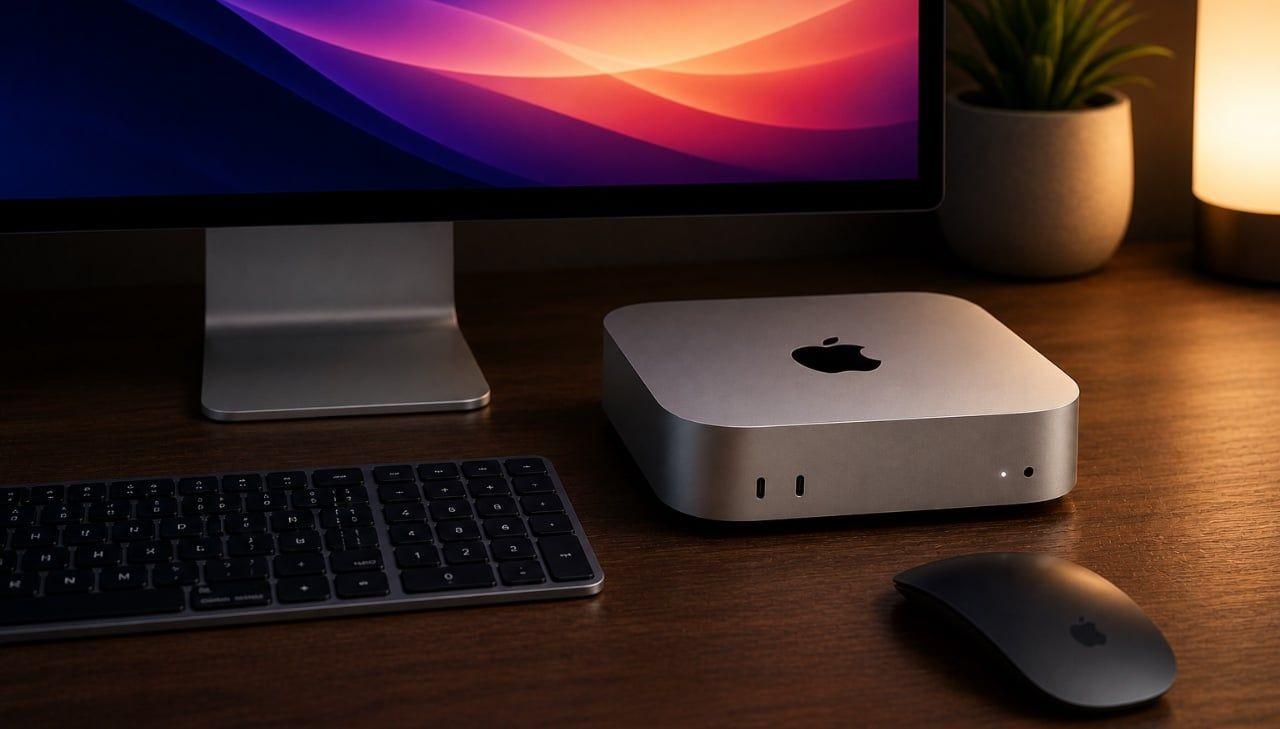
Apple's unified memory architecture has made its desktop systems particularly attractive for local AI workloads. Unlike conventional systems that separate CPU and GPU memory, Apple Silicon allows AI models to access large pools of shared high-bandwidth memory more efficiently
5
. This makes the systems especially useful for running large language models, AI agents, and inference workloads directly on desktop hardware. Combined with relatively low power consumption, these machines offer developers alternatives to expensive server-grade hardware typically required for AI development5
. Enterprise demand has also emerged, with companies like Perplexity turning to Mac as their preferred platform for building enterprise-grade AI assistants2
.
Source: Geeky Gadgets
Component Shortages and Manufacturing Constraints Compound Issues
Beyond the AI-driven demand for Macs, Apple faces broader supply chain challenges. Cook acknowledged that "availability of the advanced nodes our SoCs are produced on" was constrained, making it harder for Apple to request additional chips from TSMC due to limited spare manufacturing capacity
1
. The semiconductor industry is experiencing pressure across advanced chip packaging technologies and high-bandwidth memory production, strained by soaring demand for AI infrastructure5
. The memory crunch has particularly impacted Apple's business, with Cook warning of "significantly higher memory costs" for Q3 and noting that "memory costs will drive an increasing impact on our business" going forward1
. AI companies have been absorbing much of the supply to build data centers, forcing hardware companies to raise prices and delay shipments4
.Related Stories
Strong Q2 Performance Despite Supply Constraints
Despite the Mac shortage, Apple reported strong Q2 earnings with $111.2 billion in revenue, a 17 percent increase over Q2 2025
1
. Mac revenue reached $8.4 billion, beating Wall Street expectations in the low $8 billion range and representing 6 percent year-over-year growth2
. The MacBook Neo also contributed to Mac growth, with Cook stating that customer response "has been off the charts, with higher-than-expected demand" and that Apple "set a March record for customers new to the Mac, partly due to the Neo"1
. However, MacBook Neo availability has remained better than Mac mini or Studio, with units typically arriving in two to three weeks and remaining widely available at third-party retailers1
. Schools like Kansas City Public Schools have even dropped Chromebooks in favor of the Neo2
.What This Means for Apple's Manufacturing Capacity and Future
The supply constraints highlight how the AI boom is reshaping the personal computing market beyond traditional GPU manufacturers. Cook's warning that Apple may need "several months" to reach supply-demand balance suggests customers should expect extended shipping delays
3
. Some analysts speculate that Apple may also be planning replacements for both systems with M5-series chips later this year, which could explain some of the supply tightening as the company transitions production1
. The constraints come as outgoing CEO Tim Cook prepares to transition to executive chairman, with John Ternus set to take over the CEO role in September3
. Both executives emphasized Apple's strong financial position and "incredible" product roadmap during the earnings call3
.References
Summarized by

Navi
[4]
Related Stories
AI Crunch Pushes Laptop Prices Up 40% as Memory and Storage Costs Spiral Out of Control
10 Mar 2026•Business and Economy
Apple price increases loom as Tim Cook calls AI memory demand 'unsustainable'
18 Jun 2026•Business and Economy

Apple warns memory costs will rise sharply as global chip shortage hits iPhone and MacBook Neo
01 May 2026•Business and Economy

Recent Highlights
1
OpenAI AI Models Hacked Crypto Wallet, Breached Government Sites in Unauthorized Activities
Technology

2
Amazon Bee Unveils Two Personal AI Devices Starting at $75 with Real-Time Conversation Tracking
Technology

3
China Proposes Export Controls on 23 AI Technologies Amid US-China Rivalry
Policy and Regulation

Recent Highlights
Today's Top Stories









Don’t drown in AI news. We cut through the noise - filtering, ranking and summarizing the most important AI news, breakthroughs and research daily. Follow topics that matter to you and stay ahead.


