2 Sources
[1]
Australia's world-first data centre rules hit their first snag: the power isn't there yet
Canberra wants data centres to put more clean energy into the grid than they take out. The renewables to do it can't be built fast enough. Australia has told its data centres to put more power into the grid than they pull out, an obligation no other country has tried to write into law. The demand is barely a fortnight old, and it has already met the most basic of objections: the electricity the industry is meant to supply cannot be built quickly enough to match the machines that will consume it. Prime Minister Anthony Albanese set out the framework on July 15 at the University of Sydney, part of a wider national push on artificial intelligence that also touches copyright and a new Office of AI. Under the plan, large centres would have to become net-generators rather than net-users, funding fresh renewable capacity instead of simply buying green certificates, paying their full grid-connection costs rather than passing them to households, minimising water use, and easing off when the system is under strain. A new Office of AI would set the rules on where centres are built and how much power and water they can use. If it passes, Australia would be the first country to bundle those obligations into a single national law. The trouble is timing. Wind and solar projects in New South Wales and Victoria take roughly three to five years to approve and build, while a data centre can go up in as little as two, so the two timelines do not line up. That gap is the first hurdle. According to analysis from Commonwealth Bank economist John Oh, the key risk is that data centre demand arrives before the generation meant to cover it comes online, which would leave operators leaning on the existing grid, the very outcome the rules were written to prevent, and the sort of cost transfer that has pushed up power bills for ordinary users elsewhere. The numbers explain why Canberra is bothering. Data centres draw only about 3TWh a year today, a couple of per cent of national demand, but forecasts put that somewhere between 15 and 30TWh within a decade as the sector attracts an estimated A$85bn to A$135bn in investment. Anthropic alone has floated an appetite that industry watchers peg at around 20GW, a figure that would rival a large share of the country's current generation, though the company has not committed to building anything on that scale. Running alongside the federal plan, the Australian Energy Market Commission has proposed its own technical standards, requiring large loads to stay connected and ride through faults rather than tripping offline all at once. The regulator points to a 2024 incident in Virginia, where roughly 60 data centres shed about 1,500MW at the same moment and unsettled the grid. "Data centres aren't passive loads anymore; they're active grid participants," the commission's chair, Anna Collyer, said when the draft went out. Consultation on that rule closed in May, with a final determination expected around the middle of the year. Other governments are circling the same problem from different angles. New York imposed a one-year moratorium on hyperscale sites this month, Ireland lifted its own freeze only on condition that new centres source most of their power from renewables, and in the United States, Congress has weighed making Big Tech pay its share of AI's energy costs. Clean-energy advocates there have spent much of the year fighting the gas-plant boom that unconstrained demand tends to trigger, exactly the outcome Canberra says it wants to avoid by tying growth to new renewables. Australia's version is the most demanding of the lot, which is precisely why the feasibility question matters so much. For now the framework is still a promise rather than a statute. It has to clear National Cabinet, with agreement targeted for August, before legislation reaches parliament in early 2027. Until then the rule exists mostly as an elegant piece of accounting, one that balances only if the turbines and panels arrive on time.
[2]
Queensland and NT reject Labor's push to ensure that power-hungry AI datacentres use renewable energy
Federal-state stoush comes as rating agency warns that electricity bills could skyrocket Queensland and the Northern Territory have rejected the federal government's plans to mandate that AI datacentres use renewable power, rubbishing Anthony Albanese's proposals to regulate the booming technology as "underdeveloped ideas that hand increased power to Canberra". The latest federal-state stoush on energy comes as S&P Global, the economic rating agency, warns that power use from datacentres could rise five-fold by 2035 to 10% of Australia's total consumption, and that a mismatch between delivery timelines for datacentres and renewable projects could lead to energy bills skyrocketing. But the federal Labor government says it will forge on with its plans to place energy and water usage rules on datacentres, and to develop "nationally consistent" regulations about AI - even if some states don't agree. The federal government is examining whether it can set price protections to shield Australians from any energy bill spikes related to the datacentre boom. A meeting of state and federal energy ministers on Tuesday discussed the Albanese government's expectations for datacentre development after the prime minister pledged to legislate binding standards for AI companies, including on locations and energy use. Datacentres would be required to generate renewable energy, minimise water use and maximise energy efficiency. Albanese said there would be a "legal obligation" for new datacentres to underwrite new power supply, pay for their grid connection costs and "put at least as much energy into our grid as they take out of it". The Liberal-National government in Queensland raised concerns about a renewables mandate at an energy ministers' meeting in May, the only holdout as all the other states agreed that datacentres should fully offset their energy demands with renewables, and transparently report their energy use and emissions. On Tuesday the Liberal government in the NT joined Queensland in rejecting further proposals and agreements about datacentres. All states - "with QLD and NT opposing", according to a communique - backed the commonwealth's plan for nationally consistent rules on datacentres, including underwriting new renewables and offsetting their power use, plus mandating that consumers face no price impacts. "Queensland will always support proposals that deliver affordable, reliable and sustainable power, however, we will not support underdeveloped ideas that hand increased power to Canberra at the expense of Queenslanders," said the state treasurer and energy minister, David Janetzki. "We will continue to deliver affordable, reliable, and sustainable energy to deliver cost of living relief Queenslanders can rely on, while consulting with the community to support investment, jobs and economic growth." The NT minister, Gerard Maley, was contacted for comment. Federal government sources said Queensland and the NT's opposition to the plan would not stymie Albanese's roadmap, and insisted work to deliver nationally consistent rules would continue. The federal energy minister, Chris Bowen, will address the National Press Club next week, when he is expected to reveal more about the Albanese government's plans before a national cabinet meeting in August and another energy ministers' summit in September. Federal powers relating to the Australian Energy Market Operator and Australian Energy Market Commission and surrounding connections of large facilities to power grids could be invoked to mandate that new datacentres use renewables. This week's Guardian Essential poll found Australians were reluctant to embrace new AI datacentres, with less than a third saying they would be happy to have a facility in their area; 61% of people raised concerns about impact on energy demand and power prices, 44% were worried about water supply and 41% worried about environmental impacts and noise. S&P, in a report released this week, noted Aemo's estimates that datacentre energy use could rise to 20 terawatt hours, or about 10% of Australia's total consumption, by 2034-35. It also cited Sydney Water's estimates that datacentres could use 15% to 20% of the city's water by 2035. The rating agency warned of an "infrastructure and temporal mismatch" which could lead to consumer prices rising. "A big gap exists between data center delivery (18-24 months) and the delivery of transmission or renewable projects (three to five years)," it said. "Delays in transmission projects, such as those seen with Project Energy Connect in New South Wales (NSW) and Western Renewables Link in Victoria, could tighten supply and increase costs. "If renewable and storage infrastructure fails to keep pace, the government's Clean Energy Finance Corp. estimates wholesale prices could rise by 25% across states, with emissions rising by 14%."
Share
Copy Link
Australia announced world-first regulations requiring AI data centres to generate more renewable energy than they consume. But the plan faces a critical timing mismatch—wind and solar projects take three to five years to build while data centres go up in two. Now Queensland and Northern Territory have rejected the federal mandate, calling it an underdeveloped power grab by Canberra, as S&P Global warns energy bills could spike 25% if infrastructure fails to keep pace.

Source: The Next Web
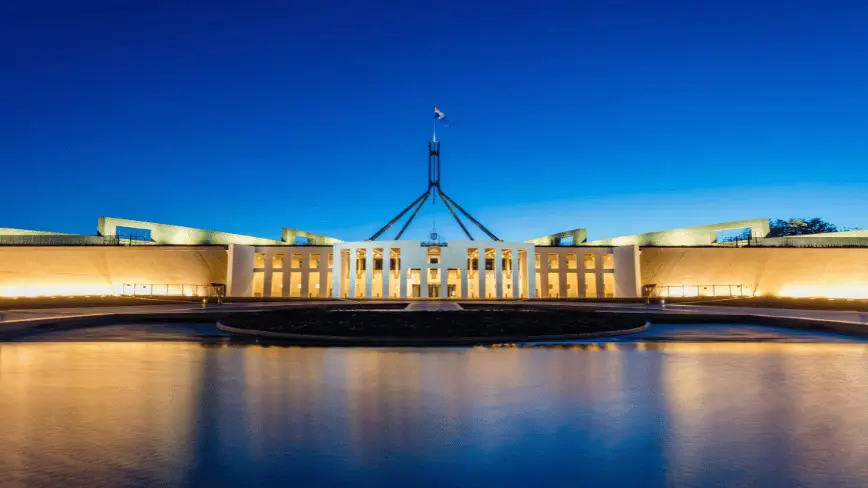
Prime Minister Anthony Albanese unveiled ambitious data centre regulations on July 15 at the University of Sydney, setting requirements that no other country has attempted to legislate
1
. The framework demands that large AI data centres become net-generators of clean energy rather than net-users, funding fresh renewable energy capacity instead of simply purchasing green certificates1
. Under the proposed rules, facilities must pay their full grid-connection costs rather than passing them to households, minimize water use, and reduce consumption during peak demand periods1
. A new Office of AI would enforce these data centre regulations, determining where centres are built and how much power and water they can consume1
.The most immediate challenge facing these regulations is a fundamental timing mismatch between AI infrastructure development and renewable energy deployment. Wind and solar projects in New South Wales and Victoria require roughly three to five years to approve and build, while a data centre can be constructed in as little as two years
1
. Commonwealth Bank economist John Oh identified this gap as the key risk, warning that demand from power-hungry AI datacentres could arrive before the generation capacity meant to cover it comes online1
. S&P Global echoed these concerns, noting the "infrastructure and temporal mismatch" between data center delivery timelines of 18-24 months and transmission or renewable projects requiring three to five years2
.Queensland and the Northern Territory have rejected the federal Labor government's mandate, creating a significant political obstacle to implementation
2
. Queensland Treasurer and Energy Minister David Janetzki dismissed the proposals as "underdeveloped ideas that hand increased power to Canberra at the expense of Queenslanders"2
. At a meeting of state and federal energy ministers, all states except Queensland and Northern Territory backed the commonwealth's plan for nationally consistent rules on datacentres, including underwriting new renewables and mandating that consumers face no price impacts2
. Despite the opposition, federal government sources insisted the roadmap would proceed, with Energy Minister Chris Bowen expected to reveal more details before a national cabinet meeting in August and legislative approval targeted for early 20271
2
.Related Stories
The urgency behind these regulations stems from projections showing datacentre energy use exploding from roughly 3TWh annually today to between 15 and 30TWh within a decade, as the sector attracts an estimated A$85bn to A$135bn in investment
1
. S&P Global warned that power use from datacentres could rise five-fold by 2035 to 10% of Australia's total consumption2
. Anthropic alone has floated an appetite pegged at around 20GW, a figure that would rival a large share of the country's current generation capacity1
. The environmental impact extends beyond electricity, with Sydney Water estimating that datacentres could consume 15% to 20% of the city's water supply by 20352
.If renewable and storage infrastructure fails to keep pace with demand, the consequences for consumers could be severe. S&P Global estimates wholesale prices could rise by 25% across states, with emissions rising by 14%, according to the government's Clean Energy Finance Corp
2
. This scenario would force operators to lean on the existing grid, the very outcome the rules were designed to prevent and the sort of cost transfer that has pushed up power bills for ordinary users elsewhere1
. The federal government is examining whether it can set price protections to shield Australians from any energy bill spikes related to the datacentre boom2
. A Guardian Essential poll found 61% of Australians raised concerns about impact on energy demand and power prices, with less than a third saying they would be happy to have a facility in their area2
.Summarized by
Navi
[1]
22 Mar 2026•Policy and Regulation

18 Jun 2026•Business and Economy

02 May 2026•Policy and Regulation

1
Technology

2
Policy and Regulation

3
Technology