3 Sources
[1]
Managing data centre energy and water use in the AI era
As artificial intelligence (AI) use surges, the data centre energy demand needed to support this growth is creating opportunities across many industries - from job creation to wealth building across commercial real estate construction, technology and venture funding. But with the global data centre sector set to expand at 14% (the compound annual growth rate) through 2030, it will require up to $3 trillion in infrastructure investment. The data centre boom is also causing a stir in local communities, becoming a hot political issue. Along with the disruption to neighbourhoods from construction, data centres use a tremendous amount of energy and water. Gartner analysts predict worldwide data centre electricity consumption will double by 2030, and the Environmental and Energy Study Institute reports that some large data centres require up to 5 million gallons of water each day. These demands are only expected to continue to increase as more data centres are built. But there is an opportunity to conscientiously build data centres for the future. A careful, thoroughly researched and thoughtfully executed data centre plan should enable the acceleration of AI-driven innovation without environmental consequences. Balancing the needs of data center stakeholders and concerned citizens is possible. Three effective approaches to address the current data centre energy challenges include: Liquid cooling and heat reuse replaces traditional air blowing to absorb and transfer data centre heat. Instead of venting that heat into the atmosphere, it is repurposed for other needs in the building or distributed to a broader network to lower the energy needs of nearby businesses or residences. Co-locating data centres on the same or an adjacent renewable energy site such as a wind or solar farm draws less power from the grid. Rather than taking power that would be used by the local community, the data centre has its own source. Predictive optimization technology uses AI and machine learning to anticipate and address potential data centre issues such as overheating before they have a negative impact on operations. This reduces energy loss from inefficient airflow and cable degradation. It also captures usage and heating data that shows real-time issues and spots trends over time. This data can support more efficient load balancing, maintenance scheduling and overall equipment optimization. Introducing new methodologies and technologies into fresh data centre builds or retrofitting existing buildings is only part of the solution, however. Supporting AI means rethinking the fundamental design of the data centre building because there are still gaps that squander energy through inefficient airflow, cable degradation and reliance on time-consuming manual installation and equipment checks. One reason for this is that traditional computing workloads have changed. Where CPUs (central processing units) were once the default standard for running workloads, they are fading into the background as today's AI demands higher powered, energy-intensive GPUs (graphics processing units). Accommodating the new GPU hardware often requires installing new equipment, which can take months and must be followed by a manual safety inspection process. These inspections rely on the human eye and handheld infrared cameras that scan an area to capture temperature readings. As AI generates heat loads that are denser, less stable and can shift, it is difficult to determine precisely where the most heat is being generated. This is due to the lack of visibility into data centre buildings' thermal energy performance and limits. As a result, these manual inspections cannot keep up with the need for continuous monitoring of the entire data centre for issues such as overheating. A lack of skilled data centre professionals compounds these challenges. This is one of the biggest and most overlooked risks in data centre management and construction today. The Uptime Institute reports that half of data centre owners and operators are tracking the metrics needed to assess their sustainability and meet regulatory requirements. Data centres are also now capturing thermal energy performance using thermal-based spatial intelligence. This approach can spot anomalies such as uneven heat distribution or hot spots that would otherwise go unrecognized by the human eye or would not be detected by an algorithm until the situation becomes critical. As a sensor without a camera, thermal-based spatial sensing provides data centre operators with real-time insight on energy consumption and heat output, down to the most granular levels. When this data is integrated into a dashboard depicting building performance, it helps ensure energy capacity flows only where it is needed. These insights can lead to faster responses and more strategic planning based on a more accurate depiction of data centre conditions. This also solves a precision issue that emerges when digital twins, virtual replicas of a facility's physical infrastructure, are used. The digital twin models are only as accurate as the sensor data input. Without continuous, physical sensing, the twin reflects intent versus reality, which can lead to costly surprises. Spatial intelligence insight, as part of a comprehensive data centre efficiency strategy, can reduce energy demand. Peer-reviewed research confirms that usage-based building controls can reduce energy consumption by 20-30% by aligning cooling output to actual demand. This would help to balance a data centre's needs with those of its neighbours. It would also help data centres to show any meaningful reductions in resource consumption. It is the responsibility of those that build and maintain data centres to optimize the infrastructure for energy efficiency. Only then can we have more productive conversations about planning the data centres of the future.
[2]
Thirsty and power hungry: Australia is in the middle of a datacentre boom - but not everyone is convinced
They're a key part of the digital and AI economy, but they come at a high environmental cost and offer few operational jobs On Mamre Road, in Sydney's outer western suburbs, there are plans to build a "hyperscale" datacentre that will be one of the biggest in the world. If approved, the 52-hectare site will include six four-storey buildings that stretch 40 metres high, alongside 936 cooling units and 852 diesel backup power generators. The Mamre Road project is part of an estimated $155bn investment pipeline over the coming decade, amid a worldwide rush to build the infrastructure enabling the artificial intelligence revolution. There are about 160 datacentres operating in the country now, with another 90 proposed, according to the Climate Council. Australia is in the middle of a sudden and enormous datacentre boom and not everyone is convinced it's good for the country. Alex Hooper, the head of climate and energy economics at Oxford Economics Australia, says the global appetite to invest in datacentres is so large that "in theory we could have any size of datacentre industry we want". "There are huge opportunities, but we need to be smart. There is some level of datacentre investment that is good for Australia. The question is: how much?" Hooper says. "Once we have that level of investment here, the next thing we need to ask is what role datacentres can play in our economic growth and prosperity. The productivity argument is there to be made, but it's not a given." These are questions that are now preoccupying experts, policymakers and governments at all levels. Most immediately, the answer revolves around how much power and water Australia can affordably and sustainably provide, and what the nation receives in return. Datacentres are a key part of the digital economy. They are essentially large, climate-controlled warehouses full of racks of servers and other IT equipment that store and process the vast amounts of data that keep websites, cloud services and artificial intelligence running smoothly. The Mamre Road datacentre, once operational, would become the country's single biggest energy user, consuming more power than the Tomago aluminium smelter. That's a big reason why Penrith council says it does not want the project to go ahead. Hooper calculates that datacentres now account for 2.8% of the electricity consumption on Australia's east coast. "By 2030 we expect that to be 7%, rising to above 10% by the mid-2030s. There is also significant upside risk to that outlook given the strength of the project pipeline," she says. The Climate Council estimates wholesale electricity prices on the east coast could be 20% higher by 2035 if the potential extra datacentre demand is not offset by additional renewable energy sources. Datacentres also consume a large amount of water for the evaporative cooling that prevents overheating servers, and require big tracts of land - with most located in cities and sometimes too near to homes. And for all that, they are not big job creators. Studies in the US show it typically takes thousands of workers in the construction phase, but only hundreds once operational. Which raises the question: why do we want them at all? Beth Webster, an economics professor at Melbourne University who specialises in advanced manufacturing, is optimistic that Australia can avoid the pitfalls that have given datacentres a bad name overseas. "America has revealed all the problems," Webster says, including not requiring developers to deliver additional energy and water to feed the centres, and placing them too close to where people live. "I think it's going to be a win. Foreign direct investment is a very important source of knowledge exchange, and I can't see too many downsides as long as they have rules around it." Pat Bustamante, a senior economist at Westpac, says there is "absolutely no question" that the datacentre boom is good for the economy. "It's laying the foundation for the next wave of productivity growth. We saw this during the PC and IT revolution during the late 90s, and this is going to be bigger than that," Bustamante says. "It's during that production and usage phase of the datacentres that you get that productivity boost, and that is going to come next. Once this high-speed computing power is in place, that's where we expect to see that productivity boost." To a large degree, scepticism around whether datacentres will be a boon or a burden for Australia is rooted in broader and deeper community angst about AI. As Sally Auld, chief economist at NAB, says: "People and society have big question marks around where AI will take us? "So are we just sowing the seeds of our own destruction by building these things?" Auld doesn't believe so. Her research suggests the new technology will augment rather than replace most jobs. "But it's hard to know what the net effect of that will be." Hooper says policymakers need to develop a proper overarching industrial policy to make sure datacentres are something that works for us, rather than just happens to us. "We have a lot of interest here to make sure the public sees the benefit, and for that we will need to have a vision of the future," she says. "I think there are huge opportunities, but we have to be smart."
[3]
Why Australia's data center boom is becoming a balancing act
Australia's data center boom faces energy and water constraints Demand for AI and cloud services is driving a new wave of data center investment across Australia, but growing scrutiny around power, water and infrastructure planning is changing how these facilities are developed. Governments are increasingly positioning digital infrastructure as part of broader economic and AI strategies. In Victoria, the state government recently launched a Sustainable Data Centre Action Plan tied to a reported $25 billion digital infrastructure pipeline, including plans to map future developments against energy and water availability. At the same time, the NSW Government has moved 15 data center projects through its Investment Delivery Authority as demand for AI and cloud infrastructure accelerates. Tens of billions of dollars of capital have already been committed to future data center projects in Australia, with national capacity projected to more than triple by 2035 as operators continue expanding AI and cloud infrastructure. As hyperscale developments move through the pipeline, governments are increasingly focused on the pressure growing demand could place on electricity networks, water resources and planning systems. The new rules shaping data center growth Australia's data center sector is entering a new phase of regulatory oversight. The Federal Government's recently announced national interest framework for data centers and AI infrastructure provides a compass for future regulation, as governments attempt to keep national interests in energy, water and infrastructure at the forefront of the sector. The framework sets out five key areas developers are expected to address as part of project approvals. These include aligning projects with Australia's strategic and economic interests, supporting the energy transition, managing water sustainably, investing in local skills and strengthening Australia's own digital capability. The framework prioritizes national interests in energy, water and infrastructure as part of data center approvals, particularly as governments respond to the growing resource demands. It also reinforces the focus on sovereign capability to ensure Australia's own digital capability can be independently controlled from within Australia, avoiding reliance on or influence from other countries. Energy, water and infrastructure constraints Access to reliable power is becoming one of the defining challenges in data center development, with many developers exploring alternative power sources and renewable energy to keep projects on track. AI usage is expected to increase power requirements for data centers by 150 to 200 per cent. The federal framework makes clear that developers are expected to reduce pressure on the electricity grid by underwriting renewable energy, financing grid connections and participating in demand-flexibility programs that shift grid usage depending on network availability. Water usage is also becoming a more prominent consideration as governments respond to the cooling demands associated with hyperscale facilities and AI infrastructure. The framework states that operators must adopt efficient technologies and practices that promote sustainable water management. Beyond energy and water, developers are facing broader construction and delivery constraints. Rising construction costs, constrained power access, labor shortages and long lead times for specialized equipment are all affecting how quickly facilities can be delivered. Land availability and planning regulation are growing areas of concern for developers. Regulatory bodies can take considerable time to issue approvals, while opposition to some data center developments is further slowing construction activity. Why modular construction is gaining momentum These pressures are contributing to increased interest in modular construction methods. Rather than relying entirely on conventional on-site construction, modular data centers use prefabricated modules containing structural, electrical, plumbing and cooling systems that are manufactured off-site before installation. Designing, building and testing modules in controlled environments can reduce delays caused by severe weather conditions, labor shortages and other factors that typically affect conventional on-site construction. Modular construction can provide greater cost predictability and faster project delivery. Modular construction also allows developers to scale projects incrementally as demand grows. Developers can begin with a base configuration and expand capacity with additional modules, particularly where standardized power and cooling mechanisms can be more easily controlled in prefabricated environments. The increasing use of modular construction is influencing broader energy strategies around data center development. Off-site construction can support earlier commissioning and improve alignment between renewable energy provision and construction milestones where renewable power sources are available. While modular construction can improve delivery speed and cost predictability, it does not remove the underlying infrastructure constraints affecting the sector. Developers still need access to sufficient power, land and network capacity, while planning approvals and sustainability requirements are becoming increasingly significant factors in project delivery. States are taking a more active role As hyperscale developments and AI infrastructure continue to expand, governments are placing greater focus on the pressure growing demand may place on energy and water resources. The NSW Government recently announced that 15 data center projects will progress through the NSW Investment Delivery Authority at a time when about half of Australia's planned data center capacity is clustered in Sydney. Data center developments now account for approximately 12 per cent of all non-residential building investment in the state. However, around $40 billion worth of projects were not endorsed because they were considered too speculative or lacked sufficient preparedness. Victoria's Sustainable Data Centre Action Plan points to a similar policy direction, with Melbourne expected to host around 25 per cent of Australia's planned data center capacity. State governments are increasingly moving beyond passive infrastructure approvals toward more active coordination of energy, water, planning and workforce settings for AI infrastructure development. With critical infrastructure projects already moving through the planning process, governments are facing increasing pressure to ensure energy, water and broader state interests remain protected as the sector continues to grow. As AI and cloud demand continue to accelerate, governments are paying closer attention to how data centers are planned, powered and integrated into existing infrastructure systems. The next phase of Australia's data center expansion is likely to depend not only on how quickly projects can be delivered, but on how effectively energy, water and planning systems can support that growth. We've featured the best AI tool. This article was produced as part of TechRadar Pro Perspectives, our channel to feature the best and brightest minds in the technology industry today. The views expressed here are those of the author and are not necessarily those of TechRadarPro or Future plc. If you are interested in contributing find out more here: https://www.techradar.com/pro/perspectives-how-to-submit
Share
Copy Link
Australia is experiencing a massive data centre boom with $155 billion in investments over the next decade, driven by AI infrastructure needs. But the expansion raises critical questions about energy and water consumption, with projections showing data centres could account for over 10% of electricity use by the mid-2030s and potentially drive wholesale electricity prices 20% higher by 2035.
Australia is experiencing a data centre boom of remarkable scale, with an estimated $155 billion investment pipeline projected over the coming decade
2
. The nation currently operates about 160 data centres, with another 90 proposed, according to the Climate Council2
. This rapid expansion reflects global trends, as the worldwide data centre sector is set to grow at 14% compound annual growth rate through 2030, requiring up to $3 trillion in infrastructure investment1
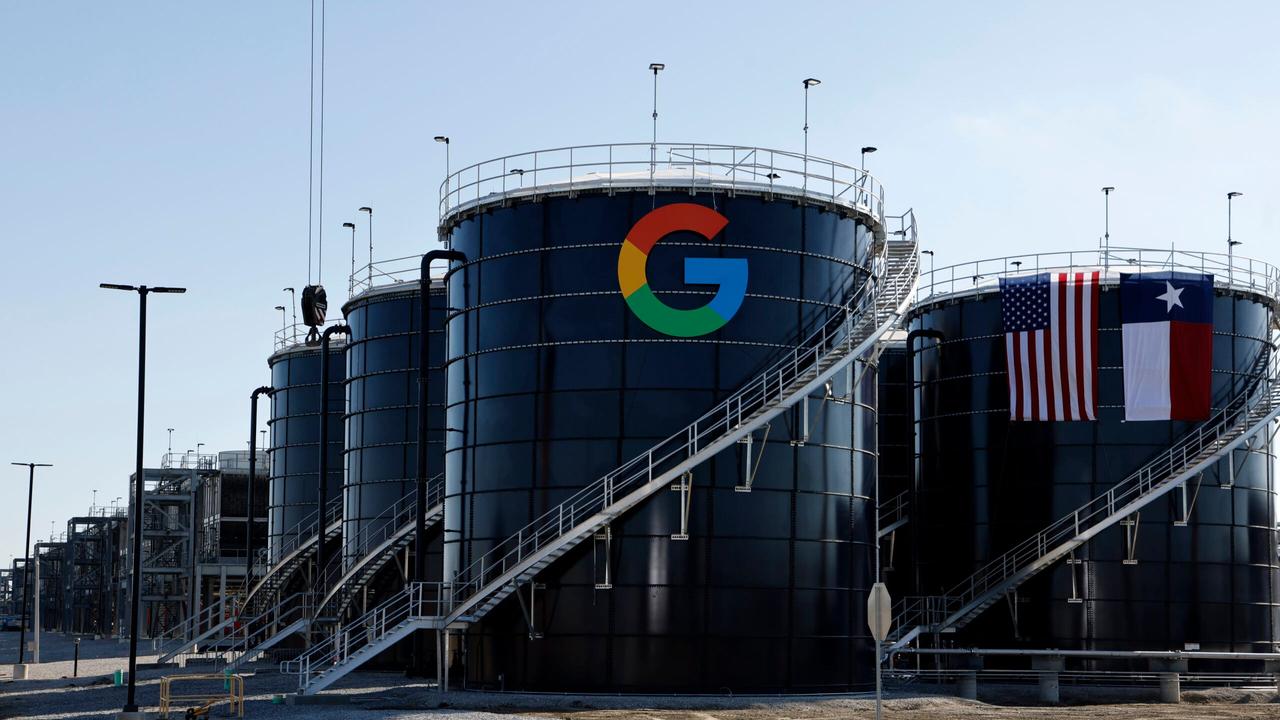
.The surging demand for AI is the primary driver behind this expansion. Among the most ambitious projects is a proposed hyperscale data centre on Mamre Road in Sydney's outer western suburbs. If approved, the 52-hectare site would include six four-storey buildings stretching 40 metres high, alongside 936 cooling units and 852 diesel backup power generators
2
. Once operational, it would become the country's single biggest energy user, consuming more power than the Tomago aluminium smelter2
.
Source: TechRadar
The environmental challenges of data centres are becoming increasingly apparent as AI infrastructure expands. Data centres currently account for 2.8% of electricity consumption on Australia's east coast, but projections suggest this will reach 7% by 2030 and exceed 10% by the mid-2030s
2
. Gartner analysts predict worldwide data centre electricity consumption will double by 20301
.Data centre energy and water use presents a dual challenge. The Environmental and Energy Study Institute reports that some large data centres require up to 5 million gallons of water each day for evaporative cooling that prevents server overheating
1
. The Climate Council estimates wholesale electricity prices on the east coast could be 20% higher by 2035 if the potential extra demand is not offset by additional renewable energy sources2
.AI's exponential power demands stem largely from the shift from traditional CPUs to energy-intensive GPUs. These graphics processing units generate heat loads that are denser, less stable and can shift, making thermal management more complex
1
. AI usage is expected to increase power requirements for data centers by 150 to 200 per cent3
.The Australian Federal Government recently announced a national interest framework for data centres and AI infrastructure, establishing new regulatory frameworks to address growing concerns
3
. The framework sets out five key areas developers must address: aligning projects with Australia's strategic and economic interests, supporting the energy transition, managing water sustainably, investing in local skills and strengthening sovereign digital capability3
.Developers are now expected to reduce grid strain by underwriting renewable energy, financing grid connections and participating in demand-flexibility programs that shift usage depending on network availability
3
. Victoria launched a Sustainable Data Centre Action Plan tied to a reported $25 billion digital infrastructure pipeline, including plans to map future developments against energy and water availability . Meanwhile, NSW has moved 15 data center projects through its Investment Delivery Authority as demand accelerates3
.Related Stories
Three effective approaches are emerging to address current challenges. Liquid cooling and heat reuse replaces traditional air cooling to absorb and transfer heat, which can then be repurposed for other building needs or distributed to nearby businesses or residences
1
. Co-locating data centres on the same or adjacent renewable energy sites such as wind or solar farms draws less power from the grid, providing dedicated energy sources rather than competing with local communities1
.Predictive optimization technology uses AI and machine learning to anticipate issues such as overheating before they impact operations, reducing energy loss from inefficient airflow and cable degradation
1
. Thermal-based spatial intelligence now captures real-time data on energy consumption and heat output down to granular levels, spotting anomalies that would otherwise go unrecognized1
.Modular data centers are gaining momentum as a response to construction constraints. These prefabricated modules containing structural, electrical, plumbing and cooling systems are manufactured off-site before installation, reducing delays from weather conditions and labor shortages while providing greater cost predictability
3
. This approach allows developers to scale projects incrementally as demand grows, beginning with a base configuration and expanding capacity with additional modules3
.Pat Bustamante, a senior economist at Westpac, argues there is "absolutely no question" that the boom benefits the economy, stating it lays the foundation for the next wave of productivity growth comparable to the PC and IT revolution of the late 1990s
2
. Alex Hooper, head of climate and energy economics at Oxford Economics Australia, notes the global appetite to invest is so large that "in theory we could have any size of datacentre industry we want," but cautions that policymakers need to determine the optimal level2
.However, concerns persist about limited operational employment. Studies in the US show construction typically requires thousands of workers, but only hundreds once facilities become operational
2
. Rising construction costs, constrained power access, labor shortages and long lead times for specialized equipment are affecting delivery timelines, while land availability and planning regulation present additional hurdles3
. The Uptime Institute reports that only half of data centre owners and operators are tracking the metrics needed to assess sustainability and meet regulatory requirements1
, highlighting gaps in accountability as the sector expands.Summarized by
Navi
[2]
22 Mar 2026•Policy and Regulation

04 Sept 2025•Technology

02 May 2026•Policy and Regulation

1
Startups

2
Policy and Regulation

3
Policy and Regulation