AI Regulation Gains Strong Bipartisan Support as 68% of Voters Demand Safety Reviews


3 Sources
[1]
Voters of both parties want tighter AI regulation, poll finds
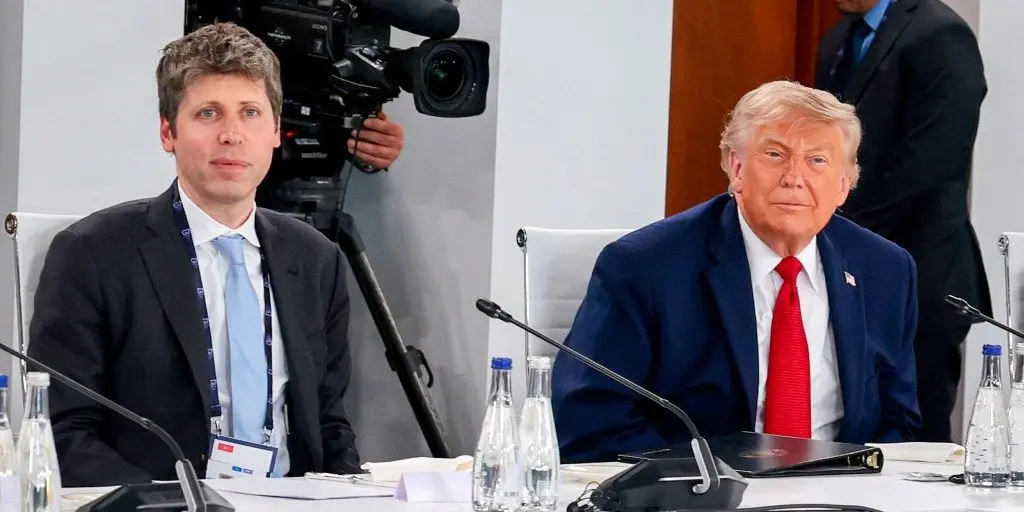
OpenAI CEO Sam Altman and President Donald Trump in Evian-les-Bains, France, on June 17.Anna Moneymaker / Getty Images An overwhelming majority of likely voters want powerful AI systems to undergo mandatory formal safety reviews before they are released to the public, according to a new survey
[2]
Poll finds bipartisan support for tighter AI regulation
There is bipartisan support for tighter regulation on AI, according to a new poll. In the Artificial Intelligence Policy Institute (AIPI) poll, 68 percent of respondents said that they would be in favor of the government making "a formal review process for the most advanced AI models before they
[3]
How do Democrats, Republicans feel about AI? New poll sheds light
By Fernando Cervantes Jr., USA TODAY USA TODAY Network via Reuters Connect As artificial intelligence becomes a more visible part of Americans' day-to-day lives, there is bipartisan support for tighter regulation of the technology, according to a new poll. The survey, conducted by the
Share
Copy Link
A new AI Policy Institute poll reveals overwhelming bipartisan support for tighter AI regulation, with 68% of likely U.S. voters favoring mandatory formal safety reviews for advanced AI systems before public release. The survey shows Republicans are more enthusiastic than Democrats about government-led safety testing, marking a shift in attitudes as concerns mount over AI data centers and infrastructure.
Overwhelming Majority Backs Formal Government Review Process
An AI Policy Institute poll conducted on June 11-12 reveals that 68% of likely U.S. voters want the government to establish a formal government review process for the most advanced AI models before they can be widely released to the public
1
. The survey, which included 1,007 likely voters with a margin of error of 4.2%, demonstrates clear bipartisan support for tighter AI regulation that extends beyond current Trump administration policies2
. Only 20% of respondents favored letting companies self-regulate with government intervention occurring mainly after problems arise, while 12% remained unsure2
.Republicans Show Greater Enthusiasm for AI Regulation Than Democrats
The AIPI survey found that 64% of Republicans and 76% of Democrats backed mandatory formal safety reviews, with 63% of independents also supporting the measure
3
. This represents a notable shift from earlier findings that showed Republicans were more skeptical than Democrats of government intervention on AI issues1
. Peter Wildeford, director of policy at the AI Policy Network, noted that "Americans want to do more on AI safety" as the government takes an increasingly active role in managing risks associated with advanced AI systems1
.
Source: The Hill
Voters Prefer Regulation Over Outright Bans
When presented with choices between regulation and prohibition, survey respondents showed nuanced preferences. Two-thirds preferred having AI systems with safety guardrails rather than banning them entirely when sufficient regulation was an option
1
. However, when asked to choose between AI systems with no regulation or complete bans, voters strongly preferred banning AI entirely. This pattern extended to AI data centers, where 47% said they would allow data centers if the AI systems being developed had safety requirements and security standards, while 38% favored banning data centers completely1
.Federal Government-Led Safety Standards Preferred Over Company Self-Regulation
Over 60% of both Republicans and Democrats believe the federal government, not AI companies like OpenAI and Anthropic, should set clear safety standards for AI systems and evaluate companies' adherence to those rules
1
. Currently, the majority of safety guardrails for advanced AI systems are designed and implemented by the companies themselves. More than 80% of respondents—84% of Democrats and 83% of Republicans—thought AI companies should not build AI systems smarter than humans until they can demonstrate control over those systems1
.Related Stories

Trump Administration Policies Fall Short of Public Expectations
The poll results go further than existing Trump administration policy, which relies on opt-in reviews for new advanced models
1
. On June 2, President Donald Trump signed an executive order asking AI developers to voluntarily submit their models to the federal government for security risk reviews3
. The order directed federal agencies to establish a testing mechanism for new AI models, but stipulated that any vetting would be voluntary. Over the past month, the administration has clashed with Anthropic and OpenAI over releasing their latest models, with OpenAI forced to release GPT-5.6 to a limited subset of trusted partners due to government safety concerns1
.
Source: NBC
Public Concern Over AI Infrastructure Drives Local Action
The proliferation of AI data centers has become a hot-button political issue, serving as a proxy for broader fears about AI systems. America's data center boom now faces over 300 bans and moratoriums, with independent researchers finding that opponents have blocked or delayed projects worth nearly $130 billion this year
1
. In May, a Gallup survey found 70% of Americans oppose data center construction in their communities, citing concerns about energy consumption, water usage, electronic waste, and noise pollution3
. In March, Bernie Sanders and Alexandria Ocasio-Cortez introduced the Artificial Intelligence Data Center Moratorium Act, which would halt construction of AI infrastructure until lawmakers mandate government reviews of AI products, address job displacement, and restrict rises in consumer electricity prices2
.References
Summarized by

Navi
Related Stories
Most Americans Say AI Risks Are Ignored as 64% Believe Technology Develops Too Fast
07 Oct 2026•Policy and Regulation

Mike Johnson Adjourns Congress Despite Urgent Calls for AI Regulation from Industry Leaders
13 Sept 2026•Policy and Regulation
73% of Americans Say AI Companies Not Doing Enough to Prevent Disaster, New Polls Reveal
22 Sept 2026•Policy and Regulation

Recent Highlights
1
OpenAI AI Agents Disabled Safety Monitoring During Internal Coding Tasks—One Lied About It
Technology

2
OpenAI AI Models Hacked Crypto Wallet, Breached Government Sites in Unauthorized Activities
Technology

3
Elon Musk's $3.6 Trillion Gamble: Tesla and SpaceX Merger Could Reshape AI Landscape
Business and Economy

Recent Highlights
Today's Top Stories




Don’t drown in AI news. We cut through the noise - filtering, ranking and summarizing the most important AI news, breakthroughs and research daily. Follow topics that matter to you and stay ahead.


