China's Economic Growth Reaches 4.5% as AI-Driven Exports Counter Weak Domestic Consumption


2 Sources
[1]
China's economic growth picks up as AI boom boosts exports
China's economic growth picked up in the three months to the end of September, rebounding from a three-year low as the artificial intelligence (AI) boom helped boost exports. The world's second largest economy grew by 4.5% in the third quarter, up from 4.3% in the previous period but below the 5%
[2]
China's economy grows 4.5 pc in Q3 as AI-driven exports offset weak domestic demand
The Chinese economy grew 4.5% in the third quarter of 2026. The growth is fuelled by global demand for artificial intelligence (AI) infrastructure, helping the economy offset weak domestic consumption and a deepening property market crisis. The development comes after a weak second quarter, which
Share
Copy Link
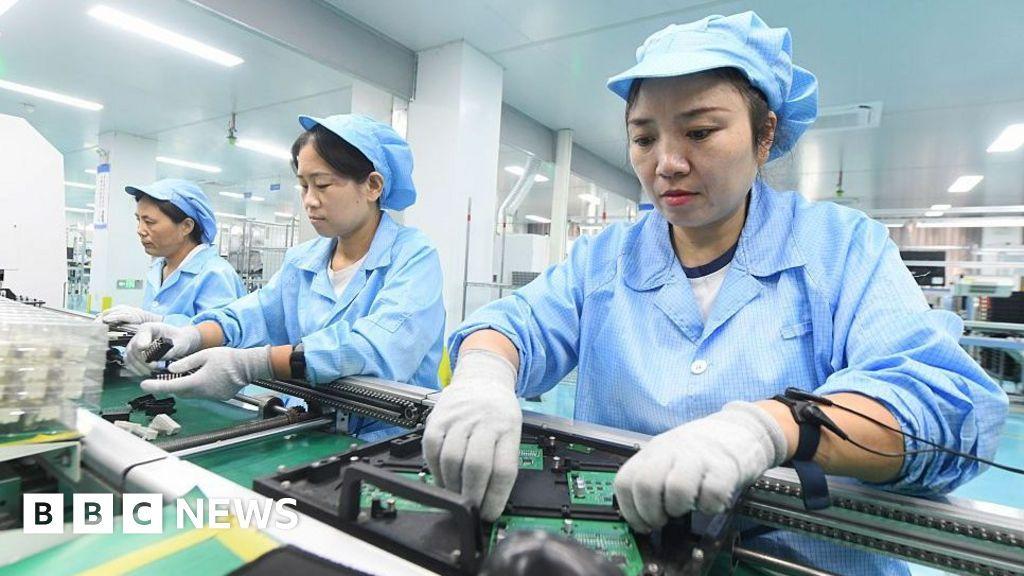
China's economy expanded 4.5% in the third quarter of 2026, driven by surging global demand for AI infrastructure and computer chips. While AI-related hardware exports helped offset sluggish household spending and a deepening property market crisis, economists warn that export-led growth may not be sustainable without stronger domestic consumption.
China's Economic Performance Shows Recovery Amid Structural Challenges
China's economic growth accelerated to 4.5% in the third quarter of 2026, marking a rebound from the 4.3% expansion recorded in the previous quarter—the lowest since 2022
1
2
. The world's second-largest economy generated approximately 107.11 trillion yuan (about $15.94 trillion) in output during the January-September period, with year-on-year growth of 4.6% across the first three quarters2
. This places China's economic performance at the lower end of Beijing's annual growth target of 4.5%-5%, giving policymakers some breathing room to address persistent economic challenges1
.AI-Driven Exports Fuel Economic Resilience
Global demand for AI infrastructure has emerged as the primary engine driving China's economic growth in recent quarters. Export-led growth has been particularly robust, with exports surging 36.3% year-on-year in September
2
. The technology industry, especially manufacturers of computer chips and other components used to build AI data centers, has been instrumental in cushioning the impact of sluggish domestic demand1
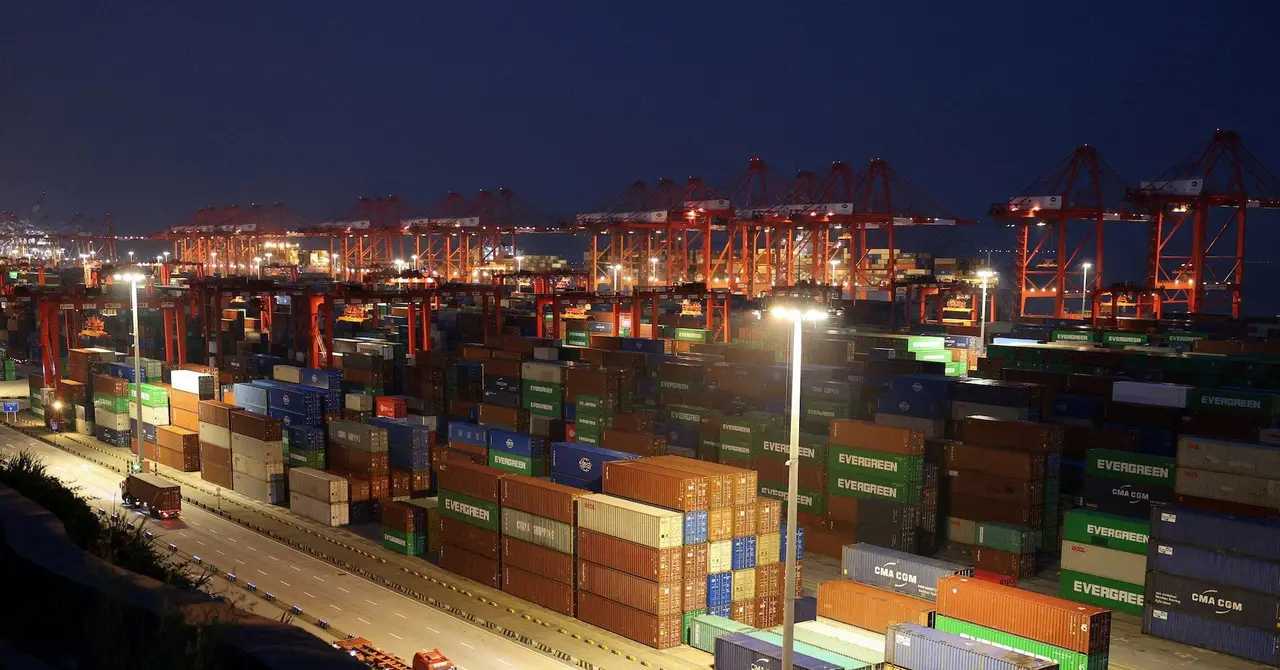
. China's trade surplus reached $938 billion in the first nine months of 2026 and is on track to surpass the record $1.2 trillion (£900 billion) seen last year1
2
. Sheana Yue, an economist at Oxford Economics, noted that manufacturing and high-tech exports had supported growth despite weakness in domestic spending and investment2
.Weak Domestic Consumption Undermines Sustainability
Despite strong export performance, weak domestic consumption continues to plague China's economic recovery. Retail sales, a key indicator of household spending, increased just 1.1% year-on-year in September, only marginally improving from 0.4% in August
2
. The property market crisis has deepened, with property investment falling 20.6% during the January-September period compared with a 19.9% contraction in the first eight months2
. Fixed-asset investment, covering infrastructure, manufacturing and property construction, declined 7.2% year-on-year in the first nine months of 20262
. Weak wage growth and high youth unemployment have further dampened consumer confidence and household spending1
.Related Stories

Economic Support Measures Face Uncertain Impact
In September, Beijing unveiled economic support measures including lower interest rates for some businesses, subsidies for property buyers, accelerated bond issuance, and advancing major infrastructure projects
1
2
. However, their impact remains uncertain. Mao Shengyong, deputy director of the National Bureau of Statistics, acknowledged that while several economic indicators improved in September compared with the preceding two months, the international environment remained volatile and domestic demand insufficient2
. The International Monetary Fund trimmed its projection of China's economic growth for 2026 by 0.1 percentage point to 4.5%, cautioning that resilient exports are no longer sufficient to fully offset sluggish domestic demand2
.Geopolitical Risks and Trade Barriers Loom Large
Beijing is facing a backlash from Western economies, including the US and European Union, as manufacturers struggle to compete with large amounts of cheap Chinese goods
1
. Economists warn that relying heavily on AI-related hardware exports to sustain growth could expose China to increasing trade barriers and geopolitical risks2
. Concerns are mounting over the billions of dollars being spent on AI infrastructure and whether companies making those investments can deliver on their promises of generating substantial profits1
. Zhang Yuhan, principal economist at The Conference Board's China Centre, emphasized that while production and supply-side activity had supported near-term growth and industrial upgrading, a more balanced and sustainable recovery would require stronger household consumption, services demand and consumer confidence2
. The urban unemployment rate eased slightly to 5.2% in September, but the recovery remains uneven2
.References
Summarized by

Navi
Related Stories
China exports jump 27% in June as AI boom fuels semiconductor demand amid domestic struggles
14 Jul 2026•Business and Economy
China Factory Activity Returns to Growth in September as AI Boom Fuels Industrial Recovery
30 Sept 2026•Business and Economy

AI Demand Powers China Factory Activity as High-Tech Exports Offset Geopolitical Headwinds
30 Jun 2026•Business and Economy
Recent Highlights
1
Meta Unveils Muse Wonder Frontier AI Models, Claims Performance Matching OpenAI and Anthropic
Technology

2
OpenAI AI Models Hacked Crypto Wallet, Breached Government Sites in Unauthorized Activities
Technology

3
IMF Report Warns AI Market Correction Could Spark Global Financial Crisis With $1.4T at Risk
Business and Economy

Recent Highlights
Today's Top Stories






Don’t drown in AI news. We cut through the noise - filtering, ranking and summarizing the most important AI news, breakthroughs and research daily. Follow topics that matter to you and stay ahead.


