China unveils $295 billion plan to build national AI data centers on homegrown chips by 2028


6 Sources
[1]
China drafts $295 billion plan to build national AI data center grid running on 80% homemade silicon -- projected 2028 timeline could run into limits of local chip production
Beijing's spending ambitions run into the reality of limited chip output. China is drafting a plan to spend roughly 2 trillion yuan ($295 billion) over five years on a nationwide web of AI data centers. The goal is for at least 80% of the underlying technology, AI chips included, to be sourced
[2]
China prepares $295 billion plan to fund nationwide AI buildout, Bloomberg News reports
June 9 (Reuters) - China is preparing to spend around 2 trillion yuan ($295.43 billion) over the next five years on building data centers across the country, Bloomberg News reported on Tuesday, as Beijing looks to challenge the U.S. in the intensifying AI race. National Development and Reform
[3]
China drafts a $295bn AI data-centre plan to shut out Nvidia
Beijing's most aggressive AI-infrastructure push yet would run on state telcos, sovereign debt, and at least 80% homegrown tech, squeezing out Nvidia and AMD. China wants to win the AI race on its own hardware. A new plan shows just how much it is willing to spend, and how far it will go to cut
[4]
Bloomberg: China plans $295bn spend for nationwide data centre build-out
China's core AI industry - which boasts more than 6,200 companies - was valued at nearly $174bn in 2025. China is planning to spend around $295bn - or 2trn yuan - over the next five years to build data centres across the country, Bloomberg news has reported, citing sources close to the
[5]

China launches $295 billion drive to boost AI self-reliance
China is advancing a $295 billion artificial intelligence (AI) strategy aimed at achieving significant progress over the next five years, with a strong emphasis on domestic components. According to a report from Bloomberg, the Beijing Administration plans to utilize 80% domestic suppliers,
[6]

China prepares $295 billion plan to fund nationwide AI buildout: Report
National Development and Reform Commission is among key government agencies drafting a blueprint to build a network of inter-connected computing hubs across the country, the report said, citing people familiar with the matter. China is preparing to spend around 2 trillion yuan ($295.43 billion)
Share
Copy Link
Beijing is drafting an ambitious $295 billion plan to construct a nationwide network of AI data centers over five years, requiring 80% domestic sourcing from suppliers like Huawei. The National Development and Reform Commission is leading the blueprint, with state carriers China Mobile and China Telecom set to operate the facilities. However, limited domestic chip production capacity threatens to undermine the timeline.
China Commits $295 Billion to Build AI Self-Reliance Through National Data Center Network
China is preparing to spend approximately 2 trillion yuan, or $295 billion, over the next five years on constructing a nationwide web of China AI data centers, according to sources familiar with the discussions
1
2
. The ambitious blueprint, led by the National Development and Reform Commission, aims to create an interconnected computing grid by 2028, with state-owned telecommunication companies China Mobile and China Telecom operating most of the computing facilities2
3
. This represents Beijing's most aggressive AI infrastructure project yet, designed to challenge U.S. dominance in the intensifying global AI race.
Source: Reuters
The $295 billion plan forms a key component of China's broader "Six Networks" program, which encompasses computing, water, communication, urban underground pipe and logistics networks, and power grids
4
. When power grid upgrades are factored in, the total capital requirement could exceed 5 trillion yuan, sources told Bloomberg1
. The funding will come largely from sovereign debt, including ultra-long special government bonds, plus state funds designated for strategic industries, supplemented by bank loans and private capital3
4
.Domestic Sourcing for AI Infrastructure Aims to Squeeze Out Nvidia and AMD
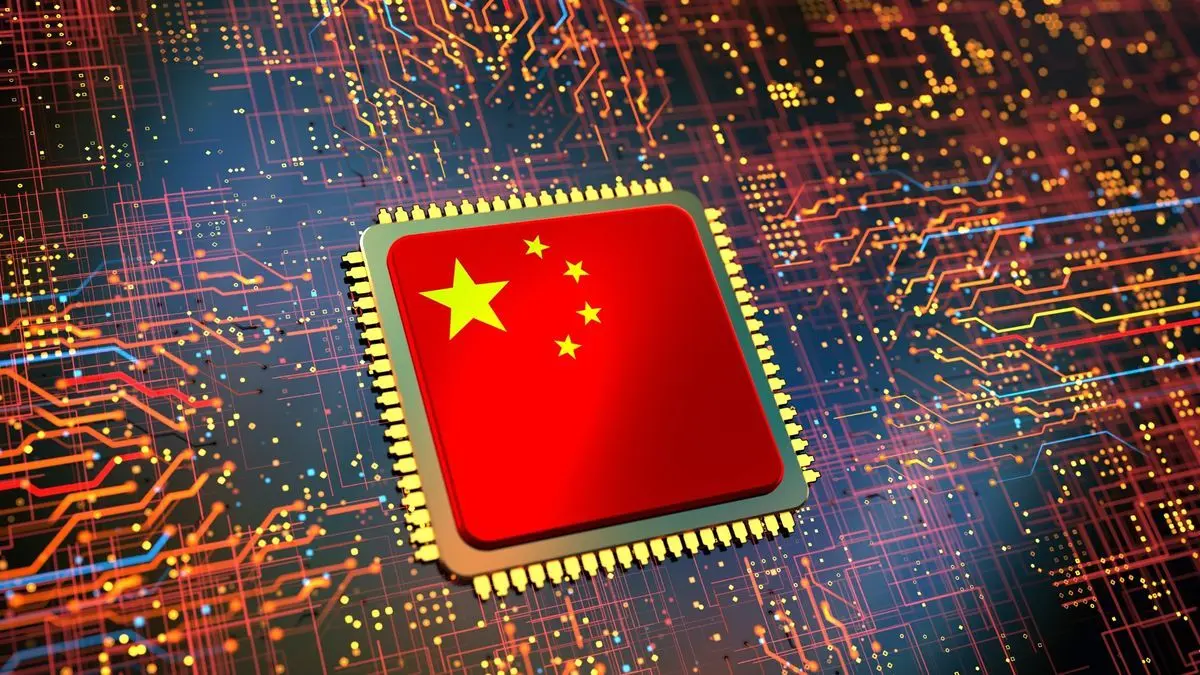
The most striking aspect of the blueprint is its requirement for domestic sourcing: at least 80% of the underlying technology, including AI chips, must come from local suppliers such as Huawei Technologies
1
2
. This domestic sourcing requirement effectively locks out Nvidia and AMD accelerators from the national grid of AI data centers, marking a deliberate effort to reduce reliance on foreign technology3
5
. The move reflects the same sovereignty logic now sweeping the West, where Europe and Britain are scrambling to cut reliance on U.S. clouds, only inverted3
.
Source: Tom's Hardware
Huawei's Ascend chipsets have demonstrated significant advancements, positioning them as a viable alternative to Nvidia's semiconductor products
5
. The company has outlined plans to launch a new AI chip annually over the next three years, with each iteration expected to offer double the computing power of its predecessor5
. This timing reflects growing Chinese confidence in homegrown technology, particularly after nine domestic AI chips from Huawei, Alibaba, Shanghai Biren, and Moore Threads cleared a domestic security review in May, opening them to sensitive sectors3
.Domestic Chip Production Capacity Threatens to Derail Ambitious Timeline
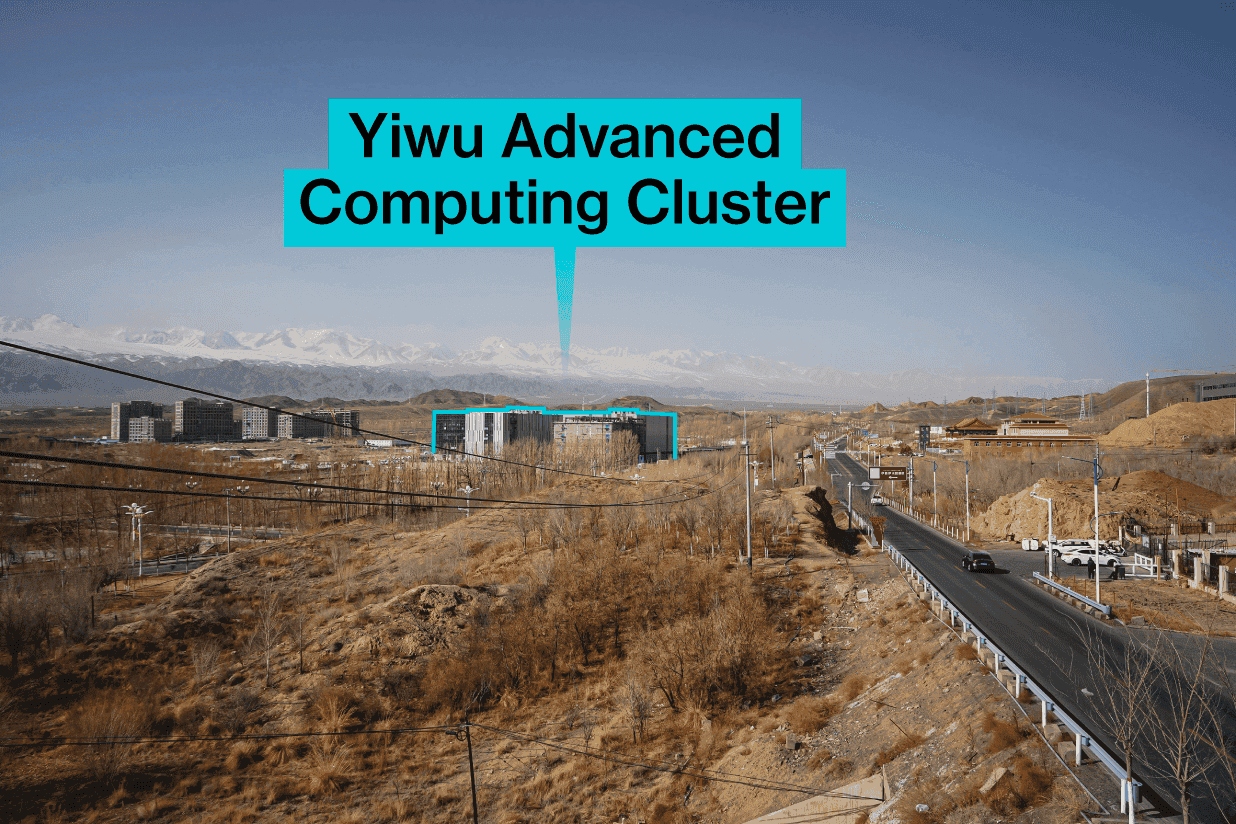
While funding the build-out appears manageable, filling the facilities with domestic accelerators presents a fundamentally different challenge. The 80% domestic sourcing requirement means China will be capped by whatever amount of chips SMIC can physically produce
1
. The foundry's most advanced stable node remains its N+2 process, roughly equivalent to 7nm, which is currently running above 93% utilization, leaving little headroom as every government-certified Chinese chipmaker competes for the same wafer slots1
.Another major chokepoint is high-bandwidth memory. Highly limited domestic HBM supply constrains how many Ascend-class accelerators Huawei can assemble
1
. Huawei alone shipped around 812,000 chips last year and projects some $12 billion in processor revenue for 2026, a pace that its own AI supply chain has struggled to sustain1
. It's estimated that China's domestic suppliers will cover only around 76% of all Chinese AI chip demand by 2030, even as that market grows toward $67 billion1
.Related Stories


China's AI Capabilities Face Reality Check Despite Industry Optimism
China's own industry has questioned whether domestic hardware can keep pace with the ambitious rollout. SMIC co-CEO Zhao Haijun has cautioned that the rush to add capacity risks leaving data centers idle, comparing it to building highways ahead of the traffic
1
. Chinese chip executives have separately conceded the country trails the leading edge in AI data center silicon by five to 10 years1
. When DeepSeek was steered toward Huawei hardware for model training, it eventually reverted to Nvidia hardware, lending credence to the idea that domestic parts still struggle with the heaviest training workloads, even where they suffice for inference1
.Beijing has massively tightened its restrictions on foreign silicon through a series of new controls. Last August, Beijing introduced a requirement that data centers source at least 50% of chips locally, and by November, state-funded projects were barred from foreign accelerators entirely, with builds less than 30% complete reportedly told to strip out Nvidia, AMD, and Intel parts
1
. These semiconductor restrictions have shaped China's strategic pivot toward AI self-reliance.
Source: ET
Context and Scale Reveal Different Strategic Calculus
The $295 billion figure, while substantial, is spread over five years and appears modest compared to Western spending. U.S. firms alone, led by Meta and Microsoft, are setting aside roughly $725 billion for AI this year
3
. Meta has a planned capital expenditure spend of as much as $145 billion for this year alone, while Alphabet has set aside up to $190 billion4
. However, the Chinese government spend doesn't account for private AI investment in China, which amounted to around $12.4 billion in 20254
. Chinese AI darling DeepSeek is reportedly nearing a $7.4 billion raise backed by the likes of Tencent, while Alibaba led a $293 million funding round into ShengShu Technology4
.China's core AI industry, which boasts more than 6,200 companies, was valued at nearly $174 billion in 2025, according to a government statement from March
4
. International Data Corporation placed the Chinese AI market at some $63 billion at the end of 2025, with estimates expecting it to cross $200 billion by 20294
. The point is less the raw sum than the coordination: a state marshalling debt, land, power, and chips behind a single national grid3
. "Elevating it to a national strategy ensures policy alignment and capital mobilisation," said Charlie Dai, a principal analyst at Forrester3
. The plan remains in early discussions and details could change, but the direction signals that the world's two largest economies are each trying to wall off their own AI supply chains, and the era of a single global stack is ending3
.References
Summarized by

Navi
[3]
[4]
Related Stories
Recent Highlights



Recent Highlights
Today's Top Stories






Don’t drown in AI news. We cut through the noise - filtering, ranking and summarizing the most important AI news, breakthroughs and research daily. Follow topics that matter to you and stay ahead.


