12 Sources
[1]
Bitcoin trader recovers $400,000 using Claude AI after losing wallet password 11 years ago -- bot tried 3.5 trillion passwords before decrypting an old wallet backup
A Bitcoin holder who changed their wallet password while 'stoned' and then forgot it was finally able to recover their wallet with the help of Claude. According to X user cprkrn, they'd been trying to recover their wallet for more than 11 years. Still, they didn't give up because that wallet contained 5 BTC; this may not sound much, but it has a value of almost $400,000. After finding a mnemonic that actually turned out to be their old password a few weeks ago, the user dumped their entire college computer files in Claude in a last-gasp effort. The bot uncovered an old backup wallet file that it successfully decrypted, while also uncovering a bug in the password configuration that was preventing recovery up to that point. Cryptocurrency wallets during their early years were completely different beasts. Mnemonic seed phrases back then generated the HD key tree, but wallets often mixed them with non-HD and imported keys. Those cannot be recovered by the seed phrase and are stored in a wallet file that requires a password. This is what happened to cprkrn -- they changed the password to the wallet file that contained some specific keys while they were stoned and then completely forgot what password they used. This meant that the Bitcoins tied to those keys were completely inaccessible, and they've been trying to find their way back in since then. It seems that the user already had some candidate passwords and multiple wallets stored on their PC. They'd been trying to brute-force their way into the locked file with btcrecover, an open-source Bitcoin wallet recovery tool, but to no success. Their luck changed for the better when they found an old mnemonic seed phrase written in an old college notebook. The HD addresses recovered by the seed phrase matched those of a specific file on their computer, confirming that it was the wallet that held the 5 BTC, but it remained encrypted. Out of frustration, cprkrn then dumped their whole college computer into Claude. This was when the AI discovered an older backup file of the wallet from December 2019 hidden in cprkrn's data. Claude also discovered an issue where the shared key and passwords that btcrecover was trying weren't combined properly. With the bug ironed out and an older wallet predating the password change, Claude successfully ran btcrecover and was able to decrypt the private keys, allowing cprkrn to transfer the five "lost" BTC to their current wallet. This is a happy ending for one user who forgot their wallet password, giving them a massive windfall because of Bitcoin's massive increase in value during the past few years. And while Anthropic's Claude did not magically guess the right set of characters to unlock the file that held the private keys, it fixed one critical issue that cprkrn missed out on, allowing him to finally regain his crypto. Before AI LLMs became popular, researchers spent at least half a year cracking open a Bitcoin wallet with a forgotten 20-character password. It was well worth the effort, though, as it contained an estimated $1.6 million in BTC back in 2024. Unfortunately, we cannot say the same thing for this poor guy who lost $780 million in Bitcoin after a 2025 court ruling prevented him from attempting to rummage through the local dump after his laptop with 8,000 BTC was discarded in the trash. Follow Tom's Hardware on Google News, or add us as a preferred source, to get our latest news, analysis, & reviews in your feeds.
[2]
Man who lost Bitcoin wallet password while high recovers $400,000 using Claude AI after 11-year lockout
Serving tech enthusiasts for over 25 years. TechSpot means tech analysis and advice you can trust. WTF?! It's quite rare that we hear positive stories about AI, but at least one person is thankful for the proliferation of LLMs. A Bitcoin owner who forgot their wallet password 11 years ago just used Claude AI to access their cryptocurrency - all $400,000 worth. An X user with the handle cprkrn writes that he was locked out of his wallet over 11 years ago because he got stoned, changed his password, and forgot it. A few weeks ago, cprkrn found an old mnemonic that turned out to be for his previous password. Disheartened, he turned to AI for help, dumping his entire college computer into Claude. Anthropic's AI discovered that an old wallet file from December 2019 was the missing piece. It reportedly contained the private keys needed to access the Blockchain.com wallet holding 5 BTC, bought back in 2015 when Bitcoin was around $250. Those coins had been sitting untouched since April of that year before finally being moved this week. The user said he had been trying to brute-force his way back in using btcrecover, an open-source Bitcoin wallet recovery tool, and had tested an absurd number of combinations. Claude's own summary of the effort put the figure at 3.5 trillion password attempts, none of which were enough on their own. The breakthrough came after the old mnemonic matched addresses linked to one particular wallet file. Claude then found an older backup and spotted a bug in the password configuration that meant the shared key and candidate passwords were not being combined properly. Once that was corrected, the wallet could be decrypted. The ecstatic X post celebrating the recovery thanked Anthropic and CEO Dario Amodei, with cprkrn (maybe) joking that he would name his kid after the latter. Given that the alternative was leaving nearly $400,000 trapped forever because of a password created while high, the reaction seems understandable. The story is one of those rare AI anecdotes that does not involve job losses, hallucinations, copyright lawsuits, or an agent deleting a production database. It is also a reminder that plenty of early Bitcoin fortunes remain out of reach because humans are very good at losing passwords, hard drives, and notebooks. Five Bitcoin is a lot of money, but it pales in comparison to the 8,000 BTC, worth around $647 million, that James Howells famously lost when his hard drive was accidentally sent to a landfill filled with 1.4 million tons of waste. A court prevented him from searching the location last year, and he's still trying to buy the site.
[3]
Man Says He Used AI to Unlock Old Bitcoin Wallet Worth $400K
A pseudonymous user on X claims he regained access to 5 bitcoin he had lost for more than a decade after forgetting the passwordâ€"and it was Anthropic’s Claude chatbot that put all the pieces of the puzzle together for him. After feeding the model files from an old college laptop and attempting to guess trillions of passwords with the assistance of a few different tools, Claude delivered the final breakthrough that unlocked the wallet. According to an interview with MTS, the man who posts on X as @cprkrn bought the 5 bitcoin from someone via the now-defunct trading platform LocalBitcoins while sitting in a Starbucks in 2015. Each coin cost about $250 at the time. He stored them in a Blockchain.com wallet and backed up the account with a mnemonic phrase. Soon afterward, while stoned, he changed the password to “lol420fuckthePOLICE!*:)†and promptly forgot it. He remembered two of the three password components but could never locate the third. https://x.com/cprkrn/status/2054586810475364536 For the next 11 years, the bitcoin sat untouched. The user tried everything he could think of to recover the funds. He brute-forced roughly 3.5 trillion password combinations using the btcrecover tool on rented GPU power that cost him around $15. He drove to his parents’ house, dug through old college notebooks, and typed in every scrap of text that looked like a password or seed phrase. A few weeks before the final breakthrough, he rediscovered the original mnemonic phrase in one of those notebooks, but it still did not work with the current wallet file. In April, he decided on one last strategy. He uploaded the entire contents of his old college computer to Claude. Over the next eight weeks, the AI scanned the files and located an encrypted wallet backup that dated back to December 2019. That older backup decrypted cleanly with the rediscovered mnemonic phrase and revealed the private keys. Public blockchain records show a user transferred 5 Bitcoin out of the dormant wallet on Wednesday. At the time, they were worth just under $400,000, with bitcoin trading near $79,000. He immediately moved the funds to a new address. Although the viral X post by @cprkrn described the event as Claude having “cracked†the wallet, the process involved no breach of Bitcoin’s encryption. The AI simply matched two pieces of information the user already had: the old password and an earlier wallet file where that password would still work. The private keys had never changed, and no cryptography was broken. The recovery was a matter of locating the right backup file on a cluttered hard drive. (The user uploaded a summary of the Claude chat for those who are curious.) Even so, artificial intelligence is increasingly viewed as a useful tool in hacking operations aimed at blockchain-based smart contracts and decentralized finance protocols, as indicated by Anthropic’s own internal testing late last year. These real-world security incidents, whether executed by North Korean agents or assisted by AI, have grown into a major problem for the industry. April set a new record, with 29 separate hacks totaling $651 million according to tracking by DefiLlama and Certik. Two of the largest attacks, on Drift Protocol and Kelp DAO, drained a combined $579 million. The Drift exploit followed a six-month social engineering campaign by alleged North Korean actors that began with in-person meetings at a crypto conference in the fall of 2025 and ended with $285 million stolen in 12 minutes. A report from blockchain analysis firm TRM Labs found that North Korean-linked groups accounted for 76% of all crypto value stolen from January through April of this year and have extracted more than $6 billion since 2017. Responses to these hacks have also repeatedly exposed centralized decision-making inside these supposedly decentralized crypto systems. After the Kelp DAO attack, Arbitrum’s 12-member Security Council used emergency powers to freeze more than 30,000 ether, worth about $71 million, that the attackers had moved. In a separate case, stablecoin issuer Tether froze $344 million in USDT on the Tron blockchain after U.S. authorities flagged the wallets for ties to sanctioned Iranian entities. These moves relied on small groups of insiders or direct cooperation with regulators, which illustrates how quickly centralized controls reappear when something goes wrong and large sums are at stake. It appears that the user who recovered the 5 Bitcoin intends to hold on to at least a portion of his newly recovered funds. In one X post, he wrote, “Cheers y’all. See you @ $250k.†He added that this was the best day of his life, but he never wants to go viral again and has no interest in building a platform around the story.
[4]
Claude AI unlocks 11-year-old forgotten Bitcoin wallet worth $400K
An X user says an AI chatbot helped recover nearly $400,000 worth of forgotten Bitcoin from an old college-era wallet, turning a decade-long crypto nightmare into one of the internet's strangest comeback stories this week. The user, who goes by "Cprkrn" on X, claimed they regained access to 5 Bitcoin that had been locked away for more than 11 years. The coins were reportedly bought when Bitcoin traded near $250. Today, that stash would be worth roughly $398,000. The post quickly spread through crypto circles after the user credited Anthropic's Claude AI assistant for helping uncover the missing piece.
[5]
Claude AI helped a Bitcoin owner recover nearly $400,000 in lost crypto -- after spotting a forgotten wallet backup hidden for more than a decade
Anthropic's AI untangled a decade of forgotten files and passwords * A Bitcoin holder says Anthropic's Claude AI helped recover nearly $400,000 in lost Bitcoin * The wallet had been locked for more than a decade * Claude identified an older wallet backup file hidden among years of forgotten computer files For more than a decade, a Bitcoin wallet sat untouched on an old computer while its owner assumed the money inside was effectively gone forever. This week, that same wallet suddenly became worth nearly $400,000 again after its owner claimed Anthropic's Claude AI assistant helped recover access to the funds. The story spread rapidly after the owner described using Claude to sift through files from an old college computer and uncover the missing pieces needed to unlock 5 Bitcoin that had been inaccessible for years. You can view the users tweet, but be aware that his language is somewhat explicit. The owner originally bought Bitcoin when the cryptocurrency traded around $250 per coin. Later, during college, he changed the wallet password while high and promptly lost track of it. Years of recovery attempts followed, including reportedly trying trillions of password combinations without success. After years of failure, the user said he uploaded files from his old computer into Claude as a final, desperate attempt. Instead of somehow "hacking" Bitcoin, the chatbot reportedly identified an older wallet backup file that existed before the password change happened. Combined with an old mnemonic phrase the user had recently rediscovered, the recovered wallet file finally allowed access to the Bitcoin again. AI archaeology The story sounds ridiculous because it is ridiculous. But it also points toward something increasingly important about how AI systems may end up fitting into ordinary digital life. Claude did not break Bitcoin encryption, despite what some online are claiming. Instead, the recovery worked because the user still possessed fragments of access information across old files and forgotten backups. Claude simply helped organize the chaos more effectively. AI models are good at that kind of navigation through scattered information. Most people have ancient hard drives, cloud accounts, USB sticks, or forgotten laptops containing years of disconnected information. Usually, those archives are useless clutter. Occasionally, they contain something extremely important that the owner no longer remembers how to piece together. Claude could sift through the data and never got bored. Enticing tales The story and its happy ending are a boon for AI companies like Anthropic as they try to entice people into loyally using their models. Stories like this help reinforce the idea that conversational AI can function as a practical reasoning assistant capable of helping untangle real-world problems. The lucky Bitcoin owner leaned into that idea himself by joking that he planned to name his future child after Anthropic CEO Dario Amodei. And it is true that when so many people can relate to carrying Byzantine and messy digital histories, an efficient inspection tool is very appealing. AI may become more commonly used because it helps humans navigate their overwhelming digital clutter, not because it can replicate human thinking. Follow TechRadar on Google News and add us as a preferred source to get our expert news, reviews, and opinion in your feeds.
[6]
Bitcoin Owner Claims Claude AI Cracked Lost Wallet Password, Netting $400K in BTC - Decrypt
Recovery experts said the screenshots appear to show AI-assisted file analysis rather than Claude "cracking" Bitcoin encryption. An X thread claiming Anthropic's Claude AI helped recover a long-lost Bitcoin wallet worth roughly $400,000 went viral on Wednesday, drawing millions of views. The posts came from a pseudonymous X user "Cprkrn" who said Claude helped unlock a Bitcoin wallet containing 5 BTC that had purportedly been inaccessible for nearly nine years. "Holy fucking shit OMG Claude just cracked this shit," Cprkrn wrote, tagging Anthropic and CEO Dario Amodei. Cprkrn also shared a post from August 2023, suggesting that the wallet had been "locked" since 2015. Blockchain data indeed shows that the Bitcoin wallet beginning in "14VJyS" had not moved any funds since 2015 -- until today. The thread generated more than 6 million views as users speculated about whether large language models could help with recovery tasks involving encrypted files and forgotten passwords. While the screenshots shared on X did not show evidence that Claude bypassed or broke Bitcoin's underlying cryptography, the images appeared to show the AI assisting with analysis of encrypted wallet files and password-recovery workflows. According to the posts, Cprkrn attempted to recover the wallet using tools including btcrecover and Hashcat, software commonly used to test password combinations against encrypted data, but with no success. Cprkrn said he finally uploaded files from an old college computer into Claude, which he claimed helped identify a file associated with a mnemonic phrase found in a notebook. "It found an OLD wallet file that the pneumonic successfully decrypted," they wrote. "Locked out 11+ years because I got stoned and changed the password." "Ended up being the most obvious opening ever lol," Cprkrn added. However, wallet recovery experts debate how much of the process could reasonably be attributed to Claude itself versus the wallet file, mnemonic phrase, and historical data needed to reconstruct the password that the user already possessed. "Claude's likely role was sorting through large amounts of historical data and identifying clues tied to older wallet credentials or password formats," one expert told Decrypt. "This isn't so much a password cracking thing as it is a forensics sorting." The claims come as interest in Claude's ability to handle complex analysis has intensified following the launch of Anthropic's Claude Mythos model last month, which the company says can identify software vulnerabilities and autonomously complete advanced security tasks. The claims also drew skepticism on Reddit, where some users argued the viral posts overstated Claude's role in the recovery process. "Claude didn't do anything other than search his files," one user posted. "The headline is vague enough to make the more gullible among us to think Claude did something groundbreaking." "And now you understand the average end user's love of AI," another said. "It isn't revolutionary; it just reinforces their pre-existing laziness."
[7]
Owner of $400,000 in bitcoin was locked out of their account a decade ago and they just used Claude to get back in
They technically could have saved money by not cashing out earlier. You may think getting locked out of your account because you've forgotten the password is annoying, but have you ever gotten locked out and lost almost half a million dollars in the process? That's what happened to X user @cprkrn, when they stored five bitcoin ($402k at the time of writing) in an account in 2015 and forgot how to get back in. As reported by Tom's Hardware, cprkrn used Anthropic's AI model, Claude, to get access again. After using 'like 7 trillion passwords ', they found a password that happened to be the one before the current one. Thinking they had no way back in, they reportedly dumped their college computer into Claude, which found an old wallet file that, once decrypted, got them into their account. This computer had a mnemonic device that they seemingly didn't spot, and Claude put that together with the rest of their account details to get into the account. The LLM didn't hack into the account, or anything so elaborate, it just found the pieces to get into the account, lost in an old computer. If you're wondering how and why they lost their password for an account that is so valuable, they were apparently "Locked out 11+ years because I got stoned and changed the password." There's an ironic silver lining here, in that we don't know if cprkm would have held onto the bitcoin so long if they hadn't lost access. According to the account history, 5 bitcoin were purchased on April Fools' Day in 2015. By this point, the cryptocurrency was worth around $245. Now, one bitcoin fetches $60,000. That's a fair jump in value, though it is down from its peak of $90,000 in October, 2025. Still, cprkrn would have been aware that they had somewhere close to half a million dollars in a locked account for years now. They report that dumping their computer into Claude was their 'last ditch effort' to get the account back. You may be wondering what they plan on doing with all that cash now that they finally have it back. Their answer? Asking electronic artist and DJ Deadmau5 to play at their wedding. I suppose there are technically worse ways to spend the money.
[8]
The Claude Bitcoin recovery story has a dangerous lesson for crypto users
Can AI retrieve lost Bitcoin, or do users risk losing it forever? A post on X claimed that Anthropic's Claude AI helped a user regain access to about five Bitcoin (BTC). The story led many crypto users to wonder whether AI could help recover funds stuck in old wallets and forgotten devices. AI can make wallet recovery feel easier than before. It can scan old files, connect clues from backups and help users make sense of technical steps that once required specialist knowledge. But that convenience comes with a serious risk. The very details needed to restore access, like wallet files, seed phrases, password hints or recovery fragments, are essentially the keys to the funds themselves. Sharing them with any third party, whether an AI chatbot, online service or self-proclaimed expert, may instantly turn a promising recovery attempt into irreversible theft. Social media buzz and news coverage suggest that a user regained access to roughly five BTC that had been out of reach since around 2015. The individual reportedly gave Claude old wallet backups, scattered recovery notes and password-related memories. The AI then helped organize the material, examine files and outline recovery steps. Based on what has been reported, Claude did not crack Bitcoin's cryptography. It appears to have acted more like a smart assistant, helping structure information, recommend tools and troubleshoot the process, while traditional password recovery or brute-force methods likely handled the intensive computations. This explains why the example gained traction. It showed how AI could make a complex wallet recovery process feel less intimidating for regular crypto users. Did you know? Millions of Bitcoin may be lost forever because early users forgot passwords, misplaced seed phrases or threw away old hard drives. Stories of lost Bitcoin have long fascinated crypto enthusiasts. Early users often stored coins on old laptops, external drives or outdated software at a time when Bitcoin had little value. Many holders still wonder whether they have inaccessible wallets buried in storage. AI's perceived "magic" adds to the appeal. Headlines suggesting that a chatbot can recover large sums may create the illusion that complex wallet problems are now easy for non-experts to solve. This perception is risky. Viral stories often leave out the hard parts. After reading about one successful recovery, some users may try the same thing by uploading wallet files, seed phrases or password hints to an AI tool. That can be extremely risky. Once this information is shared, the user may lose control over who can access it and how it is handled. AI can lower the barrier for legitimate recovery attempts, but it also narrows the gap between getting help and permanently exposing funds. Caution and careful evaluation of the risks remain essential. Bitcoin's core cryptography remained completely untouched. No AI broke private keys, bypassed elliptic curve math or hacked the blockchain itself. Today's AI models are good at recognizing patterns, explaining concepts and making complex technical tasks feel less overwhelming. They can speed up troubleshooting and help users navigate confusing recovery processes. However, they cannot override or weaken the mathematical protections that secure Bitcoin wallets. Ultimately, successful recovery almost always depends on how much original information the owner still has, such as partial passwords, seed words, backup files or other metadata. Here is the fundamental issue: The exact details required to regain access are often the same details needed to steal the funds outright. A seed phrase is not just a helpful reminder. It represents full ownership. Even fragments of information can be highly risky when combined, including: Most people underestimate how little data sophisticated attackers may need to crack a wallet. In the rush to recover funds, users may accidentally feed years of personal digital history into AI tools, unaware that buried files, metadata or innocent-looking text snippets could contain the missing pieces. This creates a new crypto risk: exposing sensitive recovery data while seeking AI-powered help. Nearly all leading AI chatbots run on remote cloud servers. When users share information, it travels outside their control and into someone else's infrastructure. Even with strong privacy policies in place, crypto users must face an uncomfortable truth: Every upload creates new points of trust. Depending on the platform and settings, conversations may be stored temporarily, reviewed by staff for safety or training purposes or used to improve models. This does not necessarily mean AI companies are malicious. The deeper conflict is philosophical. Bitcoin self-custody was built to reduce reliance on third parties. The moment sensitive wallet details leave an air-gapped or fully offline environment, the attack surface expands. One careless action, such as pasting a complete seed phrase into a chatbot, can result in irreversible loss of funds. In short, AI can be a powerful recovery ally, but only if users maintain strict boundaries around what they share. Did you know? Early Bitcoin wallets worked very differently from modern seed phrase wallets. Some older setups relied on wallet.dat files, imported keys and manually encrypted backups, making recovery attempts far more complicated than many users realize. Wallets from Bitcoin's early days were often less user-friendly and less secure than modern solutions. Users from the 2010-2015 era frequently dealt with these challenges: Many of these older wallets were created before standardized seed phrases became common, so restoring them often requires a mix of files, passwords and specific legacy programs. This technical mess can make AI help feel especially attractive. However, it also raises the risk of accidentally leaking critical details while digging through old archives. An old hard drive or USB stick can hold far more compromising material than most people realize. This could include browser history, saved emails, plaintext notes, password managers, old exchange logins or cloud authentication tokens. Feeding entire archives into online tools can expose much more than the wallet itself. The recent Claude story may encourage risky shortcuts if users draw the wrong conclusions. Common risks include: Did you know? Many crypto recovery experts use air-gapped computers that are disconnected from the internet during wallet recovery attempts. This reduces the risk of malware stealing sensitive keys during forensic recovery work. AI can still provide real value, but only with the right precautions. It should be used as a guide for understanding the process, not as a place to upload sensitive recovery data. A safer recovery approach starts with clear boundaries:
[9]
AI helped a man to recover a large sum of money
A Bitcoin holder is claiming that he recovered around $400,000 in BTC from a wallet that had been locked for more than a decade. He had help from Anthropic's AI chatbot Claude, as reported by Dexerto. A user called "Cprkrn" shared his story on X, saying Claude helped him regain access to 5 Bitcoin after years of failed attempts. At the time of writing, Bitcoin is trading at around $79,600, so 5 BTC is worth roughly $398,000. The wallet had been locked since the user's college days. He originally bought the crypto when it was worth around $250 per coin. And eventually he lost access after changing the wallet's password while... being high. And what was the right password after all these years? "lol420fuckthePOLICE!*:)", as reported by the user. The password was recovered, after he uploaded files from his old college computer into Claude. The AI helped dig through the old files and identify an older wallet.dat file, that appeared to predate the password change. The user also reportedly had an old mnemonic phrase, which helped unlock the wallet once the correct file was found. Many are now pointing out that Claude did not break Bitcoin's security, but instead helped the user sort through old files, understand what had gone wrong, and recover access using valid wallet data.
[10]
How to Recover a Lost Bitcoin Wallet Using AI: The Claude Method That Just Went Viral
AI-powered digital forensics may transform future cryptocurrency recovery efforts involving fragmented historical data and legacy storage systems. Artificial intelligence and cryptocurrency are two industries that generate instant hype. When both collide in a single headline, exaggeration spreads quickly. That is exactly what happened after viral social media posts claimed Anthropic's Claude AI had 'cracked' a Bitcoin wallet locked for more than a decade. Reality, however, is far more nuanced and arguably more important than the viral narrative suggests. Claude did not break Bitcoin's cryptographic security, bypass blockchain protections, or recreate missing private keys. Bitcoin's encryption remains intact. Instead, the incident appears to be a sophisticated example of AI-assisted digital forensics. Public reports suggest the owner still possessed fragmented recovery data, including archived wallet files and an older mnemonic phrase. Claude's role was identifying the correct historical wallet backup buried inside years of digital clutter and helping navigate the technical recovery process. Viral Bitcoin Recovery Story The incident gained widespread attention after posts on X from a pseudonymous user known as '@cprkrn.' According to the posts, the individual had been locked out of a Bitcoin wallet containing roughly 5 BTC (when it traded near $250 a coin) since around 2014 or 2015. At current Bitcoin valuations, the holdings were worth approximately $400,000 to $500,000. Blockchain activity reportedly showed that the wallet had remained dormant since 2015 before funds were finally moved in May 2026. The owner claimed the problem began after changing the wallet password while in college and subsequently forgetting it. Over the following decade, multiple recovery attempts reportedly failed. Those attempts included brute force password testing, commercial recovery services, Hashcat workflows, and btcrecover configurations. The breakthrough reportedly came after the user uploaded archived files from an old college computer into Claude AI. According to the available evidence, Claude identified an older wallet.dat file that predated the forgotten password change. The user had also rediscovered an older mnemonic phrase that worked with this historical backup. That combination appears to have unlocked access to the wallet. Also, this means he wasn't entirely without leads. He still had his original mnemonic phrase, a memorable, if colorful, string of words he'd written down in a notebook. The problem was that when he tried it on his current wallet file, it simply didn't work. The mnemonic and the wallet no longer matched. Why? He had no idea. He'd essentially given up. Until Bitcoin crossed $100,000, and the math suddenly made one more attempt feel very worth it. Bitcoin Encryption Was Never Broken Most of the online conversation surrounding the incident overstated one critical fact. Bitcoin's cryptographic security was not compromised. The Bitcoin network relies on extremely robust cryptographic principles, including SHA-256 hashing and elliptic curve cryptography. These systems remain computationally infeasible to crack using current technology, including modern AI systems. Claude did not decrypt Bitcoin itself. The AI worked with data the owner already possessed: * historical wallet backups * mnemonic phrases * archived computer files * password clues * wallet metadata In other words, the recovery was possible because critical pieces of information still existed somewhere within the owner's old digital records. Claude's role was not to generate missing credentials, but to analyze scattered data, recognize potentially relevant wallet files, and help connect information that had remained overlooked for years. What Claude Actually Did -- And What It Didn't Sifting through years of digital clutter, what Claude actually did was closer to the work of a brilliant digital forensic analyst. It: * Searched years of unstructured, messy old files and identified a relevant wallet backup * Understood the architecture of decade-old legacy wallet software (P2PKH format, pre-2015) * Diagnosed a logical bug in an open-source recovery tool that had been silently defeating every attempt * Fixed the code, ran it correctly, and extracted the keys The culprit was a bug in btcrecover itself. The tool was concatenating a shared encryption key with the password in the wrong order during decryption -- a subtle logic error that had been silently causing every recovery attempt to fail. Claude spotted the bug, corrected the decryption logic, ran the updated process, and extracted the private keys in Wallet Import Format (WIF). The keys matched the target address exactly. Claude's output, which @cprkrn screenshotted and posted to X, delivered the message in emphatic fashion: "PRIVATE KEYS DECRYPTED! WE GOT IT!!! THE 5 BTC IS YOURS!" The wallet app confirmed it -- a legacy P2PKH address with a full 5 BTC balance, untouched since April 1, 2015, now ready to sweep. He'd gotten his money back. So the AI appears to have helped locate and interpret the correct wallet file among thousands of archived files. AI as Digital Forensics Tool Digital forensics, in its traditional form, is a discipline practiced by trained specialists. Law enforcement uses it to reconstruct deleted files, identify timeline anomalies, and extract evidence from damaged storage media. Corporate investigators use it to trace data exfiltration or document tampering. The work requires intimate knowledge of file systems, metadata structures, hex editors, and software archaeology, meaning the ability to understand programs and formats that no longer have active developers or living documentation. What Claude did in the cprkrn recovery maps almost exactly onto the methods of a digital forensics investigation. That said, modern large language models are increasingly capable of: * analyzing unstructured archives * identifying obscure file formats * reconstructing technical workflows * debugging software tools * correlating fragmented evidence * reasoning through incomplete datasets The forensics framing also helps explain what AI is genuinely good at here versus where it has limits. * AI excels at pattern recognition across large volumes of unstructured data, reading and reasoning about legacy code, cross-referencing file metadata with known software behaviors, and translating between human-readable descriptions and technical execution. * It does not have magical decryption powers. It cannot guess a password with no starting information. * It cannot break modern cryptographic primitives. The intelligence is in the analysis, not in raw computation. This distinction matters because it sets realistic expectations for what AI-assisted recovery can actually accomplish. If you have the encrypted wallet file, a plausible password space rooted in real memories, and access to old backups and files, AI can dramatically compress the time and expertise needed to work through the problem. If you have genuinely lost all credentials with no recoverable context, no AI changes that equation, because the underlying mathematics of Bitcoin private keys are designed to be computationally irreversible. Beyond cryptocurrency, the implications extend to any domain where valuable data is locked in legacy formats on old hardware: * Medical records on obsolete systems. * Business archives in discontinued software. * Personal archives on formats that no modern tool reads cleanly. AI that can perform competent software archaeology and forensic file analysis represents a genuine shift in who can access their own past data, and at what cost. Growing Problem of Lost Bitcoin Lost Bitcoin remains one of the largest unresolved issues in the cryptocurrency industry. Researchers and blockchain analysts estimate that millions of Bitcoin may be permanently inaccessible due to: * forgotten passwords * lost seed phrases * damaged hardware * discarded hard drives * corrupted wallet files * inaccessible backups Some estimates place permanently lost Bitcoin holdings between 1.5 to 2 million. Most of those assets are likely unrecoverable because no usable recovery data exists anymore. If private keys disappear entirely, Bitcoin's design intentionally prevents third-party recovery. However, many lost wallets exist in a middle ground where fragments still survive: * old hard drives * legacy wallet backups * password hints * archived cloud storage * transaction histories * software remnants AI systems may become increasingly valuable in these partial recovery situations. That possibility is why the Claude incident attracted so much attention across the crypto industry. Security Concerns Around Cloud AI The cprkrn story is inspiring if you are the one recovering $400,000. It is unsettling if you are a security researcher. The same capability that allowed Claude to sift through a decade of personal files, identify a legacy wallet backup, and reconstruct access to a cryptocurrency account is, viewed from another angle, a precise description of what a sophisticated attacker would want to do with access to your data. The moment you upload an encrypted wallet file, a folder of old documents, and a collection of personal notes into any cloud-based AI system, you have moved deeply sensitive material onto infrastructure you do not control, operated by a company whose data handling, retention policies, and breach history you are largely trusting on faith. For most everyday tasks, that tradeoff is reasonable. For the specific task of recovering a wallet containing hundreds of thousands of dollars, it deserves serious thought before you hit upload. The practical security concerns in this workflow are several and worth naming clearly: * Data retention is not guaranteed to be zero: Most AI providers retain conversation data for some period, whether for safety review, model improvement, or abuse monitoring. Uploading an encrypted wallet file and a set of password hints to a cloud service means that combination may exist on a server you do not control for an unknown period of time. * Prompt injection is a real attack surface: If your old files contain any content crafted to manipulate AI behavior, such as instructions embedded in documents, code comments, or even image metadata, a malicious actor who anticipated you using AI for recovery could theoretically influence the session. This is a largely theoretical risk today but not a zero one. * The session itself is a liability window: The conversation in which you describe your password patterns, share your mnemonic phrase, upload your wallet file, and receive your decrypted private keys is, at that moment, the most sensitive document in your financial life. If your account is compromised, if the session is logged somewhere accessible, or if you are on a shared or monitored network, every piece of that recovery is exposed. * Private key handling after recovery is a separate risk: Claude returning your private keys in a chat window means they now exist as plaintext in a conversation log on a cloud server. Immediately sweeping the funds to a new, securely generated wallet is not optional hygiene. It is essential. * Local model alternatives exist and should be considered: Tools like Ollama allow capable open-source models to run entirely on your own hardware with no data leaving your machine. For a recovery task of this sensitivity, the performance tradeoff relative to a frontier model is almost certainly worth accepting. None of this is an argument against using AI for wallet recovery. It is an argument for approaching it the way you would any high-stakes security operation: with a clear understanding of where your data goes, how long it stays there, and what your exposure looks like at every step of the process. The technology that makes this kind of recovery newly accessible is the same technology that makes careless use of it genuinely dangerous. cprkrn got his money back. Whether his private keys remain secure in the months ahead depends entirely on steps taken after the AI did its work, and that part no headline will cover.
[11]
Claude AI Reportedly Helps Unlock 11-Year-Old Bitcoin Wallet
Public blockchain records reportedly showed no activity for years. Then, on May 13, the wallet became active again. In the final attempt, the user said he uploaded files from an old college computer to Claude. He claimed the AI scanned historical wallet backups and found an older wallet file. That older file, he said, could still be decrypted with the recovered mnemonic phrase. He added that the process led to the same Bitcoin private keys that controlled the funds. The user also said the encryption password had changed, but the linked to the Bitcoin holdings had not changed. After unlocking the older backup, he regained access to the wallet.
[12]
Man locked out of Bitcoin wallet for 11 years says Claude helped him get back in
The viral story has sparked wider discussions around AI-assisted cybersecurity, password recovery, and the future of digital encryption. You may have heard about locked accounts with bitcoins, or a web series about a man who discovered the lost password of a crypto account containing bitcoins. What if I told you that this occurred in real life? A user claimed that Anthropic's AI chatbot Claude assisted in gaining access to a long-dormant Bitcoin wallet containing 5 Bitcoins, which had reportedly been inaccessible for more than eleven years. The claim surfaced via a post on X by a pseudonymous user identified as cprkm, who said he had been locked out of the wallet since around 2015 after changing the password and later forgetting it. As per publicly visible blockchain activity, the wallet had shown no movement for years before suddenly becoming active again on May 13. In a series of posts, the user explained how he discovered an old mnemonic recovery phrase linked to the wallet. However, the phrase alone was reportedly insufficient because the wallet password had been changed following the initial setup. In a final attempt, the user stated that he uploaded files from an old college computer to Claude. The AI assistant allegedly scanned through historical wallet backups and discovered an older wallet file that could still be decrypted with the recovered mnemonic phrase. That process reportedly resulted in the recovery of the same Bitcoin private keys that controlled the funds. The user then stated that while the encryption password for the wallet had changed, the private keys that were related to Bitcoin holdings were not changed. After successfully unlocking an older encrypted backup, access to funds was restored. This got a great deal of attention online. Millions of views sparked the discussions about AI assisted digital forensics, password recovery and cybersecurity. Many users praised the incident as an example of how advanced AI systems can help with reverse engineering and recovery tasks that would otherwise take humans a long time to complete. At the same time, the viral thread sparked questions about the future of encryption and cybersecurity. Some users questioned whether AI tools would eventually disprove presumptions about password-based security and hidden implementation details.
Share
Copy Link
A Bitcoin holder who forgot their wallet password while high in college has finally regained access to nearly $400,000 worth of cryptocurrency with help from Anthropic's Claude AI. After 11 years of failed attempts and 3.5 trillion password combinations, the AI discovered an old wallet backup file and identified a critical bug that had prevented recovery all along.
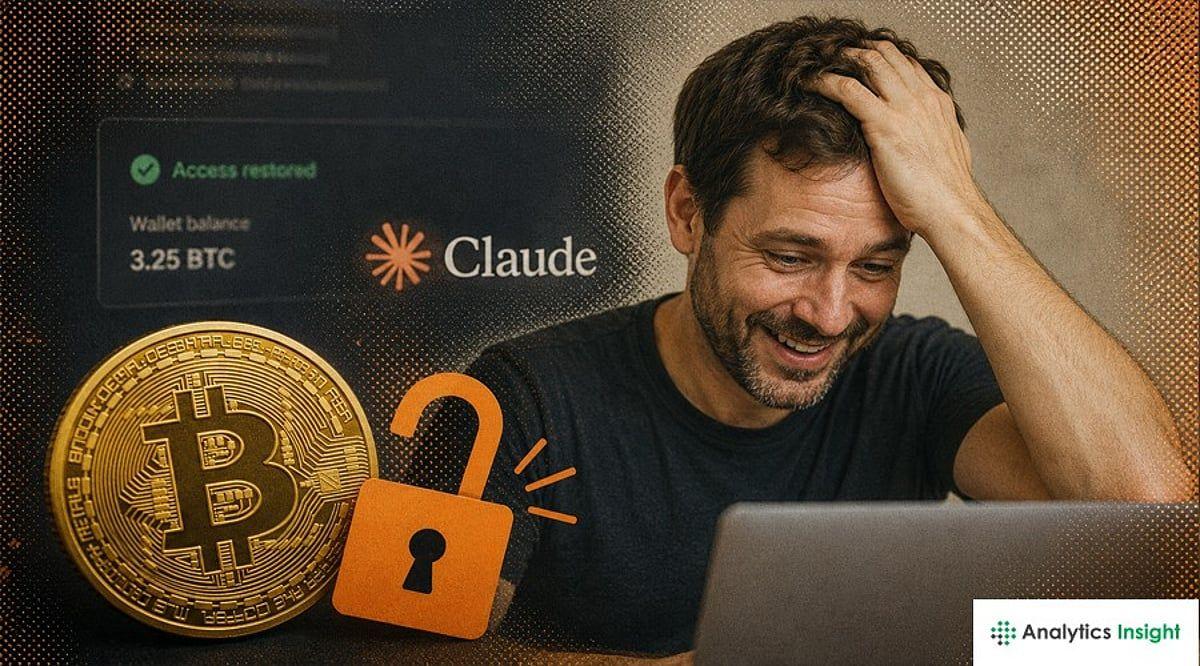
An X user known as cprkrn has successfully recovered access to a Bitcoin wallet containing 5 BTC—currently valued at nearly $400,000—after being locked out for more than 11 years. The breakthrough came when Anthropic's Claude AI identified a forgotten wallet backup file and uncovered a critical password configuration bug that had prevented recovery efforts for over a decade
1
.
Source: Analytics Insight
The Bitcoin holder originally purchased the cryptocurrency in 2015 through LocalBitcoins for approximately $250 per coin while sitting in a Starbucks
3
. Shortly after storing the coins in a Blockchain.com wallet, the user changed the password while stoned to "lol420fuckthePOLICE!*:)" and promptly forgot it3
. This seemingly minor mistake would lock away what would eventually become a small fortune as Bitcoin's value surged over the following years.The user spent over a decade trying to regain access to cryptocurrency using various methods. They attempted to brute-force their way back in using btcrecover, an open-source Bitcoin wallet recovery tool, testing an estimated 3.5 trillion password combinations on rented GPU power that cost around $15
2
3
. The user even drove to their parents' house to dig through old college notebooks, searching for any scrap of text that might be a password or mnemonic phrase3
.A few weeks before the final breakthrough, cprkrn rediscovered an old mnemonic phrase written in a college notebook. The mnemonic seed phrase matched addresses linked to a specific wallet file on their computer, confirming it held the lost 5 BTC, but the file remained encrypted and inaccessible
1
.Out of frustration, the user decided on one final strategy in April: uploading the entire contents of their old college computer to Claude AI
3
. Over eight weeks, the AI scanned through years of digital clutter and located an encrypted wallet backup dating back to December 20192
. This older backup, which predated the password change, proved to be the missing piece.
Source: Tom's Hardware
Crucially, Claude AI also identified a bug in the password configuration where the shared key and candidate passwords that btcrecover was attempting weren't being combined properly
1
. Once this issue was corrected and the older wallet backup was used with the rediscovered mnemonic, the decryption finally succeeded. Public blockchain records confirm that 5 Bitcoin were transferred out of the dormant wallet this week3
.Related Stories
While the viral X post described Claude AI as having "cracked" the wallet, the reality is more nuanced. The AI did not break Bitcoin's encryption or compromise blockchain security
3
. Instead, it functioned as an efficient organizational tool that helped navigate scattered information across forgotten files and backups. The private keys had never changed, and no cryptography was broken—Claude simply matched pieces of information the user already possessed3
.This distinction matters as AI increasingly intersects with cybersecurity and decentralized finance. According to TechRadar, the recovery demonstrates how conversational AI can function as a practical reasoning assistant capable of untangling real-world problems by sifting through digital clutter without getting bored
5
. Most people carry Byzantine digital histories across ancient hard drives, cloud accounts, and forgotten laptops—AI may become commonly used because it helps humans navigate this overwhelming mess.The successful recovery stands in stark contrast to other lost Bitcoin wallet password stories. Before AI language models became popular, researchers spent at least half a year cracking open a Bitcoin wallet with a forgotten 20-character password that contained an estimated $1.6 million in BTC
1
. Others haven't been as fortunate—James Howells famously lost 8,000 BTC, worth around $647 million, when his hard drive was accidentally sent to a landfill, and a court prevented him from searching the site last year2
.
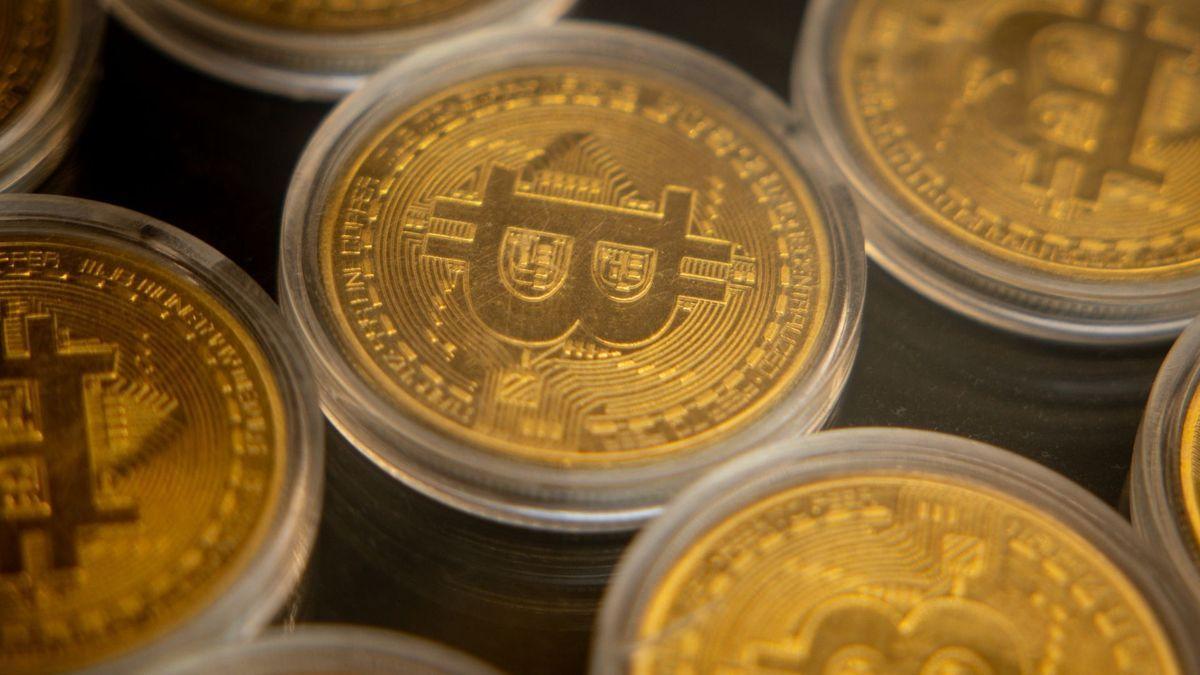
Source: PC Gamer
The ecstatic cprkrn thanked Anthropic and CEO Dario Amodei, joking about naming a future child after the latter
2
. In one X post, the user indicated plans to hold at least some of the recovered funds, writing "See you @ $250k"3
. For Anthropic, this recovery story serves as compelling evidence that AI assistants can deliver tangible value in unexpected ways, helping reinforce the idea that these tools can assist with practical problems beyond generating text or answering questions5
.Summarized by
Navi
[2]
[4]
29 Nov 2024•Technology

05 May 2026•Technology

13 Apr 2026•Technology