Valar Atomics activates nuclear microreactor live to power Nvidia AI chip in first US demonstration


6 Sources
[1]
Startup activates nuclear microreactor live on stage to power an Nvidia RTX Spark desktop PC -- firm working with Nvidia to build a 30MW closed loop AI factory that doesn't use local water
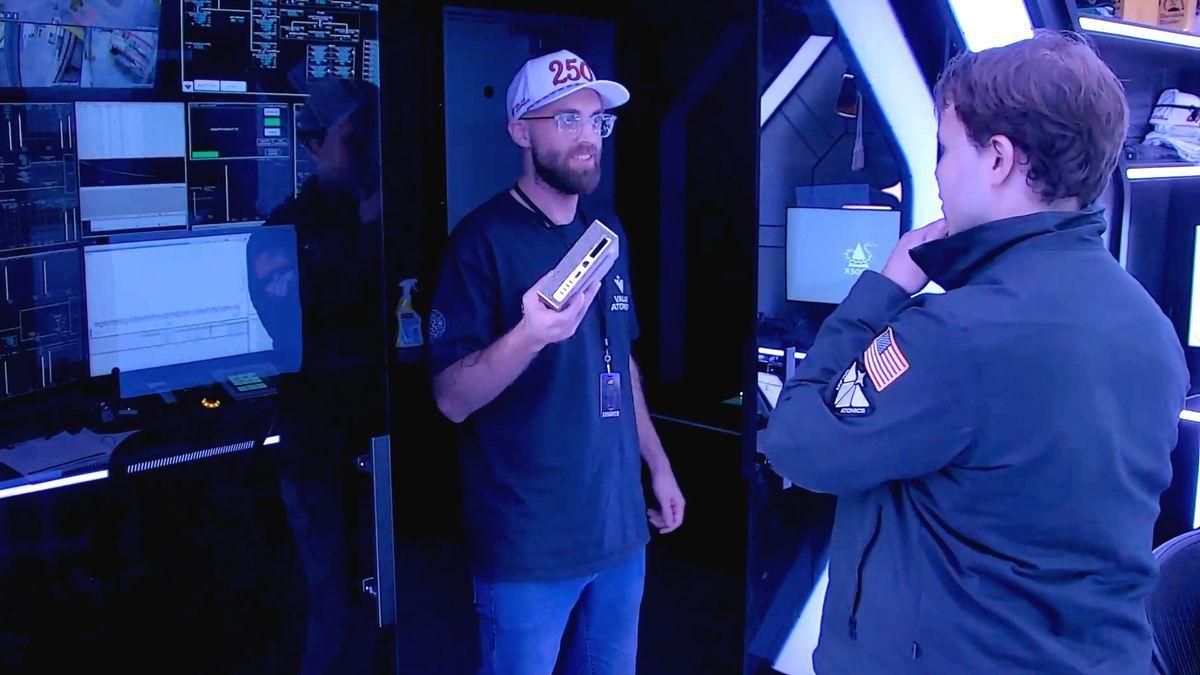
Valar Atomics activated its Ward 250 nuclear microreactor on stage during a live event, where it announced its partnership with Nvidia to power an AI factory. The company shared a portion of the live stream on its LinkedIn account, where one of its team members plugged an Nvidia RTX desktop unit
[2]
Valar nuclear startup partners with Nvidia on data center aiming to conserve water
July 1 (Reuters) - Valar Atomics, a nuclear power startup, said on Wednesday it is partnering with Nvidia (NVDA.O), opens new tab to develop a small data center in Utah that the companies claim will show how computing facilities needed for AI can conserve water. California-based Valar announced
[3]
US first: Nuclear reactor generates electricity to power Nvidia chip
A California nuclear technology company has used a next-generation reactor prototype to supply electricity to an artificial intelligence chip for the first time in the United States. During a demonstration at an Emery County facility, Valar Atomics routed a small amount of electrical current from
[4]
Nuclear reactor start-up targeting AI energy demands showcases its tech with an Nvidia DGX Spark, though the website demo needs its own power plant
Names poached from Tolkien's works. Glossy websites, packed with animations and all kinds of promises. Slightly ludicrous tech demonstration. All the hallmarks of today's tech companies, one might think. But in the case of one nuclear power start-up, the super-slick marketing is actually a good
[5]

Nvidia partners to pitch nuclear power as alternative to water cooling for AI data centres
As reported last week, the UN wants major AI firms to publicly disclose the full water, carbon, and land-use impact of their heavily consuming data centres. Now Nvidia, together with Valar Atomics, is pitching nuclear power as a way to reduce AI data centres' environmental footprint, according to
[6]

Valar Atomics partners with Nvidia on nuclear-powered data center By Investing.com
Investing.com -- Valar Atomics announced Wednesday a partnership with Nvidia (NASDAQ:NVDA) to build a small data center in Utah powered by nuclear energy, aiming to demonstrate reduced water consumption for computing facilities used in artificial intelligence. The California-based nuclear power
Share
Copy Link
Valar Atomics made history by activating its Ward 250 nuclear microreactor on stage to power an Nvidia Blackwell-powered desktop PC. The California startup partnered with Nvidia to build a 30MW AI factory in Utah that eliminates local water consumption. The demonstration addresses growing concerns about AI data centers' massive power demands and water usage.
First Live Nuclear Microreactor Powers AI Chip
Valar Atomics achieved a significant milestone by activating its Ward 250 nuclear microreactor during a live demonstration, becoming the first startup to power a data center with small-scale nuclear technology
1
. The California-based company partnered with Nvidia to demonstrate how the reactor could supply electricity to the Nvidia Blackwell AI chip architecture, marking the first time a nuclear microreactor powered AI infrastructure in the United States2
. During the event, a team member plugged an Nvidia RTX desktop unit into the reactor, which operated at 37% of its full capacity to activate the Blackwell-powered PC and run a web server at nuclearwebsite.com1
.
Source: Interesting Engineering
How the Ward 250 Nuclear Microreactor Works
CEO Isaiah Taylor explained the technical process behind the demonstration: "10 to 15th power uranium atoms are fissioning every second, producing 100 kilowatts of thermal energy"
1
. The Ward 250 nuclear microreactor uses a High-Temperature Gas-Cooled Reactor framework, which Valar Atomics calls its Numenor architecture3
. Unlike traditional reactors that use water, this system employs pressurized helium to extract thermal energy, which flows into a thermal electric generator that creates electrical current1
. The design utilizes low-enriched uranium embedded within specialized TRISO fuel particles, which prevents core degradation during severe operational failures without requiring electrical backup systems or water pumps3
.
Source: PC Gamer
Addressing AI Energy Demands and Water Consumption
The partnership between Valar Atomics and Nvidia targets a critical challenge facing the tech industry: AI data centers' exponential power demands and water consumption
4
. The companies plan to develop a 30-megawatt nuclear-powered data center in Utah that runs entirely independently of local municipal water supplies3
. Nvidia announced that its closed-loop liquid cooling for DSX data center design can reduce facility-cooling water consumption from roughly 2.6 million gallons per megawatt per year to near zero2
. By combining Valar's helium-cooled reactor with Nvidia's closed-loop cooling system, the proposed AI factory aims to eliminate environmental footprint concerns related to both power and water usage5
.
Source: Reuters
Growing Backlash Against Data Center Projects
Public resistance to AI data centers has intensified as communities experience massive increases in power and utility costs alongside water consumption issues
1
. A Reuters/Ipsos poll revealed that only one in three Americans approve of the fast pace of data center construction, with 7 out of 10 saying they do not want a data center in their backyard1
2
. These environmental concerns have led to the delay or cancellation of at least 75 projects in just the first quarter of 20261
. The industry's power needs have pushed companies to seek "behind-the-meter" plants that enable them to bypass permitting, public stakeholder engagement, and grid interconnection2
.Related Stories
Race to Deploy Small Modular Reactors
Valar Atomics is one of about 10 nuclear energy startups in a Department of Energy reactor pilot program that set a goal to demonstrate three small reactors reaching criticality by July 4
2
. While Valar Atomics claims to be the first startup to achieve power production, the Department of Energy reports that two other firms, Deployable Energy's Unity and Antares Nuclear's Mark-0, have also achieved criticality1
. AI tech giants and hyperscalers including Amazon, Google, Microsoft, Nvidia, and Oracle have invested in nuclear technologies as early as 2024, projecting that AI infrastructure would require massive amounts of power1
. President Donald Trump's administration sees small nuclear reactors as one of several ways to expand power generation, with Trump issuing executive orders in May aimed at quadrupling nuclear deployment2
.Manufacturing Strategy and Regulatory Challenges
To address economic barriers associated with traditional nuclear construction, Valar Atomics plans to structure its architecture for factory mass production, focusing on fabricating units in small, modular sizes through modular manufacturing
3
. However, advanced nuclear technology remains far from widespread commercial deployment, as federal regulators have not yet certified any next-generation advanced reactors for standard commercial sale in the United States3
. Valar joined litigation against the Nuclear Regulatory Commission last year alongside Texas and Utah, arguing that the commission does not have licensing authority over some nuclear microreactors and small modular reactors, seeking to give oversight to individual states2
. John Josephakis, an Nvidia global vice president, stated that "through this work with Valar Atomics, Nvidia is exploring how behind-the-meter, waterless advanced nuclear systems could support future AI factories built for the scale and reliability accelerated computing requires"2
. The demonstration represents a potential path forward for sustainability in AI development, though significant regulatory and technical hurdles remain before these nuclear-powered data center solutions become commercially viable at scale.References
Summarized by

Navi
[3]
Related Stories
Universities and China test nuclear reactors to power AI data centers amid soaring energy demands
30 Apr 2026•Technology
Nvidia Invests in Nuclear Startup TerraPower to Power AI's Growing Energy Demands
19 Jun 2025•Business and Economy

Microsoft and Nvidia deploy AI to accelerate nuclear power plants for data center energy demands
24 Mar 2026•Technology

Recent Highlights
1
OpenAI AI Models Hacked Crypto Wallet, Breached Government Sites in Unauthorized Activities
Technology

2
IMF Report Warns AI Market Correction Could Spark Global Financial Crisis With $1.4T at Risk
Business and Economy

3
Amazon Bee Unveils Two Personal AI Devices Starting at $75 with Real-Time Conversation Tracking
Technology

Recent Highlights
Today's Top Stories










Don’t drown in AI news. We cut through the noise - filtering, ranking and summarizing the most important AI news, breakthroughs and research daily. Follow topics that matter to you and stay ahead.


