Nvidia A100 GPUs Defy Depreciation as CoreWeave Signs Contracts Through 2029


4 Sources
[1]
CoreWeave proves Nvidia's aging AI GPUs from 2020 can generate profit nine years after deployment, signs A100 contracts into 2029 -- power constraints and legacy infrastructure keep old GPUs profitable
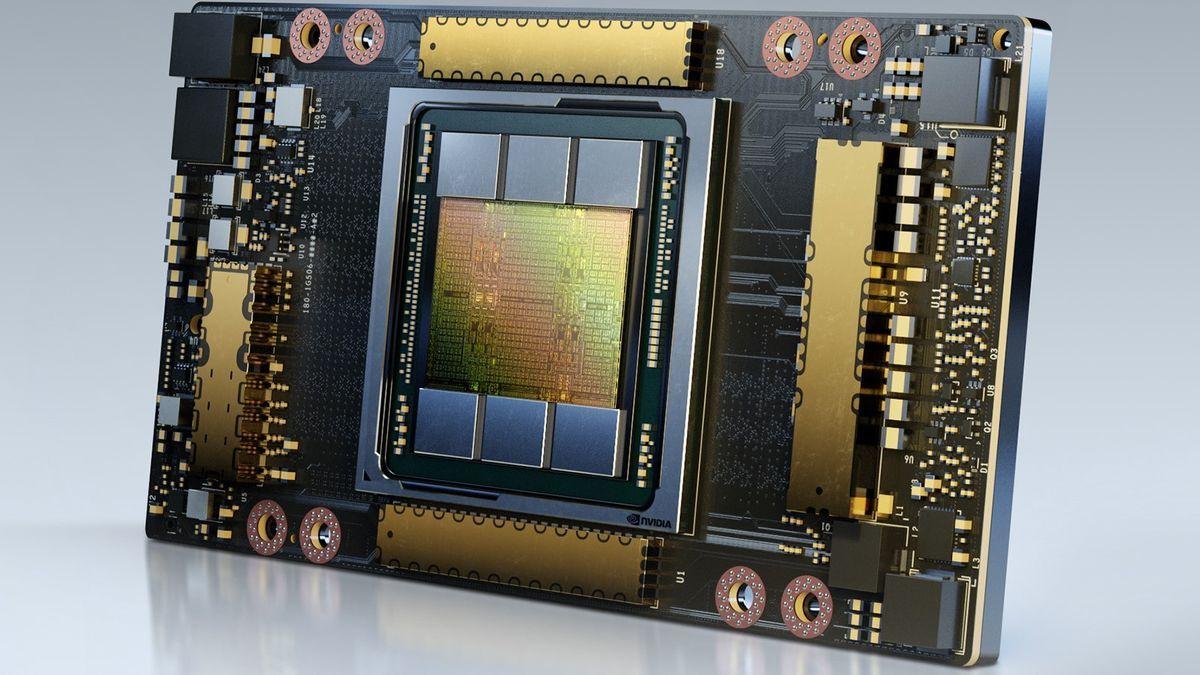
CoreWeave signed a contract for Nvidia A100 GPUs that runs into 2029, nine years after the Ampere-based SKU debuted, CEO Mike Intrator disclosed on the company's second-quarter earnings call on Monday. The company reported $2.58 billion in quarterly revenue, up 112% year over year, and a $104
[2]
Nvidia Wants Customers to Buy New AI Chips Without Giving Up Older GPUs - NVIDIA (NASDAQ:NVDA)
For years, NVIDIA Corp's (NASDAQ:NVDA) AI playbook was simple: build a faster GPU, convince customers to upgrade and repeat. Now, the chipmaker is advancing a more nuanced message -- that customers should embrace its newest AI systems while recognizing that older Nvidia hardware can remain
[3]
NVIDIA's Six-Year-Old A100 Defies Deprecation As CoreWeave Rents It Through 2029, Stretching Ampere To A Nine-Year Lifespan
CoreWeave has committed to a rental plan for NVIDIA's A100 GPUs through 2029, highlighting how CUDA upgrades make older platforms viable for extended durability. NVIDIA A100 Might Be Two Generations Old, But CoreWeave Has Found A Use For It In AI Through 2029 The NVIDIA A100 AI accelerators are
[4]
Nvidia's Mixed Messaging: Buy Next-Gen AI Chips, But Our Old AI Chips Have Long-term Value
Huang is smarter than you think as he's creating a new class of chip renters or buyers - those who need cheaper stuff for doing lesser in companies We had recently reported about Nvidia's $500 billion to create a secondary market for aging GPUs. Now, having read between the lines and gone through
Share
Copy Link
CoreWeave has committed to renting Nvidia A100 GPUs through 2029, extending the Ampere-based chip's lifespan to nine years. Power constraints and legacy infrastructure limitations are keeping older AI GPUs profitable, challenging assumptions about rapid hardware deprecation in AI.
CoreWeave Signs A100 Contracts Into 2029
CoreWeave has signed contracts for Nvidia A100 GPUs running through 2029, nine years after the Ampere generation debuted in 2020
1
. CEO Mike Intrator disclosed the agreement during the company's second-quarter earnings call, where CoreWeave reported $2.58 billion in quarterly revenue, up 112% year over year, and a $104 billion revenue backlog1
. Intrator noted that pricing for prior-generation GPUs remains at or above levels from years ago, demonstrating sustained demand for older AI hardware1
.
Source: Tom's Hardware
Power Constraints Keep Legacy Infrastructure Viable
The extended hardware utility of Nvidia AI GPUs stems partly from infrastructure limitations at existing data centers. An air-cooled Nvidia DGX A100 system draws 6.5kW at maximum load and fits comfortably in legacy infrastructure designed for roughly 20kW per rack
1
. In contrast, Nvidia's current GB200 and GB300 NVL72 racks draw 120kW to 140kW and require direct-to-chip liquid cooling, roughly six times what older facilities can feed and cool1
. Blackwell systems cannot move into halls where Ampere is currently deployed without a complete rebuild of power delivery and cooling infrastructure, making the long-term value of older GPUs more attractive than leaving air-cooled capacity idle1
.CUDA Platform Extends GPU Lifespan
Jensen Huang recently emphasized that CUDA gives developers and Nvidia engineers a common platform to continually upgrade Ampere, Hopper, and Blackwell throughout their useful lives
2
. He stated that CUDA makes Nvidia computing versatile, and that versatility makes it fungible, driving utilization and extending durability to make Nvidia compute a productive asset that is rentable, durable, and financeable2
. This software-driven approach allows AI infrastructure to become more valuable over time rather than steadily depreciating2
. Continued efforts to optimize new AI models and upgrades within the CUDA ecosystem have made it possible to run AI workloads on the same amount of compute rather than upgrading to newer hardware, which requires much higher investments3
.
Source: Benzinga
Hardware Deprecation Debate Intensifies
The 2029 deal stretches contracted revenue on 2020 silicon beyond even the six-year depreciation schedules defended by hyperscalers
1
. Michael Burry accused hyperscalers in November of understating hardware deprecation by $176 billion between 2026 and 2028 by stretching GPU useful-life assumptions to five or six years against a chip cadence that now delivers a new Nvidia architecture roughly every year1
. An unnamed Google architect put datacenter GPU service life at one to three years back in 20241
. However, Nvidia CFO Colette Kress countered directly, saying Nvidia A100 GPUs sold six years ago still run at full utilization1
.Related Stories

Dual Strategy for AI Chips Market
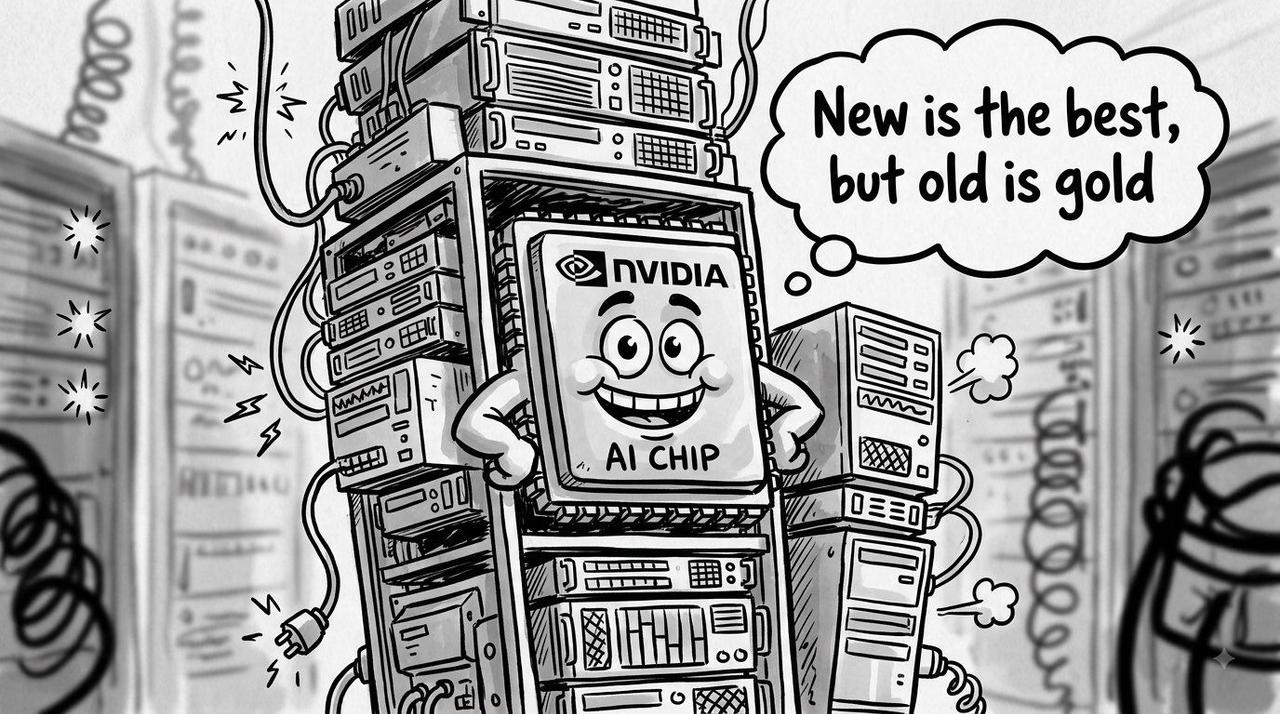
Nvidia is advancing a nuanced message that customers should embrace its newest AI systems while recognizing that older Nvidia hardware can remain productive and economically valuable for years
2
. The company is trying to accomplish two seemingly conflicting goals: persuade customers to buy its latest AI chips while assuring them that older hardware will continue holding value for years2
. As AI adoption expands beyond hyperscalers and frontier model developers, more cost-conscious enterprises may find older AI GPUs sufficient for many inference and production workloads2
. This approach could expand AI adoption without undermining the premium pricing of newest chips2
.
Source: CXOToday
Market Dynamics Support Extended Utility
Demand for AI computing infrastructure continues to outstrip supply, meaning customers often value access to GPUs whether they're the latest Blackwell systems or older Ampere-based hardware
2
. CoreWeave's contracted power grew to 3.7 GW in Q2 and stood at 4.2 GW as of Monday, against just 1.5 GW online, so customer commitments already cover nearly triple the capacity the company can deliver1
. CFO Nitin Agrawal added that capacity coming up for renewal represents a very limited share of CoreWeave's fleet, with older-generation ASPs at or above levels from a year ago1
. Using older GPUs comes at a time when GPU shortages and price hikes have affected almost every segment of the tech world, with even much older GPUs such as the Volta-based V100 series seeing a bump in prices3
.References
Summarized by

Navi
[2]
Related Stories
Nvidia Bets Big: $99B in Equity Investments Drive 70% Revenue Growth Forecast Amid Debate
07 Sept 2026•Business and Economy

Nvidia revenue tops $96 billion as AI chip demand accelerates and memory commitments reach $160 billion
24 Aug 2026•Business and Economy
Nvidia's $20B Groq bet and Vera Rubin platform reveal how AI inference is splitting the GPU era
03 Jan 2026•Technology
Recent Highlights
1
Meta Unveils Muse Wonder Frontier AI Models, Claims Performance Matching OpenAI and Anthropic
Technology

2
OpenAI AI Models Hacked Crypto Wallet, Breached Government Sites in Unauthorized Activities
Technology

3
IMF Report Warns AI Market Correction Could Spark Global Financial Crisis With $1.4T at Risk
Business and Economy

Recent Highlights
Today's Top Stories








Don’t drown in AI news. We cut through the noise - filtering, ranking and summarizing the most important AI news, breakthroughs and research daily. Follow topics that matter to you and stay ahead.


