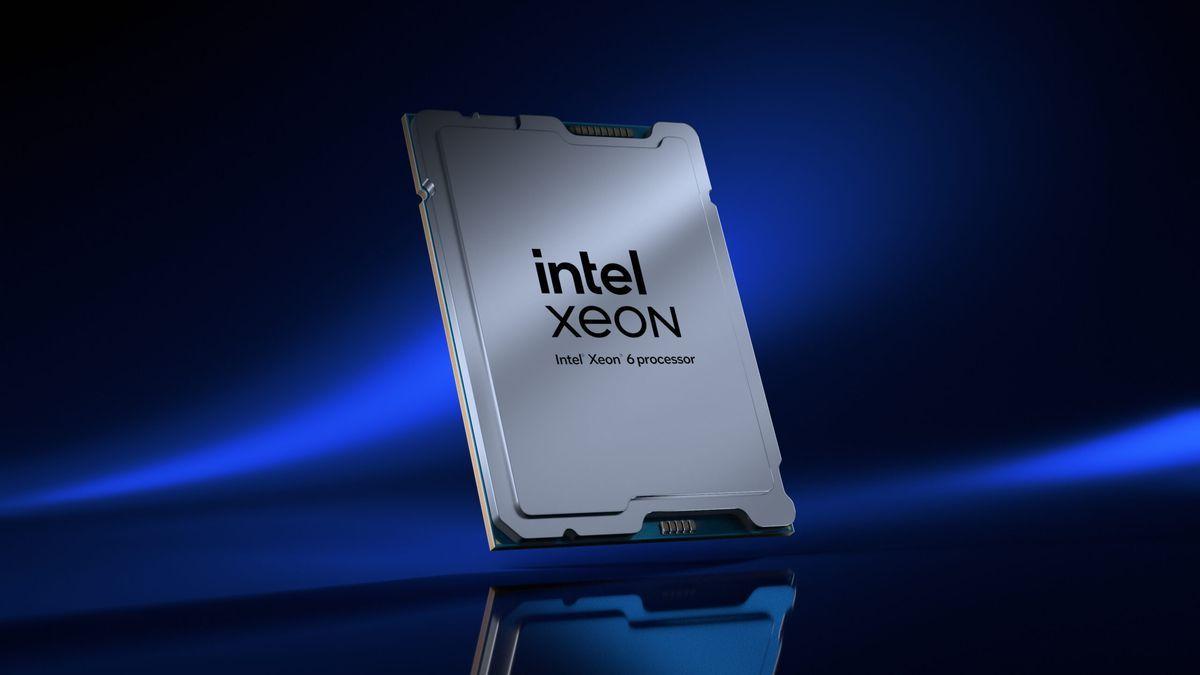
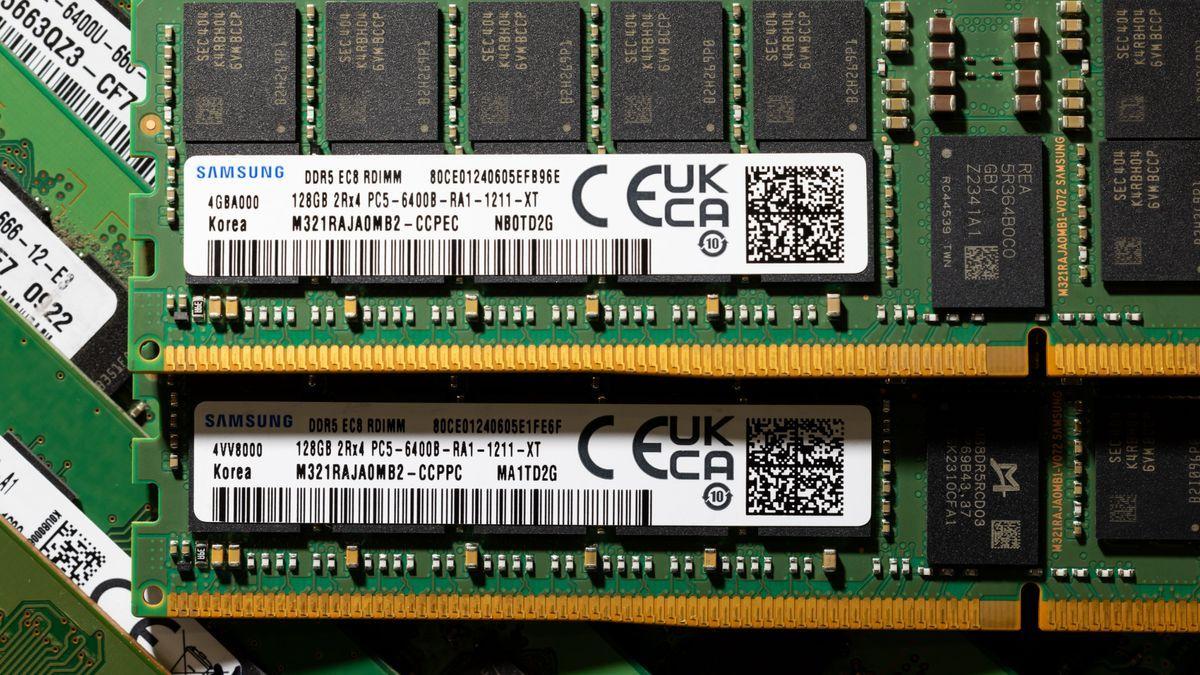
7 Sources
7 Sources
[1]
PC makers face shortages of Intel and AMD CPUs that stretch up to six months -- lead time for orders jumps from just two weeks in the face of AI demand
AI demand for server CPUs is starting to affect the supply for consumer processors. PC makers are facing new challenges as the memory and storage chip shortage is now being compounded by a lack of supply of Intel and AMD CPUs. According to Nikkei Asia, some manufacturers like HP and Dell are now saying that the number of processors that get delivered to them no longer matches the required volume, with some sources saying that the situation is getting worse compared to some months back. This shortage is causing prices to increase, with costs rising by an average of 10% to 15%, if not more. More importantly, orders are also facing delays, with lead times jumping from around a couple of weeks to six months in some cases. "Previously, the average lead time for a CPU was around one to two weeks, but now the wait time has prolonged to an average of eight to 12 weeks," one server manufacturer executive told Nikkei Asia, while another one said that this could extend up to six months. Furthermore, other industry sources expect this to become much worse in the second quarter of 2026, and PC makers can't solve the problem by throwing cash at it. "If money can solve the problem, that would be great," an executive for a gaming PC brand told the publication. "What we worry about is that even if we pay more, we still cannot get more. The CPU shortage is getting more serious day by day, no less than the memory chip situation." We first saw inklings of this in early February, when Intel and AMD server CPUs reported supply shortages in China. The two companies even confirmed spikes in CPU demand during their respective quarterly financial results, with AMD CEO Dr. Lisa Su saying that business exceeded expectations and Intel CFO David Zinsner mentioning that "the CPU has become cool again this year." Just like the current memory and storage chip shortage, this jump in CPU demand is coming from AI hyperscalers. Tech companies bought up as many GPUs as they could when AI LLMs were popularized by ChatGPT, resulting in the GPU shortage between 2023 and mid-2025. But as the graphics cards supply normalized, we started experiencing memory and storage chip shortages, beginning in late 2025. As AI tech firms were willing to pay top-dollar for these chips, manufacturers moved the majority of their production capacity for these premium customers, leaving the consumer market struggling to fight over what little remained. It has even gotten to the point that Micron, the maker of Crucial SSDs and RAM, has exited the consumer market to focus on AI and enterprise customers. Now, it seems that we're getting a CPU shortage even before the memory and storage chip supply has yet to recover. That's because while AI training relies heavily on GPUs, the rest of the system relies on CPUs. And as smaller models and agentic AI become more popular, the demand for server processors is increasing as well. On the surface, this does not bode well for the PC market. One server manufacturer employee told Nikkei Asia that demand for general-purpose server CPUs could increase by nearly 15% in 2026, but Intel's output capacity is only going up by single-digit rates. Furthermore, since AMD does not have its own fab, it must compete with other companies that make chips, like Nvidia and Google, for capacity from foundries like TSMC and Samsung. However, this is an opportunity for Arm-based chips to step up and capture more of the market, especially in mainstream laptops. While gamers and those who require specialized apps would likely want to stay with x86 processors, Arm-powered devices have been slowly entering the market ever since Microsoft made a serious push with the Snapdragon-powered Copilot+ PCs in 2024. Qualcomm is even taking steps to make gaming on Windows on Arm better, while Nvidia's N1X is tipped to arrive on laptops this year. This is a major threat to the x86 system, with Intel and AMD banding together to help maintain the architecture's popularity. But if the two companies cannot meet the demand for their processors, then buyers might have no choice but to look elsewhere for their CPU needs. Follow Tom's Hardware on Google News, or add us as a preferred source, to get our latest news, analysis, & reviews in your feeds.
[2]
It's not just memory anymore: AI data centers are taking all the CPUs, too
Serving tech enthusiasts for over 25 years. TechSpot means tech analysis and advice you can trust. Ripple effect: Ongoing AI datacenter construction has created shortages of DRAM and NAND that manufacturers say will impact prices for years, but memory isn't the only component that datacenters require. Recent reports indicate that manufacturers are also facing shortages of CPUs that might further increase prices. PC and server manufacturers recently informed Nikkei Asia that they are no longer receiving enough processors from Intel and AMD to satisfy demand. Server and OEM PC manufacturing could face delays, and prices might rise by 10% to 15%. Companies such as Dell and HP report that delays and shortages have worsened in recent months. One server manufacturer stated that lead times have lengthened from two weeks to several months, and other sources report that delays and shortages could become even more severe in the second quarter of 2026. While Intel's foundries partially insulate it from the problem, AMD must compete with other chipmakers for semiconductors. TrendForce reported disruptions in Intel and AMD CPU supply chains earlier this month, which might contribute to rising prices that threaten to eliminate the entry-level laptop market. Earlier this year, Intel and AMD also acknowledged CPU demand spikes and supply shortages. The problem compounds other issues caused by memory shortages, which have also led to delays and price hikes. Since AI datacenters require massive amounts of RAM and storage, the ongoing AI boom has diverted DRAM and NAND manufacturing capacity previously intended for consumer PCs and other electronics. DDR5 memory has become so expensive that PC upgrade cycles have stalled, as users try to save money by sticking to older processors and motherboards that support DDR4. Laptop prices have also increased, and Valve was forced to delay its upcoming Linux mini PC, the Steam Machine. Micron shuttered its nearly three-decade-old consumer RAM business, and other manufacturers predict that the crisis could last into 2030. However, Arm is one company that sees an opportunity in the ongoing demand for datacenter hardware. While Arm normally licenses its IPs and delivers reference designs to other manufacturers, the company recently unveiled the first independent product in its 35-year history, the AGI CPU. Arm's big wager that it can satisfy demand for agentic AI processors unmet by Intel and AMD server CPUs is already receiving support from Meta, Cloudflare, SK Telecom, Lenovo, OpenAI, and many other companies.
[3]
CPU shortages loom as PC makers scramble for chips
Building new chip factories requires 5-10 years and billions in investment, making rapid supply solutions impossible for the current shortage crisis. RAM, storage, graphics cards. All of them are getting harder to find, and, of course, more expensive as the "AI" bubble gobbles up manufacturing capacity. According to a new industry report, processors are next in line. Lead times for CPUs are now stretching out to multiple months, making it harder for manufacturers to finish and sell consumer PCs. Processors are incredibly expensive to produce compared to their component cost -- they're one of the most complex parts of, well, just about anything. So companies like Intel, AMD, TSMC, and Qualcomm don't build out capacity if they don't think they'll need it. It's a risk mitigation strategy that pays off...most of the time. But when you get a spike in demand, like, say, for massive data centers filled with expensive servers being planned all over the planet, suddenly the output can't match the demand. According to a report from Nikkei Asia, lead times for CPU deliveries to server manufacturers has slipped from two weeks to two or three months, with at least one reporting a wait time of six months. These are the most complex, expensive processors available, and thus the most profitable, and the ones that companies like AMD and Intel are most motivated to sell. Separately, Intel exec David Feng confirmed to CRN that the company has raised CPU prices for PC makers, though his comments again focused on the server market. Nikkei (via Tom's Hardware) also quoted an executive for consumer gaming PCs, who said that paying more may not mean they get more in terms of supply. And it makes sense that throwing money at this problem wouldn't solve it. Scaling for this sort of thing doesn't happen quickly or cheaply. There is no realistic way for CPU sellers or their fabrication partners to rapidly expand -- a new chip fab takes five to ten years to build from the ground up, with costs stretching into the billions. Even if CPU manufacturers try to offset a shortage, the production output will be focused on those servers and data centers. It won't help alleviate a crunch on consumer hardware, resulting in the sky-high prices we're seeing for the RAM and storage that go into the laptops and desktops for regular users. This isn't coming out of the blue. We've been hearing about shortages for Intel chips specifically since the beginning of the year. That's going to be a particularly bad situation for Intel. And as always, consumers will get the short end of the stick. With PC prices already expected to balloon up to 40 percent in 2026, the bad news just keeps coming. There are indications that the "AI" boom is losing steam, as the realities of power access and hardware production just can't match the ambitions of the rollout, and investors start to set more realistic expectations of what "AI" can actually do. But a full-on bubble pop might crash the broader economy, causing much more immediate problems than finding affordable PCs. Fun.
[4]
Forget the RAM crisis -- storage prices are spiralling, and processors could be next, as gaming PC maker warns 'CPU shortage is getting more serious'
This is all we need -- CPUs could be like 'the memory chip situation' with price hikes * Processors could be in line for major price hikes * Rumor has it that Intel and AMD are increasing CPU prices due to a supply shortage, and this could end up as serious as the situation with RAM * Storage prices are also heading up sharply, and device makers are having to rethink plans -- with a handheld even getting canned this week due to pricing difficulties If you've not heard enough about supply woes and price hikes for various PC components, here's another bit of bad news: CPUs are now apparently in the firing line. PC Gamer flagged a report from Nikkei Asia, which observes that the market for processors is suffering "an average price hike of between 10% to 15%", which has hit both server and PC CPUs. This information has been provided by multiple sources, we're told, all singing the same unwelcome tune. Nikkei Asia also claims that according to these sources: "Intel and AMD have recently told clients they will increase prices for all series of CPUs from March and April, respectively." The lead time taken to ship processors that have been ordered is increasing, too, and by a large margin. Wait times have increased from a couple of weeks to a couple of months, or indeed more. One of the sources is an executive at a gaming PC manufacturer who says that the supply of CPUs is expected to become thinner on the ground in the second quarter of 2026. That exec said: "Intel and AMD have prioritized capacity for server CPUs, and the supply for PCs has become less ... What PC players can get in Q2 is much less than the volume we got in Q1." They added, "What we worry about is that even if we pay more, we still cannot get more. The CPU shortage is getting more serious day by day, no less than the memory chip situation." Analysis: AI crushes the hopes of consumers once again If you wanted a worrying statement about the situation with CPUs, I don't think you could get a more ominous utterance than the last sentence above. If we're going to start thinking about comparing processor supply levels to what's happened with memory chips, then that's the start of a very dark path that CPUs could be about to head down. Indeed, seemingly this is already happening, and the article is citing multiple sources to this effect. As you might guess, this is all about the AI boom. It's driving a huge need for computing power, and that isn't just about memory and storage for servers, but also processors. Meaning the drive for profits is leading to CPU makers prioritizing data center sales over consumers, just as with memory, because these are business decisions after all, and you go where you can make the most money. Unfortunately, the storage crisis is getting worse, too. This week, we've had news of the price of a 1TB external SSD from SanDisk tripling on the Apple store (via Gizmodo). And a high-end handheld has been effectively cancelled, with Ayaneo shutting down pre-orders of its Next 2 portable gaming device, as Kotaku reports. Thanks to the spiralling costs of storage and RAM, the Next 2 would've ended up costing some $4,000, which clearly isn't tenable. (Maybe the top-end Strix Halo Ryzen CPU was a factor here, too). Meanwhile, Asus has just treated us to a forecast of 25% to 30% price rises for its PCs in Taiwan over the next quarter, and that reality will surely be reflected globally to a large extent. It's a bleak picture that appears to be worsening. And it's also very odd that Intel has just revealed a couple of very wallet-friendly consumer CPUs with its refresh of Arrow Lake. How those low prices will work in this climate remains to be seen, although of course, so do the stock levels of said processors - they may only be produced in small quantities. The advice for those thinking of buying a new CPU for their PC would be to do so now, or in the near future, much as is the case for those mulling a laptop purchase. Follow TechRadar on Google News and add us as a preferred source to get our expert news, reviews, and opinion in your feeds. Make sure to click the Follow button! And of course, you can also follow TechRadar on YouTube and TikTok for news, reviews, unboxings in video form, and get regular updates from us on WhatsApp too.
[5]
CPU shortage is 'getting more serious day by day, no less than the memory chip situation' according to an unnamed gaming PC company
A week ago or so, I flagged a report claiming that CPUs about to become the next chip class walloped by an AI-instigated shortage and spiralling prices. Now another source is making essentially the same claim but this time via at least two gaming PC maker. Nikkei Asia reports that a supply crunch is hitting the PC and server CPU markets, leading to "an average price hike of between 10% to 15%" with some CPU model prices spiking even higher. The outlet further claims that, "Intel and AMD have recently told clients they will increase prices for all series of CPUs from March and April, respectively." Lead times for CPU orders have likewise reportedly increased from one to two weeks to eight to 12 weeks, with some orders taking as long as six months to be filled. Notably, Nikkei Asia says, "an executive with a gaming PC company said that the shortage of CPUs is expected to become worse in the April-June quarter." It quotes the executive saying, "Intel and AMD have prioritized capacity for server CPUs, and the supply for PCs has become less ... what PC players can get in Q2 is much less than the volume we got in Q1." The same executive voiced fears that even with escalating prices, supplies will be tight. "What we worry about is that even if we pay more we still cannot get more. The CPU shortage is getting more serious day by day, no less than the memory chip situation," the source said. What's more, Nikkei Asia also spoke to Jose Liao, general manager of systems business at Asus. Liao said mid-range x86 chips will be subject to the most acute supply crunch, with Intel tilting production in favour of high-end chips. "The supply gap is indeed widening and is expected to continue," he said. Inevitably, the cause behind all this is said to be "surging" demand for AI computing. Nikkei Asia also says Intel commented that it has, "informed customers of planned pricing updates on select products, reflecting sustained demand, increased component and material costs, and evolving market dynamics." As I reported in the story linked above, Intel has spoken previously of its difficulties keeping up with demand, in part thanks to the yields at it own chip production fabs. As for AMD, it is constrained by production capacity at manufacturing partner TSMC. Arguably, what's slightly odd in all this from a gaming PC perspective is that Intel has just launched two new Arrow Lake Plus desktop CPUs and what's most remarkable about them is their notably low prices. The new Intel Core Ultra 7 270K Plus and Intel Core Ultra 5 250K Plus officially go on sale March 26 for $299 and $199, respectively. If nothing else, it will be interesting to see what those chips are actually listed at by retailers, and if it is MSRP how long that lasts.
[6]
After swallowing the world's memory and storage supply, AI data centers are now going for CPUs
TL;DR: AI-driven demand has caused severe shortages and price hikes in DRAM, NAND, and CPUs, with Intel and AMD struggling to supply enough processors. Server and PC manufacturing face delays and increased costs, while companies like Dell and HP report significant lead time extensions. Arm benefits by launching its first AI-focused CPU. The ongoing AI push has been nothing short of a nightmare for consumers. Everyone has felt the impact of DRAM and NAND shortages, with a 256GB DDR5 memory module now costing a staggering $5,700 in China. One would assume this is about as bad as it gets. But AI datacenters' appetite for resources is far from satisfied, as reports suggest CPUs are next in line. PC and server manufacturers recently told Nikkei Asia they are unable to meet demand because Intel and AMD have stopped supplying enough processors. On top of that, server and OEM PC manufacturing could face delays and price hikes of up to 10% to 15%. TrendForce also recently reported that Intel has already raised prices on certain entry-level and older generation notebook CPUs by more than 15%. The blue team is also reportedly planning a 10% price increase for its consumer CPUs, including the Intel Core Ultra, effective at the end of this month. The situation has reached a point where companies like Dell and HP are reporting some of the worst delays and shortages in recent months. Server manufacturers report that lead times have stretched from 2 weeks to several months, and sources suggest the situation could worsen further in the second quarter of 2026. The ripple effect has also pulled Valve into the equation. The company was recently forced to delay the launch of its Steam Machine console PC, along with the Steam Frame and Controller, which were initially planned for early 2026. A launch this year now looks unlikely. While the outlook is gloomy for most of the tech industry, Arm is one of the few beneficiaries of the current climate. The company recently announced its first production silicon chip in its 35-year history, the Arm AGI CPU, designed specifically for data center AI applications. This puts Arm in a strong position to meet demand for agentic AI processors that Intel and AMD are currently failing to satisfy. That said, there is no sugarcoating it - these shortages are here for the foreseeable future. The European market is seeing slight price drops, but they remain far from 2025 levels. The shutdown of tools like Sora offers a sliver of hope that things might eventually settle down, but for now, gamers will have to deal with AI not just derailing their PC upgrade plans but also their favourite characters with DLSS 5.
[7]
First came RAMageddon and storage inflation, now a CPU shortage could be on the cards as PC makers report limited supplies
Intel picked a good time to launch its new Core Ultra 200 Plus CPUs It seems the worst of the AI-induced chip shortages is not behind us. We've been seeing a limited supply of RAM and storage devices around the world in 2026, as well as massively inflated prices on both. Now, it seems that CPUs are the next chip to fall, with reports from PC building brands detailing a smaller supply than usual. If the best CPUs for gaming start to see the same kinds of inflation as memory and storage, consumers could be in for a really tricky time. New reports come from Nekkei Asia by way of our friends at Tom's Hardware and PC Gamer, but no matter who you read it from, things don't look good for consumers. Granted, a lot of the claims so far are seemingly hitting server builders first, but just as RAM for gamers uses the same building blocks as RAM for data centers, server CPUs and gaming PC processors share the same types of raw parts. One server manufacturer that remains nameless in the reports told Nikkei Asia that "Previously, the average lead time for a CPU was around one to two weeks, but now the wait time has prolonged to an average of eight to 12 weeks." The knock-on effect seems to be hitting prebuilt gaming PC makers too, with one brand telling Nikkei Asia that "The CPU shortage is getting more serious day by day, no less than the memory chip situation." The signposts do seem to have been pointing to a potential CPU shortage for a while. Back in February, Intel and AMD warned Chinese customers about delays for server CPU shipments: "Inventory [is] at [its] lowest level in Q1, but we are addressing aggressively and expect supply improvement in Q2 through 2026," Intel told Reuters. For reference, I've seen 32GB of DDR5 memory increase from circa $100 before RAM shortages happened to now costing upwards of $300 in places, and a vastly lessened supply of stock on the shelves. If shortages on CPUs hit in the same ways as memory and SSDs, we'll likely see bigger price hikes on "flagship" and higher-end processors first, so if you're planning an upgrade any time soon, I'd recommend buying sooner rather than later. In brief, RAM and storage products have been impacted due to AI infrastructure. With so many data centers and new facilities being built all over the world by the biggest players in AI, all of the world's manufacturing power is going into supply contracts with them, leaving hardly anything behind for consumers. If CPUs are also hit with this, it could mean the cost of all sorts of gaming hardware starts to skyrocket. We've already seen a shortage of memory impact Valve's upcoming hardware plans. If processors are implicated too, the manufacturing of even more technology will see troublesome times. This news may hit Intel the hardest as it's just launched a new range of refreshed Intel Core Ultra processors. Not only that, but its processors utilize more cores and threads than AMD's competition, meaning supply issues will hit its wares harder. That said, it may have been a wise decision from the brand (and potentially forward-thinking) to not launch a refreshed "Ultra 9" flagship. Intel outlined in a press briefing I attended recently that it wanted to focus on enthusiast products that had good performance per dollar, and that's why the most powerful CPU it's launching in this new range is the Intel Core Ultra 7 270K Plus. I now wonder if it's partly because the engineers and decision makers at Team Blue could see a potential supply chain issue on the horizon. If you want to learn more about gaming on PC, take a look at the best SSD for gaming, the best gaming PC in the UK, and the best computer speakers.
Share
Share
Copy Link
PC manufacturers face severe shortages of Intel and AMD CPUs as AI data center demand redirects supply away from consumer markets. Lead times have stretched from two weeks to six months, with prices jumping 10% to 15%. Gaming PC makers warn the situation rivals the ongoing memory crisis, while manufacturers struggle to secure processors even at higher prices.
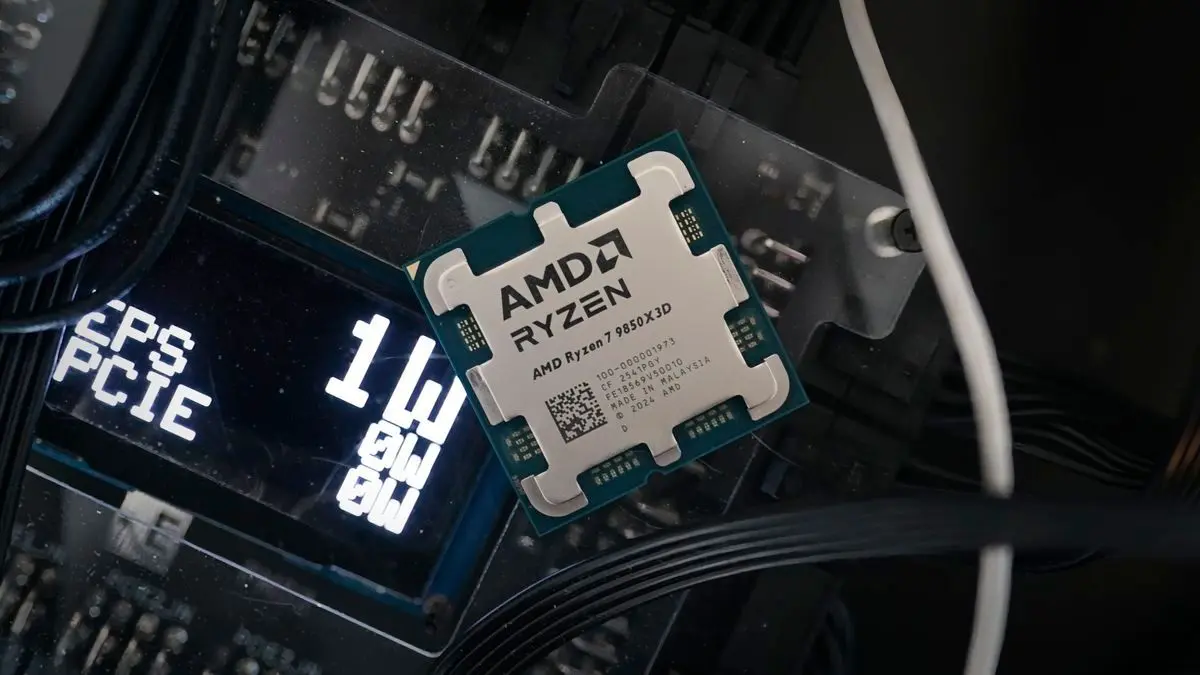
The PC market faces a deepening crisis as shortages of Intel and AMD CPUs compound existing memory and storage supply constraints. According to reports from manufacturers including HP and Dell, processor deliveries no longer match required volumes, with the situation deteriorating compared to recent months
1
. The CPU shortage stems directly from AI demand, as hyperscalers and tech companies build massive data centers requiring unprecedented quantities of server processors. Extended lead times for CPUs have jumped from an average of one to two weeks to eight to 12 weeks, with some manufacturers reporting delays stretching up to six months2
.Both Intel and AMD have informed clients of upcoming CPU price increases across all product series, effective March and April respectively
4
. Industry sources report an average price hike of 10% to 15%, with some models experiencing even steeper increases5
. Intel cited sustained demand, increased component and material costs, and evolving market dynamics as factors behind the pricing updates. The impact on consumer PCs appears particularly severe, as manufacturers prioritize higher-margin server CPUs over mainstream processors.An executive from a gaming PC company told Nikkei Asia that the situation is expected to worsen in the second quarter of 2026, warning that "Intel and AMD have prioritized capacity for server CPUs, and the supply for PCs has become less"
5
. The executive added a particularly stark assessment: "What we worry about is that even if we pay more, we still cannot get more. The CPU shortage is getting more serious day by day, no less than the memory chip situation." This comparison to the ongoing RAM and storage crisis signals the severity of supply constraints facing the PC component market1
.Prioritizing server CPUs over consumer processors reflects fundamental constraints in chip manufacturing capacity. Intel's output capacity is projected to increase only by single-digit rates in 2026, while demand for general-purpose server CPUs could jump nearly 15%
1
. AMD faces additional challenges as it lacks its own fabrication plants and must compete with Nvidia, Google, and other companies for capacity at foundries like TSMC and Samsung. Building new chip factories requires five to ten years and billions in investment, making rapid supply solutions impossible for the current crisis3
.Related Stories
The ongoing supply chain disruptions create opportunities for Arm-based chips to capture market share, particularly in mainstream laptops. While gamers and users requiring specialized applications may prefer x86 processors, Arm-powered devices have gained traction since Microsoft's push with Snapdragon-powered Copilot+ PCs in 2024
1
. Arm recently unveiled its first independent product in 35 years, the AGI CPU, specifically targeting agentic AI processors. The initiative has already secured support from Meta, Cloudflare, SK Telecom, Lenovo, and OpenAI2
. Qualcomm is working to improve gaming on Windows on Arm, while Nvidia's N1X is expected to arrive on laptops this year, presenting a major threat to the x86 ecosystem.The CPU shortage compounds existing challenges from memory and storage chip shortages that began in late 2025. Micron has exited the consumer market entirely to focus on AI and enterprise customers
1
. Storage prices are spiraling, with one 1TB external SSD from SanDisk tripling in price on the Apple store4
. Ayaneo cancelled pre-orders for its Next 2 handheld gaming device after component costs would have pushed the price to $4,0004
. Asus forecasts 25% to 30% price rises for its PCs in Taiwan over the next quarter. Jose Liao, general manager of systems business at Asus, noted that mid-range x86 chips will face the most acute supply crunch, with Intel tilting production toward high-end chips5
. Industry experts warn the crisis could extend into 2030, as AI training relies heavily on GPUs while the rest of the system infrastructure requires CPUs, RAM, and storage. As smaller models and agentic AI become more popular, demand for server processors continues to accelerate, leaving consumer markets struggling to secure adequate supply.Summarized by
Navi
[1]
06 Feb 2026•Business and Economy

29 Jan 2026•Business and Economy

23 Oct 2025•Business and Economy