Data center emissions 57% higher than expected as AI boom drives unprecedented carbon footprint


2 Sources
[1]
Data centers may emit 57% more CO₂ than expected in 2025, study finds
Data centers, whose expansion is being fueled dramatically by the artificial intelligence boom, have a far bigger carbon footprint than previously estimated, a study said Tuesday. The sprawling, power-hungry sites, used to store critical IT infrastructure like servers, are being built worldwide by
[2]
Data centres emitting more CO2 than thought: study
Frankfurt (Germany) (AFP) - Data centres, whose expansion is being fuelled dramatically by the artificial intelligence boom, have a far bigger carbon footprint than previously estimated, a study said Tuesday. The sprawling, power-hungry sites, used to store critical IT infrastructure like servers,
Share
Copy Link
New research reveals data centers emitted 286 million tonnes of CO₂ in 2025, far exceeding previous estimates. The AI boom is fueling explosive growth in power-hungry facilities, with AI workloads already consuming up to 20% of data center electricity. Without urgent decarbonization efforts, annual climate damages could surge to $154 billion by 2030.

Data Center Emissions Far Exceed Previous Estimates
Data centers emitted 286 million tonnes of CO₂ in 2025, according to a new study by Allianz Trade, marking a stark 57% increase over estimates from the International Energy Agency
1
2
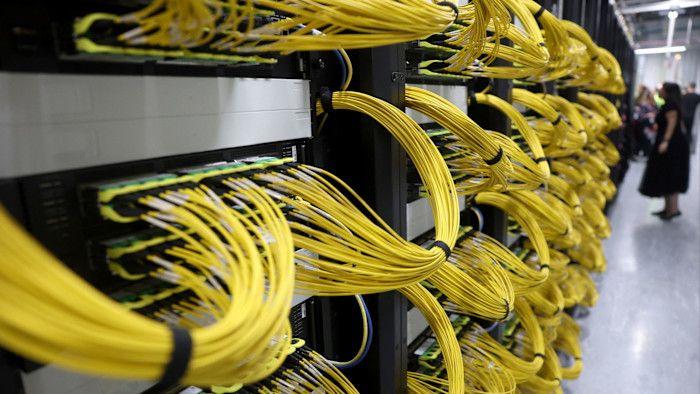
. The sprawling, power-hungry facilities used to store critical IT infrastructure like servers are being built worldwide as the AI boom drives unprecedented demand for computing power. This revelation underscores a growing environmental crisis tied directly to artificial intelligence expansion, with nearly 70% of global data center emissions currently concentrated in the U.S. and China, the world's AI leaders2
.AI Workloads Driving Explosive Growth in Data Center Electricity Consumption
AI already accounts for between 15% and 20% of data center electricity consumption, and this share could climb to 40% by 2030, the report warns
1
. "Data centres are evolving from a marginal factor into a structural driver of electricity demand in many regions," said Patrick Hoffmann, senior climate economist at Allianz2
. The AI-driven environmental impacts extend beyond carbon emissions, creating cascading effects across multiple resource systems. Without immediate decarbonization efforts to transform power grids, data center emissions would more than double by 2030, leading to an estimated $154 billion in annual climate damages—up from $68 billion today1
.Geographic Disparities Highlight Importance of Cleaner Energy Sources
The same computing power can generate vastly different emission levels depending on electricity sources. In India, emissions linked to electricity exceed 600 grams of CO₂ per kilowatt-hour, compared with less than 30 grams in Norway or Sweden, where power generation relies heavily on decarbonizing power grids
2
. This disparity highlights how location and energy infrastructure choices can dramatically alter the carbon footprint of identical AI workloads. Climate damage related to AI workloads alone could exceed $50 billion by 2030, emphasizing the urgent need for tech companies to prioritize cleaner energy sources in their expansion strategies1
.Related Stories

Strain on Water Resources Adds to Environmental Concerns
Beyond carbon emissions, data centers are creating immense strain on water resources. The facilities could require 1.3 trillion to 1.8 trillion liters of water by 2030—comparable to Switzerland's annual water consumption
1
. This water consumption primarily supports cooling systems essential for maintaining optimal operating temperatures in these power-intensive facilities. As AI applications continue gobbling ever-greater computing power, the dual challenge of carbon emissions and water consumption demands coordinated action from policymakers, technology companies, and energy providers to mitigate long-term environmental damage.References
Summarized by

Navi
[2]
Related Stories
UK government admits AI data centres could emit 100 times more carbon than previously forecast
24 Apr 2026•Policy and Regulation
AI Data Centers' Carbon Emissions Surge, Rivaling Commercial Airlines
18 Dec 2024•Technology

Amazon's Texas AI Data Center Could Become America's Largest Single Source of CO₂ Pollution
08 Aug 2026•Business and Economy

Recent Highlights



Recent Highlights
Today's Top Stories



Don’t drown in AI news. We cut through the noise - filtering, ranking and summarizing the most important AI news, breakthroughs and research daily. Follow topics that matter to you and stay ahead.


