DeepSeek's Liang Wenfeng becomes richest AI founder with $36 billion fortune


4 Sources
[1]
DeepSeek's Liang Wenfeng overtakes Amodei and Brockman as AI's richest founder
He got there by writing a very large cheque to himself, and by making sure nobody else at the table got a vote. Liang Wenfeng is now the wealthiest founder in artificial intelligence, according to the Bloomberg Billionaires Index, which revalued his stake in DeepSeek on 13 July and added roughly
[2]
Meet DeepSeek's Liang Wenfeng, the Chinese entrepreneur who is now world's richest AI founder, surpassing Anthropic's Dario Amodei
DeepSeek founder Liang Wenfeng's net worth has significantly increased after a recent funding round. He is now the world's wealthiest creator of artificial intelligence models. This surge in valuation makes him a prominent figure in China's tech landscape. His company's success is attributed to
[3]
Liang Wenfeng: DeepSeek's Liang Wenfeng tops Dario Amodei and Greg Brockman as richest AI founder
Liang is now worth $36 billion, up from about $16.7 billion previously, according to the Bloomberg Billionaires Index. That ranks him well above Anthropic PBC co-founder Dario Amodei and OpenAI's Greg Brockman. DeepSeek founder Liang Wenfeng's net worth more than doubled after his firm's most
[4]
DeepSeek's Liang Wenfeng named world's richest billionaire AI creator
DeepSeek founder Liang Wenfeng has become the world's richest creator of AI models after his fortune surged to US$36 billion following the Chinese startup's latest funding round. Liang's net worth, derived primarily from his nearly 78% stake in DeepSeek, more than doubled after a June fundraising
Share
Copy Link
Liang Wenfeng has overtaken Anthropic's Dario Amodei and OpenAI's Greg Brockman as the world's richest AI model creator. His net worth surged to $36 billion after DeepSeek's $7.4 billion funding round valued the company at $50 billion. What sets him apart is his 78% stake retention and unusual funding structure, where he personally invested $3 billion while maintaining voting control that Silicon Valley founders typically surrender.
Liang Wenfeng Claims Title as Richest AI Founder
Liang Wenfeng now holds the distinction of being the world's richest AI model creator, with a net worth of $36 billion according to the Bloomberg Billionaires Index
1
. This marks a dramatic surge from approximately $16.7 billion, positioning the DeepSeek founder ahead of notable competitors including Anthropic co-founder Dario Amodei, whose fortune stands at $7.98 billion, and OpenAI president Greg Brockman, estimated at $25.5 billion4
. The ranking focuses specifically on founders whose companies generate revenue primarily from AI models, excluding diversified conglomerates and the broader AI supply chain3
.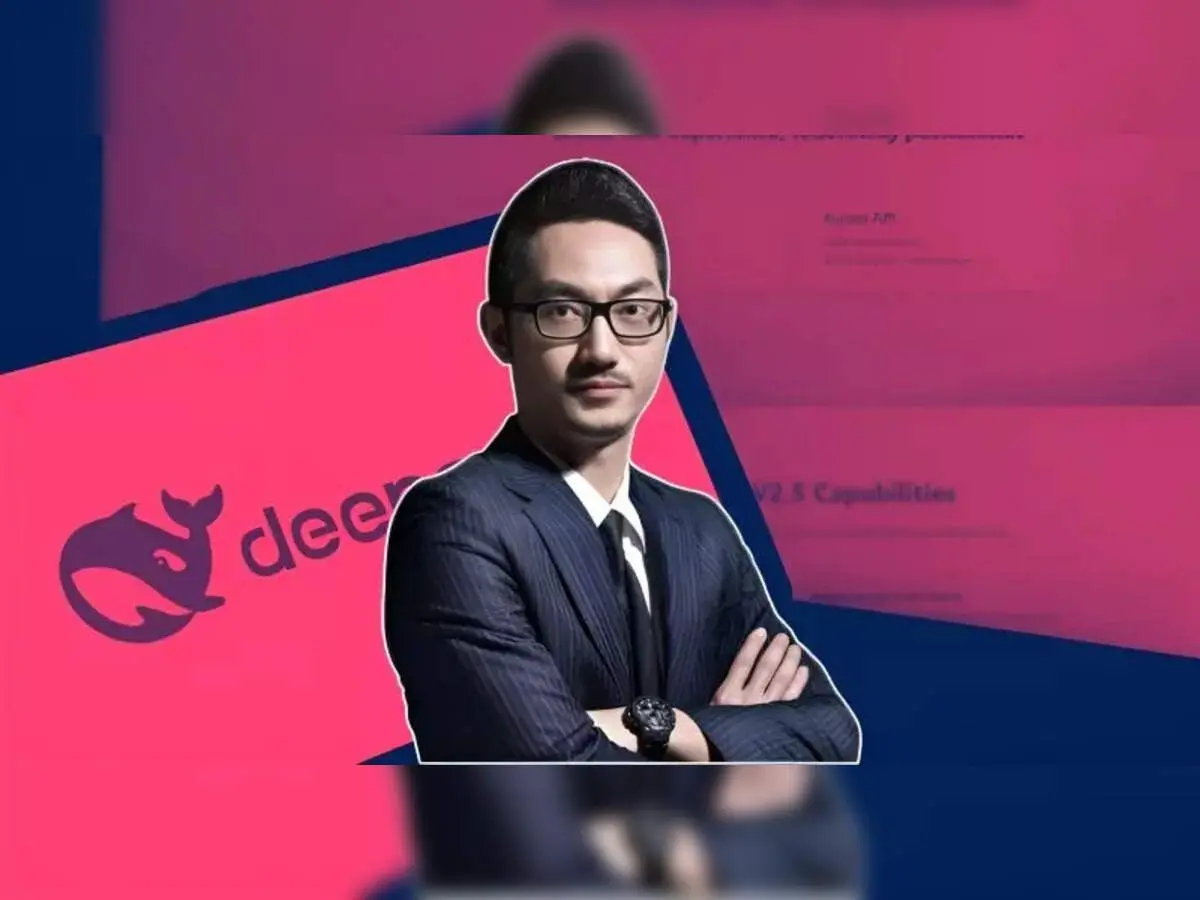
Source: ET
DeepSeek Funding Round Reshapes Valuation Landscape
The catalyst for this wealth explosion was DeepSeek's $7.4 billion funding round in June, which propelled the company's valuation from approximately $10 billion in April to roughly $50 billion
1
. What makes this raise particularly noteworthy is its unusual structure. Liang personally invested approximately $3 billion of his own capital—roughly 40% of the total round—drawn from profits at High-Flyer Asset Management, the quantitative hedge fund he co-founded in 20161
. Despite dilution from the outside investment, he retains an estimated 78% stake in the company valued at $50 billion, adding roughly $19 billion to his fortune overnight2
.Unprecedented Control Through Strategic Funding
What distinguishes Liang from his Silicon Valley peers is the sheer scale of his equity retention and control. The DeepSeek funding round was reportedly oversubscribed despite terms that would "ordinarily clear a room," as investors accepted no governance rights in exchange for entry
1
. This stands in stark contrast to OpenAI and Anthropic, where founders hold minority equity in companies with vast external investors and complex governance structures1
. Beijing's state-backed funds participated in the round, making the valuation as much a strategic statement as a financial one1
. Liang told prospective investors the lab is pursuing artificial general intelligence as its primary goal and will continue releasing open-source models rather than chase near-term commercialization—a strategy sustainable only when funders cannot outvote you1
.Related Stories


From Quantitative Trading to AI Dominance
Born in 1985 in Zhanjiang, Guangdong province, where his father worked as an elementary school teacher, Liang studied electronic engineering at Zhejiang University and earned a master's degree in information and communication engineering
2
. He established High-Flyer Asset Management with two former university classmates who had begun trading as students during the global financial crisis3
. The firm now manages around $8 billion in assets, making it one of China's largest quantitative trading operations2
. Recognizing AI's potential early, Liang's team began investing heavily in computing infrastructure in 2019, stockpiling advanced Nvidia GPUs before US export restrictions tightened3
. These early investments in computing power laid the groundwork for DeepSeek, which launched in July 2023 as an offshoot of High-Flyer's AI division2
.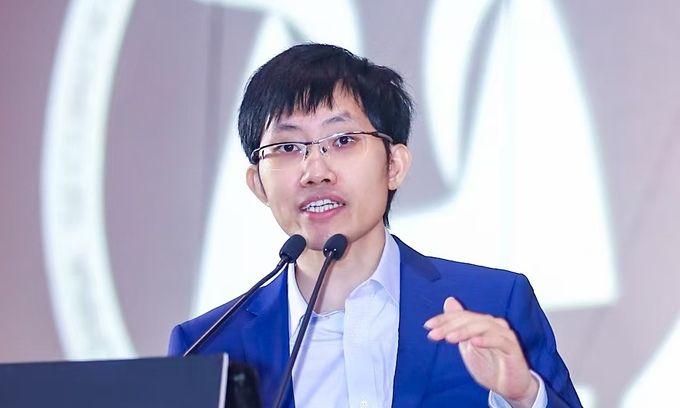
Source: VnExpress
The DeepSeek Moment and Global Impact
DeepSeek shocked the global tech industry in January 2025 when its R1 model achieved performance comparable to OpenAI's offerings at a fraction of the cost, knocking a trillion dollars off American tech stocks in a single day
1
. The release transformed Liang from a little-known Hangzhou quant into a national figure and one of China's most influential AI entrepreneurs1
. Time magazine named him among its "100 Most Influential People" in 2025, noting that his emergence marked a moment when "U.S. tech dominance was being openly questioned"4
. The startup continues building momentum, recently showcasing its V4 model and highlighting compatibility with chips made by Huawei Technologies3
. With his $36 billion fortune, Liang now ranks as China's eighth-richest person, just behind Cambricon Technologies co-founder Chen Tianshi2
. His rise signals a shift in China's tech wealth landscape, where state-backed artificial intelligence is replacing consumer internet tycoons as the dominant force in the AI-driven economy3
.References
Summarized by

Navi
[3]
Related Stories
Recent Highlights



Recent Highlights
Today's Top Stories






Don’t drown in AI news. We cut through the noise - filtering, ranking and summarizing the most important AI news, breakthroughs and research daily. Follow topics that matter to you and stay ahead.


