DeepSeek's AI Super Agent Slashes Coding Time Nearly in Half With Proactive Automation


5 Sources
[1]
DeepSeek Super-Agent takes coding work from GitHub and team chats
DeepSeek Super-Agent is designed to take as little of a team's attention as possible. Bloomberg reports the research prototype is aimed at Anthropic's Claude Code. DeepSeek has released the code for Super-Agent, an experimental AI agent that takes on coding work for a software team. The Chinese AI
[2]
China's DeepSeek's new architecture can operate with less human supervision
Security, privacy and reliability remain major challenges, and DeepSeek describes the open-source prototype as an early research project rather than a finished product. Chinese AI company DeepSeek has unveiled an experimental architecture for a more autonomous AI agent designed to coordinate
[3]
DeepSeek wants to steal Claude Code and Codex's lunch with an AI Super Agent that does not wait around
DeepSeek's new coding agent is tired of waiting for developers to tell it what to do The AI coding race is moving beyond chatbots that write code when developers prompt them to. DeepSeek wants its next agent to be a little more aggressive. The Chinese AI company has released a prototype called
[4]
DeepSeek Proposes Super-Agent Architecture to Automate AI C
In tests, the new architecture significantly reduced task completion time compared to traditional methods. Chinese AI company DeepSeek on October 31 published a technical proposal for a 'super-agent' architecture designed to coordinate multiple artificial intelligence agents with limited human
[5]

DeepSeek developing AI requiring less human input
The proposal comes amid intense competition among AI developers, including US companies Anthropic and OpenAI, the SCMP said. Chinese artificial intelligence company DeepSeek has revealed a design to increase the autonomy of AI coding assistants so they can perform multiple tasks with less human
Share
Copy Link
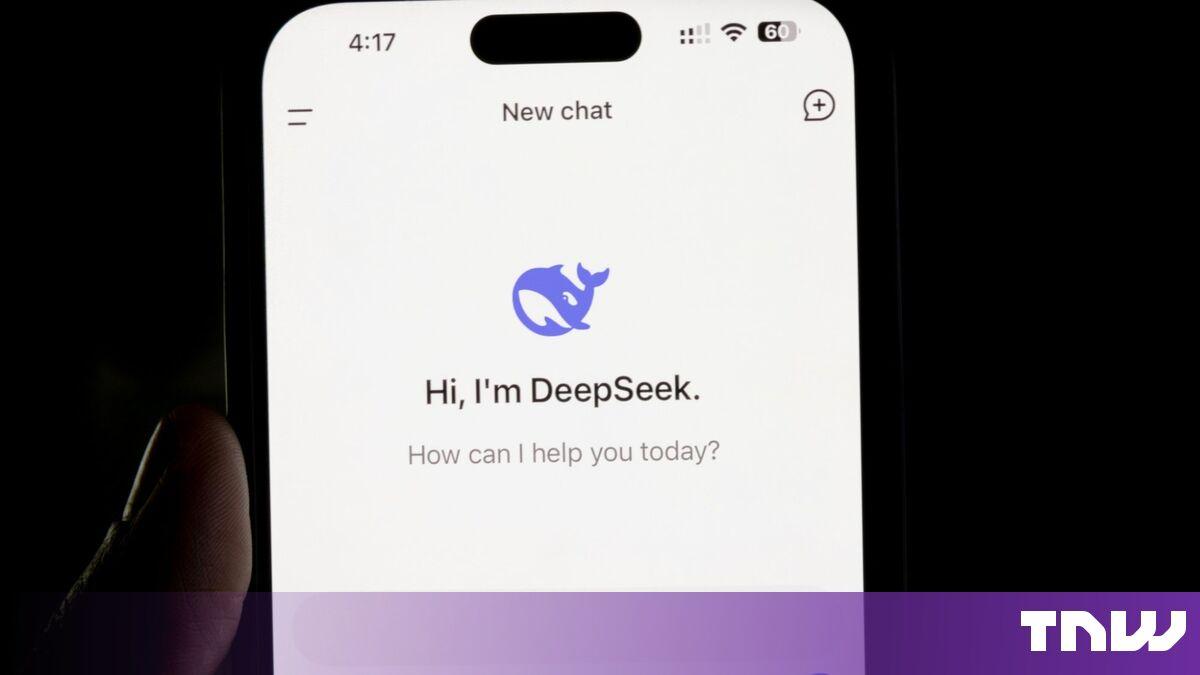
DeepSeek released an open-source AI Super Agent prototype that monitors developer group chats and autonomously handles coding tasks across GitHub repositories. In tests, the multi-agent system completed tasks in 15.7 minutes versus 29.5 minutes for traditional approaches—a 47% improvement. The Chinese AI lab positions this autonomous coding architecture against Anthropic Claude Code and OpenAI Codex.
DeepSeek Releases Open-Source Super-Agent Architecture
DeepSeek unveiled a research prototype called Super-Agent on October 31, an experimental AI agent architecture designed to automate coding tasks with less human supervision
1
4
. The Chinese AI company published the code on GitHub under the name dsh-superagent-prototype with an MIT license, positioning it directly against Anthropic Claude Code and OpenAI Codex1
3
. The DeepSeek Harness team, established earlier this year to compete with US coding tools, published a technical proposal titled "Exploring Super-Agent Design: Towards a More Autonomous Agent System" on its official WeChat account2
4
. DeepSeek describes the release as "not an official DeepSeek product" but rather an early research prototype1
.Autonomous Coding Agent Monitors Chats and Executes Tasks
The AI Super Agent distinguishes itself by proactively monitoring developer group chats for coding problems and suggesting solutions without waiting to be summoned
1
3
. The system works on one GitHub repository and can listen to Feishu, ByteDance's workplace chat app1
4
. When an approved person requests work, the agent opens a task and handles it in its own session, then replies in the original thread with solutions like pull requests1
. A web panel displays what requires human attention. DeepSeek's manual states the core principle: "Take as little human attention as possible, and give as much value as possible"1
. The agent can detect software bugs reported in group chats, attempt to reproduce the problem, develop a fix, and submit proposed code changes for human review—or remain silent if unsuccessful rather than generating unnecessary notifications2
4
.Multi-Agent Systems Coordinate Parallel Workflows
The proposed AI agent architecture separates coordination from execution through a Router-Worker model
4
. A central Router agent receives messages and distributes work to independent Worker agents, which execute tasks in parallel and report results4
. This design addresses a critical constraint: DeepSeek estimates that a person can typically oversee only three to five active AI agent sessions simultaneously, making human attention a bottleneck in deploying multiple AI coding assistants2
4
5
. The system is designed to respond to events such as messages and code updates without requiring explicit instructions for every task, enabling it to automate entire software development workflows rather than isolated coding requests2
4
.Tests Show 47% Reduction in Task Completion Time
In simulated experiments, DeepSeek's super-agent architecture recorded a 95th-percentile task completion time of 15.7 minutes, compared with 29.5 minutes for a single-session approach—a reduction of nearly 47%
2
4
. The experiment involved approximately 300 messages per run, including around 20 work requests, with each configuration tested five times4
. DeepSeek clarified that the workload was synthetic and coding tasks were simulated, with tests measuring scheduling and coordination capabilities rather than actual code-writing ability4
. The technical article did not provide enough detail to determine how broadly the results apply or whether the approach performs consistently across different software development workflows2
.Related Stories



Competition Intensifies Among AI Coding Assistants
The release positions DeepSeek against established US rivals in the AI coding space. Anthropic's Claude Code helps developers navigate codebases, debug issues, write code, run tests, and make pull requests
3
. OpenAI Codex has demonstrated agent-based workflows across software development, including parallel tasks and code review tools3
. At GitHub Universe in October, GitHub showcased a Copilot app that runs agent work across multiple repositories in parallel sessions1
. However, getting agents to share work remains challenging. In January, researchers behind the CooperBench study found that coding agents performed worse as a team, with success rates averaging 30% lower than when each agent worked alone1
. DeepSeek has raised approximately 100 billion yuan ($15 billion) ahead of a planned initial public offering3
5
.Security Risks and Implementation Challenges Remain
DeepSeek acknowledged that security, privacy, and reliability remain major challenges for autonomous agents connected to external services
2
4
. The company identified risks including prompt injection and potential credential exposure4
. DeepSeek warns that an agent acting for an entire team can waste the whole team's attention if not properly constrained, so it acts only when asked or when a team's own rules allow it1
2
. The public code differs from DeepSeek's internal version, with some architectural ideas in the technical article remaining future development directions not yet implemented in the released prototype1
4
. DeepSeek tells users to review and adapt the code before running it, describing it as research-stage software rather than production-ready1
4
. The release comes as DeepSeek faces restrictions in the US, with civilian federal agencies instructed to remove DeepSeek last month1
.References
Summarized by

Navi
[2]
[3]
[5]
Related Stories
Recent Highlights
1
OpenAI's AI Models Disprove 27-Year Exponential Time Hypothesis, Rendering Decades of Research Obsolete
Science and Research
2
Google DeepMind unveils Genie 4 world model with audio and 2-minute interactive simulations
Technology

3
Anthropic Faces $379 Million in Copyright Infringement Lawsuits Over Unlawfully Using Songs
Policy and Regulation

Recent Highlights
Today's Top Stories







Don’t drown in AI news. We cut through the noise - filtering, ranking and summarizing the most important AI news, breakthroughs and research daily. Follow topics that matter to you and stay ahead.


