3 Sources
[1]
Dream raises $260m at $3bn, tripling its value in 16 months
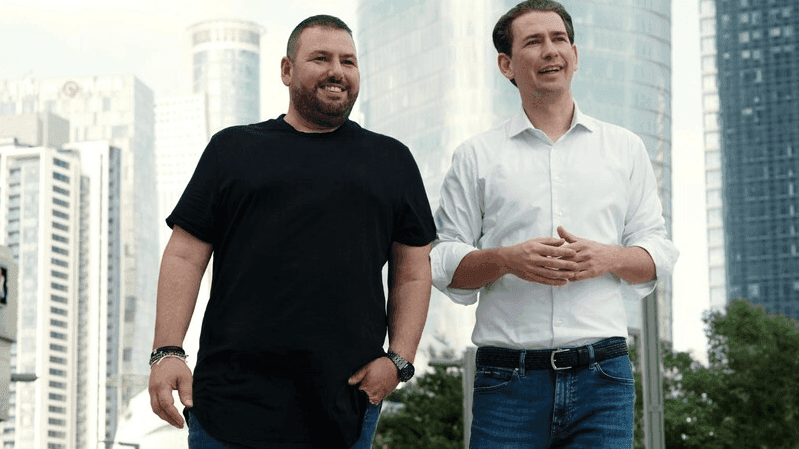
The national-security AI startup raised $260m, nearly tripling the value it held 16 months ago. Sixteen months ago, Dream was a billion-dollar company. This week it is worth three. The Israeli AI and cybersecurity firm has raised $260m in a round that valued it at $3bn, nearly tripling the $1.1bn it commanded in February 2025, a pace of revaluation that says as much about the market for defensive AI as it does about the company itself. The round was led by Bicycle Capital and Group 11, with Bain Capital Ventures, Antler, and Tru Arrow Partners also taking part. Bain had led Dream's previous round, the $100m-plus raise that first lifted it into unicorn territory, and its return is the kind of follow-on that tends to anchor a step-up of this size. The new capital lands less than a year and a half after the last, in a sector where rounds are now stacked closer and closer together. What Dream sells is national-scale cyber defence. The company provides AI and cybersecurity services to governments and operators of critical infrastructure, the power grids, water systems, and transport networks whose compromise is a state-level rather than a corporate problem. It has positioned itself as a vendor for the part of the threat landscape where the attacker is often another government, and where the buyer is a ministry rather than a chief information security officer. The founders are a large part of the story. Dream was created by Shalev Hulio, the former chief executive and co-founder of NSO Group, the surveillance-software maker behind the Pegasus spyware that drew years of international controversy, alongside Sebastian Kurz, the former Austrian chancellor, and Gil Dolev. It is an unusual combination of a spyware veteran and a head of government, and it gives Dream a Rolodex few cybersecurity startups can match when the customers are states. The valuation fits a wider pattern in which security has become one of the most fundable corners of the AI boom. European and Israeli firms have been clearing the unicorn bar at speed, with Belgian developer-security startup Aikido reaching a $1bn valuation in roughly three years, and defence-focused AI drawing fresh capital into sovereign and national-security use cases. The technology underneath that current is maturing fast. Security startups are increasingly building autonomous agents that do work which used to require expensive human specialists, from AI penetration-testing agents that compress manual security tests into minutes to systems that monitor and respond to threats without a human in the loop. For governments facing more attacks than they can staff against, that automation is the pitch, and Dream is selling it at the highest tier of the market. The funding pace also reflects a broader repricing of cybersecurity inside the AI era. As attackers begin to use generative models to write malware, automate reconnaissance, and probe systems at machine speed, the defensive side has had to answer in kind, and investors have concluded that the firms building AI-native defence are not a niche but a necessity. That conviction has compressed the time between rounds and inflated the valuations attached to them, Dream's included. What the company has not disclosed is as telling as the round. Dream has not published revenue figures, customer counts, or the specific governments it serves, which is unsurprising for a vendor whose contracts are often classified, but which leaves outsiders reliant on the valuation as a proxy for traction. In national-security cyber, the most telling metrics are frequently the ones that never become public, and the $3bn figure is doing a lot of the talking in their absence. Dream has not detailed how it will spend the $260m, and the round leaves open the usual questions about how quickly a company selling to governments can convert a soaring valuation into the revenue that justifies it. Public-sector sales cycles are long, and national-security procurement longer still. What the figure establishes is the market's conviction: a company defending nations against AI-enabled attacks is, for now, one investors are willing to pay almost any price to own a piece of.
[2]
AI company Dream triples value to $3 billion in funding round
Dream, an Israeli artificial intelligence company that provides AI and cybersecurity services to governments and critical infrastructure operators, has raised $260 million at a $3 billion valuation. Bicycle Capital and Group 11 led the round, which nearly tripled its valuation from $1 billion in February 2025, Dream co-founders Shalev Hulio and Sebastian Kurz said in an interview. Other investors include Bain Capital Ventures, Antler and Tru Arrow Partners. Hulio rose to prominence as a co-founder and former chief executive officer of NSO Group, maker of the controversial spy software Pegasus. He founded Dream in 2023 alongside Gil Dolev and Kurz, a former chancellor of Austria. After initially focusing on AI-based cyber defense for nation-states, the company is now rolling out a custom AI platform for governments and state-owned enterprises seeking more control over their data and infrastructure. "As AI becomes central to national security, economy and public services, governments face a fundamental choice: depend on systems they do not control from the US or China, for example, or build capabilities they fully own. Dream was founded to eliminate that trade-off," said Hulio. The issue of tech sovereignty took on even greater significance last week, when the White House decided to withhold Anthropic PBC's latest AI models from foreign nationals. Hulio described the moment as "a wake-up call for all nations to understand that if they want to move to AI, they can't rely on foreign model clouds or tools." While most private individuals or corporations can run systems on the cloud, Kurz notes that governments and other sensitive data holders "require on-premise solutions" which allow them to "fully own, control, and operate" the technology. Kurz, who is currently being investigated for alleged corruption in Austria, and was cleared of perjury charges last year in court, singled out counterfraud as one of Atlas's best use cases. Others, Hulio said, include procurement, streamlining corporate operations, and detecting theft in company supply chains. Sales have totaled almost $300 million since Dream began commercial operations in late 2024. Last year, it launched a product called Hero, an autonomous AI agent that helps governments identify and patch up security vulnerabilities. The new capital will allow the company to "accelerate deployment of the company's sovereign AI and national cyber defense platforms across Europe, the Middle East, Asia, and the Americas," Kurz said. "Especially in Europe, there's much need to prepare for these new threats."
[3]
Dream raises $260 million as demand for sovereign AI accelerates
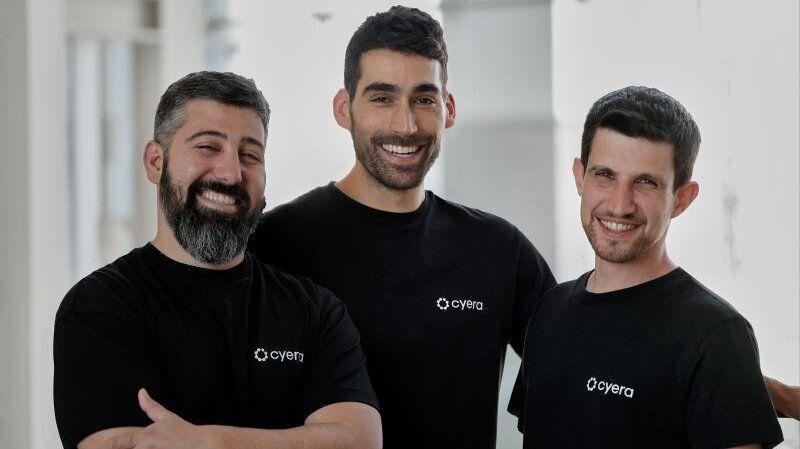
Dream, a company that builds artificial intelligence and cyber‑defense systems for governments and critical infrastructure, has raised $260 million in new funding, pushing its valuation to $3 billion just three years after its founding. The round was co‑led by Bicycle Capital and Group 11, with additional participation from Antler, Bain Capital Ventures, Tru Arrow Partners, and other investors. The company said the financing follows nearly $300 million in total contract value since it began commercial operations in late 2024. Dream positions its technology as sovereign AI, with its platforms designed to run entirely within government‑governed environments, allowing national authorities to secure and use their data without depending on foreign technology providers. Sebastian Kurz, Dream's president and co-founder, said governments are moving from asking whether to use AI to determining how to maintain control over it. He described sovereign AI as a foundation for national resilience and competitiveness. Speaking to The Jerusalem Post from Tel Aviv, Kurz said that he and Hulio started Dream together "with the idea that AI would change the world and how cyber attacks are working." And as the United States and China continue to lead the AI sovereignty race, "other countries need this technology and not be dependent on others." According to him, Europe is behind in the race, "and this is why we, as a European-Israeli company, can contribute a lot." "Nations will become supernations if they use AI," Kurtz said. "In the past, a nation was a super nation if they had nuclear power. But if you look to the future, things will be more digital. Cyber, quantum, and AI will be the key." Shalev Hulio, Dream's co-founder and CEO, said the rise of AI represents a shift comparable to earlier eras of strategic infrastructure investment, which were the foundation of economic growth and national security. He explained that the company's mission is to help governments protect and operationalize their information as AI becomes central to national security and public services. "Land created empires. Industry created nations. Artificial intelligence will create the next super nations," he said. "Every nation has data. Few can protect it. Fewer can use it. Sovereign AI is the key. We built Dream to help governments secure their information, transform it into knowledge, and convert that knowledge into national capability," he shared. "The future of a nation should never depend on technology it does not control." The former chancellor of Austria said that the disruptive power of AI will allow for more efficiency across all sectors. Dream, he explained, offers "AI in a box. Systems that are built for nations and critical infrastructure." Dream currently offers three main platforms. Sphere provides unified national‑level cyber defense capabilities, combining cyber intelligence, exposure management, attack‑path analysis, digital‑twin modeling, and AI‑driven detection and response. Hero functions as an autonomous AI security researcher that identifies vulnerabilities and continuously tests defenses. Atlas is the company's sovereign AI system, designed to connect fragmented government data and generate structured insights within secure, government‑controlled environments. "The future is all about data," Kurtz told the Post. "You just need the capabilities to make something out of it." Growing footprint Investors said the company is emerging at the intersection of AI, cybersecurity, and government technology. "Governments around the world are increasingly seeking secure and sovereign ways to deploy artificial intelligence," said Shu Nyatta, co-founder and managing partner of Bicycle Capital. "Dream has built a unique platform at the intersection of AI, cybersecurity, and government technology. The company is defining one of the most important technology categories of the coming decade." Founded in 2023 by Hulio, Kurz, and Gil Dolev, Dream employs about 350 people across Tel Aviv, Abu Dhabi, and Vienna. The company said the new capital will accelerate deployment of Dream's sovereign AI and national cyber defense platforms across Europe, the Middle East, Asia, and the Americas. With the latest round, Dream has raised $412 million to date. In February, the company opened a sovereign AI data center near Modi'in. The facility, which is part of a tens‑of‑millions‑of‑dollars investment, is designed to serve national agencies and critical infrastructure operators that require full control over data, model training, and deployment environments. The data center includes a GPU cluster built on NVIDIA B200 systems, enabling DREAM to train proprietary language models and domain‑specific AI systems. The company develops its own models rather than relying solely on public foundation models, targeting sectors such as cybersecurity, healthcare, transportation, and finance, as well as decision‑support systems for government agencies. With the data center in Moddin, DREAM aims to strengthen its role in Israel's growing AI ecosystem, which includes defense‑oriented AI initiatives, secure cloud environments, and national cyber capabilities. The company said the facility will support long‑term investment in AI systems that must operate under the highest levels of security, reliability, and accountability.
Share
Copy Link
Israeli AI and cyber-defense company Dream has raised $260 million at a $3 billion valuation, nearly tripling its worth in just 16 months. Founded by NSO Group's Shalev Hulio and former Austrian Chancellor Sebastian Kurz, the firm provides AI-driven cybersecurity services to governments and critical infrastructure operators. With $300 million in sales since late 2024, Dream positions itself at the intersection of national security and AI sovereignty.
Dream, an Israeli AI and cyber-defense company, has raised $260 million in new funding at a $3 billion valuation, nearly tripling the $1.1 billion it commanded just 16 months ago in February 2025
1
. The round was co-led by Bicycle Capital and Group 11, with participation from Bain Capital Ventures, Antler, and Tru Arrow Partners2
. This aggressive pace of revaluation reflects growing investor conviction that AI cybersecurity for nation-states represents one of the most critical technology categories of the coming decade.Founded in 2023 by Shalev Hulio, former CEO and co-founder of NSO Group, alongside Sebastian Kurz, the former Austrian chancellor, and Gil Dolev, Dream brings an unusual combination of surveillance technology expertise and government connections to the national security space
1
. The company now employs approximately 350 people across Tel Aviv, Abu Dhabi, and Vienna3
.Dream positions its technology as sovereign AI, designed to run entirely within government-controlled environments, allowing national authorities to secure and use their data without depending on foreign technology providers
3
. After initially focusing on national-scale cyber defense for nation-states, the company is now rolling out a custom AI platform for governments and state-owned enterprises seeking more control over their critical infrastructure .
Source: Jerusalem Post
The issue of tech sovereignty gained urgency last week when the White House decided to withhold Anthropic's latest AI models from foreign nationals. Hulio described this moment as "a wake-up call for all nations to understand that if they want to move to AI, they can't rely on foreign model clouds or tools"
2
. While most private individuals or corporations can run systems on the cloud, Kurz notes that governments and other sensitive data holders "require on-premise solutions" which allow them to "fully own, control, and operate" the technology .Dream has reported nearly $300 million in total contract value since it began commercial operations in late 2024
2
3
. This rapid revenue generation in the national security sector, where procurement cycles are typically lengthy, signals strong demand for AI-driven cybersecurity services among government clients. The company provides AI and cybersecurity services to governments and operators of critical infrastructure, including power grids, water systems, and transport networks whose compromise represents a state-level rather than corporate problem1
.Dream currently offers three main platforms addressing different aspects of national security solutions. Sphere provides unified national-level cyber defense capabilities, combining cyber intelligence, exposure management, attack-path analysis, digital-twin modeling, and AI-driven detection and response
3
. Hero functions as an autonomous AI agent that identifies vulnerabilities and continuously tests defenses, compressing manual security tests that used to require expensive human specialists into minutes1
3
. Atlas is the company's sovereign AI system, designed to connect fragmented government data and generate structured insights within secure, government-controlled environments3
.Related Stories
In February, Dream opened a sovereign AI data center near Modi'in as part of a tens-of-millions-of-dollars investment designed to serve national agencies and critical infrastructure operators that require full control over data, model training, and deployment environments
3
. The facility includes a GPU cluster built on NVIDIA B200 systems, enabling Dream to train proprietary language models and domain-specific AI systems rather than relying solely on public foundation models3
.
Source: ET
Speaking from Tel Aviv, Kurz told The Jerusalem Post that he and Hulio started Dream "with the idea that AI would change the world and how cyber attacks are working." As the United States and China continue to lead the AI sovereignty race, "other countries need this technology and not be dependent on others"
3
. According to Kurz, Europe is behind in the race, "and this is why we, as a European-Israeli company, can contribute a lot"3
.The valuation fits a wider pattern in which security has become one of the most fundable corners of the AI boom, with European and Israeli firms clearing the unicorn bar at speed
1
. As attackers begin to use generative models to write malware, automate reconnaissance, and probe systems at machine speed, the defensive side has had to answer in kind, and investors have concluded that firms building AI-native defense are not a niche but a necessity1
.Shu Nyatta, co-founder and managing partner of Bicycle Capital, stated that "governments around the world are increasingly seeking secure and sovereign ways to deploy artificial intelligence. Dream has built a unique platform at the intersection of AI, cybersecurity, and government technology. The company is defining one of the most important technology categories of the coming decade"
3
.Hulio framed the opportunity in historical terms: "Land created empires. Industry created nations. Artificial intelligence will create the next super nations. Every nation has data. Few can protect it. Fewer can use it. Sovereign AI is the key"
3
. The new capital will accelerate deployment of Dream's sovereign AI platforms and national cyber defense systems across Europe, the Middle East, Asia, and the Americas2
. With the latest round, Dream has raised $412 million to date3
.Summarized by
Navi
[1]
[3]
18 Feb 2025•Technology

10 Jun 2026•Startups

11 Jun 2025•Business and Economy

1
Policy and Regulation

2
Business and Economy

3
Policy and Regulation