2 Sources
[1]
Ed Markey's AI accountability bills take on Big Tech
Senator Ed Markey has bundled close to a dozen bills into an "AI accountability agenda," led by a plan to make data centres win federal sign-off that they "will not harm the public interest" before a shovel goes in. The politics are brutal, and the US is years behind Europe. The fight over AI's harms has played out state by state. One US senator wants to make it federal, all at once. Ed Markey has a long list of worries about artificial intelligence. Thirsty data centres. Workplace surveillance. Biased algorithms. Chatbots that prey on children. On Friday the Massachusetts Democrat tried to turn that list into law. In an exclusive with the Guardian, Markey unveiled a package of bills he calls an "AI accountability agenda," built around "taking power back from big tech." The 79-year-old senator has already written close to a dozen AI bills. This is his attempt to tie them together. Prove your data centre won't do harm The centrepiece is a bill due in the coming weeks. It would force any company that owns or plans a data centre to get certification from the Federal Communications Commission before construction begins. That certification would have to confirm the site "will not harm the public interest." Under the draft, the FCC would weigh a proposed data centre's effect on air and water quality, noise, energy costs, grid reliability, local wildlife, and the local economy. It would consult the Environmental Protection Agency and zoning boards. "We need to make sure these datacenters don't turn into pollution bombs," Markey said. The people behind the bills Markey's pitch leans on people he says are already being harmed. A rural Georgia resident who cannot drink her tap water after a data centre went up nearby. Parents who say their 14-year-old son died by suicide after a chatbot groomed him. A woman who sued over an algorithm she says denied her housing. A veteran nurse pressured to trust an AI's judgment over her own. Each case maps to a bill. Markey wants independent bias audits before high-stakes algorithms ship. He wants to bar employers from leaning mainly on automated systems to hire, fire and promote. He wants chatbot firms stopped from letting children grow emotionally dependent on them. And he wants hospitals to keep a human override for AI decisions. A federal answer to a patchwork Markey's argument is that safety should not depend on your postcode. "Every American is entitled to these safeguards," he said, warning that a state-by-state patchwork "would leave too many people exposed." That is also where Europe comes in. The EU already runs the kind of up-front, precautionary regime Markey is reaching for, through its AI Act, GDPR and online-safety rules. Washington has done almost nothing at the federal level since ChatGPT arrived in 2022, even as Silicon Valley itself has started asking for rules. Long odds The politics are unforgiving. Most of Markey's bills are stuck, and he is one senator in a Congress that has favoured speed over guardrails. He says he is optimistic anyway. "Ultimately, there will be national solutions that will be put on the books," he said. There are a few footholds. In March, the Senate passed a bill tightening online safety rules for children, banning targeted ads to minors and limiting their data. Other lawmakers are separately pushing to make Big Tech pay AI's power bills, as those same data centres drive up electricity costs and, in one case, contaminated a city's water. Markey traces the whole fight back to his father, who lost a finger to a factory machine before modern safety laws existed. His point is that technology keeps outrunning the rules meant to contain it. AI, he argues, is just the newest version of that gap.
[2]
'AI accountability agenda': US senator unveils package of bills to curb tech's harms
Exclusive: Senator Ed Markey on why he has proposed legislation aimed at curbing datacenters, automated hiring systems and harm to children US senator Ed Markey is worried about the perils of unregulated artificial intelligence. What part? All of it: the costs associated with thirsty, energy-guzzling datacenters, intrusive workplace surveillance, bias in discriminatory algorithms, AI overriding workers' judgments, and deepening economic inequality - as those who profit most from AI rake in extraordinary windfalls. The Massachusetts Democrat's interest in convincing Congress to rein in the harmful effects of AI has only grown, as the technology embeds itself deeper across industries. Markey has already authored close to a dozen bills aimed at tackling these problems. In the coming weeks, the 79-year-old senator, plans to introduce his latest bill, focused on federal certification requirements for datacenters powering the AI boom - as anger mounts about their negative effects on the environment and energy bills. "We need to make sure these datacenters don't turn into pollution bombs," Markey said. On Friday, Markey unveiled this package of bills as part of a new "AI accountability agenda" focused on "taking power back from big tech". "Every American is entitled to these safeguards ... it shouldn't be limited just by geographic boundaries of the individual states," said Markey, who is running for his third full term in the Senate. He stressed that a piecemeal approach to AI "would leave too many people exposed" and that the government has to act on regulation quickly, though there has been little federal movement on the subject since ChatGPT's release in 2022. Markey's preliminary version of the bill, shared with the Guardian, would require companies that own or propose datacenters to obtain certification from the Federal Communications Commission (FCC) affirming that the facilities "will not harm the public interest" even before construction begins. The proposal states that the commission would evaluate proposed data centers' potential effects on air and water quality, noise levels, energy costs and electricity system reliability, the local ecosystem and wildlife, the local economy and jobs. The agency should consult with federal, state and local agencies, including the Environmental Protection Agency (EPA) and zoning boards, the discussion draft states. The broad agenda highlights specific people hit hardest by the issues his bills seek to address. That includes grieving parents who say their 14-year-old son died by suicide after being sexually groomed by a chatbot, a resident of a rural Georgia town who can't drink her tap water at home after datacenter construction began nearby, a woman who sued over an allegedly discriminatory algorithm that denied her housing and a veteran nurse who felt morally distressed about following an AI model's instincts over her own. Markey's other AI legislation includes bills that would ban employers from primarily relying on automated systems for hiring, firing and promotion decisions; require stronger safeguards for AI chatbot companies to prevent kids from becoming emotionally dependent on them; and mandate that AI developers conduct detailed, independent audits of potential bias and discrimination before releasing algorithms that make important decisions. Other proposals would institute every federal agency using, funding or overseeing AI to have an office of civil rights focused on combatting bias and discrimination; require health care facilities to create human override options for AI decisions; protect workers who disagree with AI recommendations; and ensure companies report the energy and environmental effects of data centers in a standardized way. Fighting inertia Despite Congress's inaction on AI regulation, Markey is optimistic that in the long-run, many of his proposals will win bipartisan support: "Ultimately, there will be national solutions that will be put on the books," he said. Many of his AI bills are still stuttering through the legislative process, but one of his child safety proposals has picked up momentum. In March, the Senate passed the Children and Teens' Online Privacy Protection Act, which would ban targeted ads to children and teens, make it easier for families to delete a kid's personal data and set strict limits on the collection of personal information from minors. Another of Markey's bills would restrict the growing use of surveillance technology in the workplace, and a separate proposal would ban productivity quotas he says push staff beyond their physical limits and lead to injuries. The senator says his conversations with workers about how intensely their workdays are monitored have reinforced his belief that the labor movement's hard fought protections haven't caught up with technological advances. "The conversations I had with workers absolutely animated my decision to introduce legislation," he said. Labor rights are especially personal for Markey. His father worked in a factory before the landmark Occupational Safety and Health Administration was created to ensure safe working conditions. While on the job, Markey said at a 2024 rally outside an Amazon warehouse, that his father's finger was "crushed and cut off" because of an accident with a machine, and that his boss asked him to report back to work promptly. "My father had another finger, which he used to describe his attitude towards the boss and that company - and it reflects how too many workers in our country feel."
Share
Copy Link
Massachusetts Senator Ed Markey has unveiled an AI accountability agenda bundling close to a dozen bills aimed at curbing Big Tech's unchecked AI expansion. The centerpiece requires federal certification for data centers before construction begins, while other measures target algorithmic bias, workplace surveillance, and child safety online. The push comes as the US lags years behind Europe on AI regulation.
Senator Ed Markey has introduced an AI accountability agenda that bundles close to a dozen AI-related bills into a comprehensive legislative package aimed at reining in Big Tech
1
. The 79-year-old Massachusetts Democrat unveiled the package in an exclusive with the Guardian, framing it as an effort to take "power back from big tech"2
. His argument centers on a critical gap: while AI embeds itself deeper across industries, the US has done almost nothing at the federal level since ChatGPT arrived in 2022, leaving Americans vulnerable to a state-by-state patchwork of protections1
.
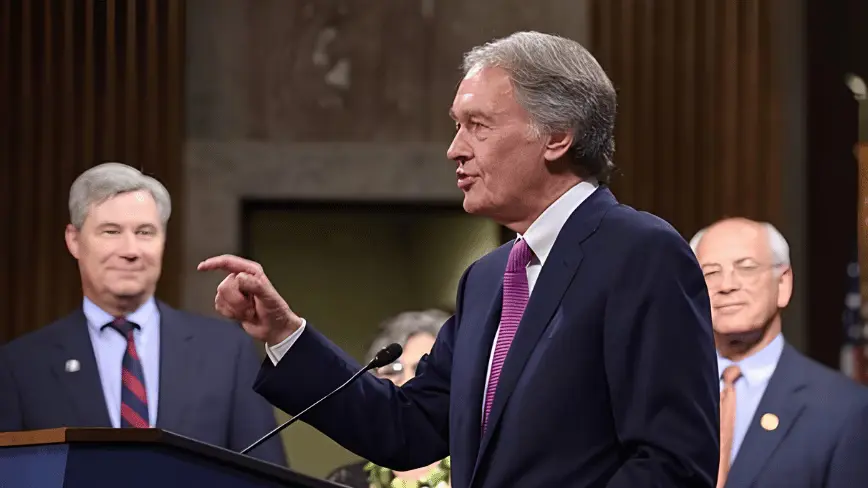
Source: The Next Web
The centerpiece of Markey's AI regulation push is a forthcoming bill that would require federal certification for data centers before construction begins
2
. Under the draft legislation, companies that own or propose data centers must obtain certification from the Federal Communications Commission affirming the facilities "will not harm the public interest"1
. The FCC would evaluate potential effects on air and water quality, noise levels, energy costs, electricity system reliability, local ecosystem and wildlife, and the local economy, consulting with the Environmental Protection Agency and zoning boards2
. "We need to make sure these datacenters don't turn into pollution bombs," Markey said, pointing to a rural Georgia resident who cannot drink her tap water after a data center went up nearby1
.Markey's broader agenda addresses algorithmic bias through mandatory independent audits before high-stakes algorithms ship
1
. One bill would ban employers from primarily relying on automated hiring systems for hiring, firing, and promotion decisions2
. Another proposal would restrict growing workplace surveillance practices, while a separate measure would ban productivity quotas that push staff beyond physical limits and lead to injuries2
. The senator grounded these proposals in real cases, including a woman who sued over an allegedly discriminatory algorithm that denied her housing and a veteran nurse who felt morally distressed about following an AI model's instincts over her own2
.The package includes measures to curb tech's harms to children, with Markey proposing safeguards for AI chatbots to prevent kids from becoming emotionally dependent on them
2
. This bill responds directly to grieving parents who say their 14-year-old son died by suicide after being sexually groomed by a chatbot2
. One proposal with bipartisan potential has already gained traction: in March, the Senate passed the Children and Teens' Online Privacy Protection Act, which would ban targeted ads to children and teens, make it easier for families to delete a kid's personal data, and set strict limits on collection of personal information from minors .Related Stories

Addressing the environmental impact of AI infrastructure, Markey's proposals would ensure companies report energy use and environmental reporting standards for data centers in a standardized way
2
. Other lawmakers are separately pushing to make Big Tech pay AI's power bills, as data centers drive up electricity costs and, in one case, contaminated a city's water1
. The agenda also mandates human oversight across sectors, requiring health care facilities to create human override options for AI decisions and protecting workers who disagree with AI recommendations2
. Another proposal would institute every federal agency using, funding, or overseeing AI to have an office of civil rights focused on combating bias and discrimination2
.The politics are unforgiving. Most of Markey's bills are stuck, and he is one senator in a Congress that has favored speed over guardrails
1
. Despite legislative inertia on AI regulation, Markey remains optimistic about bipartisan potential: "Ultimately, there will be national solutions that will be put on the books," he said2
. His pitch emphasizes that "every American is entitled to these safeguards" and that safety should not depend on geographic boundaries, warning that a piecemeal approach "would leave too many people exposed"1
. The US is years behind Europe, which already runs the kind of up-front, precautionary regime Markey is reaching for through its AI Act, GDPR, and online-safety rules1
. Markey traces his motivation to his father, who lost a finger to a factory machine before modern safety laws existed, arguing that technology keeps outrunning the rules meant to contain it and AI is just the newest version of that gap1
. The question now is whether Congress will act before societal harms from unregulated AI deepen further, or whether federal oversight will remain aspirational while Silicon Valley itself has started asking for rules1
. For labor protections advocates watching this space, the senator's conversations with workers about intensely monitored workdays have reinforced his belief that hard-fought protections haven't caught up with technological advances2
.Summarized by
Navi
[1]
19 Feb 2026•Policy and Regulation

25 Mar 2026•Policy and Regulation

28 Apr 2026•Policy and Regulation

1
Technology

2
Policy and Regulation

3
Technology