Elon Musk tried to recruit Sam Altman to Tesla AI lab before OpenAI split, trial reveals


64 Sources
[1]
Elon Musk tried to hire OpenAI founders to start AI unit inside Tesla
Elon Musk tried to hire OpenAI's founding team, including Sam Altman, to lead a new AI lab within Tesla in 2018, as the AI start-up's leaders grappled over who should control the company and its direction. Musk, a co-founder of the AI group, proposed bringing Altman, Greg Brockman and Ilya
[2]
Elon Musk's lawsuit is putting OpenAI's safety record under the microscope | TechCrunch
Elon Musk's legal effort to dismantle OpenAI may hinge on how its for-profit subsidiary enhances or detracts from the frontier lab's founding mission of ensuring that humanity benefits from artificial general intelligence. On Thursday, a federal court in Oakland heard a former employee and board
[3]
Week one of the Musk v. Altman trial: What it was like in the room
The stakes are high -- even a partial win for Musk could set OpenAI back as it reportedly plans to go public this year. But most of the attention comes from the spectacle of a feud on X now playing out in federal court. "Cringey texts, raw diary entries, and endless scheming behind the founding and
[4]
OpenAI president explains to jury why his diary entries sound greedy
Greg Brockman never wanted to discuss his personal journal in public. But the OpenAI president has been stuck for days doing exactly that, while testifying in a trial in which Elon Musk has alleged that OpenAI abandoned its nonprofit mission to instead focus on personally enriching leaders like
[5]
Elon Musk's Last-Ditch Effort to Control OpenAI: Recruit Sam Altman to Tesla
A few months before Elon Musk left OpenAI's board of directors in February 2018, he tried to recruit Sam Altman to join a "world-class AI lab" within Tesla. Musk went as far as offering the OpenAI CEO a Tesla board seat, according to emails and testimony presented in federal court on Wednesday
[6]
How Elon Musk left OpenAI, according to Greg Brockman | TechCrunch
In late August 2017, key figures at OpenAI (then a small non-profit research lab) gathered to discuss how they would create a for-profit to commercialize its technology and raise the funds needed to realize AGI. Elon Musk was demanding full control of the company and had just given each of his
[7]
Musk v. Altman week 1: Elon Musk says he was duped, warns AI could kill us all, and admits that xAI distills OpenAI's models
"I was a fool who provided them free funding to create a startup," Musk told the jury. He said when he cofounded OpenAI in 2015 with Altman and Brockman, he was donating to a nonprofit developing AI for the benefit of humanity, not to make the executives rich. "I gave them $38 million of
[8]
Elon Musk's 7 biggest stumbles on the stand at OpenAI trial
Elon Musk seems tired and cranky. On Thursday, he took the stand for the third day in a four-week trial stemming from his lawsuit alleging that OpenAI abandoned its mission and should be blocked from taking the company public later this year. If Musk plays his cards right, Sam Altman could be
[9]
'I Actually Thought He Was Going to Hit Me,' OpenAI's Greg Brockman Says of Elon Musk
In August 2017, Greg Brockman and Ilya Sutskever gathered at Elon Musk's self-described "haunted mansion," a 47-acre, $23 million estate in Hillsborough, south of San Francisco, to discuss the future of OpenAI. Actor Amber Heard, Musk's then-girlfriend, had served the group whiskey and then dashed
[10]

Mira Murati tells the court that she couldn't trust Sam Altman's words
Mira Murati, OpenAI's former CTO, has testified under oath that CEO Sam Altman lied to her about the safety standards for a new AI model. In a video deposition shown during the ongoing Musk v. Altman trial on Wednesday, Murati said Altman falsely stated that OpenAI's legal department determined a
[11]

Musk Says No Written Agreement for His Early Donation to OpenAI
Elon Musk acknowledged there was no written agreement or contract with OpenAI regarding the terms of his donation to the company when it was first founded as a nonprofit research organization more than a decade ago. Under questioning from OpenAI attorney William Savitt, Musk said he did not have
[12]

Elon Musk tried to recruit Sam Altman for role at Tesla before falling out at OpenAI
Elon Musk tried to hire OpenAI's founding team, including Sam Altman, to lead a new AI lab within Tesla in 2018, as the AI start-up's leaders grappled over who should control the company and its direction. Musk, a co-founder of the AI group, proposed bringing Altman, Greg Brockman and Ilya
[13]

Musk v Altman and the 'manifest destiny' of AI
May 6 (Reuters) - For the past week and a half, I've been watching Silicon Valley's biggest soap opera play out in a courtroom in Oakland, California. The stakes are nothing short of the future of AI, which to these longtime founders - Elon Musk and Sam Altman - actually means the fate of the
[14]

Worries about AI's risks to humanity loom over the trial pitting Musk against OpenAI's leaders
OAKLAND, Calif. (AP) -- At the heart of the trial pitting Elon Musk against OpenAI CEO Sam Altman is a moment when they found common cause on an ever more pressing question: how to protect humanity from the risks of artificial intelligence. It turned sour, and the jury is charged with settling the
[15]

OpenAI trial: Brockman rebuts Musk's take on startup's history, recounts secret work for Tesla
OpenAI President Greg Brockman concluded his testimony on Tuesday, where he largely rebutted Elon Musk's account of the early years of the startup and negotiations that occurred at the company. Brockman testified that he never made any commitments to Musk about the company's corporate structure,
[16]

Elon Musk's Confidante Shivon Zilis Is Cast as His Inside Source at OpenAI
After Microsoft invested $10 billion in OpenAI in early 2023, Elon Musk said in a social media post that OpenAI was "effectively controlled" by the tech giant. Shivon Zilis, a confidante of Mr. Musk who had spent years working for his companies and had approved the Microsoft deal as a member of
[17]

Brockman takes the stand in OpenAI trial after Musk's settlement text, with his own journals calling the nonprofit mission 'a lie'
Elon Musk texted Greg Brockman two days before trial to ask about settling. Brockman suggested Musk drop all claims against the individuals. Musk replied: "By the end of this week, you and Sam will be the most hated men in America. If you insist, so it will be." The exchange, disclosed in a court
[18]

Everything You Missed From Elon Musk's Testimony in the OpenAI Trial
Elon Musk "speaks" publicly a lot (the guy is *always* tweeting), but rarely does he do it when he's not in control of the message. On X, he can manipulate the algorithm to boost himself and friendly replies. On the rare occasion that he sits down for media appearances anymore, it's usually a
[19]
Elon Musk threatened to make OpenAI's Sam Altman and Greg Brockman 'the most hated men in America'
Elon Musk threatened to make OpenAI's Sam Altman and Greg Brockman "the most hated men in America" after they rebuffed the billionaire's overtures for eleventh-hour settlement talks in his case against the AI lab. Musk sent a text to Brockman, OpenAI's president, on April 25, during the weekend
[20]
OpenAI co-founder discloses nearly $30 billion stake, financial ties to Altman
OAKLAND, California, May 4 (Reuters) - OpenAI's co-founder and president, Greg Brockman, on Monday disclosed deeper financial ties to CEO Sam Altman than previously known as well as a stake in the ChatGPT maker worth almost $30 billion. The details were shared in court during questioning by a
[21]
Musk texted OpenAI's Brockman about settlement two days before trial began
Two days before Elon Musk's multi-billion-dollar lawsuit against OpenAI was slated to head to trial, Musk texted the company's president, Greg Brockman, to gauge his interest in a settlement, according to a filing late on Sunday. "When Mr. Brockman responded with a suggestion that both sides drop
[22]
Elon Musk Wanted OpenAI to Go Commercial, Greg Brockman Testifies
In the summer of 2017, OpenAI built an artificial intelligence system that could play a popular video game called Defense of the Ancients, known as Dota. Inside a stadium in Seattle with more than 20,000 spectators, this A.I. system won an international Dota tournament, beating many of the world's
[23]
Musk's case against OpenAI lands roughly in its first week
Three days of cross-examination in Oakland produced a $130bn lawsuit's most awkward admissions, including that xAI trains on OpenAI's models. The judge, not the jury, will decide. Elon Musk took the stand in Oakland on Tuesday with a story he has been telling for two years. He had founded OpenAI
[24]
Under-Oath Elon Musk Seems to Run a Different Company Than Public-Figure Elon Musk
Elon Musk has spent much of this week on the witness stand in federal court as part of his lawsuit against OpenAI and its CEO, Sam Altman, over the company's decision to ditch its nonprofit status. That means he's been talking a lot and, for once, has someone there to immediately call him on his
[25]

OpenAI president's 'deeply personal' diary becomes focus in Musk's case against Altman
Greg Brockman has faced questions about his emails, texts and writings in his personal diary in second week of the trial As Elon Musk's case against OpenAI entered its second week, focus shifted to the company's president, Greg Brockman. Over the course of several hours on Monday and Tuesday,
[26]

Elon Musk on the witness stand: here's what he said about OpenAI
Credit: Jessica Christian/San Francisco Chronicle via Getty Images The Elon Musk-Sam Altman courtroom showdown already promised plenty of fireworks. And in its first week, dominated by the world's richest man taking the stand in a federal courthouse in Oakland, Calif., Musk v. Altman delivered
[27]
Musk sought settlement with OpenAI before Oakland trial, filing shows
May 4 (Reuters) - Elon Musk contacted OpenAI President Greg Brockman to gauge interest in a settlement two days before their high-stakes trial got underway in Oakland federal court, according to a new court filing. When Brockman suggested both sides drop their claims, Musk allegedly said, "By the
[28]

Elon Musk gets testy on the stand: 'I thought I had started a nonprofit with OpenAI but they stole it' | Fortune
Elon Musk on Thursday sparred with an attorney for OpenAI during his third day of testimony in the contentious trial over the company's pivot from nonprofit status to a for-profit venture valued at hundreds of billions of dollars. The trial centers on the 2015 birth of the ChatGPT maker as a
[29]

Elon Musk Just Got Badly Humiliated in Court
Can't-miss innovations from the bleeding edge of science and tech Elon Musk helped birth OpenAI in 2015, a world-changing AI non-profit which he lavished with tens of millions of dollars alongside its now-CEO Sam Altman. Now in 2026, he's suing to unwind the entire project with a civil suit,
[30]
Musk sought settlement with OpenAI before Oakland trial, filing shows
Elon Musk contacted OpenAI President Greg Brockman to gauge interest in a settlement two days before their high-stakes trial got underway in Oakland federal court, according to a new court filing. When Brockman suggested both sides drop their claims, Musk allegedly said, "By the end of this week,
[31]
Elon Musk's Lawyers Ask OpenAI's Brockman Why He Is Worth $30 Billion
The legal team implied in a federal trial that Greg Brockman, OpenAI's president and co-founder, was driven by greed rather than building safe A.I. Two days before the start of the blockbuster trial pitting Elon Musk against the artificial intelligence company OpenAI, Mr. Musk sent a text message
[32]

OpenAI co-founder says he feared Musk would 'physically attack' him
OAKLAND, Calif. -- The internal debate at tech startup OpenAI got so heated back in 2017 that one of its co-founders, Greg Brockman, feared that co-founder Elon Musk would hit him, Brockman testified Tuesday in a trial that will determine the future of the organization behind ChatGPT. "I truly
[33]

Musk 'was going to hit me,' OpenAI executive says at trial
Oakland (United States) (AFP) - OpenAI President Greg Brockman told a California jury Tuesday that Elon Musk physically threatened him during a 2017 confrontation, testifying that the billionaire stormed out after he was refused absolute control of the artificial intelligence company. "I actually
[34]

Musk and OpenAI lawyer spar on third day of trial
Elon Musk accused an OpenAI lawyer of asking misleading questions designed to trick him and the jury, as the high-stakes trial against ChatGPT maker entered the third day. Tempers flared between Elon Musk and OpenAI's lawyer on Thursday as the tech billionaire's legal battle with the ChatGPT maker
[35]
Musk calls himself 'a fool' on the stand for funding OpenAI
The tense day three of Musk v. Altman saw OpenAI's lead attorney William Savitt use Musk's own emails, pledge shortfalls, and Shivon Zilis texts to argue the lawsuit is a competitive grievance dressed as a charitable principle. Elon Musk called himself "a fool" for funding OpenAI, accused its
[36]

Musk's AI empire is unraveling -- the trial is just the beginning
On March 4, 2026, Elon Musk posted on X that "Tesla will be one of the companies to make AGI and probably the first to make it in humanoid/atom-shaping form." Less than eight weeks later, under oath in an Oakland federal courtroom, he was asked whether Tesla has any concrete plans to pursue AGI.
[37]

OpenAI President grilled over his $30 billion personal stake and 'duty to humanity' - SiliconANGLE
OpenAI President grilled over his $30 billion personal stake and 'duty to humanity' OpenAI Group PBC co-founder and President Greg Brockman today disclosed in an ongoing landmark trial that his stake in the company is worth close to $30 billion, a windfall Elon Musk has invoked in his argument
[38]
Key takeaways from Musk's testimony at OpenAI trial
May 1 (Reuters) - Elon Musk testified for more than seven hours over three days this week at a trial in Oakland, California, over the future of OpenAI, casting his lawsuit against the owner of ChatGPT as a defense of the institution of charitable giving. Musk, the CEO of Tesla (TSLA.O), opens new
[39]

Elon Musk Is Probably Going to Lose the OpenAI Case
Sign up for the Slatest to get the most insightful analysis, criticism, and advice out there, delivered to your inbox daily. A new scale of humiliation ritual kicked off this week as Elon Musk's lawsuit against OpenAI went to trial in Silicon Valley. The Tesla CEO, who co-founded OpenAI, is suing
[40]
Musk's lawyer hammers OpenAI co-founder over nearly $30 billion stake in organization
OAKLAND, Calif. -- OpenAI co-founder and president Greg Brockman disclosed in a trial Monday that his stake in the firm is worth nearly $30 billion, confirming a figure that co-founder Elon Musk has pointed to in arguing that OpenAI has abandoned its mission as a nonprofit organization. Brockman
[41]
Musk vs OpenAI trial enters second week
Oakland (United States) (AFP) - Following high-profile testimony from billionaire Elon Musk last week, one of OpenAI's co-founders will testify Monday in the California lawsuit brought by the world's richest man against the creators of ChatGPT. Musk is seeking to force his rivals in artificial
[42]

Worries About AI's Risks to Humanity Loom Over the Trial Pitting Musk Against OpenAI's Leaders
OAKLAND, Calif. (AP) -- At the heart of the trial pitting Elon Musk against OpenAI CEO Sam Altman is a moment when they found common cause on an ever more pressing question: how to protect humanity from the risks of artificial intelligence. It turned sour, and the jury is charged with settling the
[43]

The Real Stakes Behind Elon Musk's Showdown with Sam Altman
A California trial examines whether OpenAI's evolution into a for-profit giant violated its founding commitments and investor trust. With the trial underway for Elon Musk's lawsuit against OpenAI CEO Sam Altman and president Greg Brockman, judges and jurors are weighing a central question: Can a
[44]

In OpenAI trial, former technology chief says Sam Altman sowed 'chaos,' distrust among top executives - The Economic Times
A former OpenAI executive testified that CEO Sam Altman created distrust among leaders. This testimony emerged during Elon Musk's lawsuit against OpenAI. Musk claims the company abandoned its nonprofit goals. The trial could significantly impact the future of artificial intelligence development and
[45]
In OpenAI Trial, Former Technology Chief Says Altman Sowed 'Chaos,' Distrust Among Top Executives
By Greg Bensinger and Juby Babu SAN FRANCISCO, May 6 (Reuters) - A former technology chief for OpenAI testified in a video on Wednesday that CEO Sam Altman sowed distrust among top executives and persistent chaos as the company forged ahead with developing and broadly deploying its powerful
[46]

Sam Altman's Financial Links To Greg Brockman Face Scrutiny In OpenAI Trial As Elon Musk Alleges Betrayal
On Monday, during testimony, Greg Brockman disclosed that his OpenAI equity stake is worth nearly $30 billion, while also revealing additional financial ties to Sam Altman through stakes in Altman-backed ventures and a share in Altman's family office. Greg Brockman's OpenAI Stake And Altman Ties
[47]

Why is Elon Musk Going After Sam Altman and OpenAI
Many are not aware but Elon Musk actually co-founded OpenAI in 2015 along with Sam Altman, Greg Brockman and a few others. Musk parted ways with the organisation's board in 2018 as he had co-founded OpenAI with a vision to grow it as a non-profit organisation for developing AI (artificial
[48]
Elon Musk sought settlement with OpenAI before Oakland trial, filing shows - The Economic Times
When Brockman suggested both sides drop their claims, Musk allegedly said, "By the end of this week, you and Sam will be the most hated men in America. If you insist, so it will be," the filing, made on Sunday, stated.Elon Musk contacted OpenAI President Greg Brockman to gauge interest in a
[49]
Musk Sought Settlement With OpenAI Before Oakland Trial, Filing Shows
(Removes extraneous text in paragraph 3) May 4 (Reuters) - Elon Musk contacted OpenAI President Greg Brockman to gauge interest in a settlement two days before their high-stakes trial got underway in Oakland federal court, according to a new court filing. When Brockman suggested both sides
[50]
Elon Musk Testifies He 'Didn't Read' OpenAI's For-Profit Fine Print, Claims Sam Altman Misled Him: 'Can't
On Thursday, Elon Musk told a California courtroom that he backed OpenAI with millions of dollars under the belief it would remain a nonprofit focused on humanity. Musk Says OpenAI Abandoned Its Original Nonprofit Mission During cross-examination, Musk testified that while he was aware of
[51]
Elon Musk vs OpenAI trial enters second week
OpenAI cofounder Greg Brockman is set to testify in a lawsuit filed by Elon Musk, who seeks to revert the AI giant to a non-profit foundation. Musk claims he was sidelined after contributing significant funds, while OpenAI questions his motives amid his own AI venture's growth. Following
[52]
Key Takeaways From Musk's Testimony at OpenAI Trial
May 1 (Reuters) - Elon Musk testified for more than seven hours over three days this week at a trial in Oakland, California, over the future of OpenAI, casting his lawsuit against the owner of ChatGPT as a defense of the institution of charitable giving. Musk, the CEO of Tesla and SpaceX as
[53]
Elon Musk Admits xAI 'Partly Distilled' OpenAI Models: What Do Prediction Markets Say About The Lawsuit?
Elon Musk took the stand Thursday, accusing OpenAI of stealing a charity before he admitted that his own AI startup, xAI, had "partly" distilled OpenAI's models to build Grok. The Tesla Inc. (NASDAQ:TSLA) CEO is suing OpenAI for $150 billion in damages, alleging the start-up betrayed its founding
[54]

OpenAI CEO Sam Altman was dishonest, caused 'chaos,' ex-exec Mira Murati says in bombshell testimony
OpenAI's former head of technology Mira Murati slammed CEO Sam Altman as an untrustworthy leader who fomented strife among the company's top ranks -- stunning testimony that was shared Wednesday in Elon Musk's bombshell lawsuit against the artificial intelligence giant. Altman created an
[55]

Elon Musk's Lawyer Questions Brockman Over Nearly $30B OpenAI Stake and Altman Ties
Brockman also said he has a stake in Helion Energy, a fusion startup backed by Altman. Altman stepped down from Helion's board in March because OpenAI and Helion were exploring work together. Musk alleges that OpenAI, Altman, and Brockman secured his donations and support by promising to build a
[56]

Key takeaways from Musk's testimony at OpenAI trial
Elon Musk testified for more than seven hours over three days this week at a trial in Oakland, California, over the future of OpenAI, casting his lawsuit against the owner of ChatGPT as a defence of the institution of charitable giving. Musk, the CEO of Tesla and SpaceX as well as the world's
[57]
Inside the Musk-OpenAI trial: Key moments from the billion-dollar legal battle - The Economic Times
Elon Musk is suing OpenAI, alleging the AI company abandoned its nonprofit mission for profit. He claims he was misled about the shift to a commercial model, which he views as a "bait and switch." Musk seeks to return OpenAI to its original purpose and remove current leadership.Elon Musk has spent
[58]

OpenAI's Evolution Examined Amid Musk Lawsuit
OpenAI's original purpose has been 'hollowed out', researchers argue. Elon Musk is suing OpenAI and its chief executive, Sam Altman, alleging the company abandoned the public-interest mission on which it was built. New research suggests Musk has a point, though the full picture is complex. The
[59]
ChatGPT OpenAI Elon Musk trial: From calling Artificial Intelligence firm charity to existential crisis, key takeaways from Tesla boss' testimony
Elon Musk repeatedly described OpenAI as a charity and testified that Altman and Brockman reneged on an initial promise to keep the nonprofit model. Elon Musk testified for more than seven hours over three days this week at a trial in Oakland, California, over the future of OpenAI, casting his
[60]

Musk vs. Altman as OpenAI trial begins in California
STORY: The lawsuit pitting Elon Musk against OpenAI and its CEO Sam Altman kicked off in a California courtroom this week... with Musk testifying for more than seven hours over three days. Here is what we learned from the first week in court: :: Musk vs. Altman Musk is suing the ChatGPT maker,
[61]
Key takeaways from Musk's testimony at OpenAI trial
May 1 (Reuters) - Elon Musk testified for more than seven hours over three days this week at a trial in Oakland, California, over the future of OpenAI, casting his lawsuit against the owner of ChatGPT as a defense of the institution of charitable giving. Musk, the CEO of Tesla and SpaceX as well
[62]

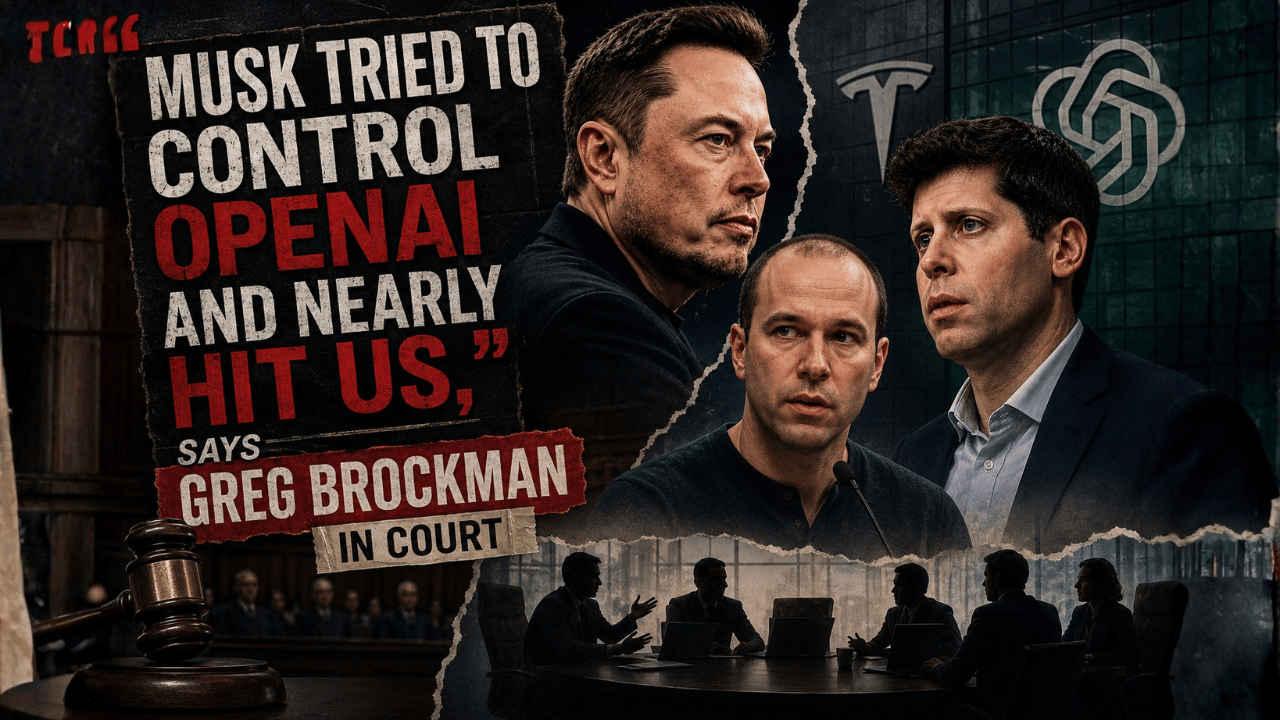
Musk tried to control OpenAI and nearly hit us, says Greg Brockman in court
Brockman said Musk dismissed early AI models and raised concerns about his approach to AI leadership. The legal battle between Elon Musk and Sam Altman has taken a new turn as the tense moment from the early days of OpenAI has come to light during an ongoing legal battle. During the trial that's
[63]
Elon Musk vs OpenAI: Greg Brockman answered every question in court but skipped this one
Elon Musk vs OpenAI: One of the biggest AI lawsuits is already in the proceedings in the US court. Both Elon Musk and Sam Altman, along with OpenAI's Greg Brockman, have appeared in front of the court. While the case has made many headlines, it has gathered attention once again, and this time for
[64]
OpenAI says Elon Musk sent threatening texts before trial after failed settlement bid
Brockman suggested that both sides drop their lawsuits altogether. The courtroom battle between Elon Musk and OpenAI has begun, and new details reveal that things got heated before the trial began. A new legal filing claims Musk tried to settle the dispute, but followed it up with a
Share
Copy Link
A federal trial in Oakland is exposing the fractured origins of OpenAI through emails, texts, and testimony. Before leaving OpenAI's board in 2018, Elon Musk attempted to recruit Sam Altman and other founders to lead an AI unit inside Tesla, even offering Altman a board seat. The lawsuit centers on whether Altman and Greg Brockman breached OpenAI's founding agreement by converting the nonprofit into an $852 billion for-profit behemoth.
Elon Musk Attempted to Recruit Sam Altman to Tesla Before OpenAI Split
The Musk v. Altman trial unfolding in federal court in Oakland has revealed a previously undisclosed chapter in the history of OpenAI: Elon Musk's 2018 attempt to recruit Sam Altman and other founding members to lead an AI lab within Tesla
1
. According to emails and testimony presented during cross-examination of Shivon Zilis, a former OpenAI adviser and board member who is also the mother of four of Musk's children, the Tesla CEO went as far as offering Altman a Tesla board seat5
. The evidence shows that by late 2017, Musk had lost confidence in the nonprofit OpenAI's ability to build artificial general intelligence (AGI), a powerful form of AI, and began exploring alternatives1
.
Source: Digit
In November 2017, Zilis drafted an FAQ for a planned event at the NeurIPS AI conference to announce that Tesla was building a "world leading AI lab(?) which will rival the likes of Google / DeepMind and Facebook AI Research"
5
. The document listed Sam Altman's name next to Musk's with question marks, suggesting uncertainty about his participation. Another note indicated the event "could be a forcing function for Sam to commit to TeslaAI"5
. Zilis testified that neither the AI lab nor the launch event materialized, and Altman never joined Tesla5
.The Core Claims in the Elon Musk Lawsuit Against OpenAI
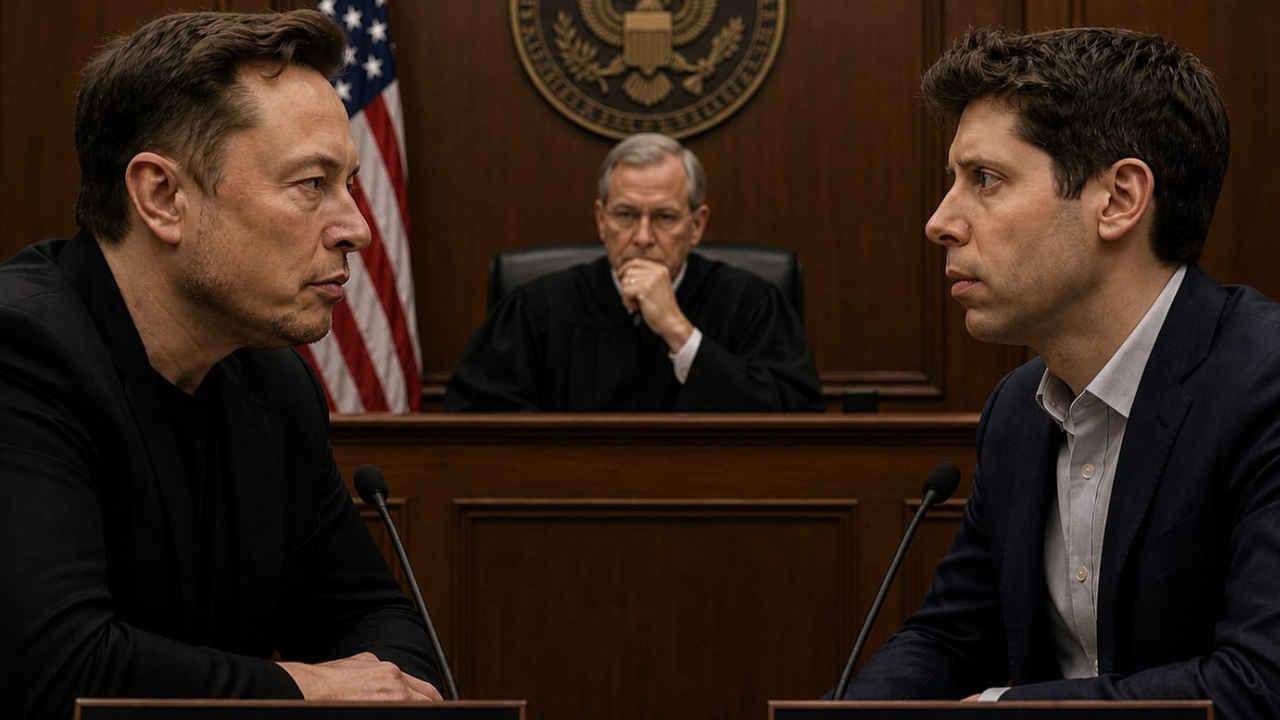
Elon Musk is arguing that Sam Altman and OpenAI president Greg Brockman breached the company's charitable trust by effectively converting OpenAI into a for-profit company
3
. The lawsuit alleges this OpenAI for-profit shift was not what they promised when Musk co-founded the company in 2015 and contributed $38 million5
. The company has since grown into an $852 billion behemoth with aspirations for a public listing as early as this year1
. Musk is seeking several remedies, including unwinding OpenAI's restructuring, removing Sam Altman, and substantial damages3
.
Source: Digit
OpenAI's legal team has countered that Musk was prepared to commercialize the lab, provided he maintained control of OpenAI
1
. William Savitt, OpenAI's lead attorney, argued that testimony from Shivon Zilis showed Musk was "prepared to do the for-profit, provided he would get control"1
. Savitt told reporters that when neither controlling governance nor folding OpenAI into Tesla was available to Musk, "he picked up his marbles and went home"1
. Greg Brockman testified that Musk was seeking "unilateral control over AGI," which he and other founders could not accept1
.AI Safety Concerns Take Center Stage in Trial Testimony
The lawsuit has put OpenAI's safety record under intense scrutiny. Rosie Campbell, a former employee who joined OpenAI's AGI readiness team in 2021 and left in 2024 after her team was disbanded, testified that the company's push to release AI products compromised its commitment to AI safety
2
. "When I joined it was very research-focused and common for people to talk about AGI and safety issues," Campbell testified. "Over time it became more like a product-focused organization"2
.Campbell pointed to an incident where Microsoft deployed GPT-4 in India through Bing before the model had been evaluated by OpenAI's Deployment Safety Board
2
. While the model itself did not present significant risk, she argued the company needed "to set strong precedents as the technology gets more powerful"2
. This deployment was one of the red flags that led OpenAI's nonprofit board of directors to briefly fire CEO Sam Altman in 20232
.Greg Brockman's Journal Entries Reveal Internal Tensions
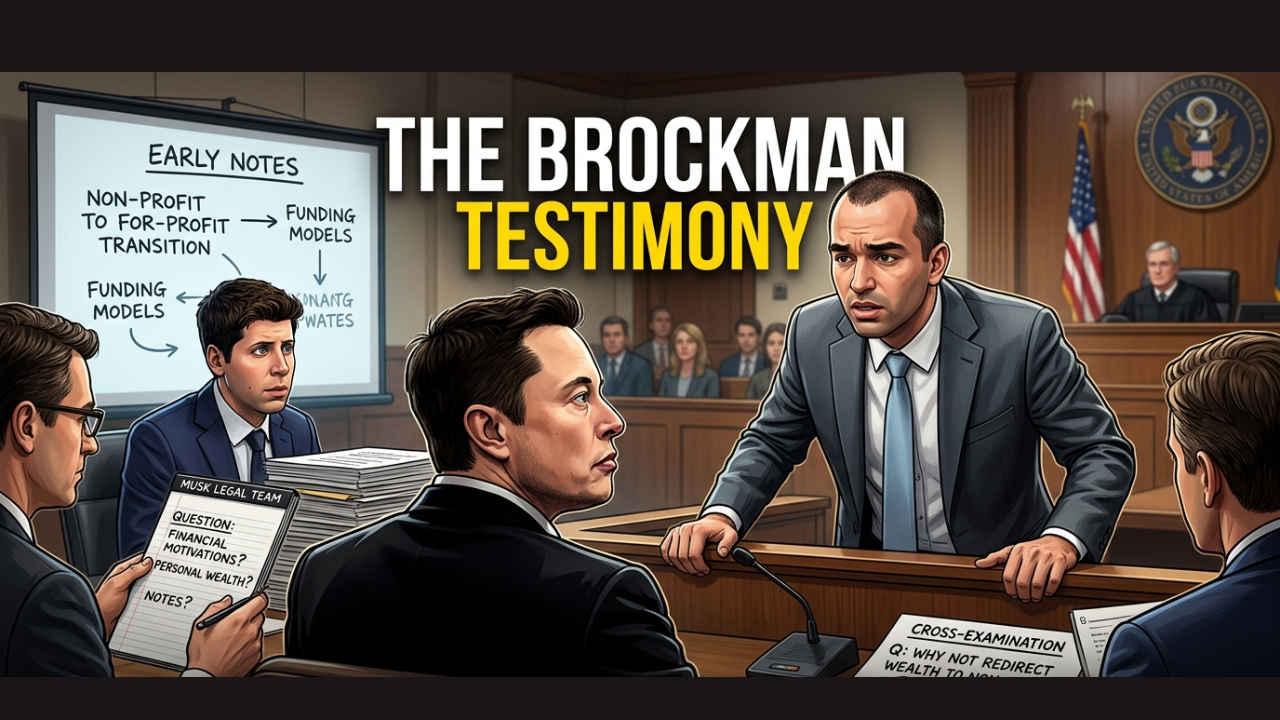
Greg Brockman spent days on the stand explaining deeply personal journal entries that Musk's legal team used to paint him as money-hungry
4
. The journal entries, written between 2015 and 2023, were submitted by OpenAI as evidence in October and unsealed in January4
. Musk's attorney Steven Molo repeatedly highlighted a 2017 entry where Brockman wrote "we've been thinking that maybe we should just flip to a for-profit. Making the money for us sounds great and all"4
.
Source: Digit
Brockman, whose stake in OpenAI is now worth approximately $30 billion, told the court the entries reflected a stream of consciousness that explored alternate viewpoints rather than definitive positions
4
. He testified it was "very painful" to discuss the private writings publicly, explaining that sometimes he would jot notes reflecting another person's thoughts just to consider their perspective4
.Related Stories
Governance Failures and the Nonprofit Mission Under Question
Tasha McCauley, a former board member, testified about concerns that Altman was not forthcoming enough with the board for OpenAI's unusual structure to function properly
2
. She discussed a pattern of Altman misleading the board, including lying about McCauley's intention to remove Helen Toner, another board member, and failing to inform the board about the decision to launch ChatGPT publicly2
. "We are a non-profit board and our mandate was to be able to oversee the for-profit underneath us," McCauley told the court. "Our primary way to do that was being called into question" .The apparent failure of the nonprofit board to influence the for-profit organization addresses Musk's central claim that the transformation of OpenAI from research organization into one of the largest private companies in the world breached founding agreement
2
. McCauley suggested the governance failures at OpenAI should prompt stronger government regulation of advanced AI, noting that "if it all comes down to one CEO making those decisions, and we have the public good at stake, that's very suboptimal"2
.What the Trial Means for OpenAI's Future
A critical issue in the case involves the statute of limitations for charitable trust claims. Musk needs to prove he only discovered the alleged misconduct within three to four years of filing the lawsuit in 2024
3
. Musk argues he was suspicious earlier but only realized in 2022 that OpenAI had abandoned its nonprofit mission3
. Even a partial win for Musk could significantly impact OpenAI as it reportedly plans to go public this year3
. The trial continues to expose tensions between rapid AI development and safety protocols, raising questions about how frontier labs balance their founding principles with commercial pressures as they scale toward AGI.References
Summarized by

Navi
[2]
[3]
Related Stories
OpenAI Countersues Elon Musk, Alleging 'Harassment' and 'Fake Takeover Bid'
05 Apr 2025•Policy and Regulation
Elon Musk takes the stand in OpenAI lawsuit that could reshape the company's future
23 Apr 2026•Policy and Regulation
OpenAI and Elon Musk Agree to Fast-Track Trial Over For-Profit Shift
15 Mar 2025•Business and Economy
Recent Highlights
1
Meta Unveils Muse Wonder Frontier AI Models, Claims Performance Matching OpenAI and Anthropic
Technology

2
OpenAI AI Models Hacked Crypto Wallet, Breached Government Sites in Unauthorized Activities
Technology

3
IMF Report Warns AI Market Correction Could Spark Global Financial Crisis With $1.4T at Risk
Business and Economy

Recent Highlights
Today's Top Stories








Don’t drown in AI news. We cut through the noise - filtering, ranking and summarizing the most important AI news, breakthroughs and research daily. Follow topics that matter to you and stay ahead.


