Euclyd Secures $231 Million Series A with Samsung Backing to Build Energy-Efficient AI Chips


2 Sources
[1]
Euclyd raises $231 million Series A with Samsung backing
Founded in 2024 by Bernardo Kastrup and Atul Sinha at High Tech Campus Eindhoven in the Netherlands, Euclyd is building chip systems designed to reduce the energy consumption and cost of running AI models. The company's roadmap targets AI inference -- the stage at which a trained model responds to
[2]
Euclyd raises $230M+ to develop chips for AI agents
Dutch chipmaker Euclyd BV today announced that it has raised more than €200 million, or $230 million, from a group of prominent investors. Samsung Electronics Co., Somerset Capital Partners and the Scaleup Europe Fund led the Series A deal. They were joined by several other institutional backers
Share
Copy Link
Netherlands-based startup Euclyd raised over $230 million in Series A funding led by Samsung Electronics, Somerset Capital Partners, and Scaleup Europe Fund. The company is developing craftwerk, an AI-specific chip designed to reduce energy consumption for AI inference workloads and tackle the memory wall challenge in the AI hardware ecosystem.
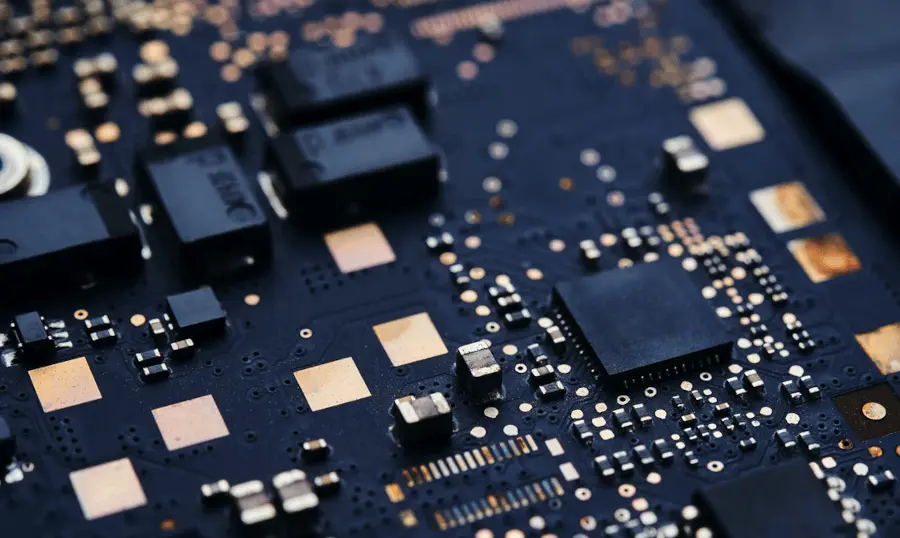
Euclyd Secures Major Series A Funding Round
Euclyd, a Netherlands-based startup founded in 2024 by Bernardo Kastrup and Atul Sinha at High Tech Campus Eindhoven, has raised more than €200 million, or approximately $231 million, in Series A funding
1
2
. Samsung Electronics, Somerset Capital Partners, and the Scaleup Europe Fund led the round, with participation from several institutional backers including imec.xpand, a fund associated with the Imec nanotechnology research center2
. The funding round also brought Peter Wennink, former CEO of ASML Holdings, onto Euclyd's board, signaling strong industry confidence in the company's vision2
.Building AI Chips to Reduce Energy Consumption for AI
Euclyd is developing chip systems specifically designed to reduce the energy consumption and cost of running AI models, addressing one of the most pressing challenges in the AI hardware ecosystem
1
. The company's roadmap targets AI inference—the stage at which a trained model responds to queries—rather than the more power-intensive model training workload1
. This focus on the inference stage positions Euclyd to serve the rapidly growing market for AI agents and real-time AI applications that require efficient, cost-effective computing infrastructure.Introducing craftwerk: An AI-Specific Chip with Innovative Architecture
At the heart of Euclyd's technology is craftwerk, an AI-specific chip that will be shipped as part of a system called CWS, expected to power AI clusters with more than an exaflop of performance
2
. The craftwerk computing module will be an application-specific integrated circuit, or ASIC design, featuring what Euclyd describes as an "innovative memory architecture"2
. The company plans to pursue processor-memory co-design, indicating that its RAM architecture will be specifically optimized to work with its ASIC, a strategy that could deliver significant performance and efficiency gains1
2
.Tackling the Memory Wall Challenge
Euclyd's planned hardware combines programmable compute, processor-memory co-design, and system-level optimization to address critical bottlenecks in AI processing
1
. The company specifically aims to tackle the memory wall challenge, an engineering obstacle that complicates efforts to speed up AI chips by limiting the rate at which data moves between a GPU's computing and memory modules2
. Multiple custom memory designs have emerged in the AI hardware ecosystem over recent years as alternatives to standard HBM memory. Nvidia recently debuted NVHBM, which can free up 30% of a GPU's surface area, while startup d-Matrix has developed SRAM-based memory architecture for inference calculations2
.Related Stories

Samsung Backing Strengthens Technical Capabilities
The Samsung backing in this Series A funding round could prove particularly valuable for Euclyd's engineering efforts
2
. Samsung Electronics is one of the world's top HBM suppliers and recently debuted technology that makes it possible to place HBM memory directly atop a GPU's computing circuits, rather than implementing memory dies and computing modules side-by-side2
. This partnership positions Euclyd to leverage cutting-edge memory technologies as it develops craftwerk and CWS.Dual Business Model Targets Multiple Markets
On the commercial side, Euclyd plans to pursue two distinct lines of business: direct sales of rack-based hardware to enterprises running AI inference on their own infrastructure, and licensing arrangements with chip developers who want to build on Euclyd's underlying technology
1
. According to CNBC, Euclyd plans to launch its silicon in 2028 and hopes to gain thousands of enterprise customers by 20302
. The company envisions a future in which advanced AI is no longer constrained by infrastructure cost, power availability, or geography2
. Watch for how Euclyd's exaflop-scale performance claims translate into real-world deployments and whether its dual business model can effectively compete against established GPU manufacturers and emerging AI chip startups in an increasingly crowded market.References
Summarized by

Navi
[2]
Related Stories
Axelera AI Secures $250 Million to Scale Energy-Efficient Chips for Edge Computing
25 Feb 2026•Startups

Eliyan raises $145M at $1B valuation to tackle AI chip data bottlenecks in data centers
29 Jul 2026•Startups
Cognichip raises $60M to use AI for designing the chips that power AI itself
02 Apr 2026•Startups

Recent Highlights



Recent Highlights
Today's Top Stories






Don’t drown in AI news. We cut through the noise - filtering, ranking and summarizing the most important AI news, breakthroughs and research daily. Follow topics that matter to you and stay ahead.


