2 Sources
[1]
Euro-Area Finance Chiefs to Discuss Mythos as Concerns Mount
Euro-area finance ministers will discuss the challenges that Anthropic PBC's Mythos AI model poses as officials struggle to get clarity on the new tool's powers. The topic will come up during a discussion with banking supervisors on Monday, a senior EU official said. Mythos, which Anthropic says is powerful enough to enable dangerous cyberattacks, has sparked global fears about digital breaches and the stability of the financial system. Such worries featured prominently at last week's International Monetary Fund spring meetings in Washington. Regulators, central bankers and corporate executives are seeking to gain more insight into Mythos, which hasn't been widely released. There are concerns that financial systems outside the US -- including Europe -- are at a disadvantage because they have limited access. The US has opposed Anthropic's plan to expand access to the artificial intelligence technology. No one in the EU has access to the model and governments are only hearing rumors about its capabilities, the senior EU official said. Ministers are expected to return to the topic after Monday's discussion once they gather more information, the official added. Anthropic PBC has begun weighing a fresh funding round that would value the artificial intelligence developer at more than $900 billion, according to people familiar with the matter, potentially leapfrogging its longtime rival OpenAI as the world's most valuable AI startup. The Claude maker is entertaining offers from investors that would more than double its current valuation, said the people, who spoke on condition of anonymity as the information is not public. The considerations are at a very early stage and the company has yet to accept any offers, the people said. Here's Why Some AI Might Be Too Dangerous To Release Arrow Right 9:21 Listen to the Here's Why podcast on Apple, Spotify or anywhere you listen. Anthropic had previously resisted several inbound proposals from investors for a new round at a valuation of $800 billion or more, Bloomberg News has reported. The new discussions, which have not been reported, coincide with a push by Anthropic to ramp up fundraising amid the breakout success of its AI software. Anthropic, which Bloomberg has reported is considering an initial public offering as soon as October, has been on the hunt for more infrastructure to meet growing demand for its products. Anthropic declined to comment. Google recently committed to invest $10 billion in Anthropic at a $350 billion valuation, the same amount it was valued at in a funding round in February. The Alphabet Inc.-owned company plans to invest up to another $30 billion in Anthropic if the startup hits certain performance targets. Amazon.com Inc. is also investing $5 billion in Anthropic at a $350 billion valuation, with plans to inject $20 billion more over time. It's unclear whether those two firms will be part of the upcoming funding round. Founded in 2021 by a group of former OpenAI employees, Anthropic has since emerged as a leader in the AI sector. Anthropic has developed a series of AI tools aimed at overhauling the way businesses handle tasks from coding to cybersecurity. In early April, the company unveiled a new model called Mythos that is purportedly able to detect and exploit vulnerabilities in a wide range of critical software. Anthropic deemed it to be too dangerous for wide release and has instead let a limited group of companies begin testing it on their own systems. However, the model has been accessed by a small group of unauthorized users, Bloomberg News has reported. As Anthropic has gained momentum, it's put new pressure on OpenAI, which is also widely expected to go public as soon as this year. The ChatGPT maker has reportedly missed some of its own targets for revenue and user growth as it contends with competition from Anthropic and Google. OpenAI has taken steps to streamline its sprawling product portfolio to focus on AI agents and a new model. The company was most recently valued at $852 billion in a funding round completed in March.
[2]
Euro-area finance ministers to discuss Anthropic's Mythos AI as no EU government has access and White House blocks expansion
Euro-area finance ministers will discuss Anthropic's Mythos AI model with banking supervisors on Monday, according to a senior EU official. The technology that will be on the agenda is one that no government in the European Union has access to, built by a company that the United States Pentagon has designated a national security supply chain risk, and which the White House is simultaneously using through the National Security Agency while blocking its creator from expanding access to others. The ministers are expected to return to the topic after Monday's discussion once they gather more information. The problem is that gathering information is precisely what they cannot do. As the senior EU official put it, governments are only hearing rumours about its capabilities. Anthropic announced Claude Mythos Preview on 7 April under a restricted access programme called Project Glasswing. The model is capable of autonomously discovering and exploiting zero-day vulnerabilities in every major operating system and every major web browser. It has already identified thousands of high-severity vulnerabilities, including a 27-year-old bug in OpenBSD and a 16-year-old remote code execution vulnerability in FreeBSD. Mozilla fixed 271 Firefox vulnerabilities found by Mythos in a single evaluation pass, more than twelve times the number identified by Anthropic's previous most capable model. Anthropic has described the system as "currently far ahead of any other AI model in cyber capabilities" and has restricted access to a consortium of launch partners: Amazon Web Services, Apple, Broadcom, Cisco, CrowdStrike, Google, JPMorgan Chase, the Linux Foundation, Microsoft, Nvidia, and Palo Alto Networks. The company is providing up to $100 million in usage credits and $4 million in direct donations to open-source security organisations. Over 99 per cent of the vulnerabilities found have not yet been patched. The model's capabilities are simultaneously defensive and offensive. In the hands of a security team, Mythos can identify and help fix vulnerabilities that have persisted in critical infrastructure for decades. In the hands of a threat actor, the same capabilities can be weaponised to run cyberattacks at a scale and speed that human hackers cannot match. Anthropic has said it limited the release precisely because of this dual-use risk. But the limitation creates its own problem: the organisations with access can see where their systems are vulnerable, and the organisations without access cannot. For European banks, which rely on complex, interconnected, and often decades-old technology systems, the asymmetry is not theoretical. It is a competitive and security disadvantage that the Bundesbank has now formally identified. Germany's chief banking supervisor Michael Theurer urged the European Commission and EU governments to request access to Mythos from Anthropic or from the US administration directly. "I consider it necessary that the European Commission and governments in Europe now also approach the company, or rather the United States, to request that the technology be shared," Theurer said. Bundesbank President Joachim Nagel was more direct: "All relevant institutions should have access to such technology to avoid competitive distortions." The concern is that European banks cannot test which vulnerabilities Mythos is capable of identifying without access to the model itself, which means they cannot defend against threats they cannot see. Theurer warned that "we may be moving into an area in which economic actors could potentially become dependent on state assistance" if the access gap persists. The access problem extends beyond Europe. Mythos dominated conversations at last week's IMF spring meetings in Washington. IMF Managing Director Kristalina Georgieva said the world does not have the ability "to protect the international monetary system against massive cyber risks" and warned that "time is not our friend on this one." Treasury Secretary Scott Bessent and Federal Reserve Chair Jerome Powell held an urgent meeting with top US bank CEOs to discuss the cybersecurity implications. Bank of England Governor Andrew Bailey, who chairs the Financial Stability Board, called it "a very serious challenge for all of us." European Central Bank President Christine Lagarde framed the core tension: "The development we've seen with Anthropic and Mythos is a good example of a responsible company that is suddenly thinking, ah, that could be really good, but if it falls in the wrong hands, it could be really bad." Regulators from the Fed, ECB, Bank of England, Treasury, and Australia's ASIC are all now monitoring Mythos for systemic financial risk. The White House's position on Mythos is structurally incoherent. The NSA is using the model. The Pentagon has designated Anthropic a supply chain risk for refusing to allow its AI to be used for autonomous weapons and domestic mass surveillance. And the White House has told Anthropic it opposes the company's plan to expand access to roughly 70 additional organisations, citing concerns that Anthropic lacks sufficient computing power to serve that many entities without compromising the government's access. The administration is simultaneously blocking Anthropic from defence contracts, using its most sensitive model through intelligence agencies, and preventing the company from sharing that model with the private sector or allied governments. Anthropic CEO Dario Amodei has been meeting with White House chief of staff Susie Wiles and Treasury Secretary Bessent to negotiate access and the Pentagon standoff, but the contradictions have not been resolved. For European finance ministers, the contradiction creates a dependency they have not faced before. The most consequential cybersecurity tool in existence is controlled by an American company that the American government has partially blacklisted, partially embraced, and entirely refused to share with allies. Anthropic has said it plans to provide access to European banks "soon," according to sources, but no formal agreement is in place. The unauthorised access to Mythos by a Discord group that guessed its URL through a third-party vendor environment has only heightened the urgency: if a group of curious hobbyists can find and use the model, so can state-sponsored hackers and criminal organisations. Europe's finance ministers are preparing to discuss a technology that their banks need, that their governments cannot access, that an ally is hoarding, and that has already leaked. The discussion on Monday will not resolve any of this. But it will establish, formally, that Europe recognises it has a problem it cannot solve alone.
Share
Copy Link
Euro-area finance ministers will convene Monday to address challenges posed by Anthropic's Mythos AI model, a tool so powerful it can enable dangerous cyberattacks. No EU government has access to the system, creating a competitive disadvantage as the White House blocks expansion while the NSA uses it internally.
Euro-area finance ministers will meet with banking supervisors on Monday to discuss the challenges posed by Anthropic's Mythos AI model, a tool that officials across Europe cannot access despite its profound implications for cybersecurity and financial stability
1
2
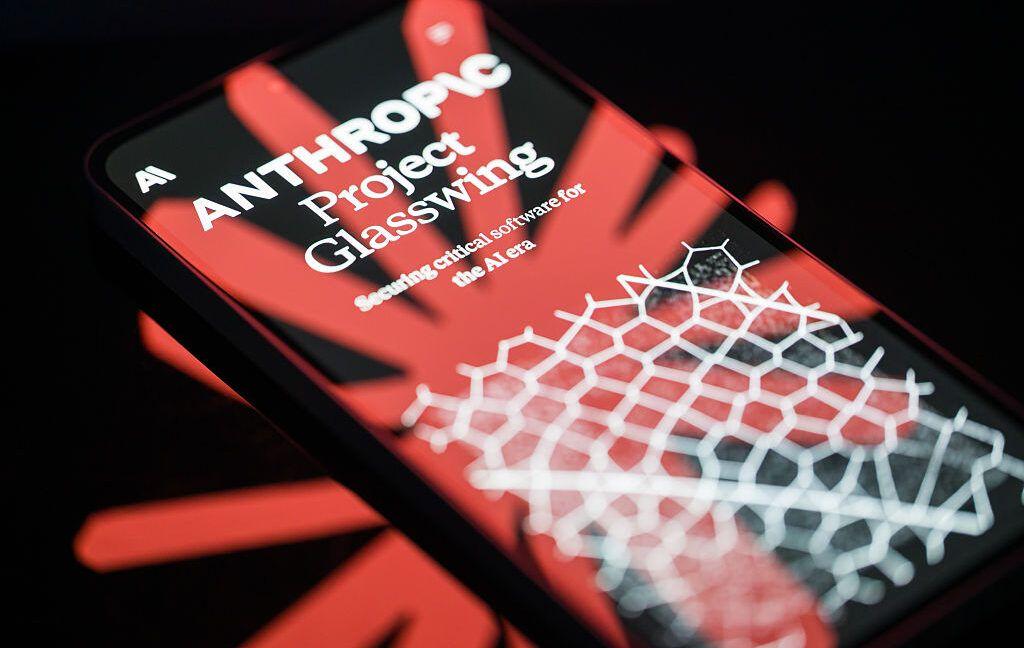
. The AI developer unveiled Mythos in early April under a restricted access program called Project Glasswing, limiting its availability to a consortium of launch partners including Amazon Web Services, Apple, Google, JPMorgan Chase, Microsoft, and Nvidia2
. No EU government has access to the model, and according to a senior EU official, governments are only hearing rumors about its capabilities1
. Ministers are expected to return to the topic after gathering more information, though obtaining that information remains precisely the problem they face.
Source: Bloomberg
Mythos AI represents a significant leap in artificial intelligence capabilities for identifying and exploiting zero-day vulnerabilities across critical infrastructure. The model can autonomously discover and exploit vulnerabilities in every major operating system and web browser, having already identified thousands of high-severity bugs
2
. Among its discoveries are a 27-year-old bug in OpenBSD and a 16-year-old remote code execution vulnerability in FreeBSD. Mozilla fixed 271 Firefox vulnerabilities found by Mythos in a single evaluation pass, more than twelve times the number identified by Anthropic's previous most capable model2
. Over 99 per cent of the vulnerabilities found have not yet been patched, creating an urgent timeline for organizations with access while leaving those without it exposed to threats they cannot see.The dual-use nature of Mythos AI creates a stark information asymmetry between organizations with access and those without. Germany's chief banking supervisor Michael Theurer urged the European Commission and EU governments to request access from Anthropic or directly from the White House
2
. Bundesbank President Joachim Nagel stated that "all relevant institutions should have access to such technology to avoid competitive distortions"2
. European banks rely on complex, interconnected, and often decades-old technology systems, making the access gap not theoretical but a tangible competitive disadvantage. Theurer warned that "we may be moving into an area in which economic actors could potentially become dependent on state assistance" if the access gap persists2
.Concerns about Mythos AI threatening financial stability featured prominently at last week's International Monetary Fund spring meetings in Washington
1
. IMF Managing Director Kristalina Georgieva warned that the world does not have the ability "to protect the international monetary system against massive cyber risks" and that "time is not our friend on this one"2
. Treasury Secretary Scott Bessent and Federal Reserve Chair Jerome Powell held an urgent meeting with top US bank CEOs to discuss cybersecurity implications. Bank of England Governor Andrew Bailey, who chairs the Financial Stability Board, called it "a very serious challenge for all of us"2
. European Central Bank President Christine Lagarde framed the tension: "The development we've seen with Anthropic and Mythos is a good example of a responsible company that is suddenly thinking, ah, that could be really good, but if it falls in the wrong hands, it could be really bad"2
.Related Stories
The White House has opposed Anthropic's plan to expand access to the artificial intelligence technology, creating what officials describe as a structurally incoherent position
1
2
. The National Security Agency is using the model internally while the Pentagon has designated Anthropic a national security supply chain risk for refusing to allow its AI to be used for autonomous weapons and domestic mass surveillance2
. This creates a paradox where US agencies benefit from Mythos AI capabilities while blocking international partners from defensive applications.Anthropic has begun weighing a fresh Anthropic funding round that would value the AI developer at more than $900 billion, according to people familiar with the matter, potentially leapfrogging its longtime rival OpenAI as the world's most valuable AI startup
1
. The Claude maker is entertaining offers from investors that would more than double its current valuation of $350 billion. Google recently committed to invest $10 billion in Anthropic at a $350 billion valuation, with plans to invest up to another $30 billion if the startup hits certain performance targets. Amazon is also investing $5 billion with plans to inject $20 billion more over time . The company is providing up to $100 million in usage credits and $4 million in direct donations to open-source security organizations2
. Founded in 2021 by former OpenAI employees, Anthropic has emerged as a leader in the AI sector, putting new pressure on ChatGPT maker OpenAI, which was most recently valued at $852 billion in March1
.Summarized by
Navi
23 Apr 2026•Policy and Regulation

15 Apr 2026•Technology

20 Apr 2026•Policy and Regulation

1
Policy and Regulation

2
Entertainment and Society

3
Technology