Exa raises $250M at $2.2B valuation to build search engine for AI agents, not humans


3 Sources
[1]
Investing in Exa | Andreessen Horowitz
For the last two decades, search was built for humans. Google's PageRank turned the web into something navigable: a system of links, rankings, and interfaces, designed to help people find the information they wanted. Entire industries emerged around this model, from SEO to advertising to content
[2]
Exa Labs raises $250M at $2.2B valuation for its AI search tools - SiliconANGLE
Search startup Exa Labs Inc. today announced that it has raised $250 million in funding to purchase more infrastructure. The round was led by Andersen Horowitz. It comes less than a year after Exa's previous raise, a $85 million Series B investment that included contributions from Nvidia Corp. and
[3]
Exa Raises $250 Million for AI-Powered Search Infrastructure | PYMNTS.com
The company reached that valuation with a $250 million Series C funding round announced Wednesday (May 20). It is money that Exa says will help it train its next generation of models and scale its systems to support hundreds of thousands of searches per second. "As trillions of agents come online
Share
Copy Link
Exa has raised $250 million in Series C funding led by Andreessen Horowitz at a $2.2 billion valuation. The startup builds AI-powered search infrastructure specifically optimized for AI agents rather than human users, serving over 400,000 developers and 5,000 companies including Cursor, Cognition, and HubSpot.
Exa Secures $250M Series C Funding to Scale AI Search Infrastructure
Exa has closed a $250 million Series C funding round led by Andreessen Horowitz, reaching a valuation of $2.2 billion
2
. The investment comes less than a year after the company's $85 million Series B round, which included contributions from Nvidia and Y Combinator2
. This rapid fundraising trajectory signals growing demand for AI-powered search infrastructure as intelligent agents become the primary consumers of web information.
Source: Andreessen Horowitz
The funding will enable Exa to expand its AI infrastructure, train next-generation models, and scale systems to support hundreds of thousands of searches per second
2
3
. The company also plans to hire more go-to-market professionals to support its expanding customer base2
.Building a Search Engine for AI Agents, Not Humans
Unlike traditional search engines designed for human users, Exa provides a web search API specifically optimized for AI agents
3
. The company operates its own independent search engine rather than acting as a wrapper for existing providers like Google Search3
. This distinction matters because AI agents have fundamentally different search requirements than humans.Will Bryk, Exa's co-founder and CEO, explains the scale challenge: "As trillions of agents come online over the coming years, search needs will grow thousands of times beyond the total search volume of Google"
3
. Agents don't ask simple queries. They probe long-tail, constantly shifting information with complex queries that can span paragraphs1
. As one leading AI company noted, "In the limit, if we could search 100% of the time, we probably would. It just comes down to GPUs, latency, and cost"1
.
Source: PYMNTS
Technical Architecture Behind AI-Powered Search Tools
Exa's fastest offering, Exa Instant, completes queries in under 180 milliseconds, making it the speediest search service of its kind on the market according to the company
2
. This low-latency performance matters acutely in user-facing agent flows, especially for time to first token1
.The company stores web data in a custom vector database that can query billions of embeddings in one tenth of a second while using less memory than a high-end personal computer
2
. One contributor to the database's speed is storing certain important files in CPU cache instead of RAM2
.Exa ingests public web data using a custom software platform called exa-d, which parallelizes key data processing tasks across multiple graphics cards
2
. The platform skips many unnecessary file changes that data management systems often make when updating records, further optimizing hardware utilization2
. The company trains custom neural networks called embedding models on an in-house cluster of Nvidia graphics cards to turn web data into mathematical structures that AI models can understand2
.Related Stories




Multi-Step Search Workflows and Enterprise Adoption
Beyond Exa Instant, the company offers several other AI-powered search tools. An offering called Contents enables AI applications to retrieve the full text of webpages
2
. Exa Agent facilitates multi-step search workflows, allowing market research agents to find an e-commerce store's most popular products and then enrich the list with customer feedback from reviews sites2
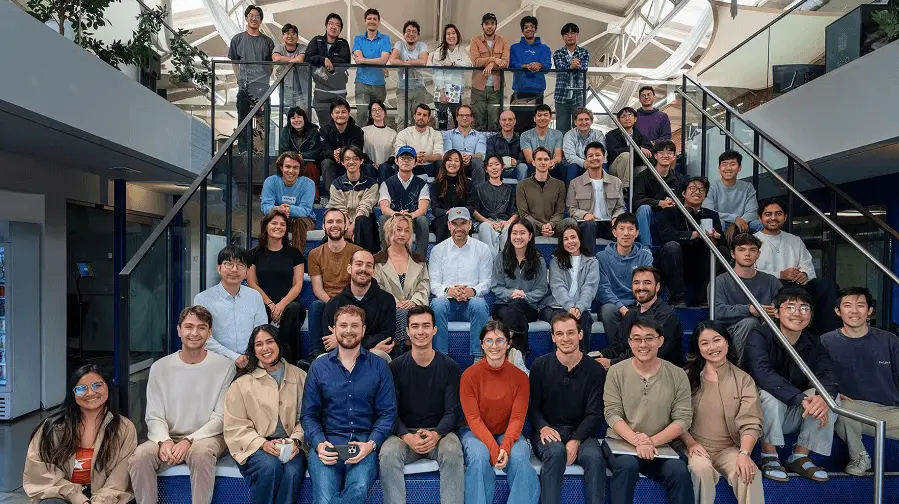
.Since launching its AI-focused API in early 2023, Exa's customer base has grown to more than 5,000 companies and over 400,000 developers
2
3
. These users include leading AI companies from startups on the frontier like Cursor and Cognition to large enterprises like HubSpot, Monday.com, OpenRouter, and many Fortune 500 companies1
3
.
Source: SiliconANGLE
Andreessen Horowitz noted that developers and AI agents are reaching for Exa first, with one customer stating, "this is the default for getting agents to do web search now"
1
. Bryk added that six months ago Exa was worse than Google at code search, but now it's used by nearly every coding agent3
.The Vision Behind Building Perfect Search
Will Bryk and co-founder Jeffrey Wang built a search engine in their dorm at Harvard a decade ago
1
. Years before ChatGPT or the AI boom really started, they were inspired by the transformer breakthrough and believed deeply that AI would fundamentally change how we access information1
. They set out to build the search engine for a future where agents become the primary consumers of the web1
.Bryk articulates the company's mission: "We're organizing the world's knowledge, but this time for AI"
1
. As agents make increasingly important business decisions, their requirements for comprehensiveness, freshness, and precision will far exceed what humans require3
. Agents will need perfect search over all the world's information at an unprecedented scale3
.Andreessen Horowitz believes the first search wars were won by organizing information for people, but the next will be won by organizing information for agents
1
. As AI both consumes and produces the internet, the web will become bigger, faster, and noisier, making search the compass for agents to navigate it1
.References
Summarized by

Navi
[1]
Related Stories
Recent Highlights



Recent Highlights
Today's Top Stories






Don’t drown in AI news. We cut through the noise - filtering, ranking and summarizing the most important AI news, breakthroughs and research daily. Follow topics that matter to you and stay ahead.


